Ross Clark

Ross Clark

Ross Clark is a leader writer and columnist who has written for The Spectator for three decades. He writes on Substack, at Ross on Why?

The hidden costs of furlough

From our UK edition

It wasn’t long ago that a Conservative government was congratulating itself for achieving the lowest unemployment figures in half a century. This won’t wash any more, since the wider picture has become clear: while official unemployment figures remain low, figures for ‘economic inactivity’ have seen a sharp rise. We have 9.4 million of working age who are economically inactive – a number that has increased by one million since before the pandemic. It is just that only a small proportion of them show up in the unemployment figures. Many of the remainder – 2.8 million – are on long-term sickness benefits, a number that has risen by 700,000 since the eve of the pandemic.

Is there really a ‘butterfly emergency’?

From our UK edition

Anyone else getting fed up with ‘emergencies’? There was a time when that word meant something, but not any longer now that every other quango or town council has declared a ‘climate emergency’, ‘housing emergency’ or ‘nature emergency’ (not that the existence of multiple emergencies seems to stop their staff cutting their hours to four days a week or expecting to work from a beach on the Med).     But the latest declaration really will have the blue lights flashing. Apparently we now have a ‘butterfly emergency’. This one has been declared by a charity called Butterfly Conservation, on the back of its annual Big Butterfly Count which it claims observed a 50 per cent collapse in butterfly numbers since last year.

Paul Wood, Ross Clark, Andrew Lycett, Laura Gascoigne and Henry Jeffreys

From our UK edition

33 min listen

On this week’s Spectator Out Loud: as Lebanon reels from the exploding pagers, Paul Wood wonders what’s next for Israel and Hezbollah (1:24); Ross Clark examines Ireland’s low-tax project, following the news that they’re set to receive €13 billion… that they didn’t want (8:40); Reviewing Ben Macintyre’s new book, Andrew Lycett looks at the 1980 Iranian London embassy siege (15:29); Laura Gascoigne argues that Vincent Van Gogh would approve of the new exhibition of his works at the National Gallery (22:35); and Henry Jeffreys provides his notes on corkscrews (28:01).  Produced and presented by Patrick Gibbons.

Does the evidence support working from home?

From our UK edition

I am sure that the business secretary Jonathan Reynolds picked up many useful skills in his previous job in local government, but does he really know more about how to run a business than the people who run one of the world’s most successful companies?    Apparently, yes. Asked on LBC where his comments about encouraging remote working fitted in with Amazon’s decision to order its staff back to work five days a week in the office he said:  If I was talking to a business like that I would say that every piece of evidence that has ever been collated suggests that flexibility, when agreed between employer and employee, is good for productivity and is good for staff resilience. You get to retain your staff for longer, you get more out of them.

Is Rachel Reeves damaging the High Street’s recovery?

From our UK edition

The former boss of Sainsbury’s, Justin King, warned on the Today programme this morning that Rachel Reeves has damaged the economy through her constant warnings of tax rises to come in October’s budget, causing anxious shoppers to draw in their horns until the big day. But if shoppers really are holding off purchases for fear that the Chancellor will raid their savings or hit them with tax rises there is scant sign of it in the Office for National Statistics’ (ONS) retail sales figures for August. They show that sales volumes increased by 1.0 per cent over the course of the month. July’s figures were also revised upwards from a 0.5 per cent increase to a 0.7 per cent increase. Clothing retailers had a particularly good month, with sales up 2.

How the EU turned on Ireland’s low-tax project

From our UK edition

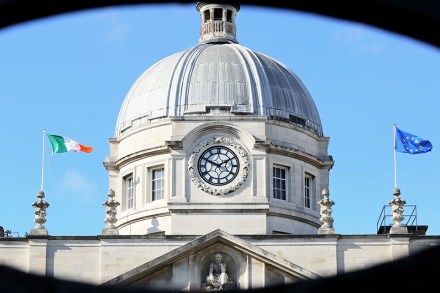
First, the good news. The Irish government is about to receive a €13 billion windfall in the form of back taxes from tech giant Apple, after the European Court of Justice (ECJ) ruled against the company. That should pay for a good few social homes in a country that has an even bigger housing crisis than Britain’s. It could even go some way to providing universal free public healthcare (at the moment most adults have to pay something, even at public hospitals). Why should countries which have been successful at managing their finances be forced to jack up tax rates? Now the bad news. Ireland doesn’t actually want to receive the money any more than Apple wants to pay it. It has spent millions of euros fighting the European Commission (EC), which initiated the case.

The poisoned chalice of trying to nationalise Thames Water

From our UK edition

Keir Starmer won the Labour leadership election in 2020 on the back of a promise to nationalise public utilities. In one of his most blatant flip flops, he later went back on that, committing instead only to nationalise the rail industry – and even then by degrees as current franchises reached the end of their lives. But could the Prime Minister find himself driven towards a much broader nationalisation after all, and at high political cost? The question arises because of Thames Water, which has warned it could go bust next year if it is blocked from jacking up customers’ bills to help fill its own £15 billion financial black hole. The company wants to raise bills by 60 per cent over five years, but the regulator Ofwat only wants to allow an increase of 23 percent.

The problem with Labour’s green energy plan

From our UK edition

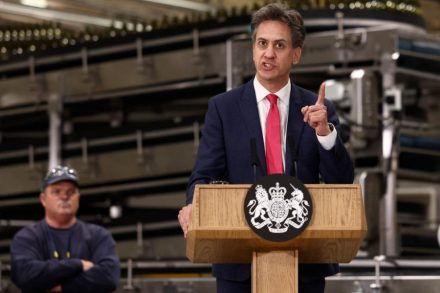
Ed Miliband told the EnergyUK conference this morning that he wants to take on the 'blockers, delayers and obstructionists' who stand in the way of Britain’s energy security. Oh good, does that mean that finally he appreciates that the North Sea needs some encouragement? And that a UK fracking industry will finally be allowed to commence, after years of being blocked in the courts by environmentalists spinning false stories about how it will cause your water taps to burst into flames and cause devastating earthquakes (including those actually felt at the Earth’s surface)? Er, sadly not. Miliband, of course, rather likes blockers and delayers when they are on his side.

Does Starmer have the gall to send asylum seekers to Albania?

From our UK edition

Sending asylum-seekers to Rwanda would, of course, be a moral outrage. We know this because Labour shadow ministers kept telling us so when the previous government wanted to do just this. Fortunately, however, there is a far more ethical alternative: to send them to Albania instead – something which Keir Starmer is considering after meeting with Italian prime minister Georgia Meloni to learn how her government has successfully reduced small boat arrivals over the past year. Starmer said he was 'interested' to see how the Albania processing scheme developed by the Italian government would work.

Cheap electric cars could be the latest Brexit benefit

From our UK edition

If Starmer were to rejoin the EU tomorrow, arch-Remainer Gavin Esler tweeted the other day, what benefits of Brexit would you miss most? I've got one for him: affordable cars.  Britain, even under a more EU-friendly Labour government, has declined to copy the EU – as well as the US – in imposing punitive tariffs on imports of Chinese-made electric cars.  For some manufacturers the new EU tariffs will reach 37.6 per cent, which together with the existing 10 per cent tariff will bring it close to 50 per cent. Britain, critics will say, will now become a target for ‘dumping’. That is another way of saying that UK motorists are about to enjoy a cornucopia of affordable electric cars – something which European manufacturers have failed completely to engineer.

The real threat to schools? Falling birth rates

From our UK edition

Labour’s proposal to impose VAT on private school fees will, we are often warned, lead to state schools becoming overloaded as parents withdraw their children from the independent sector and try to find alternative arrangements. That may turn out to be true in some areas in the short term, but in the longer term there is a different problem facing the state and independent sectors alike: a falling population of school-age children. It isn’t excessive class sizes which threaten to be an issue so much as shrinking classes, leading to school closures and amalgamations with other institutions. London classrooms appear to be emptying – in 2022, 15.5 per cent of primary school places were unfilled For nursery and primary schools in England, pupil numbers peaked in 2019.

Miliband’s empty energy promise

From our UK edition

Though not quite up there with history’s great political texts, Ed Miliband’s letter this week to the director of the ESO, which runs Britain’s national grid, is a rather important document. It reveals – or confirms – that Labour has committed itself to decarbonising Britain’s electricity system by 2030 without really having any idea of how that can be done. Miliband described this letter as a ‘formal commission… to provide practical advice on achieving clean power’. That is all very well, except shouldn’t Miliband have sought this advice months ago, before pledging to achieve net zero on domestic energy by 2030? This week was supposed to be the big reveal: we would learn how this target – considered unreachable by many – is going to be hit.

Why did the Grenfell Inquiry take so long to tell us what we know already?

From our UK edition

Predictably enough, and not unreasonably, the 1700-page final report into the Grenfell disaster apportions the bulk of the blame with the companies who manufactured and sold the flammable cladding and insulation.  The report doesn't spare the London Fire Brigade What has emerged from this inquiry is astonishing: you hardly need a degree in engineering to work out that it is not a good idea to wrap a tower block in combustible material. That manufacturers seem to have 'deliberately concealed' the risk that their products posed is something which is almost inevitably going to be picked over further in the courts. Why it has taken seven years to produce this report – thereby holding up possible criminal cases – is itself a scandal.

Why is it so hard to buy a petrol car?

From our UK edition

Is it really any surprise that car manufacturers have started refusing to sell us petrol cars? According to Robert Forrester, chief executive of dealership Vertu Motors, anyone trying to buy a petrol car at the moment is likely to be quoted a delivery date into next year. As I wrote here last December, unless electric vehicles (EVs) enjoyed a sudden rush of popularity, the inevitable result of the Zero Emission Vehicle (ZEV) mandate would be that car manufacturers would be forced to withdraw from the UK market. The reason was coming down the road at us like a three-ton electric SUV. Under ZEV, which began on 1 January this year, manufacturers are obliged to ensure that at least 22 per cent of their sales this year are pure electric models.

Labour want to Frenchify the economy

From our UK edition

It is not that long ago that the new Prime Minister Sir Keir Starmer announced that his would be the government of ‘growth, growth, growth’. What has he done in that time to try to realise that ambition? It is hard to think of a single measure that will genuinely do anything to improve the fortunes of wealth-creating businesses – other than promised planning reforms which seem destined to fail as they are based on the faulty premise that it is only Nimbys who hold up house-building and other development, and not reams of environmental regulations which Labour has shown no interest in reforming.

Why Labour’s four-day week plan could backfire

From our UK edition

Employees will have the right to ask their employers to compress their hours into four days a week rather than five, but employers will not be forced to agree. Just what is the point of the government’s latest employment reform, as proposed by Baroness Smith of Malvern, the minister for skills? Surely employees already have the right to ask for a four-day week, and always have had. There is no law I know that prohibits an employee knocking on their boss’ door and asking for a four-day week, a day off to go to the races, to bring their pet gerbil into the office or, indeed, anything else.

Is Starmer now a friend of the oil and gas industry?

From our UK edition

Keir Starmer's government appears to have softened its stance on oil and gas. Back in June 2023, the Labour leader told an audience in Edinburgh that there would be no new licences for oil and gas exploration in the North Sea. Instead, a Labour government would pursue green energy all the way, slashing our bills (it promised) and taking us ever faster to the nirvana of net zero. But how the responsibilities of government come to bear. A release from the Department for Energy Security and Net Zero (DESNZ) this morning indicates some notable shuffling of ground.

A trade deal with Germany can only mean one thing

From our UK edition

Britain will not be rejoining the EU, the single market nor the customs union – that ship has sailed, and all we seek now is a closer relationship with the EU. So Keir Starmer assures those who feel a little suspicious about his multiple meetings with Olaf Scholz in the weeks since becoming Prime Minister, the latest of which took place this morning. All he seeks, he says, is a better trade deal which would allow better access to EU markets for UK firms. Maybe Starmer dreams at night of being paraded through the streets of Brussels as the man who engineered Britain’s return to the EU Maybe Starmer dreams at night of being paraded through the streets of Brussels as the man who engineered Britain’s return to the EU.

The Next equal pay victory is a dark day for British business

From our UK edition

Who would bother to create jobs in modern Britain? Clothing retailer Next has done plenty of job-creation over the past few years – only to be whacked by an equal pay claim brought by 3,500 shop assistants. An employment tribunal has ruled that the company was wrong to pay them less than it paid staff at its warehouses. With back pay it could cost the company £30 million. The cost of this kind of case goes far beyond the potential legal liability itself Equal pay is one thing where it concerns men and women working alongside each other in the same jobs. It is quite another when it is extended to the concept of ‘work of equal value’, as it was in this case.

The energy price cap hike is just the start of Labour’s problems

From our UK edition

As far as the economy goes, Sir Keir Starmer has enjoyed something of a golden honeymoon. True, he has had riots to deal with, but economic growth has been stronger than many anticipated, while a small uptick in the Consumer Prices Index (CPI) allowed the Bank of England to reduce interest rates earlier this month. Everything appeared to be going in the right direction – until this morning, that is. Ofgem have announced that the energy price cap will rise in October by 9 per cent, adding an average of £149 to annual bills. While a rise was expected, this is a substantial rise at a time when inflation seemed to be back under control. A 9 per cent jump will not take energy bills to anywhere like where they were in late 2022 and early 2023.