Ross Clark

Ross Clark

Ross Clark is a leader writer and columnist who has written for The Spectator for three decades. He writes on Substack, at Ross on Why?

What if assisted dying turned out to save lives?

From our UK edition

Who would envy being an MP today when called upon to vote on a matter of conscience: the assisted dying bill? The issue cuts across party lines, and so whichever way they vote they will offend a good proportion of their own voters. But on the other hand, for once they are being trusted to use their own judgement rather than hiding behind party whips. That, surely, must be liberating. Might the comfort of knowing that assisted suicide were available at a later date dissuade able people from taking their lives? And which of us can say we haven’t found ourselves feeling that we must come down on one side or the other? I have a feeling that, were I in the House of Commons, I would still be wavering as I approached the lobbies.

EV craze is killing our car industry

From our UK edition

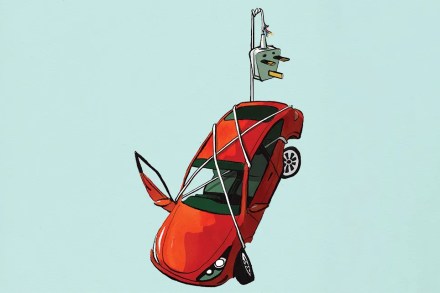
It is hard to see where all of Ed Miliband’s ‘green jobs’ are coming from, but we are certainly losing existing manufacturing jobs. Net zero has just claimed a very significant scalp. Stellantis, the parent company of Vauxhall, has said that it plans to close its plant at Luton, where it makes the Vivaro van, at the cost of 1,100 jobs (although some work will be transferred to its other UK plant at Ellesmere Port). This has been coming for months; Stellantis chief executive Carlos Tavares warned earlier this year that the Zero Emissions Vehicle (ZEV) mandate is making car-making unviable in Britain.

Starmer can’t ignore the sickness benefits crisis

From our UK edition

Where is the stick? For weeks the government has been trailing its white paper on benefits reform by floating the idea that there would be tough sanctions on claimants who refused to take up work offers. It culminated on Sunday in a double hit – Keir Starmer in the Mail on Sunday and Liz Kendall in the Telegraph – each promising that idlers would no longer have the option of a life on benefits. ‘Don’t get me wrong,’ wrote Starmer, ‘we will crack down hard on anyone who tries to game the system, to tackle fraud so we can take cash straight from the banks of fraudsters.’ Kendall added ‘there should be no option of a life on benefits for young people’.

Labour might regret its desire for vote reform

From our UK edition

Turkeys don’t usually vote for Christmas, so just why have 43 new Labour MPs signed up to the All Party Parliamentary Group (APPG) for Fair Elections and its campaign to replace the first-past-the-post system with proportional representation? These are, after all, the beneficiaries of the most distorted UK election in modern history, where Labour won one of the largest-ever majorities on just 34 per cent of the popular vote – a lower share than any post-war governing party. To underline just how lucky they were, it took 24,000 votes to elect each Labour MP in July, but 56,000 to elect each Conservative. The electoral system has started to treat the Tories even less favourably than the Lib Dems, who required 49,000 votes to elect each of their MPs.

Is Labour really going to crack down on benefit cheats?

From our UK edition

I can’t fault Keir Starmer for his piece in the Mail on Sunday today promising that Labour will crack down on idlers and benefit cheats. But does anyone really believe that Labour is really going to get on top of the explosion in out of work benefits? Whenever the Conservatives announced plans to trim the benefits bill, Labour accused them of heartlessness ‘Don’t get me wrong’, the Prime Minister writes. ‘We will crack down hard on anyone who tries to game the system… There will be a zero-tolerance approach to these criminals.’ Work and pensions secretary Liz Kendall is due to announce on Tuesday measures which will supposedly achieve this and cut the £137 billion a year welfare bill.

Is Big Oil back?

From our UK edition

Cop29 has drawn to a close with arguments over a $250 billion (£200 billion) a year ‘loss and damage’ fund, which developing countries complain is not nearly enough to match their demands. But away from the grand gestures at the summit it is worth looking at what countries are actually doing rather than what they say they are going to do. The answer to that seems to be drilling for more oil. According to the International Energy Agency (IEA), the global supply of oil in October rose by 290,000 barrels a day to reach 102 million barrels per day. That is just as well given that the IEA predicts that global oil demand will rise by a further 1 per cent to reach a record 103.8 million barrels per day in 2025.

Falling retail sales shows how fragile the UK economy is

From our UK edition

Until a few weeks ago it seemed as if the government had inherited if not a golden economic legacy then an improving economic picture. But this morning’s figures for retail sales show just how faltering the economy is. During October the volume of retail sales fell by 0.7 per cent. Worst-affected was textile and clothing sales, which plunged by 3.1 per cent. Online retail suffered along with physical stores. Not only that, the figures for September were revised downwards from 0.3 to 0.1 per cent growth. Comparing year on year, sales volumes were still up 2.4 per cent. Sales in the three months to October were also up, by 0.8 per cent compared with the previous quarter.

Labour’s promise to cut energy bills looks more foolish than ever

From our UK edition

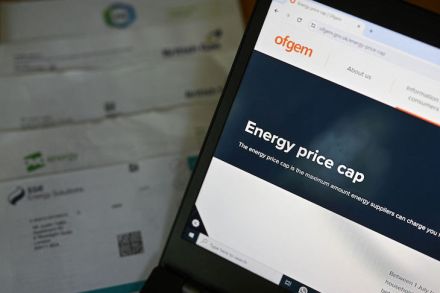
After reneging on its manifesto pledge to not raise National Insurance, Labour is starting to struggle with another promise: to cut energy bills by £300 a year. This morning Ofgem has announced that its Energy Price Cap will rise in January so the average household will be paying £21 a year more. Together with the £149 rise in the price cap in October it means that average bills will soon be £170 higher than they were when Labour came to power.  Together with the loss of Winter Fuel Payment – either £200 or £300 depending on your age – it means that pensioners will be worse off to the tune of well over £300 a year since election day.

Should we worry about Ozempic?

From our UK edition

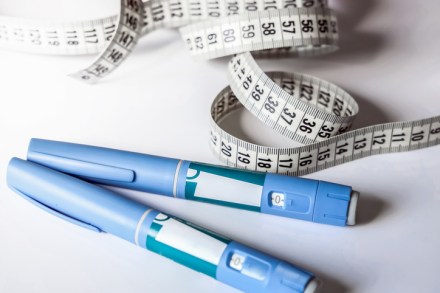
History has taught us to be shy of miracle drugs. But that hasn’t stopped weight-loss drugs being eagerly promoted by fans such as Boris Johnson, and even touted by Keir Starmer as a possible means of getting people back into the workforce. In the US, according to a survey by polling firm KFF earlier this year, one in eight adults has already taken a weight-loss drug. Grand claims have been made. Could RFK Jnr be right in suggesting that weight-loss drugs are causing more harm than they are worth? A trial of 17,600 overweight adults suffering from heart disease – sponsored by the manufacturer of Ozempic, Novo Nordisk – found that those who took it saw reduced deaths from all causes relative to a control group given a placebo.

Britain is addicted to spending beyond its means

From our UK edition

Imagine what the government could do with an extra £9.1 billion a month. It could build HS2 in its entirety within the space of a year. Or better still, it could double the defence budget and still have some money left over to build the 40 new hospitals which the Conservatives promised – as well as a few schools, too.  That sum – £9.1 billion – is what the government paid in debt interest in October alone, according to the figures on public finances released by the Office for National Statistics this morning. Overall, it was forced to borrow £17.4 billion over the course of the month – only just shy of the £18.2 billion in had to borrow in October 2020, in the depths of the pandemic.

The truth about ‘workshy’ Britain

From our UK edition

Is 'workshy Britain' a mirage caused by dodgy statistics? That is what the left-leaning think tank the Resolution Foundation is claiming in a report published this morning. The Office for National Statistics (ONS), it says, has missed 930,000 people who are actually in work. The missing numbers, it asserts, are enough to raise Britain’s employment rate from 75 percent to 76 percent, with a corresponding fall in the combined total of people classified as unemployed or economically inactive. Until the 1990s, the concept on unemployment in Britain was pretty straightforward: it was the total number of people who were claiming unemployment benefit.

Britain is eating itself to death

From our UK edition

It is a fate which has been creeping up on Britain for years, but that doesn’t make it any the harder to bear when it becomes official. According to the OECD, we now have the lowest life expectancy in Western Europe. At 80.9, the average Brit now keels over more than three years earlier than the average Swiss (84.2), Spaniard (84.0) or Italian (83.8) – which are the top three countries in Europe. We have lower life expectancy than many significantly poorer countries such as Greece and Slovenia. We also live shorter lives than countries where assisted suicide is commonplace, like Belgium and the Netherlands. We also come out pretty badly on the use of illicit drugs, with the highest cocaine use in Europe Why? On some health measures Britain comes out ahead in Europe.

Britain gave up on farmers centuries ago

From our UK edition

Farmers are threatening a national strike over the inheritance tax increases, the first in history. Given how quickly the Labour government yielded to public sector unions, it is little wonder that the farmers have sensed that strikes are the best way to achieve their goals. By 1851, the proportion of Britain’s male workforce employed on the land had fallen to 22 per cent – lower than China in 2022 But it is not surprising that the government thought it would get away with stinging family farms for more inheritance tax. The voice of farmers (as opposed to landowning nobility) has long been weak in Britain for simple demographic reasons: few people are employed in agriculture, and this has been the case for centuries.

Is deadly weather being ‘supercharged’?

From our UK edition

So that’s it then: the Guardian has declared that we are all being scorched, drowned and blown over by climate change. The website Carbon Brief, it says, has found ‘stark evidence of how global heating is already supercharging deadly weather beyond anything ever experienced by humanity’. Never mind that humans were around to witness multiple ice ages – let’s have a look at Carbon Brief’s claim. The report looks at 744 extreme weather events and trends measured by 617 different studies and makes the claim that in 74 per cent of cases, the event had been made more likely or more severe by anthropogenic climate change, while 9 per cent of events had been made less likely or less severe.

Without America, Britain’s economy will stall

From our UK edition

The comments by Stephen Moore, Donald Trump’s economic adviser, should not really be controversial. ‘I’ve always said that Britain has to decide,’ he said from Florida, where he is preparing the new administration’s economic policy. ‘Do you want to go towards the European socialist model or do you want to go towards the US free market? Lately it seems like they [Britain] are shifting more in a European model and so if that’s the case I think we’d be less interested in a free trade deal.’ He is right. Britain absolutely does have to decide whether it wants to be closer to the US economic model or to carry on down the route of becoming just another brand of European social democracy. And never has the decision stared us so firmly in the face.

Rachel Reeves is turning into Gordon Brown

From our UK edition

Rachel Reeves is beginning to look awfully like Gordon Brown. Study the actions of this government so far and you would hardly say that deregulation was its big idea. True, Keir Starmer did claim at his investment summit last month that he was going to slash red tape. Angela Rayner wants planning laws relaxed to allow new homes on the green belt and Ed Miliband wants wind farms, solar farms and pylons just about everywhere – without the locals being given much of a say.

My radical proposal for the civil service 

From our UK edition

I’ve got a better idea for the Public and Commercial Services (PCS) union, which is demanding civil servants be allowed to work just four days a week for no loss of pay, claiming that a shorter working week is ‘essential for a happy and healthy life’. Why not put civil servants on a zero-day week? That would surely be even happier and healthier for them. It would certainly be happier and healthier for taxpayers. Virtually no private business would have allowed employee numbers to get so out of control It would be little wonder if the civil service can do in four days the work it used to do in five: its numbers have exploded in the past decade. In 2016 we had 2.9 million civil servants employed by central government; now we have 3.79 million.

The world isn’t listening to Keir Starmer’s climate preaching

From our UK edition

Keir Starmer said he was travelling to Cop 29 in Baku intending to “lead the world on climate change”. But it must surely be obvious that he is, instead, barking at a world that is heading in the opposite direction. Last year’s grand talk about “phasing down” fossil fuels at Cop 28 notwithstanding, today’s Global Carbon Budget Report forecasts that global carbon emissions will hit another record high in 2024, reaching 41.6 billion tonnes, up from 40.6 billion tonnes in 2023. The report calls this “marginal”, but it’s actually a 2.5 per cent increase, including all carbon emissions from industry and land use, as well as fossil fuel burning. How much longer can Starmer claim that he’s setting an example?

Keir Starmer isn’t being honest about his COP carbon pledge

From our UK edition

‘It’s not about telling people how to live their lives. I’m not interested in that’ said Keir Starmer of his new target for Britain to reduce its carbon emissions by 81 per cent on 1990 levels by 2035. Really? In that case perhaps he would like to tell us how he does intend to reach his target. If he thinks he can do it without mandating changes to our lifestyle he must have a cunning plan indeed. His target is very much going to have to involve telling people what cars they are allowed to drive and how they are allowed to heat their homes Let’s have a look at this 81 per cent target a bit more closely. According to government figures the UK has already reduced its territorial greenhouse gas emissions by 53 per cent compared with 1990 levels.

Are the super rich really abandoning Britain?

From our UK edition

With an urgency not always noted in plumbers, Charlie Mullins announced earlier this year that he was leaving the country, before even waiting for the Budget fallout. He put his £12 million penthouse on the market and is busy buying up properties in Spain and Dubai, between which he will now spend his time. Inheritance tax, he said, was his main bugbear. He has already cashed out of his business, Pimlico Plumbers, which he sold for £145 million three years ago. Wealth managers are enjoying boom times like never before He didn’t even wait for the budget, but now it has been delivered has the real exodus begun? To judge by the headlines, Mullins is just one in an exodus of multi-millionaires who are evacuating the country in their (now more taxed) private jets.