Ross Clark

Ross Clark

Ross Clark is a leader writer and columnist who has written for The Spectator for three decades. He writes on Substack, at Ross on Why?

Is Rachel Reeves right that there is no trade-off between growth and net zero?

From our UK edition

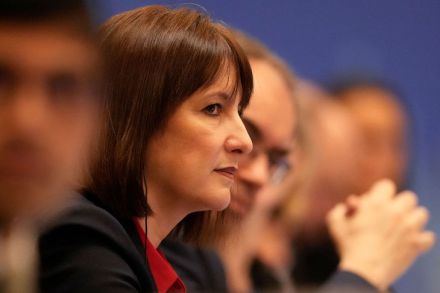
Why is it that some lies get endlessly repeated without ever being challenged, even though they are quite obviously wrong? In her pro-growth speech today, the Chancellor Rachel Reeves asserted: ‘There is no trade-off between economic growth and net zero’. Government ministers, advisers and many others have been saying such things for years – and hardly ever do they get properly challenged. To pretend that no such trade-off exists is foolish It is easy to see why, for political reasons, you might want to argue that committing Britain to achieve net zero carbon emissions by 2050 will not make us poorer and indeed might make us wealthier. You want to impress on the public that they can have their cake and eat it. Yet it makes no logical sense.

Labour will regret extending the BBC licence fee

From our UK edition

The BBC licence fee is dying as millions of Britons realise that they do not need a television; they can get all the entertainment and news they want on the internet. But don’t assume that it will go quietly. On the contrary, we could end up with something even worse. Bloomberg is reporting today that the government is considering extending the requirement to buy a TV licence to people who use streaming services. In other words, download a film from Netflix and you would have to pay the BBC. Lisa Nandy, the culture secretary, apparently denies that the idea is under ‘active consideration’, along with the idea of funding the BBC through general taxation, but her department has also said that the BBC’s charter review, soon to be published, will include a range of options.

Councils shouldn’t be allowed to raise tax by 25%

From our UK edition

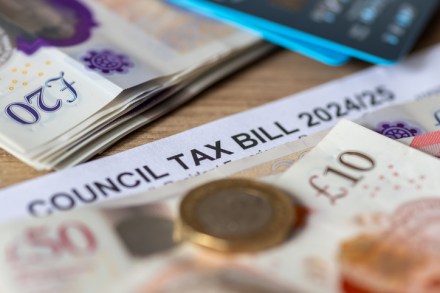
It is easy enough to trace the point at which local authorities embarked on the sad, downwards journey which has led to several going bankrupt. It was when they renamed their town clerks ‘chief executives’. In doing so they started posing as private businesses, with salaries and bonuses to match. But their pretensions were not matched by business acumen. Twenty of them are now weighed down with a combined £30 billion of debt. Several councils have got into trouble by entering the commercial property business at a time other investors were starting to flee. Woking is in difficulty after turning property developer, trying to build a posh high-rise hotel in its town centre. Others bought up shopping centres just as retail business was draining away to the internet.

Heathrow’s third runway won’t improve London’s air quality

From our UK edition

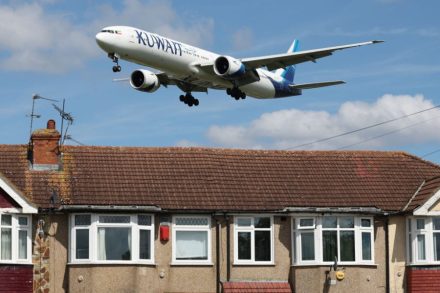
Is Rachel Reeves really correct that her new-found enthusiasm for a third runway at Heathrow would be consistent with the government’s net zero targets and other environmental policies? Over the weekend she argued that a third runway would be good for air quality over London because it would mean fewer planes circling over the capital. She also asserted that 'sustainable aviation fuel is changing carbon emissions from flying', and that 'there’s huge investment going on in electric planes'. It isn’t clear where Reeves sourced her evidence that a third runway could actually improve air quality, but that certainly wasn’t the conclusion of a 2017 study by consultants WSP commissioned by the Department of Transport.

Why won’t Britain take the Covid lab leak theory seriously?

From our UK edition

The CIA report concluding that Covid most likely originated from a laboratory leak of a man-made, or man-enhanced, virus raises an awkward and glaring question: why on Earth isn’t Britain’s own Covid inquiry even considering the possibility of a laboratory leak? The inquiry, which still grinds on even if most people have lost interest in it, has examined the inner workings of Downing Street in great detail, listened to evidence on lockdowns, the ‘Eat Out to Help Out’ scheme and so on, yet continues to ignore the single most important matter: where the virus came from. When Michael Gove – now editor of The Spectator – did try to raise the matter before the inquiry in November 2023, he was quickly closed down by the KC interrogating him.

Skiing is ghastly

From our UK edition

Is anyone else getting a bit fed up of reading weepy newspaper stories about how the skiing industry is being killed off by climate change? Apparently, 80 ski resorts in the Alps have already closed for good due to a lack of snow, and according to the OECD only 400 of the 666 ski areas in the Alps will remain viable if global temperatures rise by 2º above what they were in the mid 19th century. If we lose 250 ski resorts that would be a gain for the mountains, as far as I am concerned. I suspect many people who visit the Alps in the summer will agree with me. There is no fairly tale charm then, just a mess of pylons and wires. Want to know what those manicured pistes look like when the snow is gone?

Why are so many MPs still clueless about the cost of net zero?

From our UK edition

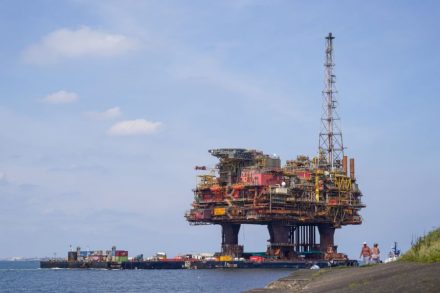
Donald Trump has withdrawn the United States from the Paris Climate Change Agreement for the second time and reiterated his desire that America should ‘drill, baby drill’. The US president's decision exposes the naivety of MPs in Britain who, in 2019, nodded through a legal commitment to reaching net zero by 2050, with the hope that it would inspire other countries to follow our example. The Climate and Nature Bill risks taking Britain back to the dark ages In fact, Britain is pretty well alone in voluntarily choosing to ‘leave it in the ground’, as anti-fossil fuel activists like to put it.

Rachel Reeves’ tinkering won’t rescue Britain’s economy

From our UK edition

The news just seems to get worse for Rachel Reeves. After the slight relief of last week’s inflation and GDP figures, this morning brings headlines that are even grimmer than economists expected. The government was forced to borrow £17.8 billion in December, more than twice the £6.7 billion which Rishi Sunak’s government borrowed in December 2023. In just one month, taxpayers had to spend £8.3 billion to service the government’s debt. Interest payments are now consuming over 8 per cent of government expenditure – more than is spent on education or defence – and very nearly as much as the welfare bill, which is itself ballooning.

Trump exposes the madness of Ed Miliband’s energy plans

From our UK edition

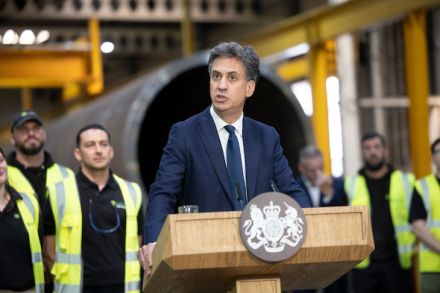
Remember how the first incarnation of a Trump presidency was supposed to be pretty well curtains for Planet Earth? Well, don’t worry: we are all going to be just fine this time around. Why? Because Al Gore assures us so. ‘The global sustainability revolution is unstoppable,’ he declared in a statement following Trump’s speech. ‘Now is the time for governors, mayors, business leaders and investors, and activists, to put their heads down and do the work that will advance the climate solutions that our nation and the world so urgently need.’ In other words, don’t worry about Trump. The US president is going to be an irrelevance because all the nice people in the world have decided that they are going to go green.

Trump won’t respect David Lammy’s fawning

From our UK edition

Dear, oh dear. Will David Lammy never get it right? This morning he told the Today programme that Donald Trump is ‘funny, friendly and warm’, that he has ‘incredible grace’ and that he is full of generosity – the last remark apparently based on Trump offering him a second helping of chicken when they met for dinner last September. This is the same Donald Trump, presumably, whom Lammy previously described as a ‘woman-hating, neo-Nazi-sympathising sociopath’ who was ‘deluded, dishonest, xenophobic, narcissistic’ and ‘no friend of Britain’. Lammy must really, really have wanted that extra helping of chicken. It isn’t hard to guess what Trump himself thinks about Lammy’s backflip.

The retail recession

From our UK edition

There was some relief for Rachel Reeves earlier this week when inflation fell slightly to 2.5 per cent and the economy just about managed to grow, by 0.1 per cent (although many were expecting it to be a little higher than that).  There is no joy to be had, however, in this morning’s retail sales figures, which show that volumes fell by 0.3 per cent in December. It suggests that a modest recovery in retail over the past 12 months has run out of steam. Sales volumes were still up 1.9 per cent on December 2023, but this does little to offset the bigger picture: that retail sales have never recovered from the pandemic, and that the rise over the past 12 months does little to offset falls of 4.1 per cent and 2.9 per cent in 2022 and 2023 respectively.

Starmer should bite the bullet and scrap the triple lock

From our UK edition

Could the government be preparing itself for a spending cut which would eclipse the ending of the winter fuel payment? In his mini-reshuffle in response to the resignation of Tulip Siddiq, Keir Starmer has appointed the newly-elected MP for Swansea West, Torsten Bell, as pensions minister. It is an interesting choice because, in his former life as director of the Resolution Foundation, Bell was a loud critic of the triple lock, which he called 'a messy way of achieving the objective of a higher state pension'. He advocated raising the state pension in line with average earnings instead. The Prime Minister quickly moved to scotch suggestions that the triple lock will be dropped; in the Commons on Wednesday he re-committed himself to Labour’s manifesto promise of keeping it.

Is Europe really faring better than Britain?

From our UK edition

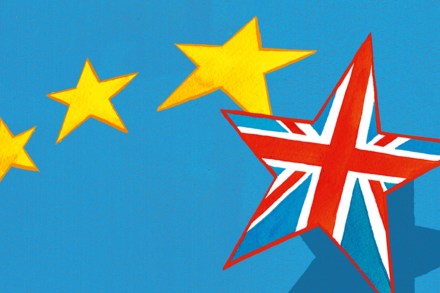
Five years ago this week, Boris Johnson was celebrating the achievement of leaving the European Union and wondering how he might take advantage of Britain’s newfound freedoms. A virus had other ideas. Covid-19 didn’t just turn our lives upside down and cost many lives; it robbed the then government of the chance to seize the initiative and prove that Brexit was worth the pain and inevitable disruption. For frustrated anti-Brexit campaigners, the pandemic provided them with ammunition to claim that their worst predictions had been realised. Falling economic growth, rising inflation, empty supermarket shelves – all these came to be blamed on Brexit, ignoring the rather large spanner which had been thrown into the works of the global economy.

Europe’s car industry is under attack on all fronts

From our UK edition

It is half a century since Britain's native car industry embarked on its long, painful decline, precipitated by Austin Allegros with rear windows falling off, endless strikes over the length of tea breaks and terrible commercial decisions such as to cede the hatchback market to overseas competition. But where Britain led, Germany and France now seem to be following. How much longer before names like Peugeot, Renault, and even Volkswagen, either disappear or become reduced to mere badges affixed to Chinese-designed and produced vehicles? The retreat of the European car industry has cropped up from time to time in recent months. In October, Volkswagen announced, for the first time, its intention to close three plants in Germany.

AI won’t save Britain with one quick trick

From our UK edition

Obviously, artificial Intelligence (AI) is a boom industry that will transform many other industries and make fortunes for some people. Anyone should want Britain to be involved and earn itself a slice of the AI pie. Why, then, does the government’s AI Opportunities Action Plan depress me? Apparently, according to Keir Starmer, it is going to turn Britain into an ‘AI superpower’. There are going to be AI growth zones, and the public sector is going to be at the forefront. AI is going to help teachers plan lessons, help councils speed up decisions on planning applications, even help mend potholes – all the biggest public sector failures, in other words, are going to be cured by AI. Sorry, but I’ve heard it all before.

Liz Truss’s legal threat against Keir Starmer is a mistake

From our UK edition

In politics as in everyday life it is possible to be right at the same time as being terribly, terribly wrong. Look no further than Liz Truss instructing her lawyers to send a ‘cease and desist letter’ to Keir Starmer demanding that he stops accusing her of “crashing the economy”. The claim, she alleges, is not only false but contributed to her losing her South West Norfolk seat in last year’s general election. Truss is right, as it happens – the mini budget delivered by her Chancellor Kwasi Kwarteng during her micro-premiership may have precipitated a run on bond markets, but it had little effect on the economy, and Britain did not suffer an immediate recession. The quarterly GDP growth figures for 2022 and 2023 were: Q1 2022: +0.7 per cent Q2 2022: +0.

The truth about the LA wildfires 

From our UK edition

It is like a Hollywood disaster movie with a difference: it really is happening close to Hollywood, and the stars involved, such as James Woods and Eugene Levy, aren’t acting – they really are fleeing their homes as a wildfire singes residential areas in the Pacific Palisades area on the north-west fringe of Los Angeles. Several film premieres have been cancelled, along with the nomination ceremony for the Screen Actors Guild awards.  Because fire services have become better at putting out fires, the natural cycle has been interrupted We know what to expect, however, when we do get to those awards ceremonies: celebs lecturing us on climate change and how it has been brought to their doorstep.

Can the grid cope with many more EV chargers?

From our UK edition

Is this the development that is finally going to make us shake off our aversion to electric vehicles (EVs)? Local authorities are reported this morning to have granted planning permission for £692 million worth of public chargers, potentially leading to the installation of ‘hundreds of thousands’ of EV charging points. A lack of public charging points is regularly cited as a reason for the slow uptake of EVs and the failure of car manufacturers to reach the target set for them in 2024: to ensure that 22 per cent of the vehicles they sold were pure electric. In the event, they managed only 19.6 per cent – and that was only achieved thanks to hefty discounting and the refusal to deliver new petrol and diesel cars until the new year, so that they would show up in 2025 figures.

Foreign national crime stats show we have an immigration problem

From our UK edition

Britain, as we know, is a country where sex offences are on the rise because toxic males are having their minds poisoned by internet porn, and are picking up bad attitudes towards women from the likes of Andrew Tate. We know this because liberal-minded folk keep telling us so. What the liberals don’t like to tell us is that sex offences are, to some extent, an imported problem. We have learned today that foreign nationals living in Britain are three times more likely to be arrested for sex offences relative to UK citizens – but only because the Centre for Migration Control has spent months teasing out the information via Freedom of Information requests.

Tommy Robinson isn’t the story here

From our UK edition

Elon Musk’s Twitter attack on Jess Phillips is certainly offensive. It may even deserve to be called a ‘disgraceful smear’, as Wes Streeting put it on the Laura Kuenssberg Show this morning. But the trouble is that every time government ministers bring up Musk’s spat with Phillips, the more they remind people of just how close Labour was to the scandal of rape gangs in Rotherham, Rochdale, Oxford, Telford and other places.