Ross Clark

Ross Clark

Ross Clark is a leader writer and columnist who has written for The Spectator for three decades. He writes on Substack, at Ross on Why?

Inside Nigel’s gang, my day as a ‘missing person’ & how to save James Bond

From our UK edition

38 min listen

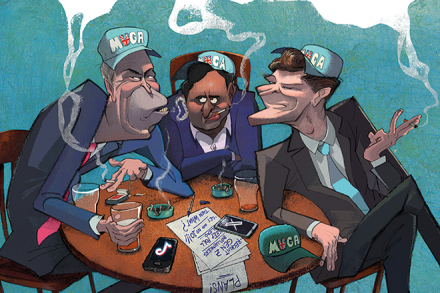
This week: Nigel’s gang – Reform’s plan for power.Look at any opinion survey or poll, and it’s clear that Reform is hard to dismiss, write Katy Balls and James Heale. Yet surprisingly little is known about the main players behind the scenes who make up Nigel Farage’s new gang. There are ‘the lifers’ – Dan Jukes and ‘Posh George’ Cottrell. Then there are the Tory defectors, trained by Richard Murphy, a valued CCHQ veteran, who is described as a ‘secret weapon’. The most curious new additions are the Gen Zers, who include Tucker Carlson’s nephew, Charles Carlson, and Jack Anderton, known as ‘the Matrix’. Katy and James joined the podcast to lift the lid on Nigel Farage’s inner circle.

How I became a missing person

From our UK edition

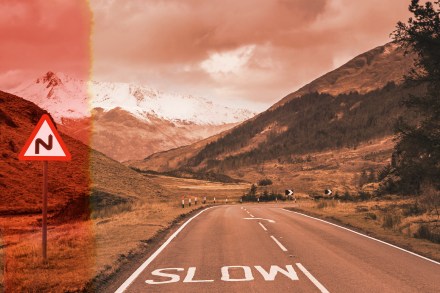
The Forcan Ridge off Glen Shiel can be a tricky place this time of year. There wasn’t a huge amount of snow, but the rocks in places were encased in ice. Without crampons, an ice axe and a head for what you are doing there are plenty of opportunities to fall to your death, but I didn’t. I bagged my hills, drove back to the holiday cottage where I was staying, had supper and turned in for an earlyish night. The only casualty was my phone which I had sat on while descending a rock, delivering the fatal blow to an already cracked screen. So I emailed my wife from my laptop instead, regretting that there would be no glorious photos today. Just after midnight the phone started to ring. I fumbled with it but there was no way to answer it. Then it rang again, and again, and again.

The Climate Change Committee is living in cloud cuckoo land

From our UK edition

Energy bills may be going up and the economy may be flatlining, but not for long. Thankfully, the government’s Climate Change Committee has the answer. In a press release introducing the committee’s Seventh Carbon Budget, published this morning, interim chair Piers Forster declares: ‘The committee is delighted to be able to present a good news story about how the country can decarbonise while also creating savings across the country.’ By 2040, when the CCC sees the UK’s carbon emissions falling by 87 per cent on their 1990 level, the cost of heating and lighting our homes is going to fall by £716 a year and the cost of running a car by £699. Surely never has such a Panglossian document been put before the public by an arm of government.

Why BP is ditching renewables

From our UK edition

Among the big, bad oil companies in borstal for environmental offenses, BP has long been the relatively benign one, the class pet. Remember how former chief executive Lord Browne two decades ago promised to take the company ‘Beyond Petroleum’ to a golden future of clean energy? In 2004, in a forerunner of the ESG indices which are commonplace today, Goldman Sachs picked out the company as the most environmentally and socially aware of all oil companies. BP was supposed to be the one which was best-placed to manage a transition to cleaner energy, which, according to Goldman Sachs, would reduce risks for the company and boost returns for shareholders. But it seems that BP is fed up with being the class pet, and wants to behave a bit more like its mates.

Is Britain’s ‘net zero economy’ really booming?

From our UK edition

If you live opposite the vacant site in Northumberland that was supposed to become the Britishvolt ‘gigafactory’ pumping out batteries for the electric car industry, or near the Vestas wind turbine plant on the Isle of Wight where half the 600 workers have been told they face redundancy, you might just struggle to believe that Britain is in the midst of a net zero jobs boom. Yet that is the striking claim that is being made by CBI Economics and the Energy and Climate Intelligence Unit (ECIU). The net zero sector, it says, grew by 10.1 per cent last year, added £83.1 billion in gross value added (GVA) and accounted for 951,000 full-time jobs – an additional 125,700 created in the past three years. This is, needless to say, what Ed Miliband wants us to believe.

The Apple encryption row has come at the worst time for Keir Starmer

From our UK edition

I am not sure about the capacity of AI to take over the world and suppress humanity, but big tech certainly has the ability to spark a trade war. There is a fuss brewing right now over an encryption system known as Advanced Data Protection available on iPhones and other Apple devices. Several weeks ago, the Home Office demanded that Apple create a so-called ‘back door’ into the system to allow law enforcement agencies to access photographs and other users’ data, saying that it was necessary in order to tackle child abuse and other serious crime. Apple held out, refusing to compromise the privacy of its customers. Now it has responded by withdrawing the tool from UK users altogether.

The online shopping boom is well and truly over

From our UK edition

So much for ‘dry' and ‘no buy' January. The UK public seems to have thoroughly rebelled against efforts to persuade them to work off the excesses of the festive season. In particular, we seem to have stuffed our faces somewhat. The retail sales figures put out by the Office for National Statistics (ONS) this morning show that the volume of sales in food stores rose by 5.6 per cent in January relative to December. That helped overall retail sales volumes to rise by 1.7 per cent, compared with a 0.6 per cent fall in December. Chancellor Rachel Reeves has good reason to feel relieved. Until a week ago it seemed as if Britain was heading for a recession.

The shame of Big Energy’s £3.9 billion profit windfall

From our UK edition

It is one of the world’s great mysteries: if wind and solar energy are supposed to be so cheap then why does the UK – which generates a higher proportion of its electricity from wind or solar than virtually any other developed country – have higher electricity prices than any other member of the International Energy Agency? There are several reasons for this, in fact. Wind and solar energy are only cheap if you look at the marginal price of generation, which is very low because the wind blows and the sun shines for free. Add on the cost of back-up and/or energy storage to make up for the gaps in generation and it becomes a very different story. But Citizens’ Advice claims to have come up with another reason for Britain’s sky-high electricity prices.

Why did Starmer rush the ennoblement of Poppy Gustafsson?

From our UK edition

Hereditary peers are for the chop, but life peers still have their uses. Last October the process of ennoblement allowed Keir Starmer to appoint a minister of state for investment in rapid preparation for his investment summit of that month. Finding no-one on the green benches who took his fancy, he turned to Poppy Gustafsson, a chartered accountant who went on to co-found the cyber security firm Darktrace, for which she served as chief financial officer followed by chief executive until it was sold to a private equity firm last year. In order to take up her government post she was hastily installed in the Lords as Baroness Gustafsson of Chesterton in the City of Cambridge. Trouble is that the House of Lords Appointments Commission is not happy.

Does Trump want to strike an Arctic oil deal with Putin?

From our UK edition

The decision by Donald Trump to hold peace talks with Russia on ending the Ukraine war – without Ukraine actually being present – is starting to look even more disgraceful. It transpires that the war was not the only item on the agenda in Saudi Arabia on Tuesday. A significant part of the day's business seems to have been discussing oil deals in the Arctic. According to Kirill Dmitriev, who heads the Russian Direct Investment Fund, the Russian and US delegations took the opportunity to talk about reviving joint exploratory operations such as that between Rosneft and Exxon Mobil, which was called off in 2018 following the imposition of sanctions against Putin. Trump was in his first presidency at the time.

Are 3.1 million Brits really too sick to work?

From our UK edition

Is it any wonder that the economy is struggling in spite of an apparently booming jobs market, with employers finding it difficult to hire recruits and average earnings rising by 5.9 per cent in the past year? Here is a shocking statistic which goes a long way to explaining the apparent paradox: there are now 3.1 million people claiming Universal Credit with no requirement to seek work – a number which has doubled in just three years. We have to be careful with the absolute numbers, because as benefit claimants are gradually moved onto Universal Credit the figures are bound to grow.

Britain’s banks never cared about net zero

From our UK edition

Several weeks ago, just in advance of Donald Trump’s second presidency, there was a mass withdrawal of US financial institutions from Mark Carney’s Net Zero Banking Alliance – which committed members to adopt policies of reducing lending to fossil fuel companies and to take other measures aimed at reducing carbon emissions. Are UK banks now preparing the ground to do the same? The senior executives of Barclays and NatWest have decided that they would rather that their annual bonuses were not based on climate targets. Both have removed sustainability metrics from the formulas used to determine the size of their bonuses.

The Europe of American imaginations no longer exists

Since the United Kingdom left the European Union five years ago, the pair have been in battle to prove who has performed better. But the real story of the past five years is not a stagnant UK falling behind a buoyant EU, but of Britain and Europe being trapped in the same cycle of relative decline. It’s America that has quietly raced ahead of Europe this century. Following the pandemic it has become impossible to ignore the gulf in economic vitality between the US and Europe, the former growing by 16.3 percent per capita since 2008. There are very good reasons for America’s success, or rather, Europe’s decline. The EU and the UK increasingly treat their industries as pieces of heritage which must be preserved against disruptors and foreign competition.

Europe

Will Ed Miliband see sense and drill British gas?

From our UK edition

The government says it wants to stop the ‘blockers’ which are holding back Britain’s economy. It also says it wants to boost the nation’s energy security. How convenient, then, that along comes a project which could achieve both at the same time. The only trouble is that it is something which will drive Ed Miliband nuts. Over the next few weeks, it is reported, a little-known oil and gas company, Egdon Resources, will announce that it has discovered 480 billion cubic metres worth of shale gas reserves in a large trough extending westwards of the Lincolnshire town of Gainsborough. Onshore oil and gas is Egdon’s business – it already operates small wells in the Midlands and Dorset. Its discovery in the Gainsborough trough, however, dwarfs all that.

Sorry Nigel, but Rayner is right to delay local elections

From our UK edition

I am sure that Nigel Farage would love the opportunity to embarrass Labour and the Tories as much as he can in May’s local elections. But sorry, Angela Rayner is right – for once – to delay local elections for a year in some areas so that local government can be reorganised and many councils abolished. No, it is not ‘cowardice’, as the Reform leader described it yesterday, adding, ‘I thought only dictators cancelled elections.’ It is simply a case of trying to save money and free the taxpayer from having to prop up a multiplicity of unnecessary councils. In any case, most of the councils where elections have been called off are Conservative-controlled; only in Thurrock could Rayner be accused of trying to keep Labour in power beyond its existing mandate.

Why should the NHS employ any diversity officers?

From our UK edition

Wes Streeting is offended by NHS staff promoting ‘anti-whiteness’ – as should any taxpayer who has not succumbed to the racist ideology of critical race theory. A social media post from a counselling psychologist with the East London NHS Foundation Trust sought an assistant on a year-long placement, describing herself as someone ‘who integrates anti whiteness/ anti racist praxis into supervision and approaches to clinical work.’ Streeting said, addressing a Macmillan Cancer Support event: ‘There are some really daft things being done in the name of equality, diversity and inclusion which undermine the cause… the ideological hobby horses have to go.

Asda and the absurdity of ‘work of equal value’ 

From our UK edition

At last, some news of an industry in Britain that is flourishing. Unfortunately, it is one that is helping to suppress growth in every other sector of the economy. I am sure that the lawyers who have brought a case involving 60,000 female workers at Asda think they have won a famous victory after an employment tribunal ruled that most of them were victims of sex discrimination for being paid up to £3.74 per hour less than the company’s warehouse staff. But all they have really achieved, other than lining their own pockets and those of their backers, is to impose vast bills on hard-pressed retailers which, in some cases, could lead to their extinction, destroying jobs along the way. The cost to Asda of the ruling has been put at £1.

Starmer is falling into the EU’s trap 

From our UK edition

No doubt Keir Starmer wants us to think he is being ‘grown up’ in accepting an invitation to dinner at an EU summit. But it is actually the reverse: he is behaving like a toddler in danger of being enticed into a stranger’s car by a bag of sweets dangled out of the window. As the Times reports this morning, Emmanuel Macron views him as a supplicant who is desperate to beg to be allowed partly to re-join the EU because Brexit has failed and immiserated the UK economy. The French president intends to take every advantage and to finish the job that wasn’t quite finished during the Brexit negotiations: to try to snare Britain within the EU’s regulatory orbit, and to tie our hands behind our backs when it comes to trade deals with the rest of the world.

Liz Kendall’s benefits crusade could make or break Labour’s fortunes

From our UK edition

Could Liz Kendall turn out to be the most significant figure of Keir Starmer’s government, and a Chancellor in the making? When I wrote on the Work and Pensions Secretary’s proposed reforms here in November, I was sceptical that Labour really had much intention of pushing through benefits cuts, not least because the party had spent the past 14 years shouting ‘austerity’ every time the Tories so much as proposed to cut a bean from the benefits bill. Starmer himself has accused the previous government of “turning on the poorest in our society” when it proposed to end the temporary £20 weekly bonus added to benefits during Covid.

Sacrificing farmland for net zero is a big mistake

From our UK edition

Yesterday it was a court ruling to invalidate licences for oil and gas extraction in the Rosebank and Jackdaw fields. This morning comes another perverse consequence of Britain’s legally-binding net zero target. Environment Secretary Steve Reed is to announce that he intends 9 per cent of farmland in England to be taken out of production in order to help achieve net zero carbon emissions by 2050. This continues a rewilding programme set up by the last government. From the point of view of achieving the net zero target it makes perfect sense; in fact it would make even more sense to take 100 per cent of farmland out of production and turn it over to woodland, fenland or whatever it naturally wants to be.