Ross Clark

Ross Clark

Ross Clark is a leader writer and columnist who has written for The Spectator for three decades. He writes on Substack, at Ross on Why?

Who becomes a Labour politician to slash benefits?

From our UK edition

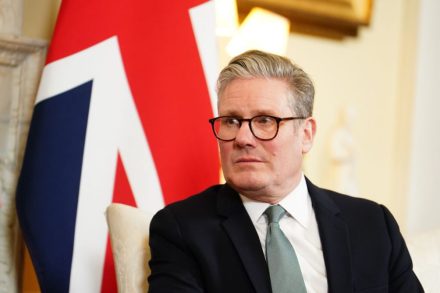
If you are an idler sponging off the state, you have every excuse to feel cheated. Throughout his years in opposition, Keir Starmer gave you every impression that he was on your side. During his Labour leadership election campaign in 2020, he promised to end Universal Credit and replace it with something more generous. In 2021, when Boris Johnson’s government proposed to remove the £20-a-week uplift in benefits, which it had introduced at the beginning of the pandemic, Starmer called a vote to oppose the move, accusing the then government of ‘effectively turning on the poorest in our society’.

Think you’re so clever boycotting Tesla?

From our UK edition

How difficult life has become for earnest, liberal-minded motorists who like to show off their environmental credentials through their choice of car. Until recently, they were buying Teslas by the car park-load. But now they seem suddenly to have gone off them. European Tesla sales have plummeted since Donald Trump’s election victory brought Elon Musk into government as axeman-in-chief. Nowhere has the plunge been more precipitous than in Germany, where sales fell 60 per cent in January and a further 76 per cent in February – when just 1,429 Teslas were sold. Existing Tesla owners, too, appear to be dumping their vehicles prematurely.

Labour will struggle to reform the civil service

From our UK edition

The need for the civil service reforms which Cabinet Office minister Pat McFadden is proposing is glaring. It can be summed up in the evidence that Bank of England Governor Andrew Bailey presented to the Commons Treasury Committee last week: that since the pandemic, productivity in the public sector has shrunk by 7 to 8 per cent. We have a civil service which has become swollen in recent years, but without any corresponding increase in output. Over the past 15 years civil service numbers have performed a bungee jump. David Cameron’s coalition made a good start, thinning out numbers by around a fifth. Come the Brexit process, however, and numbers began to rebound. When Covid arrived in 2020 the growth in civil servants accelerated.

The disturbing rise of Defend Our Juries

From our UK edition

On 29 March 2023, a retired social worker from Walthamstow, Trudi Warner, was arrested for standing outside Inner London Crown Court and holding up a banner saying: ‘Jurors you have an absolute right to acquit a defendant according to your conscience.’ Inside, four Insulate Britain activists were on trial for causing a public nuisance. The Solicitor General tried to prosecute Warner for contempt of court; a High Court judge blocked this, claiming it wasn't in the public interest. The case marked the beginning of Defend Our Juries, a pressure group which has become a kind of legal offshoot of Just Stop Oil and Extinction Rebellion.

Is Labour brave enough to say the unsayable about the NHS?

From our UK edition

Will this finally be the government which gets on top of the voracious financial monster that is the NHS and tackles its chronic over-spending? No, I can’t quite see that, either. But it has to be said that the new interim Chief Executive of NHS England – Sir Jim Mackey, who has replaced Amanda Pritchard – has made a good start. Rather than just beg the government for more money he has turned on the leaders of NHS trusts, who have been told to go back and revise the spending plans which they recently submitted. Well he might. Even with an extra NHS England granted an extra £25.7 billion over two years in the autumn budget, it seems that NHS trusts have still found ways of over-spending. The combined spending plans of NHS trusts, it turns out, exceed the money available by £6.

Matt Wrack will be a hardline teaching union boss

From our UK edition

It has a whiff of the old trailer for Jaws 2, the one where viewers were disabused of the idea that it was safe to go back into the water.  In January, Matt Wrack, the left-wing, Corbyn-supporting general secretary of the Fire Brigades Union (FBU) lost his attempt for re-election. But if anyone thought it was a sign of the trade union movement adopting a less combative attitude now that it had its much-wished-for Labour government, they were fooling themselves. Wrack has resurfaced, this time being nominated to lead the NASUWT, which until now has a reputation as the more moderate of the two largest teaching unions. That Wrack has a background as a firefighter rather than a teacher does not seem to bother the union.

The Huw Edwards BBC pay saga shows how ridiculous the licence fee is

From our UK edition

Did anyone really expect Huw Edwards to return the £200,000 he ‘earned’ – or, more correctly, was paid – between his arrest in November 2023 and when he finally resigned from the BBC the following April? The BBC’s chairman, Samir Shah, appeared to think so when he faced the Commons Select Committee on Culture, Media and Sport on Tuesday. ‘We’ve obviously asked, and we’ve said it many times, but he seems unwilling. There was a moment that we thought he might just do the right thing for a change, then he decided not to.’ If it was Mr Shah himself doing the asking, he was no doubt impeccably polite.

Why is the UK economy stalling?

From our UK edition

Giving evidence to the Treasury Select Committee this afternoon, Bank of England Governor Andrew Bailey doubled down on a point he has previously made to the committee: the economy is being pulled down by an extraordinary fall in productivity in the public sector. Relative to 2019, he said, productivity across the public sector is now 8 to 9 per cent lower. In the health sector, it is 17 to 18 per cent lower. In what he described as a ‘back of the envelope calculation’ the overall effect has been to reduce GDP by between 1 and 3 per cent. Last year, Bailey added, something extremely unusual happened: UK productivity fell without there being a recession. That was only thanks to population growth, which kept GDP – just about – growing while output per worker remained static.

Trade unions are calling the shots under Labour

From our UK edition

Is Angela Rayner really being sidelined in this government, having been steamrollered by the rush for growth championed by Keir Starmer and Rachel Reeves? That is a hypothesis which has been put forward many times in recent months, but it is not true to judge by the reaction of businesses to the Employment Rights Bill. The CBI – which gave the impression that it couldn’t get rid of the Tories fast enough after Boris Johnson’s Peppa Pig fiasco – is not the least bit impressed, with chief executive Rain Newton-Smith complaining: ‘The government has been commendably open to seeking feedback from industry about these plans,’ but that it ‘has not translated into meaningful change to several key areas where the legislation locks in an irreversible direction of travel.

Why the left hates Gail’s

From our UK edition

Is there any more evil influence on the world than Gail’s the bakery? It has thrown thousands of poor people out of their homes by gentrifying their neighbourhoods; it has destroyed the livelihoods of hundreds of hard-working owners of independent coffee shops by drawing away business; it has scorned the poor by throwing away its old sandwiches rather than give them to the homeless; and it allegedly supplied a box of pastries to the White House for tea last Friday, which so poisoned the atmosphere between Volodymyr Zelensky and Donald Trump that it could quite possibly lead to world war three. OK, I made the last one up. But as for the others, Gail’s stands accused of them all.

Angela Rayner is exercising her ‘right to switch off’ Britain’s growth

From our UK edition

It was reported over the weekend that the government has dropped ‘the right to switch off’ from its Employment Rights Bill. Such a right, it has been widely asserted, had appeared in Labour’s manifesto for last year’s general election, promising that employees would be granted a legal right to ignore their boss’s emails outside their contracted working hours. However, it was left out of the bill as originally published last autumn, and neither has it been introduced as an amendment. But it seems that we were not really paying attention. It is true that Angela Rayner, in an interview with the Financial Times in May, made the suggestion that the ‘right to switch off’ would be included in the upcoming manifesto.

Inside Nigel’s gang, my day as a ‘missing person’ & how to save James Bond

From our UK edition

38 min listen

This week: Nigel’s gang – Reform’s plan for power.Look at any opinion survey or poll, and it’s clear that Reform is hard to dismiss, write Katy Balls and James Heale. Yet surprisingly little is known about the main players behind the scenes who make up Nigel Farage’s new gang. There are ‘the lifers’ – Dan Jukes and ‘Posh George’ Cottrell. Then there are the Tory defectors, trained by Richard Murphy, a valued CCHQ veteran, who is described as a ‘secret weapon’. The most curious new additions are the Gen Zers, who include Tucker Carlson’s nephew, Charles Carlson, and Jack Anderton, known as ‘the Matrix’. Katy and James joined the podcast to lift the lid on Nigel Farage’s inner circle.

How I became a missing person

From our UK edition

The Forcan Ridge off Glen Shiel can be a tricky place this time of year. There wasn’t a huge amount of snow, but the rocks in places were encased in ice. Without crampons, an ice axe and a head for what you are doing there are plenty of opportunities to fall to your death, but I didn’t. I bagged my hills, drove back to the holiday cottage where I was staying, had supper and turned in for an earlyish night. The only casualty was my phone which I had sat on while descending a rock, delivering the fatal blow to an already cracked screen. So I emailed my wife from my laptop instead, regretting that there would be no glorious photos today. Just after midnight the phone started to ring. I fumbled with it but there was no way to answer it. Then it rang again, and again, and again.

The Climate Change Committee is living in cloud cuckoo land

From our UK edition

Energy bills may be going up and the economy may be flatlining, but not for long. Thankfully, the government’s Climate Change Committee has the answer. In a press release introducing the committee’s Seventh Carbon Budget, published this morning, interim chair Piers Forster declares: ‘The committee is delighted to be able to present a good news story about how the country can decarbonise while also creating savings across the country.’ By 2040, when the CCC sees the UK’s carbon emissions falling by 87 per cent on their 1990 level, the cost of heating and lighting our homes is going to fall by £716 a year and the cost of running a car by £699. Surely never has such a Panglossian document been put before the public by an arm of government.

Why BP is ditching renewables

From our UK edition

Among the big, bad oil companies in borstal for environmental offenses, BP has long been the relatively benign one, the class pet. Remember how former chief executive Lord Browne two decades ago promised to take the company ‘Beyond Petroleum’ to a golden future of clean energy? In 2004, in a forerunner of the ESG indices which are commonplace today, Goldman Sachs picked out the company as the most environmentally and socially aware of all oil companies. BP was supposed to be the one which was best-placed to manage a transition to cleaner energy, which, according to Goldman Sachs, would reduce risks for the company and boost returns for shareholders. But it seems that BP is fed up with being the class pet, and wants to behave a bit more like its mates.

Is Britain’s ‘net zero economy’ really booming?

From our UK edition

If you live opposite the vacant site in Northumberland that was supposed to become the Britishvolt ‘gigafactory’ pumping out batteries for the electric car industry, or near the Vestas wind turbine plant on the Isle of Wight where half the 600 workers have been told they face redundancy, you might just struggle to believe that Britain is in the midst of a net zero jobs boom. Yet that is the striking claim that is being made by CBI Economics and the Energy and Climate Intelligence Unit (ECIU). The net zero sector, it says, grew by 10.1 per cent last year, added £83.1 billion in gross value added (GVA) and accounted for 951,000 full-time jobs – an additional 125,700 created in the past three years. This is, needless to say, what Ed Miliband wants us to believe.

The Apple encryption row has come at the worst time for Keir Starmer

From our UK edition

I am not sure about the capacity of AI to take over the world and suppress humanity, but big tech certainly has the ability to spark a trade war. There is a fuss brewing right now over an encryption system known as Advanced Data Protection available on iPhones and other Apple devices. Several weeks ago, the Home Office demanded that Apple create a so-called ‘back door’ into the system to allow law enforcement agencies to access photographs and other users’ data, saying that it was necessary in order to tackle child abuse and other serious crime. Apple held out, refusing to compromise the privacy of its customers. Now it has responded by withdrawing the tool from UK users altogether.

The online shopping boom is well and truly over

From our UK edition

So much for ‘dry' and ‘no buy' January. The UK public seems to have thoroughly rebelled against efforts to persuade them to work off the excesses of the festive season. In particular, we seem to have stuffed our faces somewhat. The retail sales figures put out by the Office for National Statistics (ONS) this morning show that the volume of sales in food stores rose by 5.6 per cent in January relative to December. That helped overall retail sales volumes to rise by 1.7 per cent, compared with a 0.6 per cent fall in December. Chancellor Rachel Reeves has good reason to feel relieved. Until a week ago it seemed as if Britain was heading for a recession.

The shame of Big Energy’s £3.9 billion profit windfall

From our UK edition

It is one of the world’s great mysteries: if wind and solar energy are supposed to be so cheap then why does the UK – which generates a higher proportion of its electricity from wind or solar than virtually any other developed country – have higher electricity prices than any other member of the International Energy Agency? There are several reasons for this, in fact. Wind and solar energy are only cheap if you look at the marginal price of generation, which is very low because the wind blows and the sun shines for free. Add on the cost of back-up and/or energy storage to make up for the gaps in generation and it becomes a very different story. But Citizens’ Advice claims to have come up with another reason for Britain’s sky-high electricity prices.

Why did Starmer rush the ennoblement of Poppy Gustafsson?

From our UK edition

Hereditary peers are for the chop, but life peers still have their uses. Last October the process of ennoblement allowed Keir Starmer to appoint a minister of state for investment in rapid preparation for his investment summit of that month. Finding no-one on the green benches who took his fancy, he turned to Poppy Gustafsson, a chartered accountant who went on to co-found the cyber security firm Darktrace, for which she served as chief financial officer followed by chief executive until it was sold to a private equity firm last year. In order to take up her government post she was hastily installed in the Lords as Baroness Gustafsson of Chesterton in the City of Cambridge. Trouble is that the House of Lords Appointments Commission is not happy.