Ross Clark

Ross Clark

Ross Clark is a leader writer and columnist who has written for The Spectator for three decades. He writes on Substack, at Ross on Why?

Trump’s tariffs are a real Brexit win

From our UK edition

So, Britain has got its trade deal with the US – of sorts. Donald Trump has awarded Britain no exemption from his tariffs. Even so, he has left Britain off lightly, by imposing tariffs of 10 per cent on imports from Britain to the US – the lowest he imposed on any country, along with Brazil. The EU, by contrast, has been imposed with a tariff of 20 per cent. Finally, then, we have a tangible benefit of Brexit that no one can ignore. Were we still members of the EU, our exporters would be hit much harder than they are being. Given that the US is our single biggest trade partner, that is not an outcome to be sniffed at.

Labour’s welfare crackdown is a sham

From our UK edition

You can already sense Rachel Reeves’s spin machine whirring into action. It was Donald Trump wot ruined my careful book-keeping, the Chancellor will tell us as once again her fiscal headroom disappears and she ends up banging her scalp painfully on the ceiling. But could it be unrealistic expectations for her welfare reforms which prove her undoing? Tucked away in the government’s own figures is the revelation that Labour’s welfare shake-up could result in 400,000 more people signed off unfit for any work. Britain’s workshy culture has received another boost The contents of the impact assessment on her Spring Statement, published by the Office for Budget Responsibility (OBR) last week, are still being digested.

There’ll be no liberty on Trump’s ‘Liberation Day’

From our UK edition

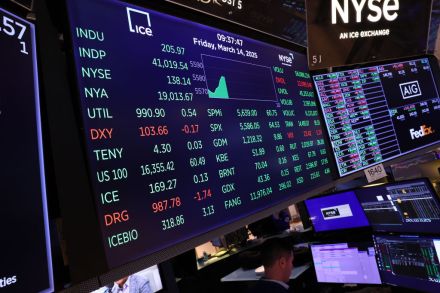
Beware the words ‘liberty’ and ‘liberation.’ There are no end of evils committed in their names. Wednesday, according to Donald Trump, will be America’s Liberation Day, as citizens are freed from the yoke of free-ish trade. That is the day that importers who have been showering US consumers with cheap goods will be slapped with punitive tariffs. So far, the only thing that US consumers appear to have been liberated from is their money. Stock markets in the US and around the world have suffered a slide as markets digest the implications. They do not like what they foresee, which is the prospect of the golden years of globalisation going into reverse.

The electric car honeymoon is over

From our UK edition

Sooner or later, it is going to dawn on the owners of electric cars that they have been enjoying one of the longest introductory free offers in history. The moment of realisation may even come tomorrow. That is when, for the first time, electric cars (EVs) are going to become liable to pay road tax. It won’t necessarily be too onerous. Drive an EV out of a showroom tomorrow and you will pay just £10 in car tax for the first year, rising to £195 for your second year of ownership and beyond. Owners of vehicles registered between 1 April 2017 and today will pay £195 a year. Those registered between 2001 and 2017 will be liable for £20 a year road tax. Driving an electric car is about to get a lot more expensive But the nasty sting will come in a year’s time.

What happened to the post-Covid roaring twenties?

From our UK edition

It has become customary for Budgets to unravel within 48 hours of being delivered. Rachel Reeves didn’t have much in the way of fiscal announcements to deliver on Wednesday, but even what she did have to say seems to be falling apart. It has since transpired that the Office for Budgetary Responsibility (OBR) did not take into account any risks from a transatlantic trade war when downgrading its growth forecast for 2025 from 2 per cent to 1 per cent. This is an additional risk which is almost certain to erode her newly-clear fiscal headroom and lead to more tax rises in the autumn Budget.

Rachel Reeves should leave ISAs alone

From our UK edition

Voters won’t want to thank Rachel Reeves if the Office for Budgetary Responsibility (OBR) turns out to be right in its forecast for zero real growth in earnings in 2026 and 2027. But static earnings could turn out to be the least of problems for households. They will take an even dimmer view of the Chancellor if they wake up to find half their savings have evaporated. But that is what may well happen if, as Treasury documents suggest, Individual Savings Accounts – or ISAs – are reformed in the next Budget to discourage people from holding cash and encourage them to stuff their savings into the stock market instead.

Trump has Britain in a bind over car tariffs

From our UK edition

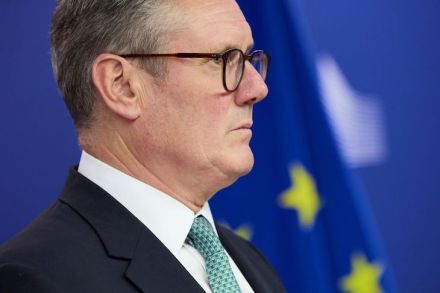
The government has less than a week to decide how to respond to Donald Trump’s announcement of 25 per cent tariffs on car imports to the US. Keir Starmer and Rachel Reeves still seem to think that Trump might exempt Britain, but there is little sign of that coming out of Washington. Unless Peter Mandelson turns out to possess rather more diplomatic skills than most people will credit him with, the Prime Minister will be faced with an uncomfortable choice: does Britain retaliate, thus risking an escalation of the transatlantic trade war, or does it suck it up and watch as Britain’s beleaguered car industry suffers even more than it is already under the government’s net zero policies?

Rachel Reeves can’t blame anyone else for stagnant growth

From our UK edition

It didn’t take long for the Commons to spot the glaring omission in Rachel Reeves’s boast that the Office for Budgetary Responsibility (OBR) has increased its growth forecast for next year and beyond. The OBR’s growth forecast for this year has just been halved relative to its estimate made last October, down from 2 per cent to 1 per cent. Take into account the growing population and the OBR expects GDP per capita to rise this year by just 0.3 per cent. While the Chancellor wants us to concentrate on later growth forecasts, these do not negate the deterioration in our short-term prospects. Overall, the OBR judges the cumulative growth in potential output between 2023 and 2029 to be 0.5 per cent lower than it thought last October.

Falling inflation may have rescued Rachel Reeves

From our UK edition

Clothing retailers have saved Rachel Reeves from having to go naked into the debating chamber. As the Chancellor rises to deliver her Spring Statement today, she will have the comfort of knowing that the Consumer Prices Index (CPI) has fallen from 3.0 per cent to 2.8 per cent – and unexpectedly at that. The main reason is that clothing retailers cut their prices by 0.3 per cent in February – against a 2.1 per cent rise in February 2024. The fall will help ease pressure on households, but nothing like as much as it will ease pressure on Reeves herself. A revival of the cost-of-living crisis is the last thing that she needs to counter the effect of a stagnant economy and the rise in employers’ National Insurance Contributions to take effect next week.

Rachel Reeves’s Spring Statement looks like a missed opportunity

From our UK edition

The Spring Statement was supposed to be a fiscal non-event, but instead, it is shaping up to be a mini-Budget. We have been primed, however, to expect only spending cuts – not tax rises (and presumably not tax cuts either). So what can we expect? So far, Liz Kendall has announced changes to welfare benefits that are supposed to save £5 billion a year by 2029–30, the last – partial – financial year of this parliament. In addition, it has been mooted that reforms to government administration – perhaps meaning up to 50,000 job losses in the civil service – will save £2 billion by the same year. Why the urgency for cuts? Because Rachel Reeves is in danger of breaking her fiscal rules, which demand that the government be running a current account surplus by 2029–30.

Why won’t Labour oppose solar panel slavery?

From our UK edition

The evils of slavery weigh so heavily on Britain’s conscience that we must decolonise our museums and our university courses, tear down statues of all those involved in the trade and quite possibly pay billions of pounds in reparations to the descendants of slaves who live 200 years ago. Yet the obsession with putting right historic wrongs does not, it seem, extend to rooting out slavery which is taking place beneath our noses in current times.

Is Rachel Reeves brave enough to slash the civil service?

From our UK edition

Chancellor Rachel Reeves is seeking to trim £2 billion from the government’s £13 billion administration budget, with up to 50,000 jobs being cut in her Spring Statement. The Prime Minister Keir Starmer said the government was 'looking across the board' for savings. But do Reeves and Starmer really have the courage, and the political capital, to carry out such a purge? On paper, Labour's task looks straightforward enough. Civil service numbers over the past 15 years have performed a bungee jump. Between 2010 and 2016, the coalition, followed by David Cameron’s majority Conservative government, succeeded in trimming civil service numbers from 492,000 to 384,000. Then they began to climb again, firstly in response to the Brexit negotiations and then thanks to Covid.

Is foul play to blame for the Heathrow fire?

From our UK edition

Ed Miliband has made the confident and somewhat premature reassurance that there is 'no sign of foul play' in the fire that has occurred at the electricity substation serving Heathrow airport. Nevertheless, investigators combing through the debris will presumably be starting with the question in their mind: 'Could this be a work of sabotage by Russia or some other hostile organisation or state?' We keep making the same mistakes in ignoring resilience when planning infrastructure projects Even if it turns out not to have been, bad actors will have gained a very useful indication of how vulnerable Britain’s infrastructure is to attack.

We’re all paying the price for Ed Miliband’s net zero rush

From our UK edition

Pursuing net zero is the ‘opportunity of the century’ which will create tens of thousands of well-paid green jobs and slash our energy bills. That is this Labour government’s official line, at least, as it was the last Tory government’s. Now we know, thanks to a leaked study, that is not quite how the Department for Business and Trade sees it. Rather, it seems, net zero threatens the recession of the century. The Macroeconomic Impacts of the Net Zero Transition, prepared by the Economic and Strategic Analysis team at the Department for Business and Trade in November 2023, warns that net zero targets could provoke an economic shock on the scale of the 1973 oil crisis, which led to global recession and a decade of high inflation.

Netflix’s Adolescence is far from perfect

From our UK edition

According to one gushing review, Netflix’s Adolescence is the 'most brilliant TV drama in years'. And that verdict is at the mild end. Others have called it 'flawless' and 'complete perfection'. The drama has achieved a 100 per cent rating on Rotten Tomatoes, the TV and film review website. If you haven’t watched Adolescence yet, you are almost certainly being implored to do so by friends, relatives, or – oh, the irony of it, as will become clear – by online peer pressure. Adolescence becomes just a little too preachy The four part mini-series, which tells the story of a 13-year-old schoolboy, Jamie Miller, who kills a classmate, certainly deserves many of its accolades.

Trump wants to know why you’ve got $200 in your back pocket

Donald Trump is shrinking the federal government and getting it off people’s backs. That is correct for the first half of that statement, but not for the second. On the contrary, in at least one respect, the government is going to be paying citizens even more attention in the future. In one of the lesser-noticed initiatives of recent weeks, the Financial Crimes Enforcement Network of the US Department of the Treasury (FinCEN) has issued a Geographical Targeting Order forcing all banks and other money services businesses to send it Currency Transaction Reports whenever anyone withdraws $200 from an ATM or makes any other transaction involving that sum of cash in one of 30 ZIP code areas adjoining the Mexican border.

Starmer is taking a big gamble with his welfare cuts

From our UK edition

That the welfare bill needs bringing under control is pretty undeniable. According to projections by the Office for Budgetary Responsibility (OBR) an unchecked welfare bill could rise over the next five years from £64 billion to £100 billion. That is not to mention the effect on the economy of increasing numbers of people being shunted onto sickness benefits and never expected to work ever again. If the case is made properly, and the focus is kept on the public finances, the government should enjoy widespread support for a policy that trims the welfare state. Yet there is still a risk that this could all go horribly wrong for the government.

Is Rachel Reeves tough enough to cut disability benefits?

From our UK edition

There are, as Rachel Reeves keeps telling us, some tough choices to be made. Whether she is personally tough enough to make them is another matter. It seems as if the government is already retreating on proposed plans to freeze Personal Independence Payments (PIP) in the Spring statement in ten days’ time. A putative backbench rebellion has grown in size to a level at which even a government with a majority of 160 cannot be sure of success. There were also rumoured threats of ministerial resignations. It shouldn’t really come as a surprise. Many Labour MPs have it in their heads that they were elected to protect the poor and needy from heartless Tory cuts. They were hardly going to take kindly to a Labour Chancellor metaphorically kicking away the crutches of the disabled.

How Europe’s electric battery dream ran out of power

From our UK edition

Setting ourselves stringent net zero targets will help us get ahead of other countries in the race to develop green technologies of the future. We know this must be true because Ed Miliband, and many others, keep telling us so. It is just that things don’t seem to be working out quite this way in the real world. The collapse this week of the Swedish electric vehicle (EV) battery-maker Northvolt has once again shown how the countries most committed to net zero seem to be the ones which keep missing out on the spoils – while their industries drain away abroad, quite often to China. Was there any company which symbolised Europe’s green industrial future more than Northvolt?

The Tories should have scrapped NHS England

From our UK edition

Listening to Keir Starmer announce this morning that he is going to abolish NHS England can only make the Conservatives wonder at what might have been. It should have been a Conservative prime minister making this sort of speech, declaring the civil service to be ‘flabby’ and cutting out masses of duplication in public administration.     Indeed, the Conservatives made a good start in increasing the efficiency of public services when they returned to office in coalition with the Lib Dems in 2010. Civil service numbers were cut by more than a fifth, from 492,000 in 2010 to 384,000 in 2016. But then something went desperately wrong, and Whitehall was allowed to run to fat again.