Ross Clark

Ross Clark

Ross Clark is a leader writer and columnist who has written for The Spectator for three decades. He writes on Substack, at Ross on Why?

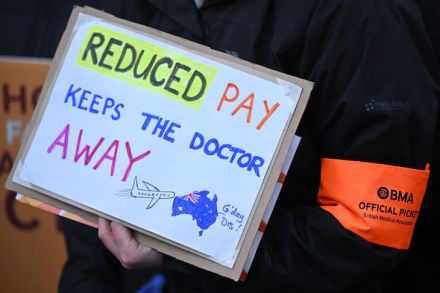
Is it any surprise doctors are trying their luck with more strikes?

From our UK edition

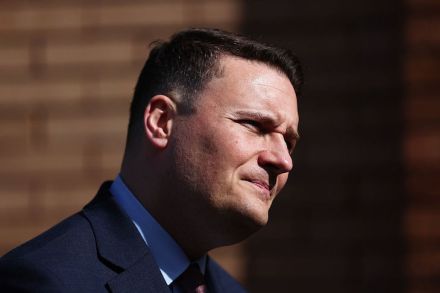
Did anyone really think that the incoming Starmer government was going to appease the public sector unions for long by stuffing their mouths with gold – awarding them fat pay rises without any requirement to improve productivity? When he awarded junior doctors a pay rise of 22 per cent last July, Wes Streeting told us that he had made more progress in days than the Conservatives had made in months. The strikes were over, thanks to grown-up government. Not so fast, Wes. Predictably enough, the government’s largesse towards towards the unions has merely served to embolden them. Now they are back for more – and the government finds itself unable to satisfy them.

Only now are Britain’s high streets busier than before Covid

From our UK edition

Finally, in a horrible week for Rachel Reeves which has seen inflation surge, the public finances take a dive and her authority undermined by Angela Rayner’s memo and the Prime Minister’s U-turn on the winter fuel payment, a glimmer of good news. Retail sales rose by 1.2 per cent in April. The Office for National Statistics (ONS) did, however, revise down March’s figure from 0.4 per cent growth to 0.1 per cent. The quarterly figures, which are more reliable, show that sales volumes were up 1.8 per cent between February and April. There is now a clear trend. Retail sales volumes bottomed out in December 2023 and have been generally rising since then.

Miliband’s 2030 clean power target looks increasingly impossible

From our UK edition

The answer, according to Ed Miliband in an infamously toe-curling rendition of the Bob Dylan song, is blowing in the wind. But no longer, it seems, if you are on the board of SSE. The energy company, which was one of the first UK electricity companies to commit in a big way to renewable energy, has just pulled £3 billion worth of investment in renewables, citing the 'changing macroeconomic environment' and delays in the planning system. For that read that the projects it had intended to build have become economically unviable now that we no longer have near-zero interest rates, and that the national grid is struggling to absorb so much intermittent green energy.    To put that figure into context, SSE is still planning to invest £17.

Is Britain heading for bankruptcy?

From our UK edition

We can thank Rachel Reeves for one thing: setting up a real-world experiment to show the Laffer curve in action. April’s figures for the public finances, like yesterday’s figures for inflation, are truly dreadful. April should have been a bumper month for tax receipts, being the month that the rise in Employers’ National Insurance Contributions (NICs) came into effect. Instead, borrowing surged to £20.2 billion in a single month. It took borrowing for the year 2024/25 to £148.3 billion, a smidgeon less that the Office for National Statistics (ONS) estimated last month but £11 billion higher than the Office for Budget Responsibility (OBR) had forecast. Government receipts in April did advance by a fairly modest £5.6 billion compared with April 2024.

Starmer’s winter fuel U-turn is a big mistake

From our UK edition

One of Keir Starmer’s first mistakes in office was to remove the winter fuel allowance from all pensioners other than those in receipt of pension credit. His latest big error is performing a U-turn and telling us that the government is, after all, looking at loosening the eligibility criteria, so that many more pensioners will qualify for the money next winter. Starmer’s explanation for his U-turn during Prime Minister’s Questions was bizarre How can both these things be true? Because the former was a political error, the latter an economic one. The optics of removing the winter fuel allowance at a time when millions of public sector workers were receiving large pay rises was terrible.

Thank God Angela Rayner isn’t Chancellor

From our UK edition

Rachel Reeves may have killed off growth with her raid on employers’ National Insurance contributions, but today comes a reminder that she is nevertheless the relatively mild face of the Starmer government. We can at least be thankful that Angela Rayner is not Chancellor. Labour’s deputy leader has written a memo to Reeves suggesting a number of taxes she would like to see increased, and which she believes – somewhat hopefully – would obviate the need for spending cuts at the next Budget. There are cabinet ministers who are even more hostile to the idea of low taxes than Reeves herself is She wants inheritance tax relief on Alternative Investment Market (AIM)-listed shares to be removed altogether (Reeves has merely halved it).

Rachel Reeves is to blame for the 3.5% inflation spike

From our UK edition

There is no positive spin to be put on this morning’s inflation figures, which show the Consumer Prices Index (CPI) rising from 2.6 per cent to 3.5 per cent in a single month. If you want to do the trick of stripping out energy and food prices to arrive at so-called ‘core’ inflation (how you can have a cost of living index which excludes two of the biggest costs faced by households defeats me) the picture is even worse – core inflation is even higher, at 4.5 per cent. The grim inflation figures are a sign that you cannot get something for nothing If you want to use the government’s preferred measure, CPIH, which includes an element of housing costs, then that too is higher than CPI, at 4.1 percent.

Miliband’s wind farms won’t ease Britain’s sky-high energy prices

From our UK edition

Rachel Reeves is perhaps not a great fan of Donald Trump, but she should be grateful to him nonetheless, and Ed Miliband even more so. The trade war sparked by Trump’s ‘Liberation Day’ tariffs is about to lower energy prices for UK consumers. According to a forecast by consultants Cornwall Insight, Ofgem’s price cap will fall in July by 7 per cent – to a level at which the average home with a dual gas and electricity bill will be paying £1,720 a year. It will reverse the uplift in the price cap in April and moderate the rise in the Consumer Prices Index (CPI), giving Reeves a bit of breathing room and – temporarily – diverting attention from the fact that Britain has the highest energy prices of any member of the International Energy Agency.

Under Labour, Britain is living beyond its means

From our UK edition

The bleak future of the UK’s public finances can be summed up in a few statistics. For the financial year just ended, the Office for National Statistics’ provisional estimate for the government’s deficit – the gap between income and expenditure – is £151.9 billion. The Office for Budget Responsibility’s estimate is that spending on welfare (including the state pension) will rise from £313 billion in 2024/25 to £377 billion in 2029/30 in today’s money – an increase of £64 billion. The government, meanwhile, has proposed changes to the welfare system, reducing Personal Independence Payments (PIPs) which it hopes will save £4.8 billion a year.

Rachel Reeves’s war on family businesses

From our UK edition

The Environmental and Rural Affairs select committee is surely right that the government imposed the inheritance tax changes on farmland without proper consultation – and ignored the likelihood that they will cause serious hardship for family farms. Never mind the threshold which Rachel Reeves claims will mean most farms can still be passed on IHT-free – something questioned by the NFU and other critics – the new rules will inevitably drive many larger farms out of business when the current generation passes on. But is there really any point in what the committee is proposing: that the changes are simply delayed for a year?

Is it any surprise junior doctors want more money?

From our UK edition

If the government was deliberately trying to encourage union militancy, it could not be making a better job of it. It is reported that junior doctors – or 'resident doctors' as we are now supposed to call them for fear of implying that they might be less qualified than consultants who have been doing their jobs for 40 years – could be in line for a pay rise of five per cent this year. This would be on top of the 22 per cent they were awarded last year. Meanwhile, nurses, who had a pay rise of 5.5 per cent last year, appear to be on course for a rise of no more than 2.8 per cent. Inflation, to put these figures into context, is currently running at 2.6 per cent. Can the government risk continuing to award much greater pay rises to junior doctors than to nurses?

What’s the truth about immigration and economic growth?

From our UK edition

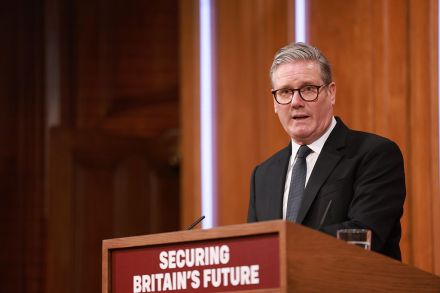
If the consequences of Labour’s heavy losses in the local elections were not already clear, they became so in this morning’s press conference to relaunch the government’s migration policy. Reversing years of generally friendly attitudes towards migration, dating back to Tony Blair’s day – when the UK opened its doors to migrant workers from Eastern Europe seven years ahead of most EU countries – Keir Starmer has unashamedly tried to reposition Labour as an anti-immigration party. He lambasted the Conservatives for saying they would reduce migration before trebling it, and repeatedly used the Leave campaign’s slogan ‘take back control’.

Trump

Will Trump’s war on Big Pharma work?

Cynics will scoff at Donald Trump’s latest initiative: issuing an executive order forcing pharmaceutical companies to lower the prices of medical drugs used by US patients by between 30 and 80 percent. The President wants to impose what he calls a “most favored nation” rule, under which drugs companies would be allowed to charge US consumers no more than they charge in the lowest-priced country where they sell their product. That could have serious consequences for campaigns to fight disease globally, given that cheaper versions of drugs are often sold in developing countries which might not otherwise be able to afford vaccination programs and the like. Isn’t Trump supposed to be against price-fixing?

Do high taxes make you less generous?

From our UK edition

Here’s a question: do you think that Bill Gates would have started and built up his Microsoft empire had the top rate of US income tax been 99 per cent? I don’t know Gates but I think the answer is obvious. Why would he have put in all those hours and taken all those risks if the state was going to snatch away virtually all the rewards? Either he wouldn’t have bothered or – my guess – he would have jumped on a plane and founded his business somewhere else, even renouncing his US citizenship in the process in order to avoid the taxman coming after him. I pose the question because 99 per cent is the proportion of his worldly wealth that Gates announced this week he intends to give away over the next 20 years.

Could Trump’s UK deal start a golden age of free trade?

From our UK edition

We had the shock of ‘Liberation day’ when punitive tariffs were levied on imports from virtually every country in the world. That was the destructive part of Donald Trump’s trade war. Now we enter phase two: trying to put things back together again. The announcement of trade deal with a ‘big and highly-respected country’ (believed to be the UK) on Thursday morning is significant not just in itself but because Trump added the suggestion that this will be ‘the first of many’. His strategy has become clear: last month’s tariffs were shock therapy intended to precipitate a round of trade deals which would rebalance trade in America’s favour. They were not intended as a permanent fixture – at least not at the levels announced on 2 April. We don’t know the details yet.

Why are the Tories now against free trade?

From our UK edition

Wasn’t a trade deal with India supposed to be one of the big gains from Brexit – an example of how Britain, once free from the protectionist grip of the EU, could go ‘out into the world’ and free up trade with fast-growing economies, rather than be stuck trading with Europe’s stagnant ones? Markets certainly like the Anglo-India trade deal announced by the government on Tuesday. Sterling is up sharply against the euro and the dollar, signalling that investors are feeling positive about the prospects for a freer-trade Britain. Car manufacturers and the Scotch Whisky Association are pretty pleased, too, given that it means the end of punitive – indeed, positively Trumpian – tariffs on UK exports to India. So why, then, have the Conservatives received the news so sourly?

Wes Streeting won’t end the 8am GP appointment scramble

From our UK edition

You can say it for Wes Streeting: he doesn’t hang about. Reacting to the heavy loss of council seats in last week’s elections, he is proffering £102 million of money for extra GPs’ appointments – hopefully to end what has been termed the “8am scramble”: a kind of Hunger Games which NHS patients have to go through in order to be seen. The Health Secretary has been pointed in trying to attribute this funding boost to the unpopular rise in employers’ national insurance contributions The Health Secretary has been pointed in trying to attribute this funding boost to the very unpopular rise in employers’ national insurance contributions in last autumn’s Budget.

AI

Is the AI boom already over?

Is artificial intelligence a flash in the pan? Is the boom in tech shares, which exploded with the rise in public awareness of AI, doomed to go the way of other investment bubbles over the centuries? The answer to the first question is almost certainly no, and the answer to the second very likely yes. Investment bubbles do sometimes involve assets which have little intrinsic value, yet it is remarkable how often they begin as an entirely rational reaction to some new invention or development – an invention which outlasts the collapse of the speculative bubble, as if nothing had happened. You only have to look at a share chart and you would assume that railways went out of fashion in the 1840s, when a mad speculative umbrella collapsed.

The M&S hack proves the danger of the ‘internet of things’

From our UK edition

A man from John Lewis came yesterday to measure up for some window blinds. When he started struggling with the mobile broadband on his phone – which he required to be able to give a quote – I made what I thought was a straightforward offer for him to sign onto my home broadband. He almost went white with fear. He had been told never to do that, he said, for fear of the company ending up as Marks & Spencer has this week – victim of a cyber attack which has put its online sales out of action and prevented it taking contactless payments in its stores, as well as wiping millions off the value of its shares.

Did winter fuel payments win Runcorn for Reform?

From our UK edition

There is little disguising what is surely going to be the prevailing story as council election results pour in from lunchtime onwards: Reform UK has had a very good night, Labour a poor one and the Conservatives a disastrous one. To win a by-election – even by just six votes – in Runcorn, will enliven Reform, especially following the civil war which threatened after Rupert Lowe’s ejection from the party. However, as we found with the SDP in the 1980s, by-election victories can give challenger parties false hope: they will not necessarily save them from a meltdown in a subsequent general election.