Rory Sutherland

Rory Sutherland

Why YouTube Premium beats the BBC

From our UK edition

YouTube has now overtaken ITV to become Britain’s second most watched media service, beaten only narrowly by the BBC. Hardly surprising. For many of us, YouTube has become the answer to more and more of life’s questions. True, you may never want to watch a film which explains how to unstick the filler cap on a Volvo XC60. Until, that is, you rent a Volvo XC60 and find yourself stranded at a Portuguese petrol station in 100˚F heat. At that moment, the 30-second explanation by Olivia from York, Pennsylvania, is better than Martin Scorsese. If I were destitute, the last expense I’d forgo would be my YouTube Premium subscription. At £13 a month, it is cheaper than the BBC licence fee.

My plan for a wealth tax – with a difference

From our UK edition

Reading Careless People, an exposé of life within Facebook written by a Kiwi, it occurred to me that one potential advantage that the UK, Australia, Canada and New Zealand have over the US is we do not unthinkingly idolise the very rich. Americans sometimes find this confusing: it always irked transplanted American bankers in London that local employees were eager to make a few million quid, but lost interest beyond a certain threshold. Once they had a rectory in the Cotswolds, an Aga, two labradors and a Range Rover it was game over, you win. This is because the US is more of a money/power economy, whereas the Commonwealth countries are to a greater extent prestige economies. We shouldn’t bemoan this, but turn it to our advantage instead. Here’s how. It’s a wealth tax.

Land value and the Somebody Else’s Problem paradox

From our UK edition

‘The Somebody Else’s Problem field can be run for years on a single torch battery. This is because it relies on people’s natural disposition not to see anything they don’t want to, weren’t expecting or can’t explain.’ The SEP, as I hope many of you remember, is a cloak of invisibility featured in Douglas Adams’s Life, the Universe and Everything. It perhaps arises from a universal aspect of socially driven behaviour – one which encompasses the Bystander Effect, the Overton Window and the Too-Difficult Box. Strangely, Donald Rumsfeld misses out one of the four (un)known (un)knowns: he does not mention ‘unknown knowns’ – things that we know but aren’t aware of knowing, or pretend not to know.

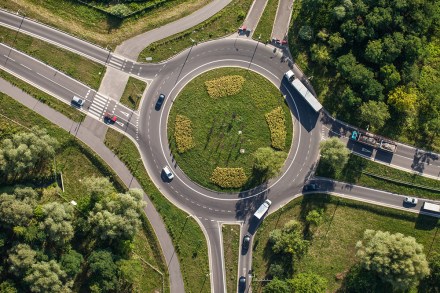
The roundabout is a symbol of British liberty

From our UK edition

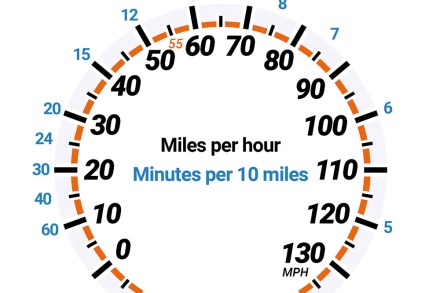
In my last article, I introduced you to the ‘paceometer’, which shows how the relationship between an extra unit of speed and the consequent saving in journey time is anything but linear. For any given distance, the time saved by increasing your speed by an additional 10mph may be immense or almost irrelevant depending on how fast you are travelling already (accelerating from 5 to 15mph cuts 80 minutes off a ten-mile journey; accelerating from 60 to 70mph over the same distance saves little over a minute). It’s a useful insight: avoiding slowness is a far more important element of time-saving than pursuing ever higher speeds.

Why driving at 80mph won’t save you time

From our UK edition

The device you see on this page is called a ‘paceometer’ and was devised by behavioural scientists Eyal Peer and Eyal Gamliel. It features in their scientific paper ‘Pace yourself: Improving time-saving judgments when increasing activity speed’. Study it carefully, because as many people have confirmed to me, it will ‘change the way you drive forever’. Nassim Taleb described it as ‘mathematically trivial, but completely counterintuitive’. The inner digits show speed in the conventional way: in this case miles per hour. In other words, how far you travel at some velocity in a given time. The small digits around the outside are the paceometer: they show the same information but expressed the other way around.

The rise and rise of the ‘tantric sector’

From our UK edition

For the past 25 years I have commuted to London from Otford, a delightful village outside Sevenoaks. I do this in adherence to Sutherland’s Law – not the excellent 1970s BBC series featuring Iain Cuthbertson, but a rule of my own devising which states that you should always travel from the smallest airport or railway station possible.  Recently, much of the station car-park was closed so a colossal pedestrian footbridge could be constructed 50 yards away; this replaced a pedestrian level crossing at the same spot, which lay along a footpath connecting one part of Otford to another. In 25 years, I have seen pedestrians using it on three occasions. Yet the construction of the bridge must have cost well over £1 million. This seemed insane.

Sean Thomas, John Power, Susie Mesure, Olivia Potts and Rory Sutherland

From our UK edition

22 min listen

On this week’s Spectator Out Loud: Sean Thomas reflects on the era of lads mags (1:07); John Power reveals those unfairly gaming the social housing system (6:15); Susie Moss reviews Ripeness by Sarah Moss (11:31); Olivia Potts explains the importance of sausage rolls (14:21); and, Rory Sutherland speaks in defence of the Trump playbook (18:09).  Produced and presented by Patrick Gibbons.

In defence of the Trump playbook

From our UK edition

The standard explanation for why charges for plastic bags reduced waste is economic. People were reluctant to pay 10p for a bag and so brought their own instead. This is partly true. But it would still be highly effective if the charge for a bag were merely 1p. That’s because charging any amount, however trifling, was sufficient to change the implicit assumptions about normal retail behaviour. Previously, if you went into Boots and bought, say, a toothbrush and a tube of Anusol, the default was for the cashier to put them in a new bag – it would have seemed rude not to do so. Suddenly, however, the imposition of a charge meant that shopkeepers had to ask whether you wanted a bag or not.

A challenge for the electric car sceptics

From our UK edition

I once heard of a couple who were teachers in their mid-fifties. Having pooled the proceeds from selling both their flats when they moved in together in the 1990s, they found themselves in the happy position of owning a mortgage-free west London house worth more than £1 million. He was originally from Norfolk, and was eager to move back to a larger and prettier country home costing half the price. They could then bank £500,000 in tax-free profits, retire early and travel the world. She, however, was a lifelong Londoner who refused to leave London. Not knowing all the facts, I cannot say who was right. But it might help to consider the inverse. Imagine a couple living in a large house in Norfolk who win £500,000 on the lottery.

How emotions shape our decision-making

From our UK edition

Ask any estate agent: most potential house buyers arrive with a detailed list of criteria for their new home, only to end up buying a property which meets almost none of them. The same is true of dating – few of us are married to people chosen on the basis of an initial checklist. Henry VIII tried this approach and it didn’t turn out well. You could dismiss this as mere whimsicality. However, the seeming messiness of such decision-making – the fact we refine our preferences in response to what we find available – is what makes consumer capitalism much more innovative than the faux-rational capitalism practised by large organisations. By demanding a problem be defined precisely and inflexibly before you are allowed to solve it, you close the door to more creative solutions.

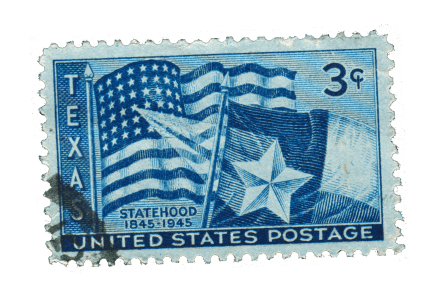
Texas is the perfect holiday destination

From our UK edition

Business travel isn’t quite the perk it is cracked up to be. For one thing, you have no say about where you go or when (New Yorkers are rude about London weather, but their own city is uninhabitable for four months of the year). Even when the weather is perfect, you often have no opportunity to extend your stay, so most of your time is spent in airports and meetings. The taxi from the airport may be the cultural highlight of the whole trip. Nothing has a worse effort-to-reward ratio than staying in a hotel for a single night. And, worst of all, while you are awake at 3 a.m. watching BBC News 24 repeat itself, your colleagues assume you are lying in a hammock being brought pina coladas.

The unsayable case for cars

From our UK edition

Rob Henderson is justly famous for coining the phrase ‘luxury beliefs’. These are opinions which are unshakeably held irrespective of any countervailing evidence, either because the display of such opinions confers status on the holder, or else because adherence to them is an article of faith among some social or professional group in which you need to be seen to belong. The only approved vision of the future involves extracting people from their cars and cramming them into mass transit Such beliefs are hence closer to religious creeds than to any conventionally formed opinion. Consequently, any contradiction of such accepted beliefs in public, however intelligent, is treated as heretical: a social gaffe at best, a career-ender at worst.

Why the restaurant world hates beer drinkers

From our UK edition

I’ve always thought working in hospitality is like getting a free MBA – but one rooted in the real world rather than theory. So it didn’t surprise me to discover a brilliant business idea in a book about the restaurant trade. In Unreasonable Hospitality: The Remarkable Power of Giving People More Than They Expect, star restaurateur Will Guidara describes his quest to take Manhattan’s Eleven Madison Park from number 50 in the San Pellegrino restaurant rankings in 2010 to the number one spot in 2017. To check out the competition, Guidara takes a group of employees to the top restaurant on the list. Unsurprisingly, the experience is superb, and his team busily spot ideas they could copy. But Guidara isn’t interested in these.

Henry Jeffreys, Marcus Walker, Angus Colwell, Nicolas Farrell and Rory Sutherland

From our UK edition

29 min listen

On this week’s Spectator Out Loud: Henry Jeffreys looks at the potential impact of Trump’s tariffs on British drinkers (1:31); on the 400th anniversary of Charles I’s accession to the throne, Marcus Walker explains what modern Britain could learn from the cavalier monarch (7:10); Angus Colwell provides his notes on beef dripping (13:55); Nicolas Farrell reveals he refused to accept the local equivalent of an Oscar (16:40); and, Rory Sutherland makes the case for linking VAT to happiness… with 0% going to pubs, Indian restaurants and cheddar cheese (24:08).  Produced and presented by Patrick Gibbons.

What’s the point in spending a fortune on a wedding?

From our UK edition

I follow the YouTube postings of a maverick young economist called Gary Stevenson, author of The Trading Game. Whatever you think of Gary, he is absolutely right about one thing. Economists, by using what are called ‘Single Representative Agent’ models, have taken a dangerous wrong turn. Such simplistic models, which contain the convenient but absurd assumption that what is good for the average person must be proportionately good for everybody else, have allowed economists to make confident pronouncements on policy while ignoring social and intergenerational inequality completely.

Massacre of the innocents, saving endangered languages & Gen Z’s ‘Boom Boom’ aesthetic

From our UK edition

37 min listen

This week: sectarian persecution returnsPaul Wood, Colin Freeman and Father Benedict Kiely write in the magazine this week about the religious persecution that minorities are facing across the world from Syria to the Congo. In Syria, there have been reports of massacres with hundreds of civilians from the Alawite Muslim minority targeted, in part because of their association with the fallen Assad regime. Reports suggest that the groups responsible are linked to the new Syrian president Ahmed al-Sharaa (formerly known as Abu Mohammed al-Jolani). For some, the true face of the country’s new masters has been revealed. Whether the guilty men are punished will tell us what kind of country Syria has become since the fall of Assad’s dictatorship.

The case for a daily limit on social media posts

From our UK edition

A few years ago, my old school magazine featured a pupil’s brief account of a geography field trip. Before the magazine was mailed out, someone had noticed a jokey reference to a minibus being driven erratically after the teacher had visited the local pub, and worried that this might be libellous. The school could have reprinted the magazine, or else thought ‘publish and be damned’. Alas they did neither: they stuck a white sticker over the offending paragraph in every copy. This led to the piece receiving perhaps 1,000 times more attention than it would otherwise have done, the attempt at censorship spotlighting a harmless joke that most people wouldn’t have noticed anyway.

How to get your husband to do the vacuuming

From our UK edition

This column nearly didn’t happen. Just as I sat down to write, disaster! My dishwasher lost its connection to the internet. This meant I could no longer view real-time feedback about its water consumption on the app. Nor could I start my dishwasher remotely from my office, timing it perfectly so it would be ending the drying cycle when I got home. This facility is, of course, almost entirely pointless. I use it all the time. Thus I was nearly resigned to cancelling this column in order to spend the next six hours fixing the problem. Fortunately, resetting the router fixed the glitch straight away, which is why you are reading this now. I am obsessed with this nonsense. I recently spent half an hour ‘upgrading the firmware’ on my lavatory.

Has email destroyed decision-making?

From our UK edition

The discourse around ‘flexible working’ has degenerated into a narrow debate over whether people come into the office on three days of the week or four. But this risks distracting us from a more interesting question: do people work better in parallel or in series? When the pandemic hugely accelerated the adoption of video-calling, many people took to comparing the quality of meetings carried out via video with those conducted face to face. In general, they divide into two camps: those who believe that there is no substitute for meeting in person, and those who concede there are some disadvantages to meeting on a screen, but suggest these are far outweighed by the time and cost savings. This is a perfectly natural comparison to make.

Freddy Gray, Tanya Gold, Rose George, Toby Young and Rory Sutherland

From our UK edition

28 min listen

On this week’s Spectator Out Loud: Freddy Gray reads his letter from Washington D.C., and reveals what Liz Truss, Eric Zemmour and Steve Bannon made of Trump’s inauguration (1:22); Tanya Gold writes about the sad truth behind the gypsies facing eviction in Cornwall (7:15); Rose George reviews The Forgotten Sense: The New Science of Smell, by Jonas Olofsson, and explains the surprising link between odour disgust and political attitudes (13:07); Toby Young provides his favourite anecdotes about President Trump, having crossed paths with him in New York City in the 1990s (18:39); and, Rory Sutherland proposes a unique way to solve Britain’s building crisis: ‘Areas of Outstanding Natural Ugliness’ (23:40).  Produced and presented by Patrick Gibbons.