Roger Lewis

Roger Lewis is the author of The Life and Death of Peter Sellers and Erotic Vagrancy: Everything about Richard Burton and Elizabeth Taylor.

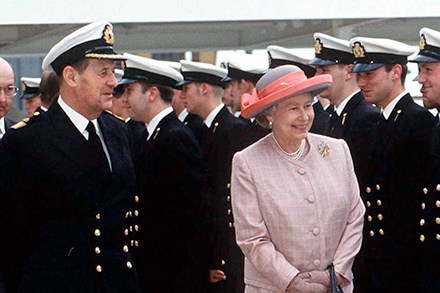
The exquisitely dull life of Elizabeth II, expert on cap badges

The dogs, horses, diamonds, furs, full-length evening gowns of lace and pearls; private jets and limousines; the ever-present jostling retinue; the push and shove of photographers and the clamour of crowds – Elizabeth Taylor and Elizabeth II had a lot in common, each taking themselves very seriously and needing to be seen to be believed. Whereas the Hollywood actress was majestic mainly in her vulgarity and brashness, however, the late Queen, as is evident in this pair of biographies, did her level best to be reticent, even non-existent. The best known of her few recorded utterances are ‘Oh really?’ and ‘Are you sure?’. She had a tendency to stare at a person with ‘absolutely no expression’, or at best ‘an expression of controlled irritation’.
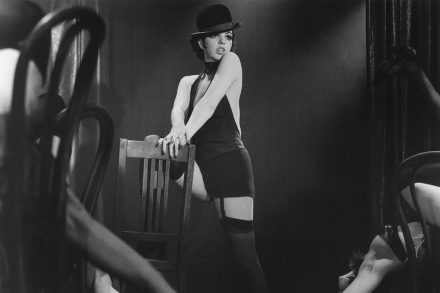
liza minnelli

Life is a Cabaret: inside Liza Minnelli’s memoir

Though she may well have been “one of the world’s most celebrated, beloved and iconic performers,” who’d have wanted Judy Garland as a mother? When not remaining in bed “for days at a time, heavily drugged and in a deep state of depression,” she was, according to her daughter Liza Minnelli, slashing her neck with a razor blade because “she loved playing the victim… Hospitals are a way of life for her.” Judy died of a (possibly accidental) drugs overdose in 1969, aged 47. At the Frank E. Campbell Funeral Chapel on the Upper East Side, her corpse was prepared for public view by the very same make-up expert who’d worked years previously on The Wizard of Oz. Twenty thousand people filed past the open coffin – more than had come to gawp at Valentino.

‘I could turn very nasty – I was an egotistical brute’, says Anthony Hopkins

From our UK edition

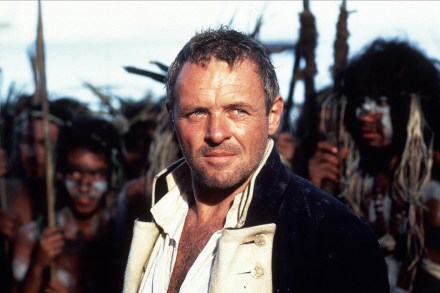
It’s a good job Anthony Hopkins is only an actor, as think what he’d be like as a dictator or grand inquisitor. ‘I could turn very nasty,’ he tells us in his memoir. Doing National Service: ‘I was beginning to enjoy the fisticuffs in my life.’ Encountering a Scotsman: ‘I felt a surge of hatred and anger. I head-butted him and smashed his nose so hard I heard it crack.’ To a director who’d annoyed him: ‘Learn some manners... or I’ll change the shape of your face.’ Mickey Rourke was told: ‘Touch me like that again and I’ll smash your face right into the back of your head.’ Hopkins is a nasty piece of work, and proud of it. He calls himself ‘a vindictive, cynical, insulting, horrible man’, adding for good measure: ‘I was an egotistical brute.

Roger Lewis: The Life and Death of Peter Sellers

From our UK edition

38 min listen

Sam Leith's guest in this week's Book Club podcast is Roger Lewis, whose book The Life and Death of Peter Sellers has been republished to mark 100 years since the comedian's birth. Roger tells Sam about the difference between Sellers's public persona and private life, plus his influence on comedy today. They also discuss how Roger reinvented the way biographies were written, and whether the view he had of Sellers as a teenager changed through writing the book. Produced by James Lewis.

Sophia Falkner, Roger Lewis, Olivia Potts, Aidan Hartley and Toby Young

From our UK edition

27 min listen

This week: Sophia Falkner profiles some of the eccentric personalities we stand to lose when Keir Starmer purges the hereditary peers; Roger Lewis’s piece on the slow delight of an OAP coach tour is read by the actor Robert Bathurst; Olivia Potts reviews two books in the magazine that use food as a prism through which to discuss Ukrainian heritage and resistance; Aidan Hartley reads his Wild Life column; and Toby Young reflects on the novel experience of being sober at The Spectator summer party. Hosted and produced by Oscar Edmondson.

The slow delights of an OAP coach tour

From our UK edition

Early on Monday mornings, in service stations across the country, armies of the elderly are mustering. These are the OAPs about to embark on motor coach tours to the Norfolk Broads, Cornish fishing villages, the Yorkshire Moors and Welsh ghost towns, organised by men in blazers consulting clipboards, like Kenneth Williams in Carry On Abroad. There will be cream teas, along with river cruises, coastal excursions, scenic drives and jaunts on steam railways.

Christmas II: Andrews Watts, Marcus Walker, Ali Kefford, Roger Lewis, Ayaan Hirsh Ali and Christopher Howse

From our UK edition

48 min listen

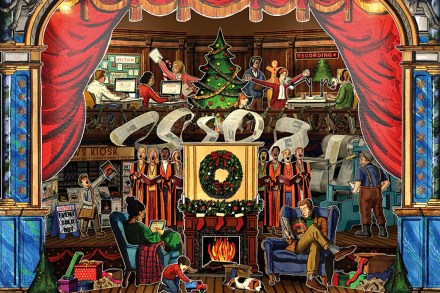
On this week’s Christmas Out Loud - part two: Andrew Watts goes to santa school (1:11); Marcus Walker reads his priest’s notebook (7:20); Ali Kefford spends Christmas on patrol with submariners (12:34); Roger Lewis says good riddance to 2024, voiced by the actor Robert Bathurst (20:57); Ayaan Hirsh Ali argues that there is a Christian revival under way (32:41); and Christopher Howse reveals the weirdness behind Christmas carols (38:34).  Produced and presented by Patrick Gibbons.

Christmas Special 2024 with Rod Liddle, Lionel Shriver, Matthew Parris and Mary Wakefield

From our UK edition

71 min listen

Welcome to a special festive episode of The Edition podcast, where we will be taking you through the pages of The Spectator’s Christmas triple issue. Up first: our review of the year – and what a year it has been. At the start of 2024, the outcome of the US election looked very different, the UK had a different Prime Minister, and The Spectator had a different editor! Luckily, The Spectator’s regular columnists are on hand to declare what they got right – and wrong – throughout the year, and whether they’re optimistic for 2025. Rod Liddle, Matthew Parris, Mary Wakefield and Lionel Shriver take us through everything from Trump to trans (03:24).

Good riddance to 2024

From our UK edition

January. When the assisted dying bill comes in, I’ll be first in the queue. Non-stop nosebleeds, Covid-esque symptoms, leg cramps, a cough resistant to antibiotics, and unremunerated press interviews for my Burton/Taylor book. In the old days I’d be in New York, running amok with publicity handmaidens, going on television and racking up bills in the Gramercy Park Hotel. Now everything is done from the back-bedroom here in Hastings, where I dwell in the slum district, my window overlooking immigrants doing their laundry. Paul Bailey went to the trouble of getting his name removed from my acknowledgements. That’s real hatred February. First anniversary of my myocardial infarction, when I collapsed in Morrisons car park.

The utter vileness of Richard Harris

From our UK edition

Brawling, boozing and womanising, those vaunted hell-raisers of the 1960s – Peter O’Toole, Oliver Reed, Richard Burton and, of course, Richard Harris – were all frightful bores. Because their professional lives involved dressing up and wearing mascara and silly wigs, it was essential for them to show what he-men they were: how hard. Like Stanley Baker (another one), Harris boasted to columnists: ‘I’ve got great contacts with the underworld,’ especially the Krays. He never had anything to say about the artistic merits or meaning of any of his films. His stories were exclusively about his prowess as a bully. Crushing an apple, he typically said to one of his directors: ‘If you don’t get out of this room right now, this is what I’ll do to your skull.

What prompted Vivien Leigh’s dark journey into madness?

From our UK edition

‘Vivien was barking mad from the word go,’ Laurence Olivier reflected in later life, and Lyndsy Spence’s biography would fully concur with the summing-up. At best, the actress was ‘suspended in a dream world’, unable to separate herself from the classic characters she played – Scarlett O’Hara, with her dark hair and flashing eyes, or Blanche DuBois (‘she is a tragic figure and I understand her’). At her worst, Leigh was, in her own words, ‘a thing, an amoeba, at the bottom of the sea’. Where Madness Lies is a sympathetic description of Leigh’s ‘perturbing nature’; an analysis of her numerous breakdowns, when she was in the grip of manic-depressive cycles – the high spirits and crushing melancholia, when ‘everything inside her brain was white noise’.

The bald truth about Patrick Stewart

From our UK edition

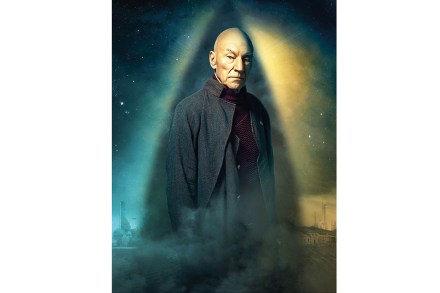
When you think that David Niven, James Mason, Ronnie Barker, Arthur Lowe and Powell and Pressburger among many others failed to receive state honours, you’ll concede that a knighthood was wasted on Patrick Stewart, even if for 12 years he was chancellor of Huddersfield University. I mean no disparagement by this. I’m happy for him. But why not Sir Timothy Spall or Sir Timothy West? Stewart, whose grandmother was Stan Laurel’s babysitter, is a middle-ranking mime with a gurgling bass-baritone. He is chiefly famous for the X-Men franchise and for playing Captain Jean-Luc Picard in 178 episodes of Star Trek: The Next Generation, plus the numerous feature film spin-offs in which he commanded an interplanetary spacecraft.

Complicated and slightly creepy: the Bogart-Bacall romance

From our UK edition

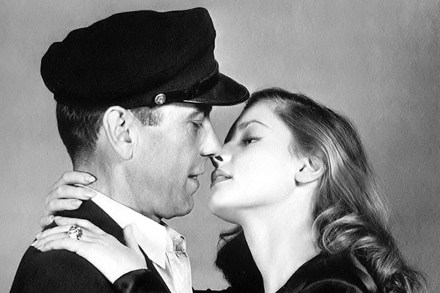
Whenever an actor and an actress begin an affair on the soundstage they like to believe they are the new Burton and Taylor. Actually they’ll be lucky to resemble Christopher Timothy and Carol Drinkwater, who had a fling on that vet programme – and now here are Humphrey Bogart and Lauren Bacall to live up to as well. Of their love story, William J. Mann avers: ‘It was wonderful; it was passionate; it was complicated.’ Also, it was creepy. Bacall was 19, Bogart 45. There was a ‘significant power differential between them’ when they met in 1944 during the filming of To Have and Have Not. Mann is probably pointing the finger at Bogart, the established Hollywood star.

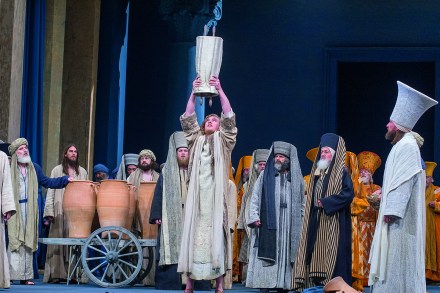
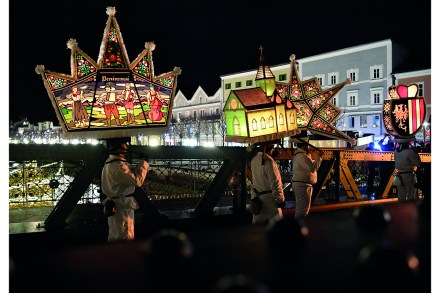
Christ stopped at Oberammergau

Getting there was penitential. The coach from my home in Bad Ischl, Austria, to Salzburg stopped a hundred times, to let on women in dirndls carrying shopping baskets. The train to Munich was subject to delays, messing up subsequent connections. The S-Bahn linking Ostbahnhof with a place called Pasing suffered a derailment, so I had to struggle backwards to the Hauptbahnhof, only to discover my alternative train to Murnau was canceled, then reinstated on a distant platform, resulting in mass confusion. (The Germans are bewildered very easily when things stop going to plan.) At Murnau there was a long wait for the two-carriage shunter service to Unterammergau, outside Oberammergau, where it was by now pitch dark and pouring with rain.

passion

Norman Scott has the last word on a very English scandal

From our UK edition

I’m glad Norman Scott can say he has ‘always had the ability to laugh at the absurdity’ of his existence because, as detailed here in a long-awaited memoir, I too couldn’t stop shrieking, he is so tragic. When he came home unexpectedly as a youngster, for example, and witnessed his mother having sex in the lounge with a telephone engineer, he was so shocked he dropped his tortoise. ‘The terrible guilt over my tortoise stayed with me,’ he writes – maybe until just the other day. Scott is now 82. He’ll always be remembered of course for the Jeremy Thorpe trial, when the judge, Mr Justice Cantley, called him a fraud, a sponger, a whiner and a parasite; and Scott’s haplessness is truly in a class of its own.

Keeping yourself angry, the Hare way: We Travelled, by David Hare, reviewed

From our UK edition

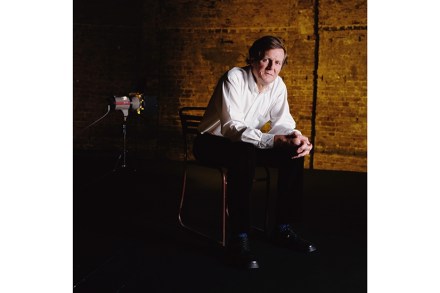
A character in David Hare’s Skylight claims she has at last found contentment by no longer opening newspapers or watching television. ‘Well,’ says her astounded interlocutor, ‘you’re missing what’s happening. You’re missing reality.’ Hare himself can never be accused of missing (or missing out on) the reality of what is happening. He has already even mounted his response to ‘what it was like to experience Covid-19’ in Beat the Devil, starring Ralph Fiennes. His instinct has always been to tackle current affairs, sometimes with surreal consequences.

Terence’s stamp: The Art of Living, by Stephen Bayley, reviewed

From our UK edition

Rumours reach me that the libel report for Stephen Bayley’s forthcoming biography of Terence Conran was longer than the book itself, so I’m hazarding a guess that Bayley has siphoned off contentious material into this purported fiction. For as he says here, kidding on the level, ‘all novels are memoirs, all memoirs are novels’, and as Conran was Bayley’s colleague at the Boilerhouse Project at the V&A, the boys indeed have ‘previous’. If the hero of The Art of Living, the brilliantly drawn Sir Eustace Dunn, is indeed Sir Terence, he comes across as a sly old fox who ‘betrayed everyone he knew’ and ‘never said please or thank you’.

Even the Queen wasn’t spared Prince Philip’s bad temper

From our UK edition

Though the indefatigable Gyles Brandreth met and interviewed Prince Philip over a 40-year period, His Royal Highness managed to give very little away. ‘He would just look at me balefully and say nothing,’ Brandreth writes. Wondering what Prince Philip’s philosophy of life might be, ‘I didn’t get very far’. When asked about his childhood,‘he brushed away the subject’. Prince Philip’s attitude to parenthood was a flat: ‘We did our best.’ His opinion of the Queen Mother: ‘He would not be drawn.’ His summing up of the consort’s existence: ‘I tried to find useful things to do. I did my best’ — e.g. by introducing a footman training programme or building a log cabin at Sandringham.

Homes, sweet homes

The moment lockdown restrictions eased, my wife Anna booked up trips to Europe, to visit houses and villages I thought I’d never see again, such were the initial predictions about the zombie apocalypse. I’d not been to Barenton, Normandy, for example, since last autumn, but that hadn’t stopped the plumber and the builder from sending me regular bills. It is in this decaying granite villa, stretching over four floors, that the accumulated junk from the Herefordshire Balkans has been shoved — thousands of books, crates of manuscripts and letters, the children’s toys, even the children. Oscar, the middle son, spent time here, depleting the cellar after he broke up with a girlfriend. He ran back to England terrified when a mouse leapt out of an oven glove.

homes

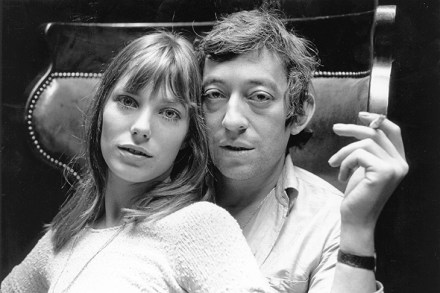
Beauty and the beast: Jane Birkin’s love affair with Serge Gainsbourg

From our UK edition

I met Jane Birkin’s parents, who flit across these pages. Her mother, Judy Campbell, was an actress in Noël Coward plays and a cabaret singer who’d worked with Charles Hawtrey, and when I invited her to a party once she drove her Mini up the steps and into the hotel lobby. Jane’s father, David, had a good war, his boat picking up pilots and spies hidden by the Resistance on the Breton coast. He told me ’Allo ’Allo wasn’t a comedy, it was documentary realism. He endured many operations on his optic nerve. A piece of hip bone was grafted to his eye socket. His lungs, as Jane says, were weakened by ‘too many anaesthetics’. The Birkin fortune came from Nottingham lace. There were aristocrats (the Russells) in the background.