Robin Oakley

A day with the West Ilsley trainer Denis Coakley

From our UK edition

Through a stormy July weekend our task was to prevent four feisty grandchildren from murdering or mutilating each other before being returned to their parents, so we gave them £3 each to spend at the local car-boot sale. After two hours, the three girls returned with two teddy bears (one the size of a sheep), a folding chair, a catapult, an electric hair curler and an Osmonds LP. Our grandson, clearly a future City wheeler-dealer, employed his wistful ‘I’m sorry, I haven’t got that much’ routine to such effect that he came back with an Xbox, a crossbow (fortunately for his sisters’ health with no arrows), two battery-powered staplers (don’t ask) and a pristine chess set.

Ralph Beckett’s winning way with the fillies

From our UK edition

Fretful horses who waste their energies — and often their racing potential — ceaselessly pacing their stable dormitories are known as ‘box walkers’. Some trainers merit a similar description, dragging nervously on one racecourse cigarette too many. It isn’t sharing the washing-up but their teeth that have left their nails worn down to the quick. Their brows are furrowed as they saddle up their hopes. Instead of enjoying a joke with an owner’s wife their eyes flicker nervously to their four-legged charges skittering around the paddock for fear they are sweating up. Nervousness is easily transmitted between man and beast and I always feel more comfortable when the handler responsible for the horse carrying my tenner looks relaxed.

Yes, I’m biased – but this was a great Royal Ascot

From our UK edition

The one sight I was determined not to miss at Royal Ascot was that of the Queen from over the water coming to claim the hearts of English racegoers. The commanding way in which Treve won the Prix de l’Arc de Triomphe last October stamped her as something very special and she should have been worth going a long way to see. But it turned out that the damp turf of Longchamp in the autumn and the quick ground at Ascot in June were not all the same to her. Although sheer quality brought her home in third in the Prince of Wales’s Stakes, the fizz had escaped Treve’s bottle before they left the stalls and Frankie Dettori reported that she ran flat all the way.

Cambridge, meet your first professor of racing lore

From our UK edition

Watching the contestants parade at Epsom for this year’s Oaks, I remembered the great D. Wayne Lukas’s pronouncement on selecting fillies: ‘She should have a head like a princess, a butt like a washerwoman and walk like a hooker.’ The John Gosden-trained Taghrooda, listed a month earlier as the first of our Twelve to Follow this season, ticked all those boxes. I doubled my bet and cheered her home nearly four lengths clear of the biggest Oaks field in 40 years. Sheikh Hamdan al Maktoum, an owner who gives much to the sport, has had a lean few years and it was good to see another Classic success for his blue and white colours.

Will racing waste its Scoop6 jackpot?

From our UK edition

Eight people became millionaires last Saturday, collecting £1,342,599 each when the Scoop6 bet, which had been rolled over for 12 weeks without a winner, was finally won. With racing’s narrative having been dominated for weeks by the gamble to find six winners on the day, there was more than £16 million in the pot: £11 million had been staked that day alone by punters large and small trying to collect an instant fortune. Let us hope no relationships suffer: I could not help thinking of the lottery winner’s wife who asked, ‘Will you still feel the same about me now you’ve won all that money?’ only to meet the reply, ‘I’ll certainly miss you...

My 12 tips for the racing year

From our UK edition

In sport, winning is everything. Come second and only your parents and the dog remember. Most readers will have forgotten that a month ago I reported that champion jockey Richard Hughes was hugely impressed by Richard Hannon’s Night of Thunder, calling him ‘a machine’ on the gallops. He expected Night of Thunder to win Newbury’s Greenham Stakes and become favourite for the 2,000 Guineas. Instead, the Greenham was won in devastating style by John Gosden’s Kingman with Night of Thunder well beaten in second. I advised readers to back Kingman for the Guineas and did so myself. But, come the day, when I discovered that Night of Thunder was 40–1, I had a saver on him too. Each way those had to be generous odds.

Own up, Twelve to Follow fans – which of you sabotaged my BMW?

From our UK edition

Mrs Oakley takes a dim view of my using the BMW that consumed much of her savings to ferry sacks of garden refuse and discarded paint tins to the council dump. She took an even dimmer view when, in executing a three-point turn recently, I missed a marker post behind me and reshaped the bumper: replacing it will require regular success in the Tote Placepot. But it really wasn’t my fault when a warning light flashed to tell us we had low tyre pressure. The garage reported that not just one tyre but all four had been penetrated by vicious-looking carpet tacks: it was either mindless vandalism or deliberate sabotage, which is not a pleasant thought to contemplate. Nobody else in our village found any tacks in their tyres.

Sympathy for the bookies

From our UK edition

We all have to adjust to reality, like the lady who entered a Barbados bar having already enjoyed several gin and Dubonnets. On her shoulder was perched a rare parrot and she announced, ‘The first person to guess what this bird is can go to bed with me tonight.’ A voice calls out: ‘A turkey.’ After a quick survey of the other bar stools she replied: ‘That’s near enough.’ Under the leadership of the British Horseracing Authority chief Paul Bittar, racing too has been adjusting to reality, most notably in working for a better relationship with the betting industry on whom it must continue to rely for funding.

Why the other jockeys love Jamie Moore

From our UK edition

In the parade ring just after Sire De Grugy had won this year’s Queen Mother Champion Chase, I found myself among a group of jockeys who had run out of the weighing room jostling and joshing like a bunch of schoolkids. They had, though, a serious purpose: they had emerged to pay tribute to one of their own, the winning rider Jamie Moore. Daryl Jacob, Aidan Coleman, ‘Choc’ Thornton and half a dozen others climbed on each other’s shoulders to cheer him in. I asked Daryl, why such a rare public honour? ‘It’s just that Jamie’s such a great guy from such a great family,’ he replied. Said Choc, ‘He’s ridden here 70 times without a winner and this is special. He’s a top guy.

Comebacks, longshots and cruel disappointments: what makes Cheltenham Festival great

From our UK edition

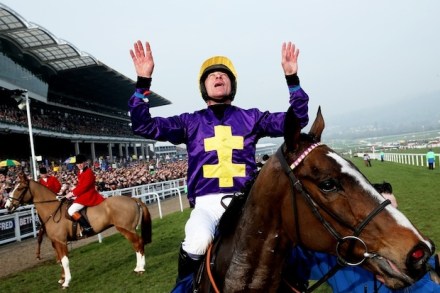
No sporting event anywhere compresses so much drama, emotion and character into a single venue as the Cheltenham Festival. It wasn’t just an extraordinary Gold Cup — in that six horses jumped the last with a chance of winning and at least two jockeys will go to their graves believing they were denied a victory that should have been theirs: the blanket finish had to be investigated fully by the stewards before the result was confirmed. What kept crowds of 60,000 or so entranced were the endless series of back stories, of comebacks that worked and comebacks that didn’t, of opportunities taken and cruel disappointments.

How Paul Bittar has kept British racing together

From our UK edition

British racing is such a quirky minefield that some were surprised when in 2011 the authorities chose Paul Bittar, a man from Wagga Wagga with most of his racecourse experience in New Zealand and the state of Victoria, to run the British Horseracing Authority. Australian cricketers, it used to be said, had a standard uniform: green caps and a chip on the shoulder. When I mentioned in front of a racing club audience the other night that New Zealanders will bet on anything that moves, and if it doesn’t move they will kick it and bet on when it will start to move, Paul was sufficiently Australian to chide: ‘You’re not suggesting, are you, that Australians would be any less eager to have a bet?’ It set the tone for an evening of good humour and candid common sense.

The Grand National needs kinder weather

From our UK edition

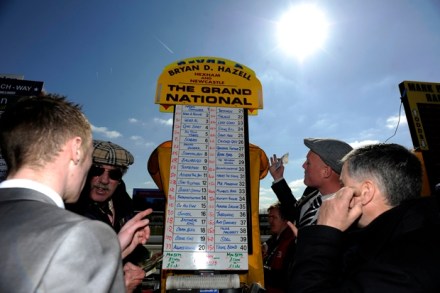
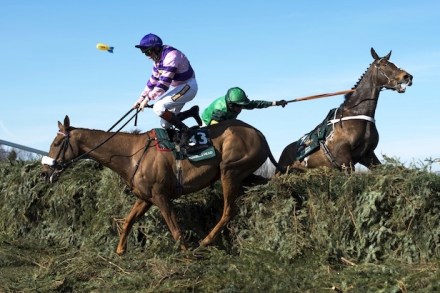
This year you don’t want to be a jockey’s valet. Never have their washing machines spun so vigorously. From every sortie, riders return as mud-spattered as if they had been trampled by a dozen rugby scrums, and so many of us gathered at the Abbey Road Studios to hear the weights to be carried in this year’s Grand National were praying that the elements will have relented well before the 5 April contest. The National is both jump racing’s biggest advertisement and its greatest potential disaster. In 1998, when the four-mile marathon was run in atrocious conditions, three horses died and only six of the 37 runners finished the course. In 2001, it was again a mudlarks’ benefit: only seven entrants survived the first circuit and only two completed without a fall.

Women simply don’t understand sport’s importance

From our UK edition

Liverpool manager Bill Shankly was once challenged with the story that for their wedding anniversary treat he had taken his wife to a Rochdale match. ‘Sheer nonsense,’ he replied. ‘It was her birthday. Would I have got married during the football season? And anyway it was Rochdale Reserves.’ Shankly may have taken it to extremes, but there is a man/woman thing over sport. Women simply cannot register its importance, not even the saintly Mrs Oakley. Having missed the last race at Sandown on Saturday to drive 90 minutes back to Oxfordshire in time to pick her up from the station, I thought I would be doing OK, brownie points-wise. I was rapidly proved wrong. We arrived home just in time for the second half of England v.

When lawyers take to racehorses

From our UK edition

Can you be both restless and content? Standing last week with Graeme McPherson on the viewing platform over his sharply rising gallops near Stow-on-the-Wold, I found a man who answers to both descriptions. An in-demand QC with a big sporting practice, Graeme is also a racehorse trainer with a fast-expanding yard, a glorious Cotswold hillside house and a plan for the future. Like most journalists, I live by the next deadline. My lawyer daughter and her husband, another advancing QC, chide me for my lack of a life plan, so perhaps it reveals something about the legal profession that Graeme started his racing career with two. The five-year plan was for a yard of 30 decent horses by December 2014, a target achieved with a year to spare.

How jockeys play dirty

From our UK edition

At Christmas a friend from CNN sent me the story of a US officer on a European train. Searching for a seat, he found one occupied by a miniature poodle and asked its French female owner if she would put the dog on her lap. She not only refused but also remarked loudly as he moved on, ‘God spare us from these bloody Americans who think they own the whole world.’ Ten minutes later, the visibly weary American returned to say that there was no seat vacant on the entire train. Again he requested politely that madame move her dog. Again she refused, this time snarling, ‘Won’t somebody protect me from this boorish foreigner?’ At this point, with the train slowing, the American seized the dog and hurled it through the window on to a grassy bank.

Why does Newbury alienate potential racegoers?

From our UK edition

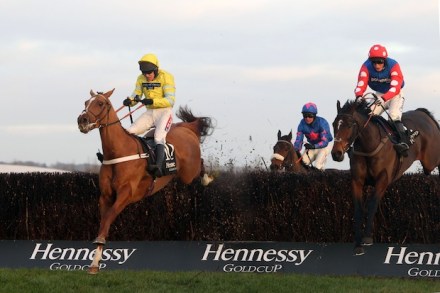
You don’t realise how much your pleasures mean until you are denied them. It was wonderful to get back on a racecourse for Hennessy Day at Newbury even if my two sticks proved an encouragement to every  acquaintance to engage at length about the hip replacements endured by their nearest and dearest. Even worse was the speculation about what had caused my problem. One even recalled me dancing on a tapas bar table at a BBC political staff Christmas party. How the past comes back to haunt you. I have been feeling haunted by the disappointing show from our Twelve to Follow on the Flat, but fortunately the jumps Twelve are setting things to rights. True, Katenko fell in the Hennessy Gold Cup but at Newcastle The Last Samurai won at 7–2 and Bob Ford ran second at Bangor.

Christmas racing reading

From our UK edition

In one of those old Mae West films a girl admires her friend’s jewellery: ‘Goodness, what lovely pearls,’ only to meet the reply, ‘Goodness, my dear, had nothing to do with them.’ The same was true of the sealskin fur coat and silk stockings worn by the gorgeous Micheline Lugeon, a would-be beautician from Switzerland who became notorious on British racecourses in the Sixties. Lugeon was the mistress of the high-rolling gambler-bookmaker Bill Roper. Roper, who maintained a wife in style as well, and put his children through private schools, needed money to keep the champagne flowing for his mistress at the Pigalle. To find it, he assembled a bunch of accomplices and started rigging races.

Racing: Here are the ‘Twelve to Follow’ for winter

From our UK edition

Women truly are different. Recovering in a spare bedroom from the wonders of a hip replacement (don’t ever jump on industrial-sized wheelie bins to compress the contents), I passed Mrs Oakley’s bedroom at 3 a.m. to find her light on. What was wrong? ‘I can’t get to sleep,’ she complained, ‘because I know there’s something I should be worrying about but I can’t remember what it is.’ My worry in recent weeks has taken a more obvious shape: how to explain to Spectator readers the performance of our Twelve to Follow on the Flat. You may remember (well, I do anyway) that our Twelve over jumps last season amassed a staggering profit of £430 to a £10 stake. Sadly we have fared rather less well with the summer Twelve.

How the slowest horse won — and caused the biggest upset in Grand National history

From our UK edition

On a grey October morning, along a Berkshire lane leading up to the Ridgeway amid fields stuffed with pheasant, 30 of us joined a mini-pilgrimage. The former champion jockeys Graham Thorner and Stan Mellor had made it along with Marcus Armytage, who won the Grand National on Mr Frisk. There, too, were a cluster of racing historians including Chris Pitt and John Pinfold. More importantly, the former trainer John Kempton and the former jockey John Buckingham were present with the author David Owen for the unveiling of a plaque to a horse whose name will never be forgotten in jump racing: Foinavon was the 100–1 winner of the 1967 Grand National after he and jockey Buckingham alone avoided the 23rd fence pile-up that devastated the field.

The Qataris are influencing every aspect of racing

From our UK edition

Not having the odd £100,000 to spare, I had never before joined the world’s richest owners and their bloodstock agents at Tattersalls yearling sales. It was my loss. Sheikhs in tracksuits and princes in flat caps mingle with ruddy-faced, padded-jacket consignors. In the sales ring, auctioneers rattle through their machinegun patter: ‘What do you want to get her away?...Here’s a wonderful chance to buy into this family who rarely come up for auction, do I have 100,000?...280,000 will seal the deal...he goes right-handed now at 750,000, any more outside?...The hammer’s up, 280,000 will seal the deal.’ They work through 22 lots an hour (at an average price this year for the Book One sale of 207,501), and all figures are in guineas, not pounds.