Robin Oakley

Ones to watch

From our UK edition

Back on political duty with CNN in election week, I came across a dead rat in Downing Street. It had to be an omen, but had the rodent been leaving or arriving when he met his fate, presumably in the jaws of the lean-looking fox who loped across the No. 10 doorstep shortly afterwards? Perhaps my furry ex-friend, too, had been misled by the polls but then we all have to make do with the best information we have available, as I did with our list of winter jumpers. After that heady summer of 2014, when our Twelve produced a profit of £171, I feared a setback and so there has been, but not on the Lib Dem scale. A tenner on the winter twelve every time they ran (choosing just one when two of our selections clashed) would have seen a profit of £19.
The real McCoy | 30 April 2015

From our UK edition

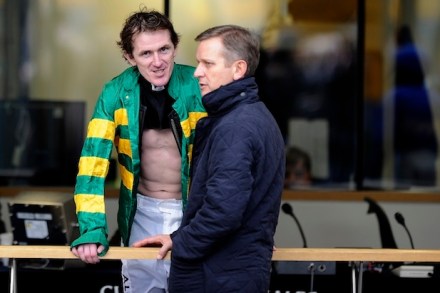
At Sandown Park last Saturday an era ended. Twenty thousand of us turned up to cheer on Tony McCoy as he took his last two mounts and collected his 20th trophy as champion jumps rider. We cheered, we clapped, we decided there was nothing to be ashamed of about a certain moistness of eye, noting that even the ultimate iron man himself wept a tear or two as he rode back on the third-placed Box Office. Over the past 20 years, the riding of racehorses has become ever more professional, but not once during that period has anybody else been champion jockey over jumps. For once the old cliché works: we will never see his like again. Just look at the statistics: AP rode in 17,630 races and won 4,357 of them, an extraordinary strike rate of 24 per cent.

No fairy tale ending

From our UK edition

It all depends how you like your fairy tales. OK, so we would have loved the retiring Tony ‘AP’ McCoy, 20 years a champion, to have won his last Grand National on Shutthefrontdoor, owned by his long-time patron J.P. McManus, jump racing’s biggest benefactor. But fate rarely reads the full script and this year’s National went instead to the talented Many Clouds, owned by Trevor Hemmings, another who has poured a fortune into racing. Many Clouds was trained in Lambourn by the generous-hearted Oliver Sherwood, a man claimed truly as a friend by more people in racing than anyone else I know and who has in his choice of riders and assistants over the years launched a whole series of racing careers.

Who will fund a prize for the true fighter pilots of the Turf?

From our UK edition

After listening to a violinist’s justification of his playing, Dr Samuel Johnson responded tartly: ‘Difficult do you call it, Sir? I wish it were impossible.’ Racing’s marketing arm, Great British Racing, probably attempted the impossible in trying to satisfy all parties concerned in devising a new structure for the Flat Jockeys Championship. As part of its efforts to give greater narrative and structure to racing’s untidy seasons, its plan is for the title, which will now include a £25,000 prize, to be awarded to the jockey who rides the most winners between the Qipco-sponsored Guineas meeting at Newmarket on 2 May and the Qipco-sponsored Champions Day on 17 October. It is not a perfect situation.

Disneyland comes to the Cheltenham Festival

From our UK edition

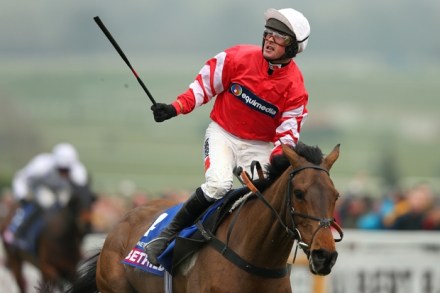
Irish racing guru Ted Walsh was asked at the start of Gold Cup day if retiring champion jockey Tony McCoy could win his last Cheltenham Festival race. ‘No,’ came the unsentimental reply. ‘This is Cheltenham, not Disneyland.’ But within three hours, racing’s raucous pilgrims cheered home a fairytale winner: the novice Coneygree ran his rivals ragged from the front in the hands of the young jockey Nico de Boinville and collected the Betfred Gold Cup for the ten-horse stable of Mark and Sara Bradstock, recently profiled here. Said former trainer Charlie Brooks, ‘That was the best victory ever in the history of horse-racing,’ and his opinion had plenty of takers.

Racing’s biggest issue is the decline in field sizes

From our UK edition

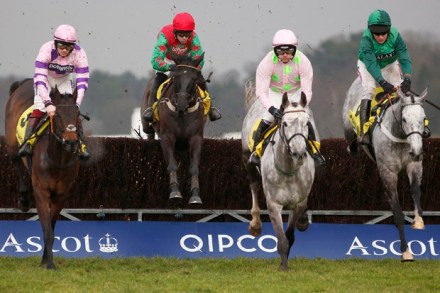
‘I don’t want to seem unromantic,’ said Mrs Oakley as St Valentine’s Day approached, ‘but this year please don’t buy another of those Monet cards you seem to find appropriate for all occasions from birthdays to anniversaries.’ And there was me thinking I had cleverly avoided slush and over-commercialism all these years. Behaviour patterns creep up without you noticing and the same is true in racing. For too long we have been enduring small fields, especially in steeplechases, still to me the most exciting of all the spectacles racing has to offer. Ascot recently celebrated its 50 years of jump racing with a racecard that included three chases. One had attracted six runners, one had five and the other four.

Why Mark and Sara Bradstock have only 12 horses is a mystery to me

From our UK edition

Some mysteries will never be solved, like why planes and boats disappear in the Bermuda Triangle, cats always land on their feet and why Mrs Oakley can always find a parking space plumb outside a restaurant when I am lucky to squeeze in 400 yards away. Add one more conundrum: why are there only 12 horses in the successful racing stable run by Mark and Sara Bradstock? Since 1994 they have trained in Captain Tim Forster’s old yard opposite the church in Letcombe Bassett. On the skyline above their glorious gallops are tree clumps planted by the Captain to celebrate his Grand National successes. Their home is in a row of converted boxes where the great Golden Miller was once trained and where an irrepressible terrier shares the breakfast table with your coffee.

This autobiography written by a horse that is not as offputting as it sounds

From our UK edition

Banks only lend money to those who can prove they don’t need it and it has not been a happy few months for racing with one trainer after another giving up the unequal struggle and shutting the stable doors. The only thing that could make it worse for many small yards is an election victory in May for the Greens: they have vowed, if they win power, to outlaw zoos and circuses and a ban on horseracing clearly would not be far behind. I have had my problems too. Gremlins from outer space this week seized control of my laptop and have locked away my racing notes behind an immovable screen that resembles an early Jackson Pollock.

The Grand National doesn’t need Jeremy Kyle

From our UK edition

Never mind David Cameron. Are you participating in the Great Debate about an event of national significance that stirs the blood of millions? No, I don’t mean the General Election: racing is in a tizzy about who should lead the television coverage of this year’s Grand National since the sainted Clare Balding (whom God preserve) has opted on the big day to cover instead the predictable procession in the Oxford v. Cambridge Boat Race. Channel Four, in whose hands Aintree coverage rests, has been semi-publicly agitating whether to allow Clare’s fellow racing presenter Nick Luck to replace her in fronting the show or to go outside for a ‘big name’, who will supposedly resonate with the wider non-racing public who tune into jump-racing just once a year.

Venetia Williams: an enigmatic woman who trains winners

From our UK edition

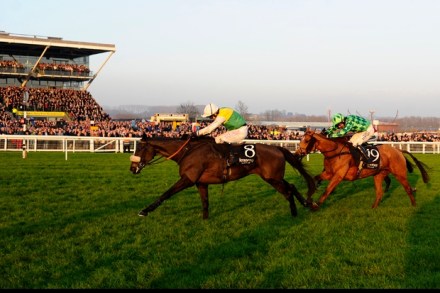
Welsh Grand National day at Chepstow could not have had a better climax than the big race. After slogging three miles four furlongs on heavy, clinging ground, three horses came to the last with a chance: leading was the Irish-trained Glenquest ridden by Peter Buchanan, in second was Benvolio ridden for Paul Nicholls by Sam Twiston-Davies and third, at that point, his chance seemingly gone when the other two had passed him two out, was Emperor’s Choice ridden for Venetia Williams by Aidan Coleman. The crowd were on tiptoe roaring all three home as first Benvolio battled past a tiring Glenquest and then Coleman somehow galvanised Emperor’s Choice into one final heave, which took him past Benvolio to snatch victory by a head in the photo-finish.

Christmas reading for racing folk

From our UK edition

‘Hang on a minute—he’s a bit wobbly,’ trainer Oliver Sherwood told photographers imploring him to stand with his winner when Many Clouds won this year’s Hennessy Gold Cup at Newbury. Truth be told, Many Clouds’s popular trainer was wobbly too, understandably emotional after a victory which reminded many that a trainer whose string of Cheltenham Festival victories were a year or two back can still produce big race winners when he has the horse. The after-race moments were a reminder, too, of the warmth and generosity of the jumping scene. As I was shaking the tearful Oliver’s hand in congratulation, he was hugged vigorously by Sarah Hobbs, wife of Philip Hobbs who had expected, as I had, that they were going to win the race with Fingal Bay.

Silviniaco answered his critics emphatically at Haydock

From our UK edition

‘I’m going for Al Ferof,’ said a suit in front of me in the Totepool queue at Ascot on Saturday before the Amlin steeplechase. ‘Don’t waste your money,’ said his companion, a man with the sort of face that made you feel he should have been somewhere else helping the police with their inquiries. ‘He hasn’t been the same horse since he won this race last year. Forget it.’ His companion listened, but if ever I have learnt a lesson in racing it is not to dismiss as a light of former days a horse that Paul Nicholls keeps sending to the racecourse. Remember a certain Kauto Star? He fell in the 2010 Cheltenham Gold Cup.

Robin Oakley’s Twelve to Follow for 2015 (this year’s came out ahead)

From our UK edition

November has never been my favourite month, not since the time when as a Rugby-playing student my face was rearranged by an opponent’s boot. At an Oxford hospital’s casualty department that 6 November fireworks lost their fun. Before they could see me the attendant clinicians were busy for hours tending children’s burns. November, too, is the reckoning time when I must reveal how the 12 animals whom I urged you to support through the Flat season have performed. Fortunately, as this column embarks upon its 20th year the news is good: had you invested £10 to win at starting price every time our Twelve reached the racecourse you would today be sitting on a comfortable tax-free profit of £171.

Maybe Mrs Oakley is right: all my tips will come in second

From our UK edition

The novelist Anita Brookner once declared that in real life hares always beat tortoises: ‘Every time. Look around you. And in any case it is my contention that Aesop was writing for the tortoise market… Hares have no time to read. They are too busy winning the game.’ Bob Ford, one of this column’s Twelve to Follow last jumping season, was not one of the biggest contributors to our fortunes, winning just once in five outings and then at a miserly price of 8-15. But at Chepstow on Saturday on soft ground Tom Scudamore sent him off like a hare in front, daring the field to catch him. ‘He’ll never keep that up,’ said two racing sages beside me but he did, pulling right away to win by 13 lengths for Rebecca Curtis.

My first Arc de Triomph was a triumph

From our UK edition

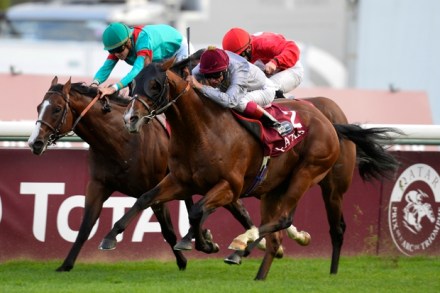
Aboard our coach from Rouen to Paris for the Prix de l’Arc de Triomphe our lady guide put it succinctly: ‘The only polite Parisians are the ones who are asleep.’ Try out your rusty French anywhere else and the locals award you bonus marks for effort: Parisians sneer and affect the sort of aural incomprehension Lester Piggott displayed when stable lads sought a fiver for leading up his winner. It was a joy nonetheless to be at my first Arc: while I was a full-time political commentator the coincidence with the party conference season made attendance impossible. It was all the more fun sharing duties with ex-jockey John Reid, who won the 1988 Arc on Tony Bin, escorting cruise ship passengers to the big race won for the second year in a row by the remarkable filly Treve.

These are the ones to watch in the Prix de l’Abbaye and the Derby

From our UK edition

Rightly, the authorities are doing all they can to find and discipline the disgruntled racegoer who threw a beer can at the champion jump jockey Tony McCoy after a recent contest at Worcester. McCoy, of course, as well as being the straightest man riding, is a teetotaller. But I couldn’t help thinking of the response when the then English women’s cricket captain Rachael Heyhoe Flint was asked about riotous crowds in the West Indies. She replied, ‘If the crowd throw bottles at us we’ll throw them back—unless of course they are full.’ Newmarket’s sunny Cambridgeshire meeting on Saturday was combined with a beer festival but there were no untoward incidents, just a wonderful holiday mood exploited by the relentlessly cheerful commentator Derek Thompson.

When jockeys earn so little, temptation is not surprising

From our UK edition

While Mrs Oakley was patrolling the aisles in Waitrose one day recently, I slipped off into my local betting shop. There, too, fresh from the pub, was Mr Knowall on the day that we learned that the former champion jockey Jamie Spencer, at only 34, intended to retire. ‘Effing retiring at 34,’ Mr Knowall told the Coral clientele. ‘It just goes to show these jockeys are all paid too much.’ There was no point in arguing with beer-fuelled ignorance, and of course Jamie Spencer won’t quit the saddle as a pauper. He has been in the elite band whose talents are so valued that rich owners fly them around the world to employ their services. He deserves to be taking a few nice nest eggs into ‘retirement’ with him. What the Knowalls forget is how few jockeys live at that level.

The making of a racing realist

From our UK edition

One of the greatest parliamentary sketch-writers of all time, Norman Shrapnel, made a point of never socialising with the politicians whose performances he chronicled. ‘I was worried it might dilute the purity of my hatred,’ he explained. When writing about Turf figures, the danger is a different one: you end up backing too many horses trained by those who have become friends. One day at Goodwood recently I plunged on three horses whose handlers had encouraged me to do so and not one of the three finished in the money. But that was my fault for suspending disbelief. As the Irish trainer Mick O’Toole once explained, ‘If there weren’t a lot of folk out there who thought their horses were better than they are then racing would collapse.

Some horses go better for a woman

From our UK edition

Mrs Oakley returned from her latest book club with an uplifting story. The Mother Superior of an Irish convent was 95 and failing. On her deathbed she asked for a drink and a nun went for fresh milk. Espying the bottle of John Jameson occasionally used by the visiting Father O’Shaughnessy for refreshment, Sister Agnes poured a generous measure into the cup of milk. As the Mother Superior drank, one of the nuns asked her what piece of advice she would leave them with for their lives ahead. Suddenly sitting bolt-upright in bed, the old lady declared, ‘Whatever you do, don’t get rid of that cow!’ That sums up how I now feel about Ascot’s Shergar Cup.

Goodwood is Ascot without the vulgarity, Aintree without the spray tans

From our UK edition

If I get to choose where to spend my last day on earth it will probably be at Glorious Goodwood. Goodwood is Ascot without the added vulgarity, Aintree without the spray tans, a garden party spiced up with some of the most ruthlessly competitive sport you can hope to watch. The Dash at Epsom apart, the five and six furlong races at Goodwood are the fastest you are likely to see horses running anywhere. It was all about speed, too, when the mighty Kingman prevailed in the mile-long Sussex Stakes duel with Toronado. Champion jockey Richard Hughes had his game plan ready for Kingman’s rider James Doyle. He aimed to kick on first off a slow pace and steal a length or two in the hope that Kingman wouldn’t respond fast enough to catch him.