Robert Peston

Robert Peston

Robert Peston is Political Editor of ITV News and host of the weekly political discussion show Peston. His articles originally appeared on his ITV News blog.

Boris Johnson’s refusal to talk about faith

From our UK edition

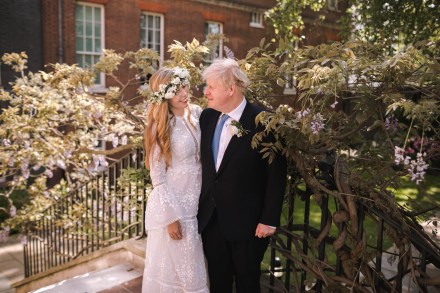
I am struggling to make sense of the Prime Minister’s answer to my question: whether he is a practising Roman Catholic - which I asked in good faith and with good reason because he was recently married in Westminster Cathedral. His answer was: 'I don’t discuss these deep issues. Certainly not with you.' He is aware that - for better or worse (worse for a long time) - this has been a pertinent question for chief and prime ministers since Henry Vlll. More broadly, the professed faith (or none) of a leader matters to many voters. But it was the 'certainly not with you' that took me aback. There is nothing in my 35 years as a journalist to suggest that I would trivialise or denigrate religion, or any issue of conscience.
Why the 21 June unlocking will probably not go ahead

From our UK edition

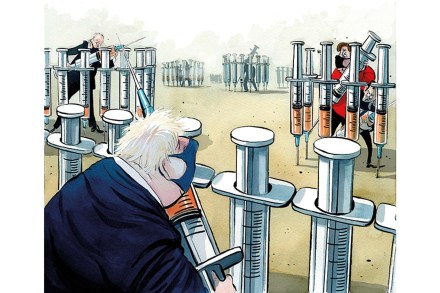
The Prime Minister’s roadmap rules would logically dictate not moving to stage four of lockdown easing on 21 June, but delaying by two or four weeks – because the increase in the R transmission rate to more than one is driven in part by the stage two and stage three easings and not just by the greater transmissibility of the Delta variant. As Nadhim Zahawi said on the Peston show last Wednesday, the more significant characteristic of the Delta variant is that one vaccine dose is not terribly effective against it, though two doses provides decent protection. And that good protection kicks in two or three weeks after the second dose.

Was Matt Hancock guilty of ‘negligence’?

From our UK edition

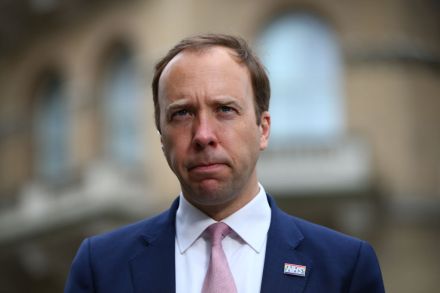
The Health Secretary Matt Hancock has insisted that he promised the Prime Minister and his former chief aide Dominic Cummings only that all elderly and vulnerable patients would be tested for Covid on discharge to a care home when there was adequate testing capacity, and not with immediate effect. This is Hancock’s defence against Cummings’s charge that the Health Secretary lied to him and the PM when promising to test patients prior to them going to a care home. But I understand Cummings has documentary evidence that as late as May last year he and the PM feared they had been misled by Hancock about how he would protect the elderly in care homes, and that he was guilty of ‘negligence’.

Johnson’s strategy for dealing with Cummings

From our UK edition

The government is not challenging Dominic Cummings's evidence in any kind of detailed way — despite the many highly damaging charges against the Prime Minister, the Health Secretary, and the entire Whitehall system. On my show last night, the Housing Secretary Robert Jenrick repudiated nothing of substance that Cummings had alleged, including the most damaging assertion of all, that the PM’s refusal to lock down in September had led to tens of thousands of avoidable deaths. The calculation appears to be that by the time Johnson’s public inquiry into the crisis starts next spring, we’ll have moved on and have forgotten and forgiven in our gratitude for the vaccines.

Cummings will not pull his punches

From our UK edition

Dominic Cummings will not pull his punches when criticising the Prime Minister when he appears before MPs on Wednesday morning. In evidence to MPs on the combined health and science committees, he will allege Boris Johnson said 'Covid is only killing 80-year-olds' when delaying lockdown in the autumn. Cummings will say that the PM insisted he wouldn’t repeat what he saw as his mistake of March when being pressurised over the possible collapse of the NHS, and added that 'I’m going to be the mayor of Jaws, like I should have been in March'. As I have reported, potentially the most damaging testimony from Johnson’s former chief aide is likely to be around his failed attempt to persuade the prime minister to lock down in September.

Why Boris shouldn’t be optimistic about the Bolton Covid data

From our UK edition

I am bemused by Boris Johnson’s optimism about the prospects for full unlocking on 21 June, based on the data he says he is seeing. Because the government’s own daily published data is showing worrying trends for the Indian variant. For example, there were 280 Covid infections reported for Bolton alone yesterday, 10 per cent of the UK total, and as you can see here the trend is steeply upward: That would be less worrying if there was also a steep rise in Covid testing in Bolton. But there isn't. As you can see here, the ratio of positive test results to tests carried out in Bolton – the positivity ratio – is holding fairly steady at about 7.5. It is obviously encouraging that there has not been a sharp associated rise in hospitalisations.

The fatal flaw in the Covid travel restrictions

From our UK edition

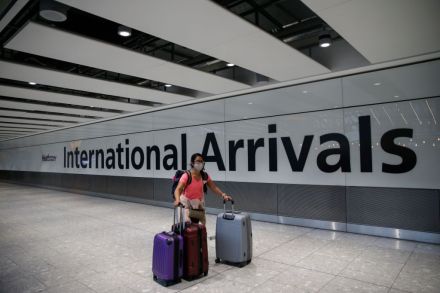
Here are two Covid questions, thrown up by the rate at which the Indian variant is infecting parts of the UK. First, does it show that the traffic light system, which was designed to prevent the UK from importing new strains and variants from abroad, is unfit for purpose? The delay of one to two weeks in moving India from the amber to red category – which I’ve been banging on about for a month – is relevant, and looks like a serious government mistake. But isn't there a more fundamental flaw in the system? Ministers keep pointing out that with India in the amber category the UK should have been protected – because passengers from India were supposed to quarantine at home for 10 days and take tests on days two and eight.

Full easing of Covid restrictions on 21 June looks unlikely

From our UK edition

The prospect of the final easing of lockdown restrictions in England going ahead precisely as planned on 21 June is close to nil, according to ministers and officials. 'It is clear some social distancing will have to be retained, not everything we've set out for 21 June is likely to happen,' said a government adviser. 'But it is also possible some of the easing we've done today will have to be reversed.'  Neither he nor a minister would be drawn on precisely which parts of the planned unlocking may have to be delayed, or which aspects of unlocking that's already happened would need rolling back.

Why a Covid public inquiry could prove useful for Boris

From our UK edition

The Prime Minister said today there would be a 'full proper public inquiry' into the government's handling of the Covid-19 crisis. This is highly significant, because a 'full, proper public inquiry' means one led by a judge and with witnesses represented by lawyers. I am also told – though Downing Street is refusing to comment on this – that the Cabinet will be asked by the Prime Minister to approve the terms of the inquiry on Wednesday morning, and there could be an announcement shortly afterwards. Such a public inquiry – like Leveson's into hacking and Chilcot's into the decision to go to war in Iraq – would take many years and might not report until after the next election.

Nine lessons from the elections

From our UK edition

Here are the big things I learned from Thursday's elections and their aftermath. 1. The Scottish parliament will vote to hold a referendum on independence for Scotland — but the legislation probably won't be introduced till late 2022. 2. The earliest there would be a referendum would be 2023. 3. Boris Johnson's revealed preference is to persuade the people of Scotland of the merits of remaining within the UK, rather than exploiting the Westminster government's 'reserve power' to veto independence. He wants to avoid what would be widely seen in Scotland as the tyranny of Westminster depriving the Scottish people of a voice on their future. That means a referendum in around three years is likely — which does not mean independence for Scotland is likely. 4.

Can Starmer reverse the horror of Hartlepool?

From our UK edition

The Tory victory in Hartlepool, with a swing of 16 per cent and the biggest increase in a governing party's vote in any by-election since 1945, is a terrible blow to Labour hopes that the choice of Sir Keir Starmer would soon stem their rot. What happened in what was a safe Labour seat — it was Peter Mandelson's in New Labour's heyday — is that voters who backed the Brexit party in 2019 switched to the Tories. According to the election analyst Matt Singh, if that sort of shift were repeated in other seats where the Brexit party made an impact then more than 20 Labour MPs would lose their seats — including leading figures like Yvette Cooper, Ed Miliband and Jon Cruddas.

How Tory MPs plan to clip Cummings’s wings

From our UK edition

On 26 May, Dominic Cummings will give evidence to MPs grouped on the health and science super committee, chaired by Jeremy Hunt and Greg Clark. This will be box office politically, because – as I have mentioned – Cummings will prosecute Boris Johnson and his scientific advisers for failing to lock down early enough in March 2020, and Johnson and Rishi Sunak – though not the scientists – for failing to lock down in early September (not late September). But the Tory controlled committee will not allow him to use them to humiliate the PM in other ways (though some might say the charge that the PM put thousands lives at risk by refusing to lock down is humiliating enough).

The nightmare: Boris’s battles are just beginning

From our UK edition

28 min listen

In this week’s podcast, ITV's political editor Robert Peston joins The Spectator's deputy political editor Katy Balls to talk over this week’s cover story, on the maelstrom of mayhem surrounding Boris Johnson. (1:29) With the recent exit of Johnson’s oldest advisor, Lord Udny-Lister, from Downing Street, the rumbling row over what Boris did or didn’t say in earshot of Cabinet staff, chatty rats and John Lewis - all in all, it hasn’t been a vintage week for Boris Johnson.

The truth about the government and ‘herd immunity’

From our UK edition

I spent much of the 1980s and 1990s reporting on company chief executives who didn’t understand the distinction between mine and theirs. They enjoyed lavish lifestyles — company flats, art collections, huge expense accounts — without the owners of the company (you and me through our pension funds) having a clue. Then came the corporate governance revolution, and much of this was cleaned up. So I had déjà vu earlier this week when reporting that the Tory party had loaned tens of thousands of pounds to lavishly decorate and refurnish the PM’s home in Downing Street. Maybe Tory donors and members think this is an appropriate use of their money. But did anyone bother to ask them?

Revealed: How Boris paid for the Downing Street refurbishment

From our UK edition

I understand that CCHQ (Conservative Campaign Headquarters) made a payment to the Cabinet Office to cover the initial costs of refurbishing the Prime Minister’s home in Downing Street, and the PM is now repaying CCHQ.  There is an audit trail and Cabinet Secretary Simon Case knows about it. This is presumably why he told MPs today that he would do a report on the propriety of how the decoration and furnishing was funded. Downing Street says to me that the PM has now paid for the costs of the refurbishment. But there was a loan to him from the Tory party. And I assume that loan will now have to be declared by him.  Readers can decide whether it was appropriate for his party to give him this kind of financial help.

The truth about Boris’s ‘bodies pile high in their thousands’ comment

From our UK edition

There is an incredible amount of hysteria and noise being generated by the conflict between Boris Johnson and his former chief aide, Dominic Cummings. So maybe it is useful for me to share what I know about three big claims: 1) The charge that Prime Minister did say he would rather see 'bodies pile high in their thousands' than order a third lockdown (as reported in the Daily Mail); 2) The cabinet secretary Simon Case still believes Cummings may be the 'Chatty Rat' who leaked details about November's lockdown; 3) the refurbishment of the Prime Minister's flat was originally to be funded by Tory party donors, even though on Friday the Prime Minister said he had been paying for it.

Cummings’s attack spells big trouble for Boris

From our UK edition

When No. 10 briefed newspapers on Thursday that Dominic Cummings was the source of leaks of the Prime Minister's text conversations with Sir James Dyson and the Crown Prince of Saudi Arabia, and pointed to Cummings as the 'chatty rat' who leaked news of the November lockdown, I said this looked like an exercise in mutually assured destruction. And so it has turned out. The PM's former chief aide — who was closer to Boris Johnson than anyone till he was forced out at the end of last year — has issued a statement that explicitly brands Johnson as 'unethical' and implicitly calls him a liar.

Did David Cameron know Greensill was about to collapse?

From our UK edition

On the day that senior Treasury officials and the Bank of England revealed quite how much David Cameron lobbied them last spring on behalf of Greensill for access to emergency loan schemes, I want to share important disclosures made in recent weeks that suggest Greensill was heading for collapse over many months. These represent the financial – as opposed to the political – side of this debacle, which has largely been ignored because of widespread outrage at the way David Cameron exploited his connections in government and the civil service to lobby for Greensill's cause.

Why are politicians picking on the football Super League?

From our UK edition

The collective gasp of outrage – led by Prime Minister Boris Johnson – at the decision of a few wealthy clubs around Europe to announce the creation of a European Super League is either naive or hypocritical. Because the idea that professional football is some kind of social enterprise owned and run by fans and communities might have been true 100 years ago, but in recent decades it has been a rapacious, commercial enterprise motivated mostly by money. It is quite difficult to see why the cartelisation of football should be what jolts our political leaders to man the barricades And does anyone think FIFA, UEFA and the Premier League have any kind of serious moral authority, given how they've conducted themselves in recent years?

The EU is playing a dangerous game with vaccine exports

From our UK edition

The EU is arguably playing a self-harming game in potentially restricting vaccine exports to the UK as a tit for tat for the inability of AstraZeneca to supply the 80 million doses it ordered by the end of March. First of all, this looks like unedifying EU sour grapes that the UK, out of the EU, moved earlier to place vaccine contracts and will soon be self-sufficient in vaccines. Second, it risks damaging the reputation of the EU as a place where multinationals can securely invest, because it is blowing up the supply chains of two big American companies with EU operations, Pfizer and Moderna. The UK, desperate for inward investment, will look relatively more attractive as a haven for foreign capital.