Robert Peston

Robert Peston

Robert Peston is Political Editor of ITV News and host of the weekly political discussion show Peston. His articles originally appeared on his ITV News blog.

Boris Johnson is becoming a risk to his own Covid rules

From our UK edition

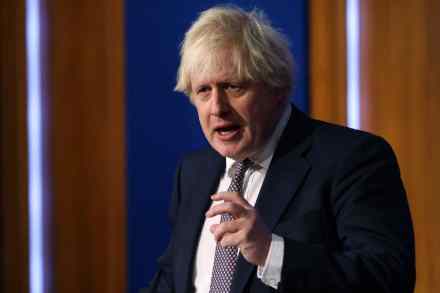
'It feels like a tipping point. Trust in Boris is collapsing. It could be fatal'. So spoke a senior Tory, who hitherto has been a great cheerleader for the Prime Minister. Sunday night's address to the nation by Boris Johnson won’t, he says, change the perception of Tory MPs that his recent performance has been wholly inadequate. That feeling may in fact be reinforced by Johnson’s choice of simply speaking sombrely down the barrel of a camera lens rather than holding a press conference and taking questions.

The problem with No. 10’s drinking culture

From our UK edition

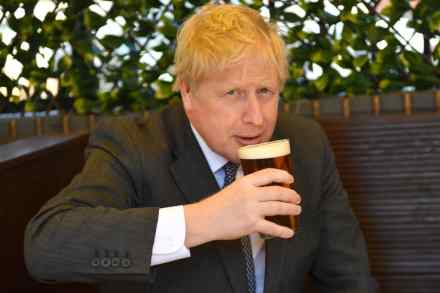
One challenge for the Cabinet Secretary Simon Case in deciding whether a group of people drinking together is a party is that there was something of an evening drinking culture in 10 Downing Street, especially on Friday nights and especially in the press office. He'll have to begin his adjudication of the propriety of Downing Street parties by deciding whether a group of people routinely drinking at their desks in the office constituted a breach of lockdown rules. According to a government source: ‘The Number 10 press guys drink at their desks on a Friday evening... that goes on for hours, but still fielding calls/emails etc, so just got old school Fleet Street vibes.

Why there is more Omicron than we know

From our UK edition

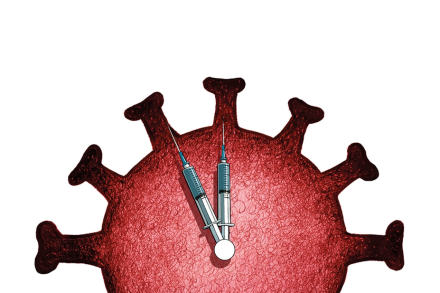
Yesterday the UK Health Security Agency (UKHSA) announced it had identified another 26 Omicron cases, and the total number of cases in the UK had reached 160. The rate of increase from zero in little over a week seems significant. But the one thing we know is these official figures are a significant underestimate of how many cases are actually in the UK. Here’s why. Omicron is already with us in much greater size than we know. There will already be significant transmission within communities.

Javid’s contact tracing optimism looks misplaced in the fight against Omicron

From our UK edition

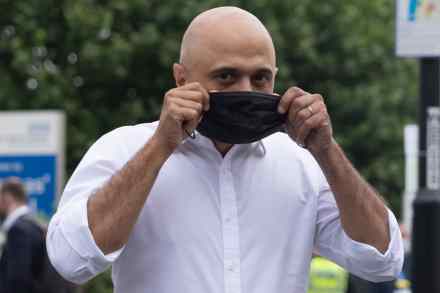
Sajid Javid told Andrew Marr this morning that it would be possible to quarantine the contacts of those with Omicron, because the new Covid variant comes up negative for the 'S' gene in PCR tests (what he called 'S gene drop out'), unlike Delta. I had already been told about this helpful characteristic of some PCR tests, which would allow rapid detection of Omicron relative to Delta. But I was also told that just a portion of tests carried out by NHS Test and Trace had the ability to check for the S gene. I made inquiries and the UK Health Security Agency (UKHSA) gave me this statement: '50 per cent of the Lighthouse laboratory network carrying out Pillar 2 community testing can assess samples for S gene target failure.

Has Boris Johnson done enough to stop the Omicron variant?

From our UK edition

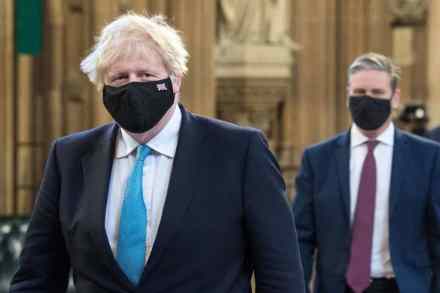
The restoration of an obligation to take a PCR test within two days of return to the UK, and to isolate until receipt of a negative result, is the most important of Boris Johnson's announcements today. In theory it will delay the seeding and spread of the new Omicron Covid-19 variant. But the relatively limited prophylactic measures unveiled alongside this – compulsory mask wearing in shops and on public transport, the obligation for any close contacts of those infected with Omicron to isolate, whether or not they test positive – will only turn out to be adequate if the new variant hasn’t already been seeded here. It is possible that there is more of Omicron in the UK than we know.

Was Boris Johnson’s blunt letter to the French a mistake?

From our UK edition

Boris Johnson may well be right that the best deterrent to migrants and refugees crossing the channel in flimsy, life-endangering dinghies would be for the UK and France to agree a ‘bilateral readmissions agreement to allow all illegal migrants who cross the Channel to be returned’. The question is whether he was well advised – or advised at all – to put that blunt request in a letter to the French president that he immediately put in the public domain via Twitter. The French government appears to have been blindsided and to have taken immediate offence.

The key difference between Johnson and Starmer

From our UK edition

Here is the symbolic difference between Boris Johnson and Keir Starmer. Johnson at the CBI rocked up with a bunch of notes and mid-way through lost track of what he was saying, whereas Starmer turned up three hours early and rehearsed his speech in full twice. There were other important differences. You’d think, given the damage that Brexit did to Labour in the 2019 general election, Starmer wouldn’t touch leaving the EU with a barge pole. But to a business audience that is deeply anxious about the rising cost of trading with the EU, Starmer listed how he would endeavour to negotiate better access to the EU’s market for the City, for farmers, for professional services.

Why I didn’t get a hug at COP26

From our UK edition

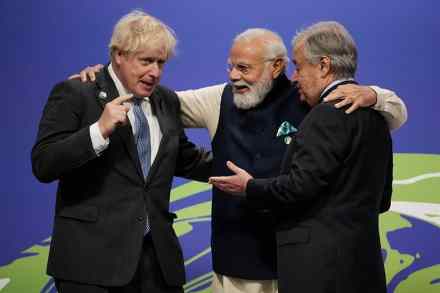
COP26 is not your typical power summit, because world leaders, NGOs and hacks are all in the same scrum. Outside their gilded fortresses politicians reveal different habits. John Kerry has the most purposeful stride, eyes rigid to the front, refusing to acknowledge the melee. Macron gives an impromptu press conference at the drop of a hat: he always has an articulate opinion to share, though his macho minders manhandle anyone who gets a little too close. Trudeau is predictably generous with his flirtatious smile. And Modi is the most huggy, which I hadn’t anticipated. He hugs everyone. Except me. I was particularly struck by his warm embrace of Luxembourg’s PM, Bettel.

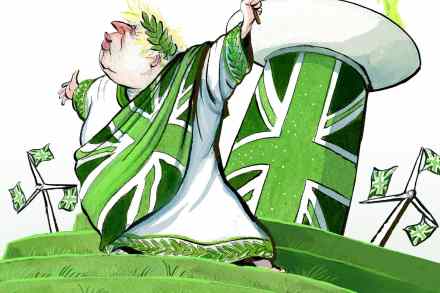
Boris Johnson, unlikely eco warrior

From our UK edition

Boris Johnson is famously a politician who sees the glass half full, and whose instincts are to hope that a crisis solves itself before he has to impose painful sacrifices on himself and us. So it is all the more curious that he is strikingly gloomy that far too little is being done across the world to halt global warming. What's more, his plans to 'green' the British economy are more ambitious than many other governments' and relatively expensive.  Why then is Johnson being less Micawberish and more pre-emptive on climate change than he was – for example – when Covid-19 arrived here in February 2020?

Has COP26 already flopped?

From our UK edition

'There is no chance of stopping climate change next week,' the Prime Minister told me in an interview for ITV News. 'There is no chance of getting an agreement to limit climate change to 1.5 degrees'. Standing in Rome's magnificent ancient Colosseum, he warned that the cost of this failure, if not somehow rectified, would be far worse than the recent pandemic: 'The Romans thought they were going to go on forever...Then wham, the middle of the fifth century, they hit a complete crisis, uncontrolled immigration, you have the Dark Ages. The lesson is things can go backwards... for a long time.

The real reason Britain failed on coronavirus

From our UK edition

The joint health and science super-committee's report into 'lessons learned' on the UK's coronavirus response may not want to 'point fingers of blame' for the grotesque failures, but my goodness it leaves the reader angry and upset. It confirms so much that we knew anyway, namely: 1) The early consensus among ministers, officials and scientists was that 'herd immunity by infection was the inevitable outcome'. 2) That this led to lockdown being delayed, at a cost of thousands of lives. 3) That there was a 'serious early error in adopting this fatalistic approach and not considering a more emphatic and rigorous approach to stopping the spread of the virus as adopted by many East and South East Asian countries'.

How will Boris build his ‘high-wage, high-skill’ Britain?

From our UK edition

There are a few problems with Boris Johnson's big idea, namely that the sharp fall in the supply of unskilled and semi-skilled workers in the UK – triggered by Brexit, reinforced by Covid – will automatically lead businesses to invest, such that the UK's long history of low productivity and low incomes will end on his watch. His vision, the philosophical heart of his speech to Tory conference this morning, is of a gleaming new 'high wage, high skill, high productivity economy' and that 'we are not going back to the same old broken model with low wages, low growth, low skills and low productivity, all of it enabled and assisted by uncontrolled immigration'. It is important to note his stress on controlling immigration.

Could the squeeze on living standards bring down Boris?

From our UK edition

There is about to be a two-phase onslaught on the living standards of those on low-to-middling incomes. On 1 October the energy price cap, for dual fuel, rises from £1,150 to £1,277. This is a rise of 11 per cent, at a time when furlough is ending and just a few days before the £1,000 a year uplift to Universal Credit is removed (which presumably Boris Johnson will not be swanking about in his big speech to Tory conference). That’s the first hit to living standards. There’ll then be a gradual further erosion of living standards with rising food inflation (of around five per cent, as per what Tesco’s chairman John Allan said on my show this week).

We’ll all pay the price for reckless energy firms’ gambling

From our UK edition

You know that mate of yours who is always boasting they pay way less for energy than you because they’re constantly surfing for the best deal on price comparison websites? Well they are still going to have the last laugh, even though the energy company that supplied them is going bust. That is because the energy secretary Kwasi Kwarteng promised today that he would protect consumers and keep the official cap on prices, which means that the amount your mate pays for energy will hardly go up at all. And they’ll probably end up paying what you are paying.

Why Johnson’s tax gamble will pay off

From our UK edition

Boris Johnson's announcement today, promising he will fix the £15 billion hole in health and social care, may well be the decision that determines his and his party's fate at the next election — and, by implication, Keir Starmer's reaction will also determine his destiny.  Probably the most important point is that after the 18 months we've had, most people would argue that putting the NHS and care for the elderly and vulnerable on a stable financial footing should be the Prime Minister's number one priority.

Will Johnson’s cabinet of cardboard cutouts make a stand?

From our UK edition

Cabinet government has become a very degraded thing. When I checked last night, cabinet ministers had still not been told whether the PM's planned breaches of his 2019 manifesto would even be on the formal agenda for discussion at the 8.30 a.m. cabinet meeting today. But as of last night, Boris Johnson is going ahead with: a manifesto-breaking 1.

Is Boris Johnson allowed to pick the next Archbishop of Canterbury?

From our UK edition

A few weeks ago, Prime Minister Boris Johnson was shirty with me when I asked him whether he was now a practising Roman Catholic, having recently been married to Carrie Symonds at Westminster Cathedral. His answer was ‘I don't discuss these deep issues. Certainly not with you.’   The question may be ‘deep’, as he says, but it is also – as a senior minister has reminded me – an intensely practical one and relevant to his duties as Prime Minister. Because under the British constitution:  1. The Prime Minister’s appointments secretary has an advisory role in the appointment of all bishops  2.

How ‘freedom day’ became ‘chaos day’

From our UK edition

Welcome to ‘freedom day’, or more properly ‘chaos day’ – with businesses warning they can’t operate because too many employees are being ‘pinged’ and told to isolate, and the clinically extremely vulnerable terrified to leave their homes for fear no one will be wearing a mask. The funny thing is that all this madness was foreseeable. Because, as the PM himself said only a week ago, the surge in infections is almost exactly what his epidemiological advisers on Sage have been forecasting. But the government is behaving as though all this mess is just an accident, one of those things. It wasn’t. It was the choice of Boris Johnson and his cabinet.

Boris’s ‘freedom day’ spells misery for many

From our UK edition

The projection from Sajid Javid that Covid-19 infections could surge to a record 100,000 per day in a few weeks, as all social distancing and mask-wearing regulations are removed, is especially terrifying for those whose immune systems are impaired or are clinically vulnerable in other ways. There are millions of these frail people. For those whose immune systems are compromised or suppressed, the efficacy of vaccines is much reduced. For others among the frail, any residual risk of becoming infected is too great, because for them it is literally a matter of life or death.

What can Britain learn from Israel on ending lockdown?

From our UK edition

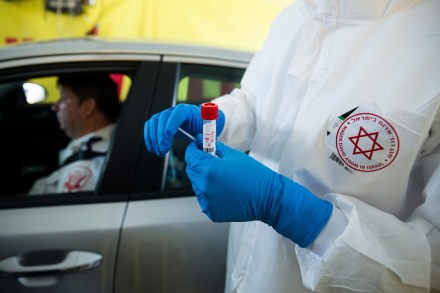
Israel has been the world’s whole-country experiment to establish how, and how fast, Covid vaccination can return life to normal (as much as life is ever normal in a country where there is constant tension over the rights and future of Palestinians). I am in Jerusalem, trying to understand the implications for stability in Israel and peace in the Middle East of a new government where prime minister Naftali Bennett is opposed to any kind of Palestinian state, and the alternate PM Yair Lapid passionately believes a two-state solution is the only answer.