Robert Peston

Robert Peston

Robert Peston is Political Editor of ITV News and host of the weekly political discussion show Peston. His articles originally appeared on his ITV News blog.

Jeremy Corbyn’s mystifying Brexit stance continues

From our UK edition

A Labour party that goes into the looming general election campaigning for a new Brexit referendum, which Jeremy Corbyn says it will do, will delight Boris Johnson and fill EU leaders with despair. Because Johnson will think millions of British people will recoil at the idea of a general election followed by a referendum in quick succession. And Johnson will also be delighted that he would face a warring opposition, since Lib Dems, Greens, SNP and Plaid Cymru are clear the UK must stay in the EU, whereas Corbyn’s Labour isn’t sure. Also EU leaders will be despondent that the UK under Corbyn’s plan may still not have made up its mind whether to stay or go by next spring, when the EU has to set its new budget.
Why Boris Johnson needs an election to deliver Brexit

From our UK edition

What more-or-less all Tory MPs seem to have missed is that Philip Hammond, the ex-chancellor who has become the anti-no-deal Sandinista, agrees with Boris Johnson and Dominic Cummings on the big thing that matters. Hammond loudly – and Johnson, with his consigliere Cummings sotto voce – all accept that EU leaders and negotiators do not see ANY way of negotiating a new Brexit deal on the basis of what Britain's new Prime Minister says he wants. As one Brussels official confirmed to me, even if EU leaders – and especially Ireland's Taoiseach Leo Varadkar – were prepared to do as Johnson asks and rip up the backstop, which they most definitely are not, they could not do so unless Johnson offered a detailed proposal for what would replace the backstop.

Dominic Cummings won’t blink over no deal. But will Boris Johnson?

From our UK edition

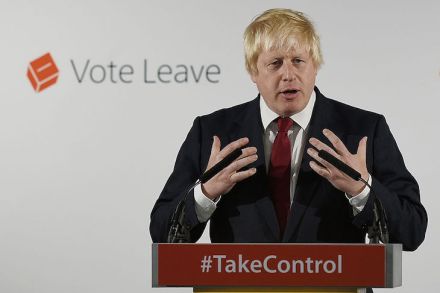
On the day Boris Johnson became Prime Minister, I said his most important appointment was that of Dominic Cummings – who had run the triumphant pro-Brexit, Vote Leave referendum campaign – as his most senior government adviser. It signalled Johnson was not bluffing when he pledged to extract the UK from the EU do or die, no ifs no buts, deal or no deal – because there are few political operators on the planet more ruthless, focused and remorseless than Cummings. I imagine he has OODA tattooed on his bottom (look it up). There has however been a bit of a misunderstanding about precisely what Cummings agreed to do for Johnson and for how long. So here are the terms of their compact.

Why a no-deal Brexit is now overwhelmingly likely

From our UK edition

I am regularly asked whether MPs can block a no-deal Brexit, whether they will block a no-deal Brexit and whether there will be a referendum. The short answers are: 1. MPs have the power to block a no-deal Brexit 2. The likelihood of them permanently and definitively blocking a no-deal Brexit is slim-to-none 3. There is likely to be a general election to decide whether the UK stays in or quits the EU, and the prospect of a referendum or People's Vote is now vanishingly small. Here is why, if you can be bothered to read on.

Who’s bluffing: Boris Johnson or the EU?

From our UK edition

Brussels believes that it has completed almost all the necessary no-deal planning, except it may try to organise improved communication between relevant national agencies and the EU Commission. It regards the idea being floated by many Brexiter MPs and the CBI that there will be mini deals before 31 October to lessen the shock of no deal as wholly laughable. 'The CBI stuff last week was desperate nonsense' said one EU source. 'It is not the EU's job to mitigate Brexit's impact on the UK. No deal means no deal – not mini deals'. So the main residual area of attention for the Commission is to work with Dublin on how to maintain the integrity of the single market in the absence of the backstop and how to limit the damage to the Irish economy.

Boris Johnson hasn’t learned the lesson of his Brexit referendum win

From our UK edition

During the 2016 referendum battle, I consistently said that leaving the EU would make the UK poorer, though probably not as poor in the short term as George Osborne was arguing. But – as I always added night after grinding night on the News at Ten and in a couple of Tonight films I made for ITV – there were other reasons why people might choose Brexit, such as increasing the independent power of Parliament and the courts, or having a greater say over who can come to live and work here. The complaint of Remainers after the election result that 'no one voted to make themselves poorer' was a canard, a convenient fiction. This was to imply that only wise Remainers were privileged enough to understand the basic laws of economics. They were patronising and wrong.

Can Boris Johnson overcome Jean-Claude Juncker?

From our UK edition

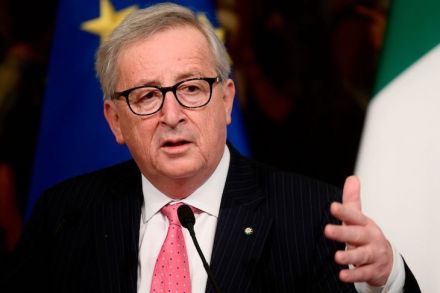
I don't know if Boris Johnson is as surprised to be prime minister as those who've known him for 20 years, and worked for him when he was Spectator editor, and became incredibly grumpy at his seeming pathological inability to make up his mind. But it all felt a bit unreal and disconcerting to see Johnson at the dispatch box today in the Commons – even though I've been calling him a shoo-in for the job for months. I presume the sense of detachment will dissipate. One thing Johnson has made up his mind about, seemingly, is that – in the words he uttered to MPs – any negotiated deal to leave the EU 'goes by way of the abolition of the backstop'. He said the same thing during the leadership campaign.

Why Dominic Cummings is Johnson’s most important appointment

From our UK edition

The closest analogy to the government Boris Johnson is forming is Blair’s and Brown’s New Labour government of 1997, when they appointed super powerful political advisers – Campbell, Powell, Balls, Whelan – to boss conservative Whitehall. That is what Johnson is doing – in spades – by making former Vote Leave campaign chief Dominic Cummings his de facto chief executive as senior advisor, because Cummings is NEVER a passive adviser. Cummings has an extraordinary sense of purpose and objectives – and pity those who get in his path. Cummings’s mandate is to deliver Brexit in 99 days, and in his spare time he’ll endeavour to reform Whitehall, since one of his obsessions is that the civil service is unfit for modern government.

Boris Johnson has achieved his dream. Will he mess it up?

From our UK edition

When Boris Johnson chants his mantra of delivering Brexit, uniting the country and beating Jeremy Corbyn, it is very much a personal imperative. For the simple reason that if he fails, as many of his colleagues anticipate, he will look like a blithering idiot. The point is that back in the spring of 2016, he faced a nation-defining fork in the road, when he was dithering about whether to stick with the then PM David Cameron and fight to stay in the EU or lead the leave campaign. Cameron will believe till his last breath that Johnson’s defection to Brexit tipped the scales against him. And when Cameron lost, May took over, and the rest was chaos and mayhem for the Tory party. But let’s play the game of counterfactuals.

Boris Johnson created Brexit. Now he has to own it

From our UK edition

At just before midday today, Brexiters will own Brexit for the first time, and that will really matter – if, as expected, Johnson is crowned Tory leader. Because from that moment, they will have no one but themselves to either praise or blame, for either Britain's brave new dawn or its slow and painful demise (whichever turns out to be our fate). The point is that, till today, Brexiters inside and outside the Tory party, from Jacob Rees-Mogg to Nigel Farage, have been able to attribute the failure to deliver Brexit, and an absence of the great sense of national rebirth that they expected, on the treacherous and pesky Remainers, who currently occupy all four of the great offices of state.

We’re heading for an autumn election

From our UK edition

Interviewing Boris Johnson is like staring long and hard into an expressionist painting: there are pyrotechnics, the shape of commitments and policies, but it might all be mirage. After I spoke with him on Wednesday for my show, my abiding sense was that he would dearly love a root-and-branch renegotiation of Theresa May’s Brexit deal, but that his famous optimism is not the same as naïveté. He knows replacing the Withdrawal Agreement at this late juncture is a million-to-one chance – and so leaving without a deal may be the only way to meet his deadline of Brexit by 31 October.

The Labour party is completely dysfunctional

From our UK edition

What has it come to in the Labour Party when the only way Labour peers feel they can communicate with their leader, Jeremy Corbyn, is to pay to take out an advert in the Guardian? No major party has ever been this dysfunctional. The advert has been signed by roughly a third of Labour Lords. It looks like a declaration of semi-independence by them – over Jeremy Corbyn’s failure to deal with the scourge of anti-Semitism in a way they see as effective and appropriate. [caption id="attachment_10346522" align="alignnone" width="444"] The Guardian advert taken out by Labour lords.[/caption] 'The point about the Lords is they can’t be deselected,' said a senior Labour MP. 'If we didn’t face the threat of deselection, we’d be as bold as the Lords.

Are the Conservatives now officially the no-deal Brexit party?

From our UK edition

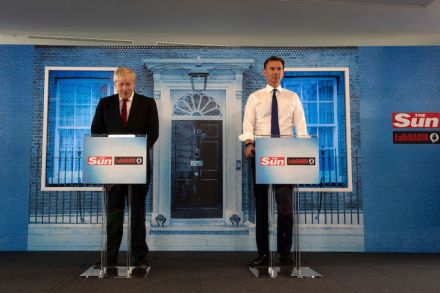
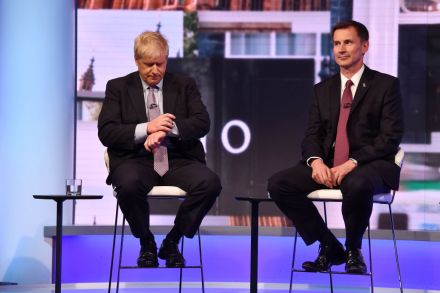
With just a week to go before the result is announced of the election to choose the new Tory leader, and our new PM, Boris Johnson and Jeremy Hunt are shape-shifting into each other. On Brexit Hunt is adopting more and more of Johnson's rhetoric about the need to keep open the option of a no-deal Brexit. And in Monday night's Sun debate, both of them made a new commitment that makes no deal the most likely outcome – they both said they wanted to scrap the so-called backstop, the mechanism for keeping open the border on the island of Ireland. Johnson said that putting a time limit on the backstop, or acquiring a unilateral right for the UK to withdraw from the backstop, would no longer be an acceptable reform. The backstop had to go altogether. Hunt concurred.

Why Boris Johnson failed to defend Kim Darroch

From our UK edition

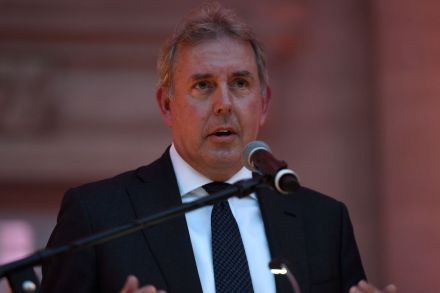
Boris Johnson’s failure to rebuke Donald Trump for his unpresidential attacks on the serving British prime minister and our US ambassador show that he takes for granted he’ll be the next PM, despite his insistence on the ITV debate last night that it would be presumptuous for him to do that. He is looking beyond the short-term attraction of being seen to stand up for Britain against a bullying US, to the relationship that he thinks will determine whether his early weeks in office are forceful or farcical. Johnson has been attacked by putative Tory friend and foe alike for refusing to manifest adequate solidarity with Sir Kim Darroch, who on Wednesday morning resigned after his criticisms of Donald Trump were leaked.

The Boris Johnson paradox

From our UK edition

Here is the Boris Johnson paradox: the Tory party appears to have made up its institutional mind that Boris Johnson will be its next leader and our prime minister. And yet all the senior Tories I meet – ministers, MPs and especially his supporters – are bracing themselves to be disappointed and even betrayed by him. They don’t trust him. But they are aching for him. One household-name, Johnson-backing, Tory Brexiter, a little the worse for wear at The Spectator’s party last week, told me 'of course Boris is going to eff us; it’s what he does.

The plan to block no-deal Brexit

From our UK edition

MPs opposed to a no-deal Brexit will make an almost-final attempt early this coming week to make it impossible for Boris Johnson - if he becomes PM - to prorogue or suspend parliament to force through a no-deal Brexit. The plan which has been designed largely by Dominic Grieve, the senior Tory MP and former Attorney General, would amend the Northern Ireland (Executive Formation bill) - which is due to be debated on Monday - to force the government in October to make an oral statement on the progress of efforts to restore fully devolved government to Northern Ireland. If the amendment were to pass, it would mean the House of Commons would have to sit in October.

The Tories have hit peak bonkers over Brexit

From our UK edition

Is it the country that has gone mad? Or just a majority of members of the Conservative party? They are the questions that rattle around my brain as the self-styled “sensible” candidate in the Tory leadership campaign, Jeremy Hunt, speaks to me for an ITV interview. He tells me it would serve democracy and save his party from possible extinction for the UK to leave the EU without a deal, even though he agrees with the Bank of England that the rupture from the EU could be almost as big a blow to our prosperity as the 2008 banking crisis. And he agrees with the Chancellor that the shock could increase the national debt by £90bn. And he agrees with the former Tory leader William Hague that it could lead to Northern Ireland and Scotland breaking away from the UK.

Why Boris Johnson’s team fear the tide is moving against him

From our UK edition

William Hague is not noted for agonies of self-doubt. But the former Tory leader’s judgement, in his Telegraph column on which of Johnson and Hunt is best suited to lead his party and our country, was not a close run thing: Hunt is one of the most impressive ministers Hague has worked alongside, and might even avert what he sees as the catastrophe of a no-deal Brexit; Johnson has made him laugh. At a time of national emergency, Hague went for the least amusing of the two. None of which will surprise Brexit true believers, because Hague has been saying clearly and loudly for some time that he fears leaving the EU without an agreement would make us considerably poorer and could precipitate the fission of Northern Ireland and Scotland from the UK.

Why neither Boris nor Hunt can stop a no-deal Brexit

From our UK edition

There is a lot of confusion about Boris Johnson’s approach to Brexit. And that is deliberate because the candidate has yet to make a big call about the nature of the modifications he is seeking to the Brexit plan negotiated by Theresa May. The ultra Brexiters among his supporters, the hard core of the European Research Group led by Steve Baker and Jacob Rees-Mogg, want him to ditch her Withdrawal Agreement completely – and replace that with a “GATT 24” temporary free trade arrangement for the years that would be necessary for the negotiation of a permanent new trade deal with the EU. This they regard as true liberation from the EU. Now confusingly Johnson yesterday – in a Talkradio interview – referred to this as his “Plan B”.

‘Preposterous rubbish’: The EU’s verdict on Boris’s Brexit plan

From our UK edition

I asked important EU and UK people involved in Brexit talks what they made of Boris Johnson's claim on BBC that: 1: The EU would be prepared to cancel the Northern Ireland backstop. 2: Continue free and frictionless trade with UK for an "implementation period" after Brexit on 31st October. 3: Negotiate a new package of measures to keep an open border on the island of Ireland during the implementation period, and; 4: Would break all their own red lines because they won't like Nigel Farage's 29 MEPs turning up at the European Parliament, and will panic when Johnson says he won't necessarily pay all the £39bn Theresa May agreed that the UK owes the EU in full, or on time.