Robert Peston

Robert Peston

Robert Peston is Political Editor of ITV News and host of the weekly political discussion show Peston. His articles originally appeared on his ITV News blog.

The cost of Britain’s coronavirus lockdown is mounting

From our UK edition

Thursday's meeting of the emergency Cobra committee that takes decisions on how to protect us from the ravages of Covid-19 was supposed to be a 15-minute formality, to rubber-stamp a decision, to make no decision at all on when and whether to ease these unprecedented on our freedoms. But because the telecoms connections for this video conference call were ropey and the ministers chaired by the First Secretary of State Dominic Raab struggled to be understood, the 15 minutes extended to a frustrating 45 minutes. Even so, ministers did decide to mandate the government's scientists, on the so-called SAGE committee, to gather the data necessary to inform a political decision on how and when to return our way of life to something that feels a bit more like normal.

The nerve-wracking task of governing without the PM

From our UK edition

I had been puzzling about why for most of the past 12 days, until last night, the PM and his advisers had been insisting - in tweets, short videos and statements - that he was still running the show, in spite of the evidence that he was seriously and worryingly under the weather. The answer, which is conspicuous this morning, is that although Dominic Raab has been asked by the PM to deputise for him when chairing important committees, including Cabinet, he is not 'in charge', in the way that a PM appointed by HM the Queen (and a Tory leader elected by Tory MPs and party members) would always be. It is not his fault, but he has no proper mandate. This absence of a conventional leader of the nation is complicated and concerning for two reasons.

What will a coronavirus ‘exit strategy’ look like?

From our UK edition

At the daily press briefings of senior ministers, the medical and the scientific advisers, there is a reluctance to talk about a timescale for an 'exit strategy' from these unprecedentedly severe restrictions on our freedom to move around and see people - and even to discuss what that strategy might look like. The understandable priority is to get us to commit wholeheartedly to the surrender of these basic rights so that the incidence of the virus can be slashed and many lives can be saved. Among the senior medical and scientific advisers, who seem to be steering pretty much everything right now, any initiatives that aren't about immediate virus suppression are deemed a potentially harmful luxury.

Why the Treasury is bashing the banks over coronavirus emergency loans

From our UK edition

There is some fascinating language in last night's press release from HM Treasury that modifies the Coronavirus Business Interruption Loan (CBIL) Scheme. It says lenders are 'banned from requesting personal guarantees on loans under £250,000'. Hmmm. This is – to put it mildly – a bit disingenuous, though politically expedient, bank bashing, because it implies it was the banks which wanted borrowers from the CBIL emergency scheme to pledge their business premises and any assets (other than the primary residence) as security against the loan.

A million coronavirus tests are coming to Britain, but do they work?

From our UK edition

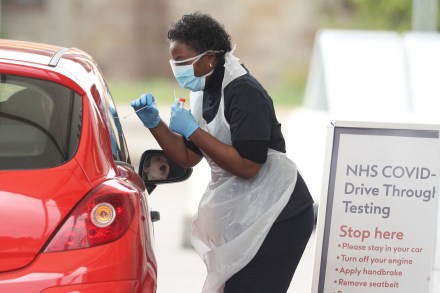
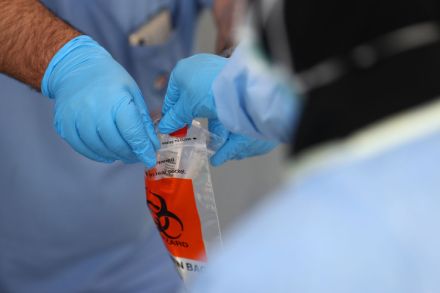
I have uncovered another troubling potential roadblock to increasing the volume of tests for Covid-19. It is all quite complicated, so please bear with me. What I have learned is that just under two weeks ago, the Government paid several million pounds to purchase two million 'rapid lateral flow diagnostic test' kits from China, with one million coming from a company called Wondfo and one million from AllTest. Both of these tests have EU approval for use by medical practitioners. They can be deployed and used in hospitals in the UK right now. Of these tests kits, one million – the ones made by Wondfo, which also have Chinese FDA approval – are scheduled to arrive in the UK in the coming week.

The heartbreaking decisions doctors are preparing to face

From our UK edition

In recent days, I have had more than enough upsetting conversations with doctors to last a lifetime. About how they don't have the protective gear to protect themselves from infection or to minimise the risk of them infecting others, about shortages of critical care beds and equipment, and about what they see as the scandal that not enough of them are tested for the virus. But perhaps the most upsetting conversations of all are about what they say to patients who come to hospital barely able to breathe, and whose underlying frailties are such that there is little prospect of them surviving longer than a few days. Like the rest of us, most doctors - except those working in end-of-life or palliative care - do not experience death as a daily or hourly experience.

Coronavirus can help us confront the uncomfortable truth about death

From our UK edition

In recent years, I've been thinking about the right way to die, having been with my late wife Sian Busby when she was in great pain from cancer at the end of her life, and been chairman of Hospice UK, the charity which campaigns - among other things - to improve end-of-life care. In normal times, few of us want to dwell on better or worse ways to die. But these are not normal times. The coronavirus crisis means we have to confront perhaps the hardest question any of us will ever face. For ourselves and for those we love most dearly, if a doctor told us that our chances of survival were slim, would we prefer to be kept alive possibly for just a few days more in a painful and humiliating way, on an incubator, or would we rather die at home, with those we love?

Has Boris Johnson acted fast enough for the NHS to cope?

From our UK edition

My jaw slightly dropped on Friday when Michael Gove announced that the number of Covid-19 cases in the UK was now doubling every three to four days. This is significantly faster than the five days that was initially built into the government's forecasts for the rate of increase in sufferers, and the 4.3 days that epidemiologist Neil Ferguson told me on 17 March was the new estimated ‘baseline’ doubling time. On the one hand, this accelerated rate of infection explains why the government moved to enforce much more severe measures to restrict social interaction just over a week ago, because presumably its scientific advisers had more than an inkling that the virus was spreading significantly faster than would allow hospitals to cope.

The lethal ambiguities in the ‘stay at home’ coronavirus advice

From our UK edition

There are still potentially lethal ambiguities in the government's coronavirus advice about who should go to work; such is the judgement of leading employers, to whom I've spoken. The fundamental question is whether businesses that are not doing work considered of national importance, but which involve employees working cheek by jowl in sweaty conditions, should cease operating. The head of one of the UK's largest companies is absolutely clear to me that the government has given a signal that such operations should send staff home and switch off the machines.

Boris had little choice but to impose a coronavirus crackdown

From our UK edition

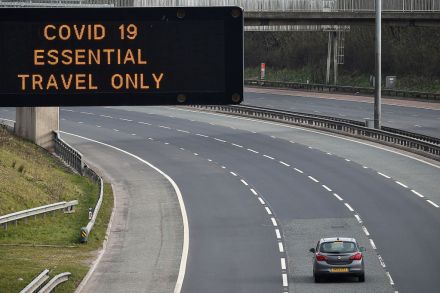
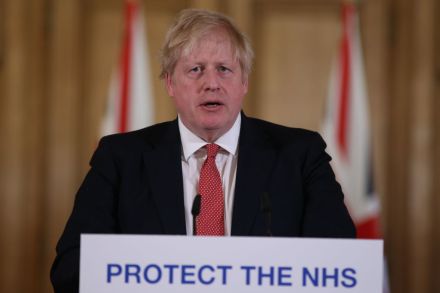
Very few of us alive thought we would ever hear a prime minister of the United Kingdom, with its centuries old liberties, order us to stay in our homes, and only venture out, and never in groups, to acquire what we need to stay alive or for basic essential exercise – on pain if we disobey of being arrested and fined by the police. His reason, that won't have escaped you (I hope), is rarely in our history have we faced such a threat to the lives of those we hold most precious as that posed by Covid19. And never in its 72-year existence has the NHS teetered so precariously close to collapse, because of the demands it faces from those with the virus who are struggling for air.

Doctors and nurses deserve to know if the NHS has enough protective clothing

From our UK edition

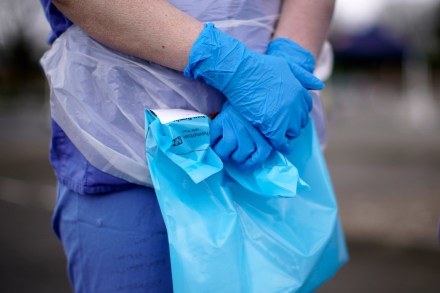
We are relying on courageous NHS staff to help us through this terrible Covid-19 crisis. So many would say we have a duty to listen to their concerns and anxieties. And as you will be aware, and as the chief executive of St George's University Hospital's Jac Totterdell has made explicit, lots of doctors and nurses do not feel that they are being given the appropriate protective clothing. A leading consultant has explained the issue to me. It is probably best if I just use the consultant's own words. 'All we get are little plastic aprons that don’t cover your arms or neck or back or lower legs. And no facial protection, yet patients are coughing all over you. 'Then you walk through the hospital covered in (the) bug. Which as we know can live for days on surfaces...

Remembering Alan Davidson

From our UK edition

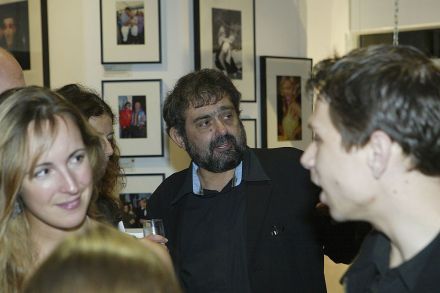
My dear cousin the pioneering newspaper photographer Alan Davidson has died. It is almost impossible to believe because he has been everywhere in my life since I was a child. At party conferences, he was always at the front, getting the best picture of the PM, and pissing off the likes of Alastair Campbell. At parties, including notably The Spectator’s famous summer party, he charmed the powerful and arrogant to give him that revealing portrait. And he always knew where to be to get the picture that the papers wanted.  He more or less invented the modern celebrity photograph in the 70s. In my life we had pesach with him, he photographed me as a child and my wedding. We enjoyed happy times and helped each other through the saddest.

The Bank of England’s coronavirus gamble

From our UK edition

It's very interesting, and important, that the Bank of England is encouraging banks to turn half a blind eye to likely coronavirus losses on loans to businesses and mortgage borrowers – in the hope that banks don’t suddenly stop lending for fear future losses will deplete their capital. After the 2008 banking crisis, this is something I never thought I would see, but it's probably an appropriate measure. Given the sheer number of businesses and mortgage-borrowers in trouble, the damage to the economy would be made much worse if banks stopped or cut lending for prudential reasons. What matters is that the Bank had better be right that the economy and businesses will bounce back when we are through this Covid-19 crisis.

Boris vows to ramp up coronavirus testing

From our UK edition

The announcement today by Boris Johnson that we are gearing up Covid-19 testing from 5,000 a day, to 10,000, to 25,000 to 250,000, and the endorsement from the government's chief scientific adviser Sir Patrick Vallance that this could theoretically happen in weeks, was the most important Covid-19 announcement on Thursday. Many in the NHS and in the wider scientific community see this as a shift in policy that should have come earlier. But few doubt its importance in saving lives by making social distancing more effective because it is more accurately targeted. And it creates the possibility of an earlier return to something for all of us that would feel a bit more like normal life.

The risk of the NHS collapsing under coronavirus may have just reduced

From our UK edition

There was widespread anxiety and concern that the Government was basing its measures to suppress spread of coronavirus on an assumption that the numbers infected were doubling every five days, when the evidence here and internationally suggested a doubling rate of nearer four days. I raised this concern with Neil Ferguson, the Imperial College expert whose forecasting has underpinned the Government's accelerated moves to constrain our freedom of movement. He told me: 'I misspoke when I said five days.' His baseline for the spread rate (R0) is that each sufferer would infect 2.4 people on average (technically: R0 = 2.4) which implies that the numbers infected would double every 4.3 days, in line with the international data. If R0 turns out to be 2.

Boris must borrow from Corbyn’s playbook to prevent a coronavirus crash

From our UK edition

A few principles should inform how the Government – any government – responds to what is a devastating act of God that affects all of us. They are: 1) The vulnerable, those who can't look after themselves, need more help than most. 2) If certain behaviours help to keep all of us safe, they should be incentivised. 3) If vital infrastructure and services are at risk of collapse, and the market cannot bear the cost of restoring them, those costs should be socialised, or shared between all of us, with the wealthy shouldering the lion's share.

Why isn’t the government ramping up coronavirus testing?

From our UK edition

When the government announced that anyone with a cough or a temperature had to stay home for a week, it was framed by the chief medical officer and the chief scientific adviser as a policy designed to slow the peak of the coming coronavirus epidemic. And it should help to do that. But there was another decision taken that many doctors tell me was more important, and was in their view retrograde – which was that anyone with mild symptoms who does not require hospitalisation would not be tested for it. Those with symptoms are not even being asked to voluntarily click on a button on a website or send in a text to announce that they may have the virus.

Government to quarantine elderly and tell over-70s: stay at home

From our UK edition

People over 70 will be instructed by the government to stay in strict isolation at home or in care homes for four months, under a 'wartime-style' mobilisation effort by the government likely to be enforced within the next 20 days. It is part of a series of measures being prepared by the prime minister, health secretary, chief medical officer and chief scientific adviser to prevent the health service from 'falling over' and to save lives as coronavirus, Covid-19, becomes an epidemic in the UK.

What the government doesn’t yet know about the coronavirus

From our UK edition

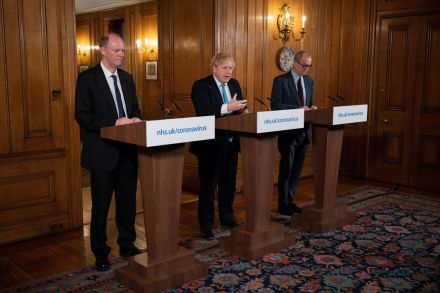
I understand a bit more than I did about what the prime minister, the chief medical officer Chris Whitty and the chief scientific adviser Sir Patrick Vallance are trying to achieve with their Covid-19 policy, what that policy actually is, what they actually know about the illness and - importantly - what they don't know. Let's start with the most important thing they don't know. This is the proportion of people who will get the virus but will show no symptoms. It is a hugely important ratio, because it conditions how far the government should take measures to restrict our ability to move around and socialise.

The price we’ll pay for halting coronavirus

From our UK edition

As I have repeatedly mentioned, the view of the chief medical officer Chris Whitty, which has shaped the Government’s response to Covid-19, is that the virus is the equivalent of unstoppable bad flu. But to make policy on that basis is to impose an epidemiological judgement on what is a social, ethical and political issue. The fact is that for most British people, 20,000 people or so dying each year from flu is just one of those horrible facts of nature. But that does not mean all, or any of us, will or should accept as a fait accompli that 100,000 or more have to die so that we can acquire the “herd immunity” I cited earlier today, as the Government’s goal.