Richard Davenporthines

Bohemian bonhomie

From our UK edition

Mary Ann Caws, a retired professor of English and French literature at the City University of New York, published her first book in 1966. Since then she has written several dozen studies, many of them about surrealism or modernism; others with such varied subjects as the women of Bloomsbury, Robert Motherwell, Blaise Pascal, Provençal cooking, Dora Maar and the wonderfully titled The Art of Interference. Now, after a career of urbane, discreet academic distinction, Caws has decided that it is time for her to put her personality into her books as well as her name on the title page.
Eric the Red

From our UK edition

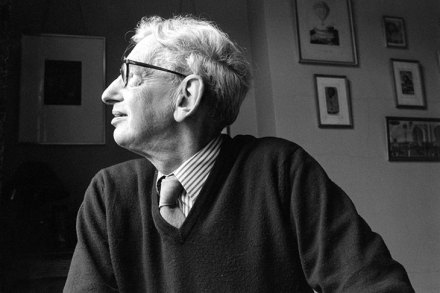
Sir Richard Evans, retired regius professor of history at Cambridge, has always been a hefty historian. The densely compacted facts in his books, the evidence of an inexorable mind incessantly at work, the knock-out blows that he has dealt to adversaries from David Irving upwards — they all characterise authoritative books by a hard-man among scholars. But in retirement, it seems, the great man is mellowing. His latest book — a biography of his friend, the historian Eric Hobsbawm — is a masterpiece of gentle empathy. Hobsbawm was born in 1917 in Alexandria, where his father (a naturalised British citizen of Polish origins) worked for the Egyptian Post & Telegraph service. His mother’s family were jewellers in Vienna.

Two men on a mountain

From our UK edition

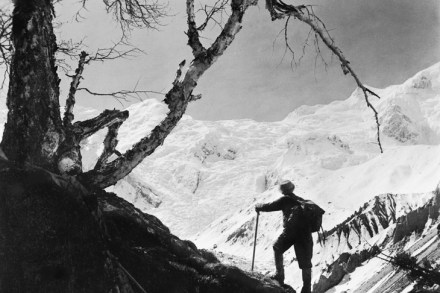
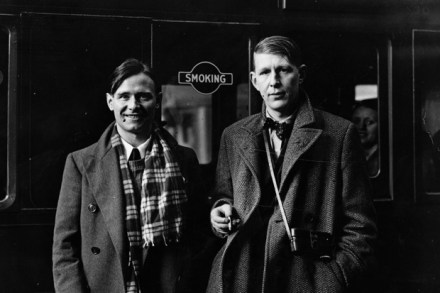
A book that opens in a Lahore refugee camp, shifts to Cat Bells Fell, rising above the shores of Derwentwater, and then swoops between the Ranigunj coalfields in Bengal, Belsize Park, a handicrafts exhibition at Kharagpur, Kensington Gore, military intelligence headquarters in Calcutta, an aircraft factory in Wembley and the Himalayas is bound to keep its readers jumping. In The Last Englishmen, Deborah Baker has written an exuberant, scene-changing, shapeshifting group biography, with John Auden and Michael Spender as its chief human protagonists. But she makes the Himalayas, and Mount Everest, palpable and vivid characters in her story too. John Auden was the geologist elder brother of W.H. Auden and became a global expert on the Himalayas.

Found and lost | 30 November 2017

From our UK edition

Charles Duff’s memoir tells a sad tale of cruelty and betrayal with spry wit rather than bitter resentment. Notwithstanding the subtitle’s threat of earnest Welsh soul-searching, Charley’s Woods is tart, arch and crisp. It recalls a strange, lonely childhood with brisk frivolity and a ruthless perception of other people’s oddities, vices and humours. Duff was born in Battersea in 1949. His mother, Irene Gray, was a Dublin social worker who pioneered role-play therapy in Ireland, and became pregnant by an Irish don of French-Jewish descent. After her son’s surreptitious birth, she hastened back to Dublin.

Muddled in minutiae

From our UK edition

‘Publitical’ is a neologism worth avoiding. Bill Goldstein uses it to describe T.S. Eliot’s activities when launching and promoting his quarterly review of literature, the Criterion, which had its first issue in October 1922. Eliot wanted an eminent French author as a contributor: ‘the only name worth getting is Proust’, he told Ezra Pound. As the founding editor of the New York Times books website, Goldstein is attuned to cultural fashions, publicity drives and the politicking of literary factions. And so he makes a painfully reductive explanation of Eliot’s remark: ‘The importance of Proust was publitical above all.’ 1922 was the publication year of P.G.

Understated eloquence

From our UK edition

It is 50 years since the publication of Very Like a Whale, Ferdinand Mount’s first novel. ‘Mr Mount’s distinguishing feature as a novelist,’ Mary-Kay Wilmers wrote in her sniffy, uncomprehending Times Literary Supplement review, ‘is that his analysis of society is obedient to Conservative economic principles.’ In the ensuing half century Mount has proven resolute in his Conservativism. He had two spells as a gloriously shrewd political columnist in The Spectator, headed Margaret Thatcher’s Downing Street Policy Unit, wrote the Tory manifesto for the 1983 general election, and edited the TLS under Rupert Murdoch’s proprietorship.

An infinite spirit

From our UK edition

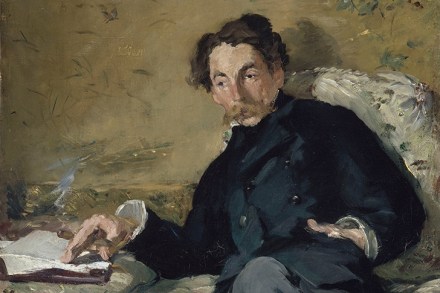
Can American publishers be dissuaded from foisting absurd, bombastic subtitles on their books as if readers are all Trumpers avid for tawdry, over-simplified stunts? Howard Bloch is a professor at Yale whose previous books have had medieval French literature, the Bayeux tapestry and medieval misogyny as their subject matter. He has taken an entertaining diversion in his career by writing a relaxed and accessible book about Mallarmé’s poem of 1897, ‘Un coup de dés jamais n’abolira le hasard’ (‘One toss of the dice will never abolish chance’) and its place in belle époque Paris. The professor’s erudition and light touch need no Barnum-style booming.

All about C

From our UK edition

In March 1981 Margaret Thatcher went to the hospital bedside of Maurice Oldfield, the former head of the Secret Intelligence Service, who was dying of stomach cancer. She found him surrounded by his brothers and sisters, whom she gently asked to leave as she needed to ‘speak privately with Sir Maurice’. When they trooped back after her departure, they found their brother, hitherto calm and resigned about his illness, distraught and weeping. It was the first time any of them had seen him in tears. In answer to their question what was wrong, he answered: ‘Mrs Thatcher asked if I was homosexual. I had to tell her.’ It was the first time any of his siblings had heard any remark about his sexuality.

Spectator books of the year: Richard Davenport-Hines on a real flirt of a book

From our UK edition

Laurence Scott’s The Four-Dimensional Human: Ways of Being in the Digital World (Heinemann, £20) is the year’s most surprising book. I expected a dour, lumbering tract about the dehumanising influence of new technologies, social media and information overload. Instead, I found a real flirt of a book. It’s full of impish gaiety, elegant and lithe in its language, providing intellectual ambushes and startling connections. It examines our evolving notions of publicity, privacy, time-wasting, frivolity, friendship, allegiances, denial, escapism and squalor in the internet age. The teasing, wary optimism is bewitching as well as informative. The little volumes of the ‘Penguin Monarchs’ series (£10.99 each) will be a matchless collection when completed.

Swords of honour

From our UK edition

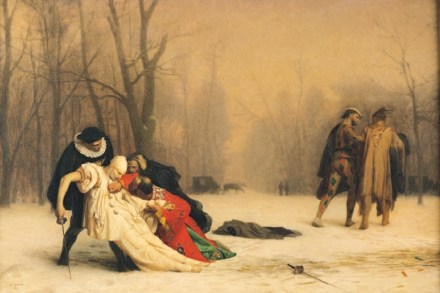
Earlier this century I was a guest at a fine dinner, held in a citadel of aristocratic Catholicism, for youngish members of German student duelling societies. My hosts were splendidly courteous, some of them held deadly straight rapiers or lethal curved blades, there were brightly coloured and golden braided costumes that made King Rudolf of Ruritania’s coronation robes seem dowdy, and we sung a rousing anthem about Prince Eugene of Savoy smiting the fearful Turk at the battle of Zenta in 1697. It was a high-testosterone evening. A few of my young hosts had duelling scars, discreetly placed so as to be imperceptible when they were in office suits, for some of them worked in Canary Wharf or the City as bankers, lawyers and accountants.

Wilde about the boy

From our UK edition

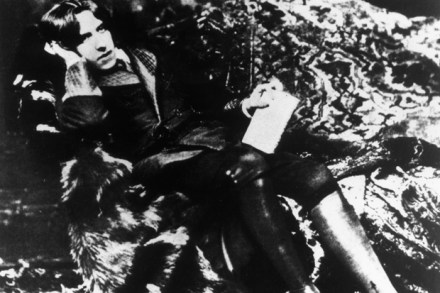
The prodigious brilliance, blaring public ruin, dismal martyrdom and posthumous glory of Oscar Wilde’s reputation are almost too familiar. The facts have been rehashed in numerous biographies, and dramatised by such actors as Robert Morley, Peter Finch, Rupert Everett and Stephen Fry. The only way to attack the subject with any hope of surprise is by an oblique sideways move from an unexpected angle. This was Robert Maguire’s method in Ceremonies of Bravery (2013), an intriguing account of Wilde’s friendship with the man-about-town Carlos Blacker and their connection with the Dreyfus affair in France. Another enjoyably tangential contribution is Linda Stratmann’s recent The Marquess of Queensberry: Wilde’s Nemesis.

Sunday roasts and beaded bubbles: dining with the poets

From our UK edition

In December 1817 Benjamin Robert Haydon — vivid diarist and painter of huge but inferior canvases of historic events — held a Sunday luncheon to which he invited John Keats, Charles Lamb and William Wordsworth. Nearly a century later, in January 1914, seven poets and Lord Osborne de Vere Beauclerk met in Sussex to eat roast peacock at another Sunday lunch. Six of the poets (Yeats, Ezra Pound, Richard Aldington, Sturge Moore, Frank Flint and Victor Plarr) came from London to honour the seventh, Wilfred Scawen Blunt, at his manor house. Hilaire Belloc joined them for tea afterwards, and sang a ballad about cuckoldry. Robert Bridges and John Masefield declined their invitations.

How a clumsy drummer started the 1848 revolutions

From our UK edition

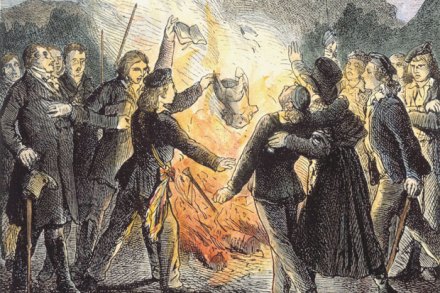
There are hundreds of resounding ideas and shrewd precepts in Adam Zamoyski’s temperate yet splendidly provocative Phantom Terror. This is the history of European ultra-reactionary repression and police espionage in the half-century after the overthrow of the French monarchy in 1789-93. The instability of popular opinion, the destructiveness of angry, ignorant populism and the wretchedness of timid, suppliant leadership are laid bare by him. Yet his deadliest strictures are against the rigid, fear-driven, authoritarian reaction of the propertied classes, which he demonstrates was lethally counter-productive as well as often absurd.

The opéra bouffe that was the Bretton Woods conference

From our UK edition

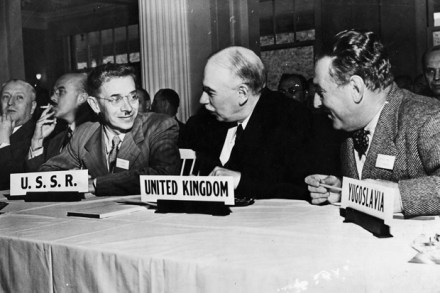
There ought to be a comic opera about the Bretton Woods conference — Thomas Adès’s Powder Her Face, about Margaret, Duchess of Argyll, with its mordant libretto by Philip Hensher, should be the model. Everything about the conference was overdone. It was held in 1944 in the gargantuan Mount Washington Hotel in New Hampshire, which provided a preposterous background of gimcrack luxury. The arrangements were as farcically managed as the Atlanta Olympics. The boy scouts who were dragooned in to help run the conference would make a wonderfully playful chorus in the Adès-Hensher opéra bouffe. There were 400 delegates from 77 countries — to say nothing of hundreds of slavering newshounds.

What E.M. Forster didn’t do

From our UK edition

‘On the whole I think you should write biographies of those you admire and respect, and novels about human beings whom you think are sadly mistaken,’ said Penelope Fitzgerald in 1987. The South African novelist Damon Galgut has reversed this formula — with mixed results. He has written a novel about a fellow novelist, E.M. Forster, using episodes and quotations taken from a conscientious reading of biographies, diaries and letters. He salutes Forster as a writer and commends his humanity; but it is not clear whether he thinks Forster was sadly mistaken in his sexual bearings or lame in his choices.

Critics can be creative – look at Malcolm Cowley

From our UK edition

Even Spectator book reviewers have to concede that their craft is inferior to the creative travail of authors. Henry James railed against the practitioners of literary criticism long ago: So much preaching, advising, rebuking & reviling, & so little doing: so many gentlemen sitting down to dispose in half an hour of what a few have spent months & years in producing. A single positive attempt, even with great faults, is worth generally most of the comments and amendments on it. The American critic Malcolm Cowley (1898–1989) escapes these anathemas because early in his long life he was a poet of some distinction. For nearly 70 years, too, he produced essays and books which together constituted a literary history of the United States.

What would Auden have deemed evil in our time? European jingoism

From our UK edition

‘Goodbye to the Mezzogiorno’ was the first Auden poem that Alexander McCall Smith read in his youth. He discovered it in an anthology, and it puzzled him because he had not then visited Italy. A little later, Smith found Auden’s elegy to Sigmund Freud, and was enthralled by its promise that psychoanalysis frees people ‘to approach the future as a friend/ without a wardrobe of excuses, without/ a set mask of rectitude or an/ embarrassing over-familiar gesture.’ When Smith began his careful, systematic reading of Auden while living under civil war conditions in Belfast, he found the hostility, menace and anxiety of Auden’s pre-1939 poems attuned to his environment. The poet’s hold on Smith’s imagination and intellect has not slackened.

The Rothschilds, the Spenders, the Queen…

From our UK edition

The novelist David Plante is French-Québécois by ancestry, grew up in a remote Francophone parish in Yankee New England and came to London half a century ago when still an avid young man. For 38 years he lived there with the late Nikos Stangos, a cosmopolitan of the Greek diaspora, whose father had been expelled from Bulgaria and his mother from Istanbul. Displacement and asylum were so much part of Stangos’s imagination that whenever he saw an old person in the street carrying a suitcase, tears came to his eyes. Stangos’s sensibility, zest and physical grace provide many of the richest moments in his lover’s diaries. Plante began keeping this diary in 1959.

Colette’s France, by Jane Gilmour – review

From our UK edition

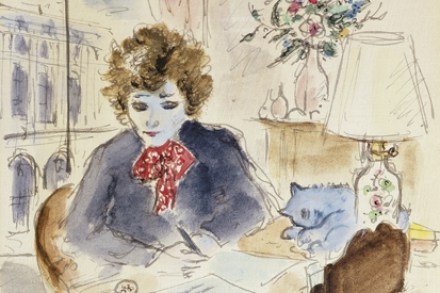
Monstrous innocence’ was the ruling quality that Colette claimed in both her life and books. Protesting her artless authenticity, she was sly in devising her newspaper celebrity and ruthless in imposing her personal myths. She posed as provincial ingénue, wide-eyed young wife of the Paris belle époque, scandalous lesbian, risqué music-hall performer, novelist of prodigious output, theatre reviewer, beautician, seducer, the most feline of cat-lovers and, ultimately, garlanded literary lioness. Yet her phoniness should not deter people from reading her books. Although most of her work resembled an imaginary autobiography, it was never self-obsessed or constricting.

Brotherly love

From our UK edition

Twenty years ago Pat Barker won acclaim with Regeneration, her novel about shell-shocked army officers undergoing treatment at the Craiglockhart psychiatric hospital for soldiers during the first world war. Her new novel is a close scrutiny of parallel atrocities of 1914–18. As in Regeneration, some characters are based on real-life figures. Several scenes are set in Queen Mary’s Hospital, Sidcup, where the pioneer plastic surgeon Harold Gillies worked to rebuild the smashed or scorched faces of soldiers who had been fighting on the Western Front — ‘1,000 young men with gouged-out eyes, blown-off jaws, gaping holes where their noses had been’, as a visitor finds.