Richard Bratby

Richard Bratby is the chief classical music critic of The Spectator

The problem with Klaus Makela

From our UK edition

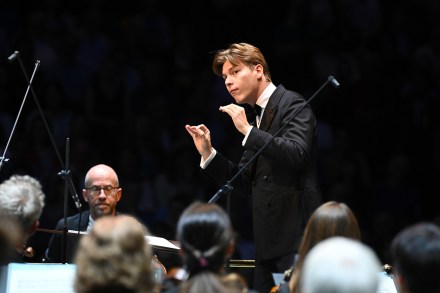
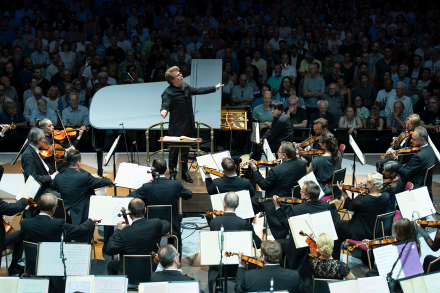
Klaus Makela is kind of a big deal. He’s a pupil of the Finnish conducting guru Jorma Panula – the so-called ‘Yoda of conducting’ – and he’s chief conductor of the Oslo Philharmonic as well as the Orchestre de Paris. Within the next three years he’s scheduled to take the baton at both the Chicago Symphony and the Royal Concertgebouw Orchestra in Amsterdam: blue-chip international positions, with fees to match. So we’re going to be hearing a lot more from maestro Makela, though possibly not in the UK where he has almost certainly (barring the LSO and Covent Garden) been priced out of the market. He is only 28, though apparently his agents would prefer it if you didn’t talk about that.

A lively showcase for a great central European orchestra at the Proms

From our UK edition

As the Proms season enters the home straight, it’s moved up a gear, with a string of high profile European guest orchestras. First up was the Czech Philharmonic playing Suk’s Asrael Symphony under Jakub Hrusa before moving on to Janacek’s Glagolitic Mass the following night. These grand, glittering monuments of Czech music were garnished with a couple of relative rarities – Dvorak’s Piano Concerto, played by Mao Fujita, and the Military Sinfonietta, composed in 1937 by (the then 22-year-old) Vitezslava Kapralova, who died at the age of 25. It’s unmistakably the work of a young composer. Xylophone?

Alt reich: Is Germany’s far right about to go mainstream?

From our UK edition

46 min listen

This week: Alt reich. The Spectator’s Lisa Haseldine asks if Germany’s far right is about to go mainstream, ahead of regional elections this weekend. Lisa joined the podcast, alongside the historian Katja Hoyer, to discuss why the AfD are polling so well in parts of Germany, and how comparable this is to other trends across Europe (1:13). Then: why are traditional hobbies being threatened in Britain? Writer Richard Bratby joins the podcast, alongside Chris Bradbury, the drone support officer at the BMFA, to discuss his article in the magazine this week about the challenge red-tape poses to model steam engine and aeroplane enthusiasts (18:47). And finally: how has sound design changed the world of theatre?

Aggressively jaded: Edinburgh’s Marriage of Figaro reviewed 

From our UK edition

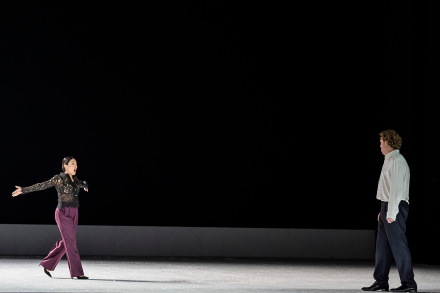
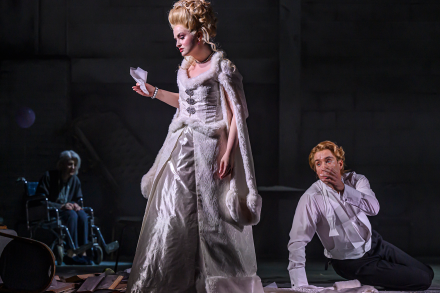
‘Boo!’ came a voice from the stalls. ‘Boo. Outrage!’ It was hard not to feel a pang of admiration. British opera audiences don’t tend to boo; we’re either too polite or too unengaged. But there we were in Act Three of Kirill Serebrennikov’s production of The Marriage of Figaro – just after the scene where Susanna, the Count and the Countess enjoy a three-in-a-bed romp while singing the trio ‘Soave sia il vento’ – and at least one person felt passionate enough to raise his voice. It was hard not to feel a pang of admiration. British opera audiences don’t tend to boo Obviously, there’s no such trio in The Marriage of Figaro.

Save our steam engines!

From our UK edition

Last week, if you’d known what to listen for, you might have heard a chorus of miniature whistles in gardens across the UK. Other sounds too: the whirr of pistons, the hissing of steam from valves. Up and down the nation, enthusiasts were fuelling up their model traction engines and steamrollers and raising steam not in celebration, but in mourning. It was a tiny mechanical wake for Mamod, the Birmingham firm which has made model steam engines since 1936, and which has announced that it is ceasing production. It’s estimated that more than 2.5 million engines have been sold by the company over the years. As commerce and government push our behaviours down digital channels, older hobbies don’t register When a beloved brand perishes, there’s rarely a single reason.

Britain’s youngest summer opera festival is seriously impressive

From our UK edition

Waterperry is one of the UK’s youngest summer opera festivals: it started up in 2018, at the northern limit of the species’ natural habitat. You leave the motorway at Oxford services and double back through the fields to the hamlet of Waterperry. Drive past the ‘Cats Crossing’ sign and the life-sized effigy of Rowan Atkinson (honestly) and you’re there. There’s a big house (slightly run to seed), a farm shop, a garden centre and a nursery containing the national saxifrage collection, which is not something you see every day. The opera festival squeezes in between them. Let’s do the show right here! Well, why not? The Barber was literally staged on the lawn. And if it rains? ‘We hope it won’t. Would you like a poncho?

Edinburgh is ruined by the Festival

From our UK edition

As an arts journalist, you know you’re getting old when you scan the Edinburgh Festival programme, and instead of thinking ‘Wow, look at all this,’ your reaction is ‘Oh Christ, look at all that’. You tell friends that you’re off to cover Edinburgh in August, and instead of lighting up with envy, they suck their teeth in sympathy. Ouch – nasty! And yet there it is, nonetheless: that great immovable cultural blow-out on the shores of the Forth; infinite, monstrous, plastered all over press and media, and defying you to ignore it. Could you design a less suitable host city for a major international arts festival? No, it’s got to be done, and you know what that means. The hell of a Cross Country train.

In defence of Gilbert & Sullivan’s The Grand Duke

From our UK edition

Artistic partnerships are elusive things. The best – where two creative personalities somehow inspire or goad each other to do better than their individual best – can seem so natural that they’re almost easier to identify by their absence. No one’s queuing up to revive Richard Rodgers’s Rex (lyrics by Sheldon Harnick). Pretending to rate Band on the Run above Revolver is a fun way to wind up boomers, but c’mon – honestly? With Gilbert and Sullivan, meanwhile, recordings have given us the chance to rediscover Grundy and Sullivan’s Haddon Hall and Gilbert and Cellier’s The Mountebanks: turkeys both.

Forget the Proms and Edinburgh – the Three Choirs Festival is where it’s at

From our UK edition

The Proms have started but there is a world elsewhere, and in Worcester Cathedral the 296th Three Choirs Festival set sail with a concert that couldn’t have happened anywhere else. A few years back I caused grave offence when I described the Three Choirs as a ‘home of lost causes’; as if, coming from The Spectator, that could ever be anything but a compliment. In truth, there’s still no classical music festival that provides such a sense of being plugged into a vital and ancient tradition – of being so close, as Elgar put it to ‘the living centre of music in Great Britain’.

A major operatic rediscovery: Birmingham Opera Company’s New Year reviewed

From our UK edition

This prophecy Merlin shall make, for I live before his time. One of the most thrilling aspects of the Tippett revival has been the discovery that his late masterpieces seem to have been fitted with a four-decade time-fuse. Works that prompted bafflement in the 1970s and 1980s, and then sat there for years looking like duds, are suddenly acquiring their targets. A quarter of a century after Tippett’s death, they’re blinking into life, locking on, and detonating in huge, psychedelic sunbursts of precision-targeted beauty and truth.

I’m an unrepentant sportsphobe

From our UK edition

It’s 1 a.m. in our small cathedral city and car horns are honking in jubilation. From down the street comes the sound of smashing bottles, and a deep bellowing roar, growing louder as the ‘whooahs’ and the chants echo off Georgian terraces. Well, it’s a country town on a Saturday night; a certain amount of lairiness is priced in. But God, this lot seem loud. Football? Rugby? I’m sure I read somewhere that an Olympics is due. One thing is clear, though: the sports people are doing sports stuff again and no power on earth will stop them. All you can do about it – all you’ve been able to do about it for your entire adult life – is tug the duvet about your head and wait for it to go away.

Sparky and often hilarious: Garsington’s Un giorno di regno reviewed

From our UK edition

Hang out with both trainspotters and opera buffs and you’ll soon notice that opera buffs are by far the more trainspotterish. It’s the pedantry, the one-upmanship (‘Really? You should have heard it with Goodall in 1976’). Above all, it’s the impulse to collect. You can’t actually buy little pocket books with lists of obscure operas to be underlined in biro once you’ve seen them (blue for a full staging, red for a concert performance) but there are certainly opera-goers who compile their own lists of personal stats – and they let you know it. The completist urge is powerful. Hardcore opera-spotters will cheerfully cross continents to cop a rare performance of Schreker’s Der Schatzgräber or César Franck’s Hulda.

An ensemble achievement that dances and sparkles: Glyndebourne’s Giulio Cesare reviewed

From our UK edition

A classic opera production ages like wine. When David McVicar’s staging of Handel’s Giulio Cesare first opened at Glyndebourne in 2005, Michael Tanner – writing in these pages – loathed it. ‘A quite hateful betrayal’ was how he described a production that is now widely regarded as a classic. It would be easy to brandish those words now he’s gone – ha ha, no one ever erected a statue to a critic – ignoring the truth that any first night review can only ever be a snapshot, and that the big story back then was the hyperactive, neon-lit debut of Danielle de Niese as Cleopatra. Tanner did predict that de Niese would do well out of it, though no one guessed that she’d end up marrying the owner of the theatre.

‘Zings off the stage’: My Fair Lady, at Leeds Playhouse, reviewed

From our UK edition

If you want to kill a musical, make it into a movie. Cats, Phantom of the Opera, South Pacific… cinema history is littered with dud remakes of world-conquering theatrical sensations. But it’s almost worse when a film musical succeeds on its own terms, and – like a mask eating into the face – proceeds to write over the original show in the collective memory. I once saw a newspaper describe a West End revival of The Sound of Music as a ‘stage version of the classic movie’, which is a bit like describing Pride and Prejudice as a novelisation of the hit BBC drama. Her coloratura is like sunlight on water.

A sugar rush for the eyes: Glyndebourne’s The Merry Widow reviewed

From our UK edition

In 1905, shortly before the world première of The Merry Widow, the Viennese theatre manager Wilhelm Karczag got cold feet and tried to pull it. He offered Franz Lehar hard cash to withdraw the score, and when that failed, he rushed it on under-rehearsed, using second-hand sets from an older show. Or so the story goes anyway. Karczag couldn’t know that within a decade The Merry Widow would become the most successful piece of musical theatre in human history up to that point: an all-conquering global brand that gave its name to hats, corsets, cigarettes and a rather nice cocktail (equal measures gin and vermouth, splashed with absinthe, Bénédictine and bitters, in case you’re curious). In the 1920s an American firm even marketed Merry Widow condoms.

‘I want every production I do to be the funniest’: an interview with Cal McCrystal

From our UK edition

There are certain things that you don’t expect at the opera. Laughter, for example. Proper laughter, that is; not the knowing sort that ripples politely across the auditorium five seconds after the punchline appears in the surtitles. We’re talking unconstrained laughter; laughter that gives you an endorphin rush and sends you straight online to tell your friends that they must see the show. But that’s Cal McCrystal’s whole business. He’s the director who devised James Corden’s delirious plate-spinning capers in the National Theatre’s One Man, Two Guvnors and whose face (in motion-capture) provided the elastic expressions of a small Peruvian bear in Paddington. ‘I want every production I do to be the funniest I’ve ever done.

Shiny, raunchy, heartless spectacular: Platée, at Garsington, reviewed

From our UK edition

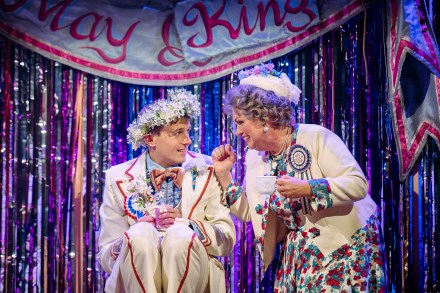
Fast times on Mount Olympus. Jupiter has been shagging around again and now his wife Juno has bailed on their hit reality show Jupiter & Juno, storming off set in a thundercloud of gold lamé and wheeled luggage. The producers are freaking out. Production runners scamper in all directions until Bacchus sends out to Starbucks and they all sit down to brainstorm a route out of ratings Hades. Meanwhile the luxury villa lies silent, its jacuzzi empty and the fake grass scattered with cardboard coffee trays. Cupid, it turns out, might have a plan – she knows a wannabe called Platée and, hilariously, she’s a total minger. Garsington’s new Platée is Greco-Roman mythology restaged as Celebrity Love Island And that’s just the prologue.

When Fauré played The Spectator

From our UK edition

Gabriel Fauré composed his song cycle La bonne chanson in 1894 for piano and voice. But he added string parts later and he premièred that version in April 1898 at the London home of his friend Frank Schuster: 22 Old Queen Street, the building currently occupied by this very magazine. I’m not sure how much Fauré gets played at Spectator HQ these days; his music certainly hasn’t been a feature of recent summer parties. Perhaps Fauré himself caressed the ivories where James Delingpole and Toby Young now prop up the bar. Imagine Verlaine’s poetry drifting out into the garden to mingle with Rod Liddle’s cigarette smoke on the moonlit air. L’heure exquise, indeed.

Bristol’s new concert hall is extremely fine

From our UK edition

Bristol has a new concert hall, and it’s rather good. The transformation of the old Colston Hall into the Bristol Beacon has been reported as if it was simply a matter of upgrading and renaming. There were probably sound reasons for doing so, but in fact (and despite protests from the Twentieth Century Society) the postwar auditorium has been demolished outright and replaced with a wholly new orchestral hall designed on the best current principles: shoebox-shaped, with much use of wood and textured brick. Butterworth sears his melodies on to the eardrums. Isn’t it weird we still think of the Edwardians as inhibited? Acoustically, it’s extremely fine – not a glamorous sound, but a remarkably transparent one.

Meet the man who says improvisation is the key to Mozart

From our UK edition

In August 1993, the pianist Robert Levin sat down in Walthamstow Assembly Rooms with the conductor Christopher Hogwood and the Academy of Ancient Music (AAM) to record the complete piano concertos of Wolfgang Amadeus Mozart. Mozart was big – the bicentenary celebrations of 1991 had made a global impact. And Hogwood and the AAM were big too. After their groundbreaking period-instrument Mozart symphony cycle a decade earlier, the 27 piano concertos seemed like a wholly achievable ambition. What could go wrong? ‘For Mozart’s contemporaries, what surpassed even his virtuosity was his ability to improvise’ Only, as it turned out, the entire classical record industry. The project was meant to take a decade but in 2000 the record label, Decca, lost its nerve and pulled the plug.