Richard Bratby

Richard Bratby is the chief classical music critic of The Spectator

Summer opera festivals have gone Wagner mad

From our UK edition

Another week, another Wagner production at a summer opera festival. This never used to happen. When John Christie launched Glyndebourne in the 1930s, he hoped to stage the Ring. So he gathered a team of refugee musicians from Germany, who quickly assured him that it was impossible and he should stick to Mozart. The man who changed all that was Martin Graham, the plimsoll-wearing founder of Longborough Festival Opera, who died in April at the age of 83. Graham was irrepressible; a self-taught enthusiast. With no one around to tell him it couldn’t be done, he pushed ahead regardless, staging the Ring cycle twice in as many decades. And now look.

Thrilling: Garsington’s Queen of Spades reviewed

From our UK edition

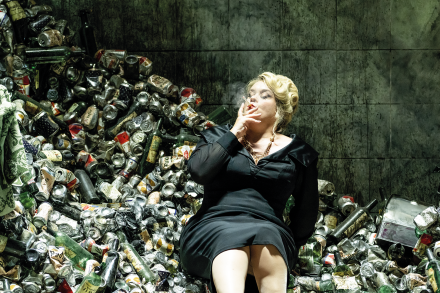
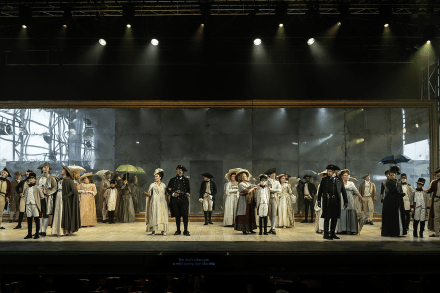
Tchaikovsky’s The Queen of Spades is one of those operas that under-promises on paper but over-delivers on stage. It’s hard to summarise the plot in a way that makes it sound theatrical, even if you’ve read Pushkin’s novella, and I’ve never found a recording that really hits the spot. And yet, time and again, in the theatre: wham! It goes up like a petrol bomb. With a good production and performers, Tchaikovsky hurls you out at the far end feeling almost hungover – head swimming, and wondering where those three hours went. The cast and staging at Garsington are very, very good.

Sincere, serious and beautiful: Glyndebourne’s Parsifal reviewed

From our UK edition

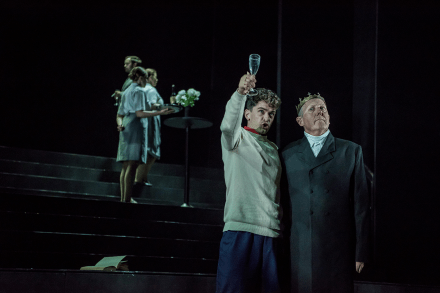
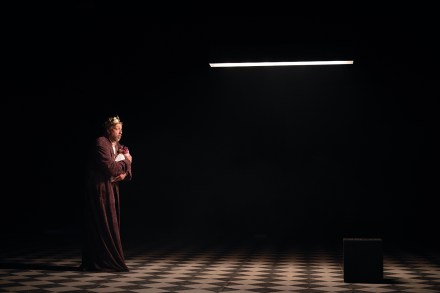
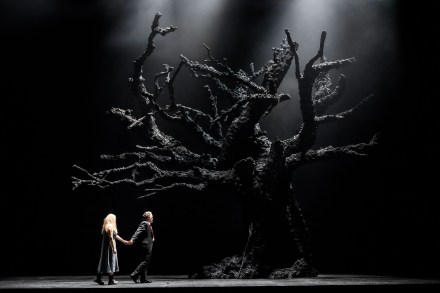
‘Here time becomes space,’ says Gurnemanz in Act One of Parsifal, and true enough, the end of the new Glyndebourne Parsifal is in its beginning. We don’t know that, at first: the sickbed image that’s glimpsed during the prelude doesn’t resolve itself until the opera’s closing scenes. In between, characters appear on stage in multiple forms, at different ages – past and future selves attendant on the present, whatever ‘present’ means in Monsalvat. Wagner, after all, makes it clear enough that time in the Grail Domain moves in mysterious ways, and his whole musical strategy reinforces that truth.

James Heale, Angus Colwell, Alice Loxton, Lloyd Evans, Richard Bratby, Christopher Howse and Catriona Olding

From our UK edition

38 min listen

On this week’s Spectator Out Loud: James Heale analyses the splits in Labour over direction and policy (1:27); Angus Colwell asks if the ‘lanyard class’ are the new enemy (6:21); Alice Loxton explains why bite-sized histories have big appeal (9:58); Lloyd Evans reports on how Butlin’s is cashing in on nostalgia (15:00); Richard Bratby on Retrospect Opera, the non-profit record label that resurrects the forgotten works of British opera (20:40); Christopher Howse provides his notes of typos (27:27); and, Catriona Olding reflects on the death of her partner, the Spectator’s Jeremy Clarke, two years ago this week (32:15).  Produced and presented by Patrick Gibbons.

The forgotten story of British opera

From our UK edition

British opera was born with Purcell’s Dido and Aeneas, and then vanished for two-and-a-half centuries, apparently. Between the first performance of Dido in 1689 and the première of Britten’s Peter Grimes in 1945, serious British operas effectively didn’t exist – or so we’re told in textbooks and biographies. But what if there was a different story; a forgotten story of a lively, eclectic British operatic tradition that thrived in those missing centuries, and was buried only through a combination of accidents, economics and our enduring national snobbery about theatre that’s sung rather than spoken? And what if there was an organisation devoted to excavating these forgotten works and giving them a chance to live again?

A spate of re-releases suggests that Wolfgang Sawallisch was no B-lister

From our UK edition

Grade: A It’s clearance-sale time for the great classical labels of the 20th century. As streaming platforms drain the remaining value out of once-prestigious recorded catalogues, even B-listers are being pulled up from the vaults and remastered for one last re-release. Eleven-disc Rafael Frühbeck de Burgos edition? Walter Weller’s complete Decca recordings? Now’s your chance: everything must go! The Bavarian conductor Wolfgang Sawallisch, who died in 2013, was never exactly B-list. His name always commanded respect. But in the golden age of LP collecting he was regarded as a safe pair of hands rather than a blue-chip name. Listening to a mini spate of Sawallisch re-releases suggests that we underrated him.

Our half-time scorecard on the Royal Opera’s Ring cycle

From our UK edition

With Die Walküre, the central themes of Barrie Kosky’s Ring cycle for the Royal Opera are starting to emerge, and one of them seems to be wood. Not trees, so much; at least not as a symbol of life. After the rapid assembly of a world from theatrical nothingness (a bare stage), Hunding’s forest hall is simply a wall of blackened planks, with no World Ash Tree in sight. Then you notice the protruding hilt of the sword Nothung: no, that is the World Ash Tree, and Hunding has recycled it into building material. We knew he was a wrong ’un, but really: this is Sycamore Gap-level wickedness. Various ex-trees recur in Rufus Didwiszus’s designs. The huge, maimed log from Das Rheingold reappears during Siegmund and Hunding’s duel, spewing blood as the betrayed hero falls and dies.

Inspired: Scottish Opera’s Merry Widow reviewed

From our UK edition

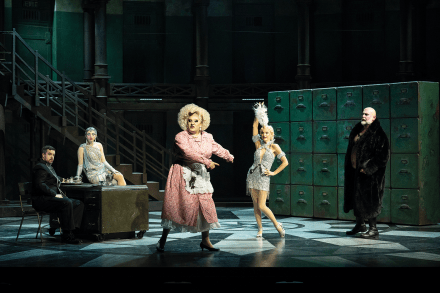
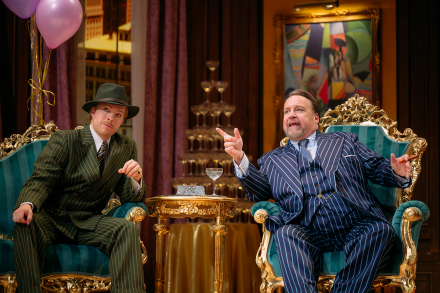
The Merry Widow was born in Vienna but she made her fortune in the West End and on Broadway. The original 1905 Viennese production was a shoestring affair. It was the English-language revivals in London and New York that made the Widow a global smash, and that happened only after extensive rewriting, done with Lehar’s wholehearted endorsement. Hanna Glawari (deemed unpronounceable) was renamed Sonia Sadoya, Zeta became Baron Popoff and the comedian George Graves inserted a humorous monologue about a chicken called Hetty. You probably had to be there. Anyway, the point is that operetta is protean. Rewrites, updates and changes of setting are not only forgivable; they’re intrinsic to the genre.

Imagine Dua Lipa releasing an album of Victorian parlour ballads

From our UK edition

Grade: B+ This is unexpected. A bright young cellist – one of the brightest, in fact – makes his recorded debut with a collection of opera fantasies. In the 19th century, touring virtuosos routinely ransacked hit operas for melodies, then decked them out with every conceivable bit of flummery, dazzlement and top-end-tinsel, the better to excite their fans. They were wildly popular. The young Wagner spent a miserable few months in Paris compiling opera fantasies for cash in hand. The process basically radicalised him. Nowadays, there’s no less fashionable genre, and for the excellent 26-year-old American cellist Zlatomir Fung to record a whole disc of the silly things – well, it’s as if Dua Lipa had suddenly released an album of Victorian parlour ballads.

Poulenc’s Stabat Mater – sacred, fervent and always on the verge of breaking into giggles

From our UK edition

It’s funny what you see at orchestral concerts. See, that is, not just hear. If you weren’t in the hall during Poulenc’s Stabat Mater would you even realise that the tuba uses a mute in the final chord? Visually, it’s hard to miss – the thing’s huge, whether standing on the floor or being heaved into the instrument’s bell. The sound? A muffled, matte effect, quite unlike the usual nasal buzz of muted brass. But how droll of Poulenc, and how utterly in keeping with the raffish, trash-fabulous aesthetic of Gallic brass writing: a world where no symphony is complete without a pair of honking cornets à pistons. And how perfect, too, for this Stabat Mater, a fervent choral work that sounds nonetheless as if it’s about to break into giggles.

Devastating: WNO’s Peter Grimes reviewed

From our UK edition

Britten’s Peter Grimes turns 80 this June, and it’s still hard to credit it. The whole phenomenon, that is – the sudden emergence of the brilliant, all-too-facile 31-year-old Britten as a fully formed musical dramatist of unignorable force. W.H. Auden had urged him to risk everything – to step outside his admirers’ ‘warm nest of love’ – and in the first moments of Peter Grimes, Britten does precisely that. The folk-opera bustle of the opening tribunal scene dissolves into the desolate bird cry of the first Sea Interlude and straight away, you’re in the presence of something unimaginably vaster and more true. It pins you to your seat. That was certainly the impression I had from Tomas Hanus, conducting the orchestra and chorus of Welsh National Opera.

Sunny Schubert and iridescent Ravel: album of the week

From our UK edition

Grade: A Maurice Ravel was tougher than he looked. True, he dressed like a dandy and wrote an opera about a dancing teapot. But when he was rejected for military service in the first world war (he was 39 and 5ft) he practically forced his way to the front line as a lorry driver – sheltering for days in a forest near Verdun after his truck was disabled by shrapnel. Apparently, when he visited Vaughan Williams in London he went straight to the Victoria Station grill and ordered steak and kidney pudding. Just when you thought you couldn’t admire the man any more.  It’s the toughness that impresses in this new recording of his Piano Trio. OK, not toughness – more like tautness, perhaps; a clear-eyed, athletic sort of grace.

The liberating force of musical modernism 

From our UK edition

It’s Arvo Part’s 90th birthday year, which is good news if you like your minimalism glum, low and very, very slow. Lots of people seem to. The London Philharmonic’s concert on Saturday night was a reminder of an earlier, less ingratiating Part: the dissident composer in Soviet-controlled Estonia. Hannu Lintu revived Part’s First Symphony of 1963, and there’s nothing remotely minimal about its opening. There’s a swagger of brass, machine rhythms and an onslaught of string chords in which the dissonances don’t feel aggressive so much as mischievous. This is a young composer taking a manic glee in piling on the wrong notes just because he can.

Splendid revival of an unsurpassed production: Royal Opera’s Turandot reviewed

From our UK edition

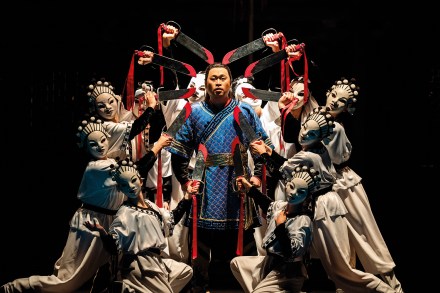
Puccini’s Turandot is back at the Royal Opera in the 40-year old production by Andrei Serban and… well, guilty pleasure is an unfashionable notion these days, but I still feel a batsqueak of shame at enjoying it so much. It’s not the chinoiserie – anyone who believes that an opera based on an 18th-century Italian pantomime should be taken literally is probably beyond help. No, it’s a Spectator headline from years back that still nags. ‘Turandot is a disgusting opera that is beyond redemption’ was the gist of a review of this same staging by the late Michael Tanner, and if it was anyone else you’d put it down to snobbery and move on. But you can’t do that with Tanner, a thinker of piercing intelligence who spent decades interrogating how opera works and why it matters.

Barbara Hannigan needs to stop conducting while singing

From our UK edition

Last week, Barbara Hannigan conducted the London Symphony Orchestra in Haydn, Roussel, Ravel and Britten, though to be honest she had me at Haydn. It’s still relatively unusual to encounter him in a symphonic concert, and more than one promoter has told me that Haydn is ‘box office poison’, which is a shocking description of such life-enhancing music. Perhaps it’s down to sonic overkill. Bingeing on Shostakovich and Mahler has left our emotional reflexes distended and coarsened, and now we feel short-changed if every inch of the concert platform isn’t crammed with extra brass and percussion.

A luminous new recording of The Dream of Gerontius

From our UK edition

Grade: A– There’s a species of music-lover who enjoys pointing out that Elgar isn’t played much on the Continent – the musical equivalent of those social media bores who pop up each April to reveal that Saint George was Turkish, ackshully. It’s all rot, of course. Some of the best Elgar performances of recent years have come from Barenboim and Petrenko in Berlin; and, after all, it was Richard Strauss in Düsseldorf who put The Dream of Gerontius on the map.  And now here’s Gerontius from Helsinki. True, the conductor, Nicholas Collon, is British and I hadn’t previously had him down as an Elgarian. The choirs are a mixture of Finns and Brits (they blend well) and the soloists are about as fresh a crop as you could hope for right now.

A dancing, weightless garland of gems: Stephen Hough’s piano concerto reviewed

From our UK edition

Stephen Hough’s new piano concerto is called The World of Yesterday but its second ever performance offered a dispiriting glimpse into the world of tomorrow. A couple of minutes into the finale Hough stopped playing and the orchestra fell silent. ‘I’m very sorry,’ he explained. ‘My iPad is going crazy.’ A murmur of sympathy, mingled with laughter; then Hough signalled to the conductor Mark Wigglesworth and the Bournemouth Symphony Orchestra and they carried on, this time without mishap. But we’d seen it happen, and until last week I’d have told you it was inconceivable. This wasn’t some rash experiment: professional musicians have been using electronic scores for well over a decade, generally without problems.

Spreads emotions like jam: Festen, at the Royal Opera House, reviewed

From our UK edition

Mark-Anthony Turnage’s new opera Festen opened at Covent Garden earlier this month, and reader, I messed up. I broke my own golden rule with new operas: don’t do any homework, don’t try to memorise the plot, and whatever you do, don’t revisit the source material. The aim is to experience the new work on its own terms. That’s hard enough, given the PR onslaught that precedes any Royal Opera première – the way the classical establishment circles the wagons, and the unspoken consensus that certain living composers (including Adès, Benjamin and Turnage, though not Judith Weir, curiously) are simply too big to fail. But no: I rewatched Thomas Vinterberg’s 1998 Dogme movie, twice, and it was the wrong decision. Inevitably, and unfairly, you cross-reference.

Regents Opera’s Ring is a formidable achievement

From our UK edition

I saw the world end in a Bethnal Green leisure centre. Regents Opera’s Ring cycle, which began in 2022 in Freemasons’ Hall in Covent Garden, has found its culmination and completion at York Hall, a rundown public bath better known for championship boxing. Tower Hamlets security staff scan you for concealed weapons on the way in, which is not exactly typical at the opera. Still, the Ring is not a typical opera – and isn’t art supposed to feel dangerous? But once you’re inside – and as long as you’re not seated within earshot of the bar staff, who clatter and chatter throughout – Caroline Staunton’s scaled down production transfers seamlessly; in fact, the sightlines are better.

Want to understand a conductor? Listen to their Haydn

From our UK edition

Grade: B When a music-lover is tired of Haydn’s London symphonies, they’re tired of life. It’s not just the sheer creative verve of these 12 symphonies by a composer in his sixties. It’s the generosity of spirit. Beethoven demands a battle of wills; Mozart a near-impossible grace. But a conductor can run straight at a London symphony and Haydn will show us, with a smile, exactly who they are. Beecham is urbane, Bernstein camps it up; Abbado is trim and impeccably turned out. Eugen Jochum (a belated discovery) is just very, very German. Haydn’s still bigger than all of them. Paavo Jarvi has reached the second volume of his London symphonies with the Bremen-based Deutsche Kammerphilharmonie, and he’s surely never been anyone’s idea of a ray of sunshine.