Raymond Keene

Tal story | 18 July 2019

From our UK edition

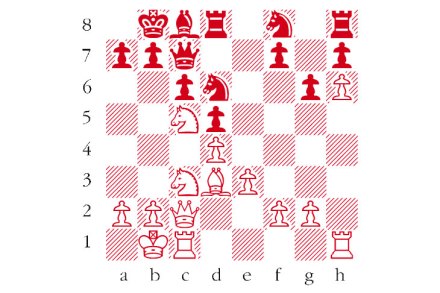
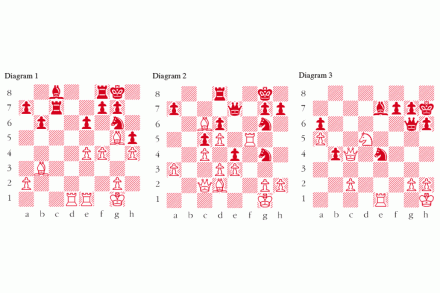
Sixty years ago, the great Mikhail Tal won the Candidates tournament by a massive margin to qualify for a world title match against Botvinnik, which Tal also won, equally convincingly. This week, in homage to Tal, one of his four zero wipeout games against Bobby Fischer, with notes based on those of eyewitness Harry Golombek from his book Fourth Candidates Tournament 1959 in the Hardinge Simpole edition edited by David Regis.   Fischer-Tal: Candidates Tournament Bled/Zagreb/Belgrade 1959; Sicilian Defence   1 e4 c5 2 Nf3 d6 3 d4 cxd4 4 Nxd4 Nf6 5 Nc3 a6 6 Bc4 e6 7 Bb3 Be7 8 f4 0-0 9 Qf3 Qc7 10 0-0 b5 11 f5 White should not permit his queen’s knight to be driven away from c3, so 11 a3 was indicated. 11 ...
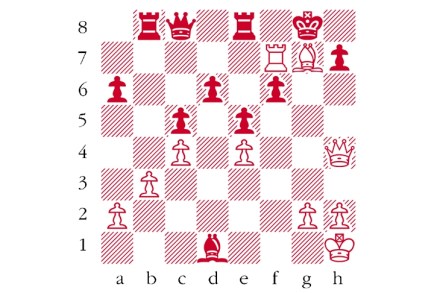
no. 563

From our UK edition

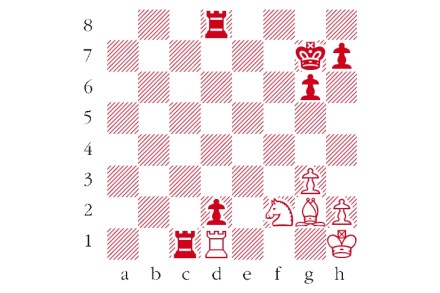
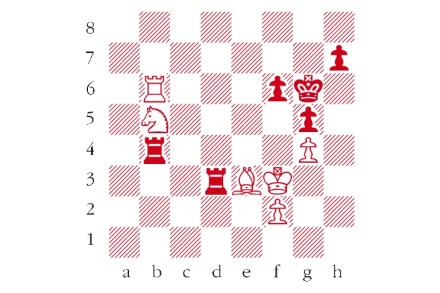
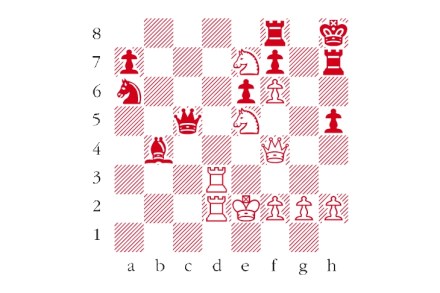
White to play. This position is from Tal-Rantanen, Tallinn 1979. This game features a typically brilliant Tal finish. Can you spot his amazing coup? Answers to me at The Spectator by Tuesday 23 July or via email to victoria@spectator.co.uk. There is a prize of £20 for the first correct answer out of a hat. Please include a postal address and allow six weeks for prize delivery.

Howard Staunton

From our UK edition

Staunton was the most successful British player of all time, winning three matches against European masters in the 1840s which in modern times would certainly have qualified him to be recognised as world champion.   On the social medium of Twitter (@HowardStaunton), an anonymous writer has invented a witty and satirically trenchant imitation of Staunton. The voice is spot on and whoever lurks behind the Twitter handle is clearly extremely erudite and evidently an expert on 19th-century British chess.   I am offering a champagne lunch at Staunton’s old haunt (and the traditional home of British chess), Simpsons-in-the-Strand, to anyone who can reveal the identity of the Staunton tweeter.

no. 562

From our UK edition

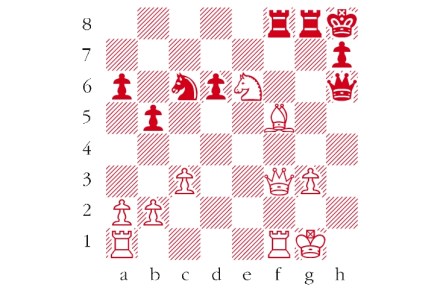
White to play. This is from Wassin-Grigorchuk, Izola 2019. Although the game is only just out of the opening, White can engineer a decisive material gain. What is the key move? Answers to me at The Spectator by Tuesday 16 July or via email to victoria@spectator.co.uk. There is a prize of £20 for the first correct answer out of a hat. Please include a postal address and allow six weeks for prize delivery.

Tigran, Tigran, burning bright

From our UK edition

This year Tigran Petrosian would have celebrated his 90th birthday. The Armenian grandmaster and world champion was noted for the profundity and originality of his strategic concepts, as well as his quasi-invincibility in high level contests. He was certainly my role model when I was a student of chess in my teens, a chess hero to emulate along with Aron Nimzowitsch, Richard Reti, Alexander Alekhine and Mikhail Botvinnik.   Petrosian-Gligoric: Zagreb 1965; Grunfeld Defence   1 d4 Nf6 2 c4 g6 3 Nc3 d5 4 Nf3 Bg7 5 e3 0-0 6 Bd2 c6 7 Be2 Ne4 8 0-0 Nxd2 9 Qxd2 e6 10 cxd5 exd5 11 b4 In this structure White plans to establish an enduring bind on the queenside. 11 ... Nd7 12 b5 Nf6 13 bxc6 bxc6 14 Na4 Bf5 15 Bd3 Ne4 16 Qc2 The c-file is White’s playground. 16 ..

no. 561

From our UK edition

White to play. This is from Reti-Bogolyubov, New York 1924. How did Reti conclude his attack with a fine blow? Answers to me at The Spectator by Tuesday 9 July or via email to victoria@-spectator.co.uk. There is a prize of £20 for the first correct answer out of a hat. Please include a postal address and allow six weeks for prize delivery.

King’s Indian

From our UK edition

The King’s Indian Defence is one of Black’s most dynamic reactions to closed openings such as d4/c4 and Nf3. Black sacrifices space in the centre but gains flank counter-chances on both wings in compensation. It has been a favourite of the pioneering Soviet grandmaster David Bronstein, who was followed enthusiastically by like-minded aggressors such as Mikhail Tal, Bobby Fischer and Garry Kasparov.   A new book, First Steps: The King’s Indian Defence by Andrew Martin (Everyman Chess), is an excellent introduction to this complex system. Notes to the following game are based on those in the book.   Brown-Mamedyarov: PRO League, chess.

no. 560

From our UK edition

White to play. This position is from Michalik-Jirasek, Prague 2019. The game is only just out of the opening but White already has a crushing tactical blow. Can you see it? Answers to me at The Spectator by Tuesday 2 July or via email to victoria@spectator.co.uk. There is a prize of £20 for the first correct answer out of a hat. Please include a postal address and allow six weeks for prize delivery.

Fortune’s wheel

From our UK edition

The elite tournament at Stavanger in Norway has resulted in yet another victory for the world champion Magnus Carlsen. The format was unorthodox in that draws were replayed as so-called Armageddon blitz games. In such cases White has more time but any draws count as Black wins. Classical wins count as 2-0, whereas Armageddon wins count as 1½-½. The random factor is therefore very high and I doubt that the format will catch on. Final scores (out of a possible 18) from Stavanger were: 1. Carlsen 13½; 2= Lev Aronian and Yu Yangyi 10½; 4= Fabiano Caruana and Wesley So 10; 6 Ding Liren 8½; 7= Viswanathan Anand and Maxime Vachier-Lagrave 8; 9= Shakhriyar Mamedyarov and Alexander Grischuk 5½.

no. 559

From our UK edition

Black to play. This position is from Grischuk-Anand, Altibox (Armageddon game), Stavanger 2019. How does Black break White’s resistance? Answers to me at The Spectator by Tuesday 25 June or via email to victoria@spectator.co.uk. There is a prize of £20 for the first correct answer out of a hat. Please include a postal address and allow six weeks for prize delivery.

Morse and Lewis

From our UK edition

The Isle of Lewis chess pieces are one of the proudest possessions of the British Museum and also the National Museum of Scotland, which shares the hoard discovered on Uig in 1831. They represent the oldest complete chess sets in the world, with only a few pawns and a rook missing from one set. Now the rook has turned up from a back drawer in a private home and Sotheby’s are estimating a potential sale price of £1 million. The Lewis pieces are made from Walrus tusk, known as morse ivory, and give valuable insights into the Viking civilisation and environment from which they sprang.   This week, a game by that modern Norwegian descendant of Vikings, the world champion Magnus Carlsen, played on the traditional Viking turf of Stavanger.

no. 558

From our UK edition

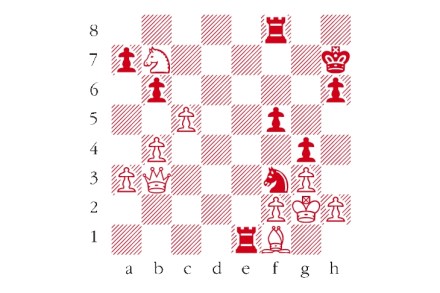
White to play. This position is a variation from Ding Liren-So, Stavanger 2019. White could continue the attack with 1 Qc3 but which move wins material at once? Answers to me at The Spectator by Tuesday 18 June or via email to victoria@spectator.co.uk. There is a prize of £20 for the first correct answer out of a hat. Please include a postal address and allow six weeks for prize delivery.

Spirited

From our UK edition

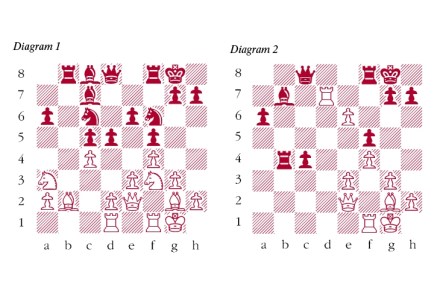
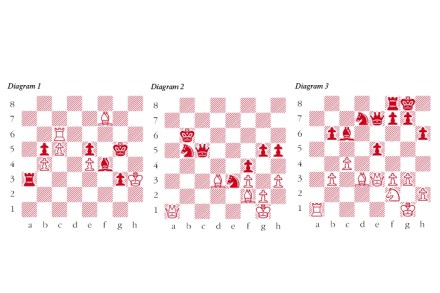
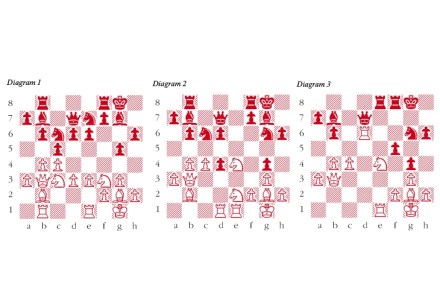
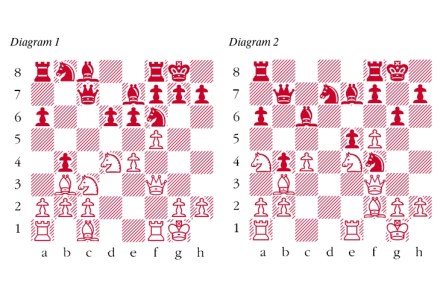
An unusual tournament has taken place at the Lindores Abbey Whisky Distillery in Scotland, namely a double-round competition between four of the world’s elite, including world champion Magnus Carlsen. The final scores out of six were as follows: Magnus Carlsen 3½, Ding Liren and Sergey Karjakin 3, Viswanathan Anand 2½, and this week I focus on the decisive games from this most imaginative event.   Carlsen-Anand: Lindores Abbey Stars 2019 (See diagram 1)   Anand, as Black, had doubtless prepared a defence against the dangerous-looking 21 Qb3. In fact, after 21 Qb3 Black can defend with 21 ... Rb8 22 Qxf7+ Kh8 23 Nxc5 Nxc5 24 Rxc5 Ne5 with strong counterplay.

no. 557

From our UK edition

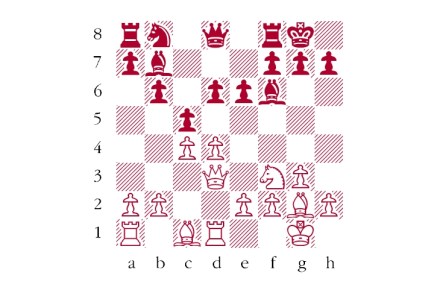
White to play. This position is from Ding Liren-Anand, Lindores Abbey Stars 2019. Here White played 1 Rb8 which lost a piece to 1 ... Rdb3. In fact White has only one move to avoid ruinous material loss. What is it? Answers to me at The Spectator by Tuesday 11 June or via email to victoria@spectator.co.uk. There is a prize of £20 for the first correct answer out of a hat. Please include a postal address and allow six weeks for prize delivery.   Last week’s solution 1 ...

Holy Grail

From our UK edition

Gawain Jones has fought his way to the no. 1 position on the UK ranking list by a series of recent successes in the world team championship, the Reykjavik Open, and now by scoring first prize in the Sigeman closed invitational tournament in Malmo, Sweden. Gawain’s live rating is now 2,709, ahead of Howell and Sadler on 2,692, Adams 2,690 and McShane 2,688. Leading scores in Malmo (out of 7) were: Jones 5, Harikrishna 4½ and Grandelius 4.   Hillarp Persson-Jones: Sigeman & Co, Malmo 2019   1 c4 c5 2 Nc3 g6 3 g3 Bg7 4 Bg2 Nc6 5 Nf3 d6 6 0-0 e6 7 a3 Nge7 8 Rb1 0-0 9 b4 White has chosen a fairly sedate version of the English Opening where he hopes to gain a slight initiative on the queen’s flank.

no. 556

From our UK edition

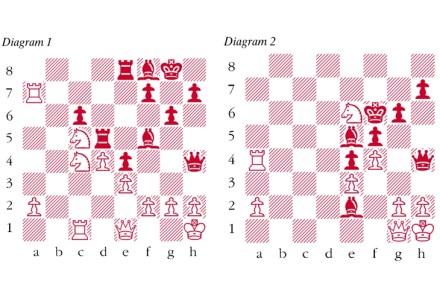
Black to play. This position is a variation from today’s game, Hillarp Persson-Jones, Malmo 2019. How can Black conclude the attack? Answers to me at The Spectator by Tuesday 4 June or via email to victoria@spectator.co.uk. There is a prize of £20 for the first correct answer out of a hat. Please include a postal address and allow six weeks for prize delivery.

Goring the gambit

From our UK edition

One of the most irritating defences to meet when playing 1 d4 as White is the Benko Gambit (1 d4 Nf6 2 c4 c5 3 d5 b5). It was foreshadowed by a Ruy Lopez between Nimzowitsch and Capablanca from St Petersburg 1914. In that classic game, White won a queenside pawn in ingenious fashion, only to see the black forces pour down the open lines occasioned by the pawn loss and destroy White’s queen’s flank.

no. 555

From our UK edition

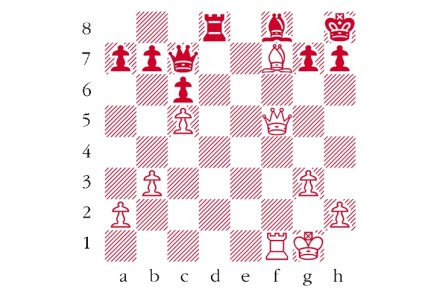
White to play. This position is from Dubov-Giri, Moscow 2019. How did White conclude with a fine blow that forced a quick checkmate? Answers to me at The Spectator by Tuesday 28 May or via email to victoria@spectator.co.uk. There is a prize of £20 for the first correct answer out of a hat. Please include a postal address and allow six weeks for prize delivery.   Last week’s solution 1 ... Rxf5 Last week’s winner D.V.

Ivory gates

From our UK edition

This year’s Grand Chess Tour kicked off in the Ivory Coast with a significant innovation, the first ever tournament in Africa involving a reigning world champion. Magnus Carlsen duly triumphed in the overall scores of a combined rapid and blitz event. The champion, however, did not have it all his own way. Carlsen easily won the rapid section but suffered a scare in the blitz when Maxime Vachier-Lagrave twice defeated the champion and won a barely credible eight games in a row. This remarkable parade was, though, insufficient to jeopardise Carlsen’s victory, since his lead from the rapid section was too vast to overcome.

no. 554

From our UK edition

Black to play. This is from Topalov-Carlsen, Côte d’Ivoire 2019. How did the world champion finish off? Answers to me at The Spectator by Tuesday 21 May or via email to victoria@spectator.co.uk. There is a prize of £20 for the first correct answer out of a hat. Please include a postal address and allow six weeks for prize delivery.   Last week’s solution 1 ...