Carl Heneghan

Carl Heneghan is professor of evidence-based medicine at the University of Oxford and director of the Centre for Evidence-Based Medicine

Could mass testing for Covid-19 do more harm than good?

From our UK edition

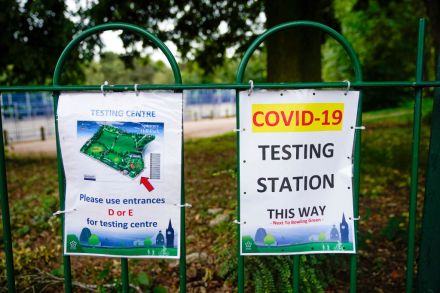
Making a diagnosis used to be a well understood and practised procedure: take a history from someone presenting with symptoms, examine them and do some tests to arrive at an overall diagnosis. It requires substantial training and experience to put this into practice. William Osler, known as one of the founders of modern medicine, often directed his trainees to ‘listen to the patient, he/she is telling you the diagnosis'.  With Covid-19, however, clinical diagnosis is seemingly a secondary consideration in the face of mass testing. All you require is a positive PCR test; no symptoms, no signs, no other diagnostic proof. But our limited understanding of mass testing and PCR suggests this might not suffice.

The real Covid-19 threat

From our UK edition

Daniel Kahneman called it anchoring; I call it tunnel vision. It’s when we depend too heavily on our pre-existing ideas and first pieces of information – the anchor – to inform our judgments. How a problem is perceived, how it is described, how it makes us feel alongside our individual experience and expertise shapes the decisions we make. Anchoring ensures emerging evidence is ignored. Even in the face of this new contradictory evidence, we refuse to change our early decisions. In the week ending the 24th of July, 8,891 deaths were registered in England and Wales (161 fewer than the five-year average). This is the sixth week in a row that we have observed fewer deaths, a total of 1,413 fewer deaths than expected.

Why Covid cases in England aren’t actually rising

From our UK edition

The government has restricted the movements of millions of people in England because Covid is apparently on the rise. But what happens when you start digging into the data? I have used two datasets to piece together the number of tests, cases and results for Pillar 1 tests (which are done in healthcare settings) and Pillar 2 tests (which are done in the community). Looking at the data for July, by the date PCR tests are reported, you can see a trend for an increased number of cases detected (from about 500 to nearly 750 a day). If you then look at the date the actual tests were taken, the trend is still apparent: Now all things being equal, the increase in cases is about 250 per day over a month – not an exponential rise and no sudden jump.

What’s behind the excess deaths statistics?

From our UK edition

23 min listen

Statistics released this week showed that England had the worst excess death rate in Europe during the first half of 2020. Katy Balls speaks to Kate Andrews and Carl Heneghan, professor of evidence-based medicine at Oxford University about what's behind the numbers.

How many Covid diagnoses are false positives?

From our UK edition

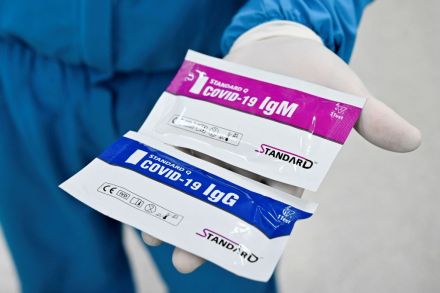
Test, test, test said the WHO. And globally, that’s what everyone did: tests have detected more than 14 million cases of Sars-CoV-2 so far. The thinking goes: turn up, have your test, and if positive, you must have the disease. But that’s far from the truth. When virus levels in the population are very low, the chances of a test accurately detecting Covid-19 could be even less than 50 per cent – for reasons that are not widely understood. There are two issues about tests to get your head around. The first is the sensitivity of the test: the proportion of people who test positive, out of the population who have the virus. The second measure, specificity, is about the proportion of people who test negative, out of the population who should have tested negative.

Studying sewage could help solve a coronavirus mystery

From our UK edition

There are plenty of mysteries about how coronavirus spread around the world so quickly. But could we shed some light on this by looking in an unusual place? Several studies have been doing just that: tracing the emergence of covid-19 by investigating frozen faeces samples from sewage. This analysis cannot tell us where the virus originated from, nor can it tell us whether the recovered micro-organisms are still infectious. But they can give us ideas about how long we have been living alongside a virus which has so far killed more than half-a-million people. Coronavirus has been found in sewage from several countries predating the detection of the first confirmed cases in those areas: in Barcelona, in March 2019; Santa Catalina, Brazil in November 2019; and Milan, in February 2020.

Can antivirals defeat Covid-19?

From our UK edition

Can antivirals help us defeat coronavirus? The odds don’t look good. The use of antiviral compounds against respiratory viruses has a chequered history. Hundreds have been tested; very few have made it to market. And even fewer make a difference. What’s more, the evidence of their impact on mortality rates – the most important outcome of all – is thin. The race for a magic bullet to overcome Covid-19 has been going for months now. At least 254 treatments are currently undergoing development, ranging from antibodies to cell-mediated treatments. And there are over 3,500 trials underway.

The data is clear – Covid is receding

From our UK edition

The coronavirus data from across the capital – which shows that the numbers are coming down – is highly reassuring.  On 15 May, there were just 56 people with newly diagnosed cases of Covid. And at least six London trusts are reporting no deaths in hospitals in the last 48 hours. Across the country, about 30 per cent of all trusts have had no deaths in the last 48 hours. The deaths are coming down. And actually, if you look at information like 111 calls and 999 calls, you're seeing a trend here that's showing coronavirus is disappearing at a rate that's speeding up, which is highly reassuring.

Let’s bring back Britain’s fever hospitals

From our UK edition

Could the future of pandemic planning lie in our past? A century ago, there were hundreds of so-called 'fever hospitals' dotted across Britain. These small institutions were built for diseases of a bygone age – smallpox, scarlet fever and typhus – but were designed for precisely the same problems we face today.  They contained isolation wards, separate accommodation for different infections, laboratories, operating theatres and convalescent wards with activities for recovering patients. Given the current problems of the Covid-19 outbreak, we need to re-establish these medical relics.