Books of the Year | Sam Leith & Philip Hensher
35 min listen
Sam Leith is joined by Philip Hensher to pick over their books of the year.
Philip Hensher is professor of Creative Writing at Bath Spa University and the author of 11 novels including A Small Revolution in Germany.
35 min listen
Sam Leith is joined by Philip Hensher to pick over their books of the year.
41 min listen
On this week’s special Christmas edition of Spectator Out Loud – part two: Dominic Sandbrook reflects on whether Lady Emma Hamilton is the 18th century’s answer to Bonnie Blue; Philip Hensher celebrates the joy of a miserable literary Christmas; Steve Morris argues that an angel is for life, not just for Christmas; Christopher Howse ponders the Spectator’s
A Christmas Carol is pretty well unavoidable around now, with Little Women trailing somewhat behind. There’s no shortage of alternative literary Christmases among the classics, however, often less sweetly heartwarming and more invigoratingly grumpy. Nigel Molesworth, it will be remembered, foiled all attempts to inflict A Christmas Carol on him. ‘It is just that there
Simon Winchester has found an excellent subject. While invisible, wind makes itself apparent through its effect on other things. This may mean flying detritus, scudding clouds and the rustle of foliage; or it may mean the ways in which it irresistibly alters and directs larger movements in society and culture. Much of the history of
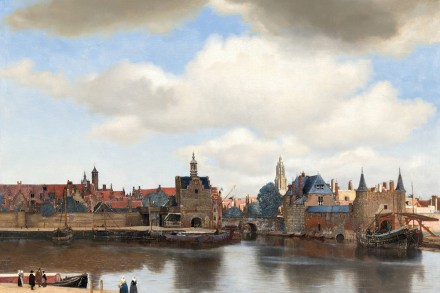
The Delft painter Johannes Vermeer, now probably the most beloved artist of the Dutch Golden Age, had an unusual career. His reputation in his lifetime was small. For some reason he painted almost exclusively for the van Ruijvens, so only those who knew the family would have been able to view much of the work.
Dame Jilly Cooper, who has died at 88, had a remarkable career, turning herself from a sparkling writer for newspapers into the author of novels which survive, decades after they came out, very well. Few of the huge bestsellers of their day are read 40 years on – The Manxman, Peyton Place, Valley of the
40 min listen
The Spectator’s cover story this week is an interview with Conservative leader Kemi Badenoch ahead of the Tory party conference. Reflecting on the criticism she received for being seen as slow on policy announcements, she says that the position the Conservatives were in was ‘more perilous than people realise’ and compares herself to the CEO
This is a treasure house of a book, filled with curiosities and evidence of a rare breadth of patient investigation. Anyone who has read one of Graham Robb’s books, from his early biographies of classic French writers, through a wonderfully amusing study of 19th-century homosexuals, to a series of historical and geographical studies of France
Slavery was – and importantly continues to be – a moral abomination. Its existence in the 21st century is a disgrace. Whole communities such as the Uighurs are subject to forced labour; two years ago it was estimated that 5.8 million people were living in slavery in China. And slavery is a problem much closer
43 min listen
This week’s Book Club podcast marks the 80th anniversary this year of the publication of Brideshead Revisited. This conversation is from the archives, originally recorded in 2020 to mark its 75th anniversary. To discuss Evelyn Waugh’s great novel, Sam Leith is joined by literary critic and author Philip Hensher, and by the novelist’s grandson (and
Stephen Greenblatt tells the story of being approached in the 1990s by a screenwriter who wanted to make a Shakespeare -biopic. Greenblatt repeatedly told him to forget Shakespeare and look instead at his predecessor Christopher Marlowe. The screenwriter knew what he was about and ignored Greenblatt’s advice – the result was Shakespeare in Love. The
How do artists sustain a reputation? We’d like to think it’s on the basis of their work. In the case of visual artists, it would be nice to think they make it because their art is beautiful, original or absorbing. It shouldn’t be a matter of what the art is about, or Benjamin West’s epic
The usual piece about public libraries runs like this. Public libraries are for ‘more than just books’. They are in a desperate plight after years of cuts, or better still ‘Tory cuts’. Librarians, who are heroes, struggle to go on serving their local communities. Libraries are hanging on by a thread, and because of those
These legendary lives need the clutter cleared away from them occasionally. Lawrence Durrell and his brother Gerald turned their family’s prewar escape to an untouched Corfu into a myth that supplied millions of fantasies. It still bore retelling and extravagant expansion recently, if the success of ITV’s series The Durrells is any sign. (One indication
All great diarists have something intensely silly about them: Boswell’s and Pepys’s periodic bursts of lechery and panic; Chips Channon’s unrealistic dreams of political greatness leavened with breathless excitement over royal dukes and handsome boys; Alan Clark’s fits of romantic, almost Jacobite, dreaming; James Lees-Milne’s absurd flights of rage. I dare say the mania that
52 min listen
How Reform plans to win Just a year ago, Nigel Farage ended his self-imposed exile from politics and returned to lead Reform. Since then, Reform have won more MPs than the Green Party, two new mayoralties, a parliamentary by-election, and numerous councils. Now the party leads in every poll and, as our deputy political editor
Some sorts of books and dramas have very strict rules. We like a lot of things to be absolutely predictable. In romantic comedies, a girl chooses between a charmer who turns out to be a rotter and another man she hates at first but then falls for. In the BBC’s long-running Casualty, if a worried
You know Mark Twain’s story. You’ve got no excuse not to; there have been so many biographies. Starting in the American South as Samuel Clemens, he took his pen name from the call of the Mississippi boatmen on reaching two fathoms. His lectures, followed by his travel pieces and novels, enchanted America and then the
40 min listen
Scuzz Nation: Britain’s slow and grubby declineIf you want to understand why voters flocked to Reform last week, Gus Carter says, look no further than Goat Man. In one ward in Runcorn, ‘residents found that no one would listen when a neighbour filled his derelict house with goats and burned the animals’ manure in his
Any consideration of Stefan Collini’s subject has surely to address a major recent issue. The academic study of English, both at school and university, has fallen away significantly, with the numbers opting for it greatly diminishing. Anecdotal evidence from even the most serious institutions suggests that many students are now finding previously accessible texts impossible