Philip Clark

The British modernist who was airbrushed from history

From our UK edition

Elsewhere in British music in 1960: William Walton was writing his Symphony No 2, Benjamin Britten his opera on Midsummer Night’s Dream and Michael Tippett was about to start King Priam. Meanwhile in Cambridge, an ex-pat composer from Catalonia, Roberto Gerhard, was puzzling out how to knit together a new large-scale piece for orchestra and electronics. Simon Rattle and the London Symphony Orchestra are about to give that work, Gerhard’s Symphony No. 3, Collages, a rare outing at the Barbican on 21 May. It’s a mind-stretching piece, both very much of its time and of the future. Gerhard’s electronics gurgled, bleeped and cracked their knuckles, as he atomised the orchestra, finding a kaleidoscope of inventive ways to cement its working parts back together.

James Baldwin – dogged by painful uncertainties throughout life

From our UK edition

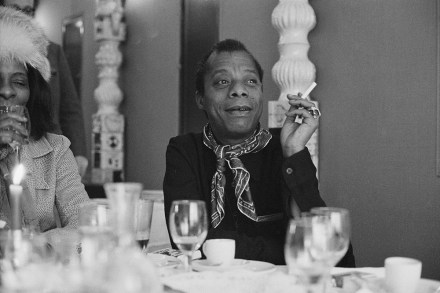
James Baldwin, like many American novelists before him, F. Scott Fitzgerald and John Dos Passos included, spent his formative years flitting restlessly between New York and Europe – New York being a source of fascination but also of creative burnout. He completed his first novel, Go Tell It On the Mountain (1953), not in Harlem, where he grew up and set the book, but in a Swiss chalet owned by the family of his then boyfriend, Lucien Happersberger. As he lived and worked in Loèche-les-Bains, Baldwin reasoned that the village children who shouted ‘neger’ at him did not mean to be unkind. They were simply curious and could never have known ‘the echoes this sound raises in me’.

Jon Fosse’s Scandi-lit revival

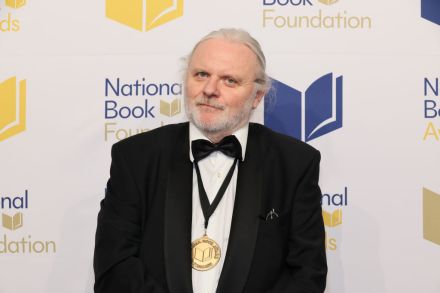
Jon Fosse, the Norwegian novelist who won the 2023 Nobel Prize in Literature, has sat center stage in the recent revival of interest in Scandinavian literature. Fosse’s one-time creative-writing student Karl Ove Knausgård became the very definition of a publishing sensation when the first volume of his six-part memoir Min Kamp (“My Struggle”) – in which he dragged all his family skeletons out of the closet for all to see – was published in 2009. Danish novelist Solvej Balle’s seven-part On The Calculation of Volume, of which only the first three parts have been published in translation, has caused a similar stir in the past two years.

The genius of Morton Feldman

From our UK edition

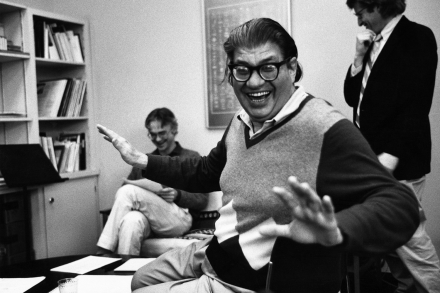
To accompany an exhibition of paintings by Philip Guston at the Royal Academy of Arts in London in 2004, a performance was arranged of Morton Feldman’s composition written in homage to Guston, for which I was persuaded to page-turn. For Philip Guston runs non-stop for four hours and the thick A3 bundle of manuscript paper balanced precariously on a flimsy music-stand was a matter of concern: what could possibly go wrong? Once the performance ended, I snatched the bundle of £20 notes that I’d been promised, sprinted to the bathroom, then fortified myself with the chunkiest slice of cheesecake I could find in Patisserie Valerie on Old Compton Street. Nothing had gone wrong but, boy, did I need a sugar-kick.

Indian classical music’s rebellion against modernity

From our UK edition

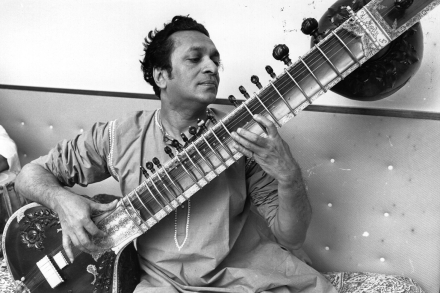
When Gurdain Ryatt, Ojas Adhiya, Milind Kulkarni and Murad Ali Khan take to the stage at Milton Court this Sunday they will be united by a common language: the tradition of Hindustani Indian classical music, rooted in the north of India. Ryatt and Adhiya’s job will be to keep beats circulating on their pitched, drum-like tablas, while Kulkarni’s harmonium will sustain drones, apparently towards infinity. Khan plays the sarangi, a string instrument famed for its uncanny invocation of the wavering of the human voice. Shankar’s tireless advocacy spawned a crossover culture that he felt too often sullied the very music he loved British audiences have a head start when it comes to appreciating this tradition.

Francesca Wade’s Gertrude Stein biography is a study in frustration

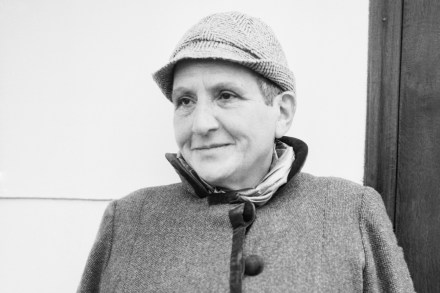
There came a point in time when Gertrude Stein was more famous for being Gertrude Stein than for anything she’d written. The American writer, born in Oakland, California, in 1874, moved to Paris in 1902 and devised a style of writing that privileged the sounds of words over narrative or plot, a process of discovery inspired by the art she discovered in the city. The non-representational canvases of Picasso and Cézanne, who became her close friends, made more of an impact on her emerging style than any writer: colors and shapes told a story of their own beyond any apparent subject or setting. She engaged in constant battles of wits with publishers and editors, eventually resorting to publishing her writing herself instead.

Stein

The very essence of jazz: Mingus In Argentina reviewed

From our UK edition

Grade: B Charles Mingus arrived in Buenos Aires at the start of his 1977 Argentinian tour with aching joints, an ominous first sign of the muscle-wasting Lou Gehrig’s disease that would claim his life two years later. Musically, he was at a musical crossroads too. His record label, Atlantic, had insisted on adding electric guitarists John Scofield and Larry Coryell – associated with lucrative jazz-rock fusion – to his latest album Cumbia & Jazz Fusion, while his once stable touring quintet had become more of a revolving door. Jazz has often been written up as a sequence of landmark recordings and concerts captured at prestigious venues, but the value of Mingus In Argentina is precisely that it’s neither.

The Renaissance master who rescued polyphonic music

From our UK edition

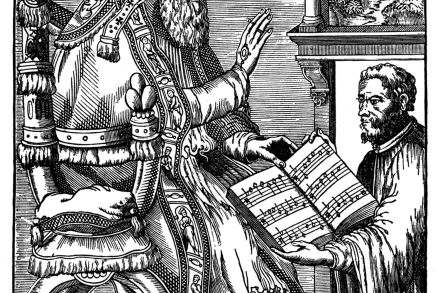
Last month I watched conductor Harry Christophers blow through what sounded like an arthritic harmonica but in fact was a pure-toned pitch pipe, which handed the singers of his vocal group the Sixteen their starting notes. Then the Kyrie from Giovanni Pierluigi da Palestrina’s Missa Regina coeli unfolded inside the resonant splendour of St James’s Church in Mayfair and, 500 years after his birth, I grasped why Palestrina, maestro di cappella of St Peter’s Basilica in Rome from 1551-5, still has the capacity to surprise. Christophers and the Sixteen are celebrating this greatest of the late Renaissance composers in his anniversary year with three concerts promoted by the Wigmore Hall but held at St James’s: this music lives or dies by the acoustic in which it is heard.

Erik Satie was an inadvertent innovator

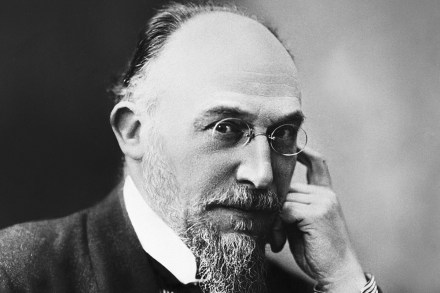
The music critic Ian Penman has structured his new book about the great French composer and rascally agent provocateur Erik Satie in three parts, in the manner of classic Satie compositions such as Trois Gymnopédies, Gnossiennes and Trois morceaux en forme de poire. A hundred years after his death, aged 59, in 1925, Satie remains one of the great enigmas of 20th-century composition. A frequent visitor of Parisian cabarets, immersed in the city’s chanson tradition, his work could also be bafflingly conceptual. He was connected to the world of classical composition through his friendships with Claude Debussy and Maurice Ravel, but remained determinately his own person. His music is regularly held up as a precursor to John Cage and to ambient electronica alike.

RIP to new music’s gentle, smiley radical

From our UK edition

Danish composer Per Norgard – whose death at the age of 92 was announced this morning – was a towering presence in European new music, and the shine-bright timbres and heady narrative drive of his eight symphonies posed crucial questions about what it meant to be a symphonist during the late 20th century. In 2000 I was despatched to interview Norgard for a magazine and found a man as gentle and thoughtful as his music suggested he would be, with eyes that gleamed just like his woodwind writing. He had been in London to hear a performance of one his works – I forget which – but under discussion that afternoon was a new recording: the violin concerto he'd written in 1987, Helle Nacht.

Charles Ives was a composer before his time

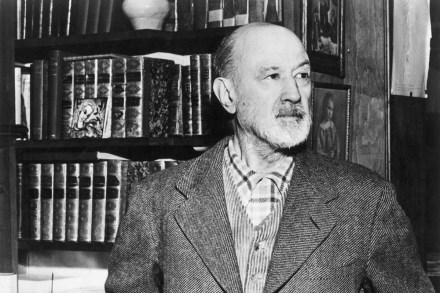
In February 1951, Leonard Bernstein led the New York Philharmonic through the première of a symphony by an American composer unknown at Carnegie Hall. The composer in question was Charles Ives, by then too frail to attend in person. He listened from home when the concert was broadcast a few weeks later. An experimenter by instinct, Ives’s work had already proved an inspiration to a younger generation of radical American composers including John Cage, Lou Harrison and Morton Feldman. But that Ives listened from afar to the première, at long last, of his Second Symphony – completed in 1902 – was symbolic of the distance he maintained from America’s classical mainstream.

Ives

My adventures in experimental music – by David Keenan

From our UK edition

David Keenan acquired his craft as a music writer, he says, from reading the crème de la crème of critics who milked rock music for all it was worth during the 1970s – Lester Bangs, Griel Marcus, Paul Morley, Biba Kopf – before deciding that rock criticism was not his bag. In the preface to this weighty collection of his music journalism, he says he considered himself more of a ‘rock evangelist’. The pieces originally appeared between 1998, when Keenan was writing for hardcore music magazines such as Melody Maker, MOJO and the Wire, and 2015, after which he checked out of regular reviewing duties to pursue his career as a novelist. Luckily for him, his debut novel This Is Memorial Device proved a smash hit.

The unnerving world of Erik Satie’s 20-hour composition 

From our UK edition

Once Igor Levit starts playing Erik Satie at 10 a.m. on 24 April at the Queen Elizabeth Hall, he can expect to be there for a long time. Satie’s Vexations is a piece that looks innocent enough, like butter wouldn’t melt in its composer’s ears. A doleful 18-note theme in the bass is filled in with stately, chorale-like notes in the right hand; the theme repeats, followed by the same chorale except turned upside-down. Nothing too strenuous so far. But Satie’s enigmatic inscription ‘To play this motif 840 times in succession, it would be advisable to prepare oneself beforehand, in the deepest silence, by serious immobilities’ mixes up the variables. Taking him to the letter of his word adds up to a performance duration of anywhere between 14 to 20 hours.

Back to the birth of the Greenwich Village music scene

In 1961, the folk guitarist Barry Kornfeld moved back to Manhattan after spending a year in Boston. The Greenwich Village folk musicians he called friends, who before his trip to Boston had been enduring a hand-to-mouth existence, were now making a living playing their music in clubs along MacDougal Street — not necessarily “a good living,” Kornfeld noted, but certainly enough to get by. Kornfeld spotted another difference, too. Audiences at clubs weren’t merely clapping; they were snapping their fingers in appreciation, which felt like the hippest thing ever. Rolling Stone writer David Browne’s latest book, chronicling the history of Greenwich Village music, pivots around 1961.

Greenwich

An unvarnished insight into the mind of Sonny Rollins

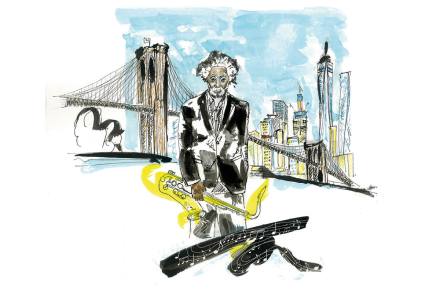
In the mid-1950s, alongside his close friend and intimate confidant John Coltrane, the revered saxophonist Sonny Rollins completely revolutionized notions about how the tenor saxophone could function within modern jazz. In landmark albums like Freedom Suite, Way Out West and Tenor Madness, Rollins pushed the art of melodic improvisation to transcendent new heights, his charismatic sound, his snaking melodies and his rhythmic liquidity ringing the changes as surely as Louis Armstrong had done thirty years earlier. And like Louis, and later Miles Davis, there came a point where Rollins wrestled free of the jazz aficionado’s gaze to become admired by a more general audience.

rollins

Relive Lou Reed’s wild, contradictory life

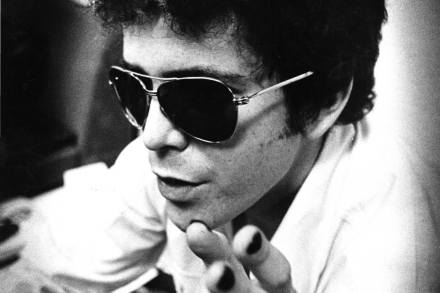
Before “Walk On The Wild Side” changed everything for Lou Reed in 1972, bringing him status and bolstering his bank account, he had been lead singer of the Velvet Underground, a group, as managed by Andy Warhol, that served up songs about drugs, gender-bending and sexual fetish, all designed to crash the boundaries of what polite America considered acceptable. The great thing about Velvet Underground songs was that musically, too, they transgressed: drone-based harmonies progressed glacially as rhythmic impetus stuttered. The big problem with the Velvets, in terms of finding any wider audience beyond self-confessed weirdos who hung out with Warhol, was that virtually nobody wanted to hear drone-based harmonies moving glacially or rhythms that fragmented. Where was the fun in that?

reed

Bach to basics

From our UK edition

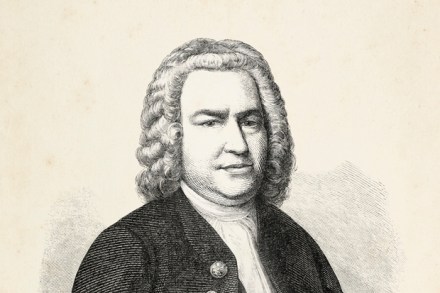
The churning, rheumatic mechanism of a harpsichord — notes needling your ears like drops of acid rain — doesn’t necessarily play well to an audience whose sensibilities have been moulded around the picture-perfect delicacies of the classical piano. J.S. Bach’s freakishly popular Goldberg Variations remains best known through the recording made by the oddball Canadian pianist Glenn Gould in 1955, a record that would bleed unexpectedly into mainstream consciousness. For a whole generation, the sound of the Goldbergs became interchangeable with Gould’s quicksilver fingers — and a collective amnesia grew around the fact that Bach had actually conceived his most famous keyboard work for the harpsichord.

Playing for high stakes

From our UK edition

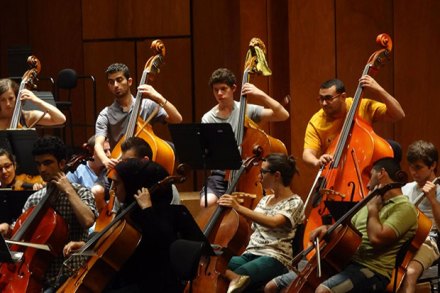
Now that even candidates for President of the United States can rise up from the undead dregs of reality television, it comes as no surprise to read that the National Youth Orchestra of Iraq owes its origins to a conclave of television execs. In 2008, Channel 4 and the independent production company Raw TV took upon themselves to campaign for a youth orchestra in Iraq, focusing their programme around the story of Zuhal Sultan, a 17-year-old Iraqi pianist. Later that same year, the Scottish conductor Paul MacAlindin was savouring a fish-and-chip supper in his favourite Edinburgh pub when his eye caught a headline in the Glasgow Herald about the same project — ‘Search for UK maestro to help create an orchestra in Iraq’ — and he thought: ‘I know how to do this.

How does Karl Jenkins get away with his crappy music?

From our UK edition

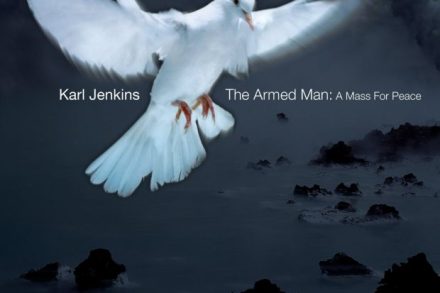
In a week that saw the UK vote itself out of the EU, the resignation of David Cameron followed by most of Jeremy Corbyn’s shadow cabinet, the audience who dutifully trooped to the Royal Albert Hall this Sunday for a concert celebrating the 2,000th performance of Karl Jenkins’ The Armed Man – A Mass for Peace were clearly looking for reassurance. And reassurance is what they got – because whatever happens in the big wide world outside, Jenkins’ music has always been, and probably always will be, utter crap. If you believe ‘crap’ to be unworthy of the critical lexicon, no word could be more apt. Believe me, nothing would have given me greater pleasure than going on record in calling his music shit.

Nice effort, Don Cheadle, but no film will ever do Miles Davis’s defiant, volatile music justice

From our UK edition

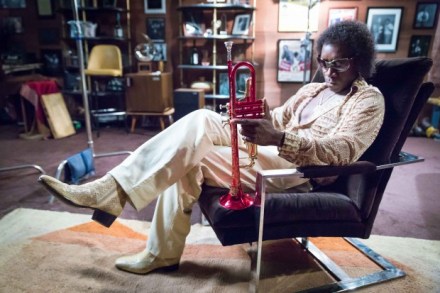
There’s an absolute zinger of a joke currently circulating around the London jazz scene. Miles Davis is being celebrated with a new biopic! And anything that spreads the message about jazz is undoubtedly a good thing. But – and now the punch-line – what a pity the film bogs itself down; all that sober analysis of Miles’s evolving concepts of harmony and musical structure diminishes what could otherwise have been a sure-fire commercial hit. In reality, Miles Ahead, directed by and starring Don Cheadle, is centred around a period in Miles Davis’s life between 1975 and 1979 when he was making precisely no music at all and instead spending his time binging on drugs, drink and recreational sex.