Peter Jones

The ancient dangers of ‘proscription’

From our UK edition

‘Proscription’ appears to be the current word of the month. But what does it mean? The Latin scribo means ‘I write’ and generates a root in script-. Since the Latin prefix pro carried the idea of ‘bringing something into the open’, the noun proscriptio meant ‘a written notice announcing a sale’. In the 1st century BC, a culture of corruption, bribery and political violence in a fight for power led by wealthy dynasts with private armies at their back resulted in civil wars and the complete collapse of Rome’s traditional institutions. One feature of this collapse was to be particularly significant. In 88 bc the current strong man Lucius Cornelius Sulla decided to call any Roman who opposed him a hostis (cf.


The Romans would have been baffled by the Gaza protests

From our UK edition

Why are people in the UK protesting about the situation in Gaza? Surely it should be because the helpless Gazans cannot protest about their plight, caused by Hamas, because if they did, Hamas would kill them. But in that case, why isn’t it Hamas that people are protesting against? Or are they in favour of Hamas and therefore hate Israel for wanting to destroy Hamas? But wouldn’t that free Gazans? The whole situation would have baffled the Romans. Romans protested only when their own interests were at stake. On one occasion around ad 50, the emperor Claudius was confronted by a mob in the forum, cursing him and pelting him with bread crusts because of a grain shortage.

How the Spartans got fighting fit

From our UK edition

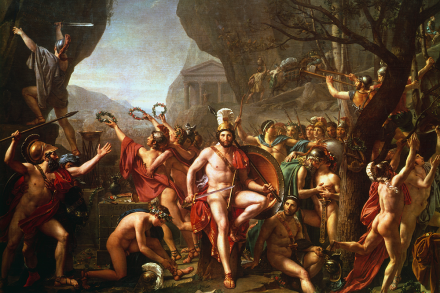
Donald Trump has brought back the Presidential Fitness Test for American children, once used in state schools to gauge young people’s health and athleticism with one-mile runs, sit-ups and stretching exercises. He could usefully add elements of the early training invented by the Spartan lawgiver Lycurgus to create disciplined, physically and mentally resilient soldiers and citizens. Every baby was examined for fitness. They were trained not to fuss about food, or be frightened of the dark when left alone, or to get angry or cry. At seven, they joined bands in which they grew up together while their elders registered their progress in obedience and courage.

Is Trump playing the same game as Nero?

From our UK edition

Last week, in his jovial Spectator piece about Donald Trump’s golf diplomacy, Patrick Kidd drew a comparison with the Roman emperor Nero, who adored chariot racing and was always deemed to have ‘won’, whether he crashed or not. He also raced a chariot drawn by four camels, but that was just the half of it. He was passionate about music, took lyre and singing lessons and kept his weight down with enemas and emetics. No one was allowed to leave while he performed. Women gave birth during his recitals, we are told, and people climbed out over the rear wall or shammed dead in order to be carried out. Whenever he performed, his claqueurs made sure the applause went on and on.

How ‘cosmopolitan’ is Lord Hermer? 

From our UK edition

The Telegraph reports that Attorney General Lord Hermer has ‘been accused of asserting the primacy of human rights law over British government and politics’. Is he then a latter-day Diogenes (4th century bc), who saw himself as a ‘cosmopolitan’, i.e. a citizen of no one place, but rather of the whole world (kosmos, ‘the ordered world’ + polites ‘citizen’)? At one level, obviously not. Diogenes, we are told, travelled from place to place, rejected all conventional values, often lived in a large stone wine jar and performed all natural functions in public, like a dog – kunikos in Greek, whence our ‘cynic’. Self-sufficiency, freedom of speech, indifference to hardship and lack of shame were Cynic hallmarks.

What Aristotle would have made of Gregg Wallace

From our UK edition

The BBC chef Gregg Wallace has been sacked for his objectionable behaviour over many years, but has blamed the BBC for not taking the action which, he claims, would have saved him from himself. Aristotle (d. 322 bc) would have doubted that. Let us assume, says Aristotle, that it is possible for any human to wish to do what is good. But a mere wish counts for nothing. Goodness will find its expression only in the way a man deals with the means he adopts to bring about the wished-for result. But what if he is just not the sort of man to take the trouble? That is surely a consequence of the style of life which he has adopted: after all, one acquires particular attributes only by constantly behaving in particular ways.

Orcas, dolphins and the ancient question of animal sentience

From our UK edition

Killer whales have been seen offering titbits to divers – but as a gift or a lure? Plutarch (c. AD 100) had strong views on animal sentience.  Unlike most ancients, Plutarch did not think that animals were there to be exploited for humanity’s benefit, whatever that entailed for the animals themselves. He believed they were worthy of respect rather than exploitation because they demonstrated, admittedly in a ‘weak’ and ‘muddy’ form, a capacity to think, reason and remember. For example, without those capacities, an animal would not be able to discriminate between what it should avoid and what pursue.

A Spartan’s guide to body shaming

From our UK edition

Now that new drugs have allowed the government’s Fat Controller to celebrate a nation of skinnies – let us hope the drugs are not too temptingly tasty – he will not have to adopt the Spartan custom of checking their naked young men every ten days for signs of excessive thinness or corpulence. In Greek eyes, obesity was particularly associated with luxury. On their tomb paintings, Etruscans tended to depict aristocrats at dinner as very fat and even more contented. Ptolemy Alexander, a Greek king of Egypt, needed two people to support him when he left the room to relieve himself.

The abortion debate is as old as time

From our UK edition

Now that parliament has decided to decriminalise abortion, it is interesting to see what the ancients made of the matter. The question for them was, as for us – when did the foetus become ‘human’? The answer was when it developed a psukhê (‘soul’). Some Greek philosophers argued that the foetus was fully ‘ensouled’ from the moment of conception, and abortion was therefore wrong. Others asserted it was only ensouled at birth. The ‘gradualists’ thought the foetus took between 36 and 50 days to became human (active kicking was a good sign). Aristotle (d. 322 BC) argued that the embryo became human when it had developed four ‘capacities’ in the following sequence – nutrition, motion, perception/sensation and finally reason. That took the male 40 days, the female 90.

What Seneca would have made of the assisted dying bill

From our UK edition

Kim Leadbeater’s assisted dying bill has generated much talk about the ethics of suicide. As far as the ancients were concerned, it was only in life that you could make your mark. The Christian passion for embracing, even rejoicing at, death made no sense to them. Ancient thinkers generally did not fear an afterlife. Although there were no received views on the matter (unless you were a member of a cult of some sort), many ancients reckoned that, if the gods were displeased with you, they would demonstrate their hostility in this life rather than the next. But when death was inevitable, they wanted to be in control, because the way one died revealed the true stature of the person, which could do much for one’s posthumous reputation.

Elon Musk and the art of flattery

From our UK edition

Flattery will get you everywhere, as the sycophants that surround Donald Trump, Kim Jong-un, Vladimir Putin and Xi Jinping know. Which makes Elon Musk’s defection rather interesting. Trump’s policies meant that Musk simply could not flatter him any more just to satisfy his inexhaustible self-love, which, says the Greek essayist, biographer and diplomat Plutarch (d. c. ad 120), is what gives the kolax (‘flatterer’) his foothold: the person he wishes to flatter, his victim, will be only too happy for the kolax to endlessly proclaim his qualities and abilities. Naturally, the kolax does not pay attention to poor, obscure or unimportant persons – where is the gain in that? – but only to those with power, engaged in great affairs.

The Romans wouldn’t have put up with Thames Water

From our UK edition

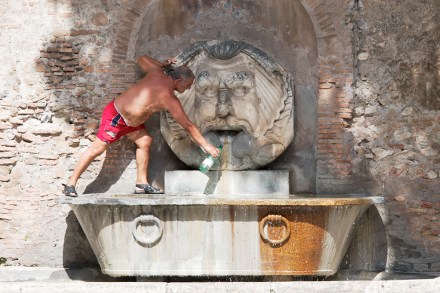
It is embarrassing to compare Thames Water’s efforts even to the Greeks, let alone the Romans. Most Greek cities got their water from public fountains fed by springs. Doctors new to a district examined the supply to determine likely ailments (one spring was said to make your teeth fall out). A few towns had piped supplies: Athens had one, and Greek Pergamum (in Turkey), from a source 20 miles away. An inscription there ordered wardens to ensure ‘fountains are clean and pipes supplying them allow the free flow of water’. But the Romans were the great water engineers, spreading comfort and luxury thereby far down the social scale. Initially they were privately funded benefactions (not ‘serious’ enough for the state: this changed under the empire).

Why did the ancient Greeks have so many gods?

From our UK edition

Writing in a lesser organ, Matthew Parris wondered whether most ancient Greeks ‘really, sincerely, did believe in their bizarre pantheon of gods’. Belief in a single god was at that time limited to two peoples: Jews and Zoroastrians (and Egyptians once, briefly). To everyone else, perhaps the sheer variety of the world, the extraordinary generative power of nature and the impossibility of making secure predictions about anything suggested a multitude of powers at work.

The Roman approach to tax

From our UK edition

The Sunday Times rich list would have excited the male citizens over the age of 18 who determined state policy in the Athenian assembly in the 5th century bc. The reason is that Athens levied taxes on citizens by their wealth, as judged by the property they owned. The most important tax was the leitourgia (source of our ‘liturgy’). This was imposed upon the 300 wealthiest Athenians and was hypothecated on two specific projects: the funding of the annual comic and dramatic festivals (one of which involved, among much else, the training of 1,165 men and boys for months on end) and the funding and maintenance of fully equipped Athenian triremes, which controlled Athens’s marine empire. At times of emergency, mainly war, a further tax was levied on the 6,000 wealthiest.

Pope Leo XIV – lion or a pussycat?

From our UK edition

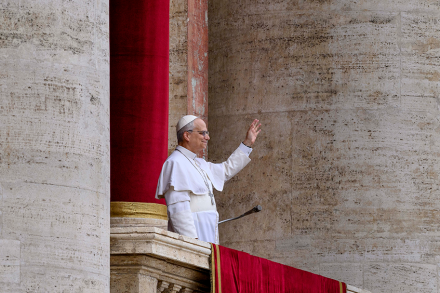
Will Pope Leo turn out to be a lion or a pussycat? That depends on what he has to confront, but one hopes he will do better than Pope Siricius (384-399), let alone Kirill, current Patriarch of the Russian Orthodox Church. When the Roman emperor Constantine published a letter in 313 allowing freedom of worship to pagan and Christian alike, it opened the door to Christian leaders taking over the function of the old Roman elite. This at once presented a problem: if there really was one true God, whose will only bishops could interpret, was the emperor lord over the church or the church lord over the emperor? In 390 Butheric, a close friend of the emperor Theodosius, arrested a star charioteer for homosexual rape. A riot ensued and Butheric was murdered.

Who could persuade you to fight for Britain today?

From our UK edition

This week we celebrated VE Day. When Pericles remembered the dead from the war against Sparta in his famous Funeral Speech of 431 bc, he was not celebrating victory – the war would end in 404 bc with Athens’s surrender – but doing something quite new: he was reflecting on what Athens stood for and why it was worth dying for.

How to capture a lion

From our UK edition

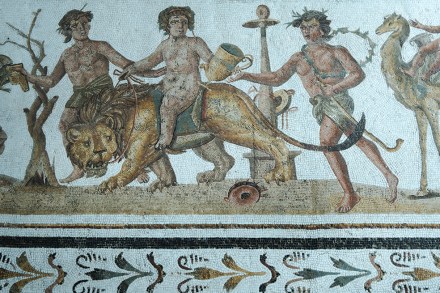
An 1,800-year-old cemetery on the outskirts of the Roman legionary fortress town of York has been found to contain a skeleton whose pelvis was bitten by a lion. Since most of those buried there were decapitated young men, the victim was surely a gladiator. That lion must have been a major entertainment coup for the soldiers. During the reign of the emperor Augustus, 400 tigers, 250 lions and 600 leopards were slaughtered in the gladiatorial arena, together with bears, wolves, elephants, boars and other wild animals. This was one important way to win the favour of the plebs and was a very big business, employing thousands of men across the empire.

What would Livy have made of Trump’s treatment of Harvard?

From our UK edition

It is not surprising that Donald Trump holds the law in contempt. That is what happens when you have a criminal as President. His treatment of Harvard University is an example: he has cancelled a very large grant, saying Harvard is guilty, as charged, of doing nothing about student riots, on the back not of evidence, but simply a collection of opinions. For nearly 250 years, the Roman plebs (about 99 per cent of the free population) fought a battle to have some say in the way Rome was governed against the wealthy elite who made up the Senate, Rome’s ruling body. Under the kings (753-509 bc), they had no rights at all, but with the inception of the Republic, the real battle began. The story is told by the Roman historian Livy.

How Roman emperors handled hair loss

From our UK edition

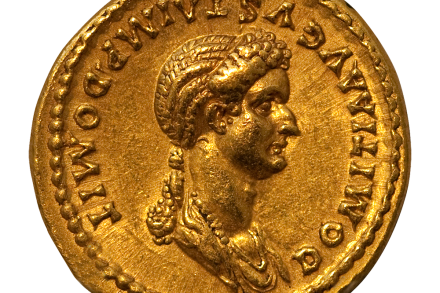
Donald Trump’s obsessive ‘awhairness’ makes one wonder: why is it so important to him? The topic was of some interest in Rome. The emperor Domitian wrote a treatise on baldness. So too did Cleopatra, who offered the following remedy: ‘For bald patches, powder red sulphuret of arsenic and take it up with oak gum, as much as it will bear. Put on a rag and apply, having soaped the place well first. I have mixed the above with a foam of nitre, and it worked well.’ Pompey had himself depicted in statuary wearing a hairstyle associated with Alexander the Great, with a lock of hair brushed back from the forehead. Julius Caesar combed his hair forwards to try to cover his receding hairline.

Cicero’s case against astrology

From our UK edition

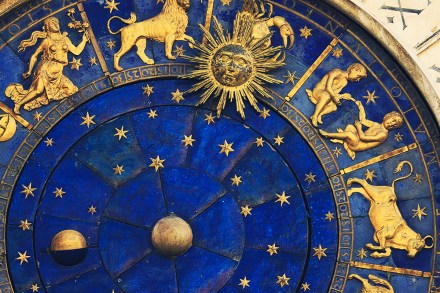
The young in Canada are said to be taking up astrology. But why? Do they think Mark Carney is a star? The ancients saw astrology as a form of divination, which Cicero debunked in 44 bc. The debunking is in the form of a debate with his brother Quintus, who defines divinatio as ‘the foreknowledge and foretelling of events that happen by chance’. First, Cicero points out that no one summons up the diviner when there are experts to hand. On questions of nature men go to a scientist, on statecraft to a politician, on war to a general and so on. The diviner has no role anywhere. Then consider the logic. If something happens ‘by chance’, it cannot, by definition, be predicted: otherwise it could not be said to have happened ‘by chance’.