Peter Jones

Glimmers of hope

From our UK edition

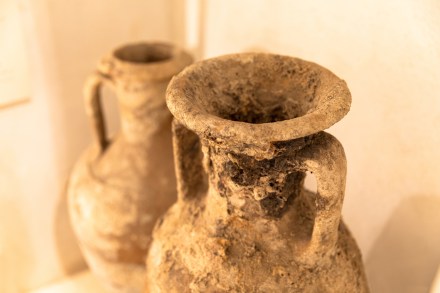
With parliament irretrievably deadlocked over Brexit and the EU intransigent, there remains little belief that either of the prime ministerial candidates can find an even remotely happy solution to the problem. All they can currently offer are the tender leaves of hope. The ancient Greek farmer poet Hesiod (c. 680 bc) told the story of this ambiguous commodity. The gods, determined that life on Earth should be one of suffering, fashioned an irresistibly beautiful woman, Pandora, and sent her down among men with a large storage jar, which she proceeded to open.

Tragedy and validity

From our UK edition

Rufus Norris, the National Theatre’s artistic director, has revealed that all those tedious ancient plays will from now on be updated with a ‘modern twist’ to ‘bring in a fresh audience’. By way of example, he assures us that the forthcoming reworking of Sophocles’s Philoctetes (409 bc) will still be ‘a very valid Greek play’. Valid? What does he mean by that? The original was pretty ‘valid’, with its chorus and three masked male actors playing all the parts, speaking and singing in complex metrical forms in high linguistic register; and it was a serious, elevated medium, inhabited by high-status characters. Most tragedies were drawn from myth.

Rory’s classic mistakes

From our UK edition

If Rory Stewart had taken full advantage of his education at Eton and read classics at Oxford rather than PPE, he would not have made the basic mistakes that blew apart his short-lived campaign to become prime minister. Not that his failure was one of content: far from it. His views on public services and Brexit were entirely predictable and could be correct. So what went wrong? His failure was one of rhetoric, the skill of peaceful persuasion dissected by Aristotle and further refined by Cicero; and his failure consisted in his being so swept away by his millions of followers on social media that he started to believe his own hype, as if that guaranteed victory. But to win, you must persuade those who are not your followers.

The perils of popularity

From our UK edition

So: Boris triumphans, ready to deliver a 140-seat majority for the Tories and lead the UK out of Europe and on to greater triumphs? The shade of an Athenian statesman might offer a warning. Themistocles (c. 524-459 bc) came from an obscure family, but early on conceived a passion for politics. His father ‘pointing out some ancient triremes, mere hulks abandoned on the seashore, said that was what happened to leaders when the people decided they were irrelevant’. This merely spurred him on. Themistocles flourished in the direct democracy invented in Athens in 508 bc. He built up a following among the poor, was said to know every citizen by name, and helped many with difficult court cases. The elites regarded him with great suspicion.

How to lead, Persian-style

From our UK edition

As Tory hopefuls bid to become prime minister, they might like to reflect on Cyrus the Great (r. 557-530 bc), who created the first Persian empire, stretching from the Mediterranean to Pakistan. The soldier-essayist Xenophon (d. 354 bc) spent eight books explaining why he was the model Supreme Leader. The Romans were wildly enthusiastic about it, as were Milton, Gibbon and Machiavelli. Cyrus’s secret was that he was able to command willing obedience from a vast range of peoples, cities and tribes. It was all down, said Xenophon, to his character: ‘The most humane of men, most devoted to learning and most ambitious for honour. The result was that he would put in any effort, however painful, and face any danger, for the sake of esteem.

Seduction and the Boris bus

From our UK edition

Boris Johnson is to be tried at the Crown Court on the grounds that, during the 2016 Brexit referendum campaign, he crucially affected the referendum result by arguing that the UK paid the EU £350 million a week, ignoring another interpretation that the sum was only £250 million a week. Ancient Greeks knew all about advocating one side of an issue, as a law suit exemplifies. Euphiletus was the defendant in a homicide case brought against him by the relatives of one Eratosthenes. The relatives claimed that Euphiletus had murdered Eratosthenes after luring, or even forcing, him into his house as part of a premeditated plan. But Euphiletus’s defence (we do not possess the prosecution’s case) was that Eratosthenes had been seducing his wife.

Learn from your enemies

From our UK edition

The MPs wishing to replace Theresa May as prime minister have policies — but do they know what their electorate makes of them as human beings? In one of his many essays, Plutarch (fl. ad 100) analysed how your enemies could help you see how you came across to others. He began by stating that all governments had to put up with malice, jealousy and the desire to come out on top. But as early man learned that wild animals, his natural enemies, could in fact be a most agreeable source of food, clothing and medicine, so politicians could learn how to turn their mortal enemies to advantage.

Jeremy Kyle, Roman-style

From our UK edition

The Romans were as aware as Jeremy Kyle was of the pleasure that people could get from situations in which others were seen to be in trouble or humiliated in one way or another. Such situations were exploited by everyone from emperors to artists. Is there a new TV show here to replace Mr Kyle’s? Romans would have made programmes exploiting the disabled. There was a fad among emperors for purchasing deformed slaves, and every elite home wanted to have one (we are told there was a market in Rome specialising in them). We hear of someone who paid a vast sum for a guaranteed cretin, only to demand his money back when he turned out to be no fool at all. The emperor Domitian staged a gladiatorial contest between a band of ‘knotted, ball-shaped dwarfs’.

Age-old wisdom

From our UK edition

In her cover story last week, Camilla Cavendish argued that we could keep mentally fit in old age through ‘physical exercises, social contact and new challenges’. The ancients reached a similar conclusion 2,500 years ago. When the Roman poet Juvenal (2nd century ad) reflected on what a man should pray for, his first suggestion was a healthy mind in a healthy body. That had already been standard doctrine for 600 years. The historian Herodotus (5th century bc) noted how many different peoples saw a connection between diet, drink, exercise and lifespan; and it was Greek doctors who argued that mental health also came into the equation. Others then joined in. Socrates pointed out many people ‘do not think straight because their body is not in good health’.

A show of loyalty

From our UK edition

After the sacking of Gavin Williamson, a former No. 10 insider said of Theresa May: ‘One of Theresa’s big faults is that she basically doesn’t trust any other elected politicians. She places her trust in advisers and officials, because they are loyal to her.’ The Roman emperor Claudius (r. 41-54 ad) too found it hard to know whom to trust. He turned to an adviser of the previous emperor. Claudius, nephew of the emperor Tiberius, was born in 10 bc but because of some disability (his mother Antonia called him a monster) he was never taken seriously by the imperial family. However, when the emperor Caligula was assassinated in 41 ad, Claudius was made emperor by the army. Since the senate strongly disapproved, Claudius could hardly trust them.

Rebuilding Artemis’s temple

From our UK edition

As soon as the blaze that nearly brought down Notre Dame was extinguished, two questions were asked: how did it catch fire? And how will it be rebuilt? So too with a famous Greek temple. In 560 bc in Ephesus on the west coast of modern Turkey was built a massive temple to Artemis (Roman Diana), the largest building we know of from the Greek world and the first to be constructed out of marble. It was sponsored by Croesus, king of Lydia, a man so rich you could commit suicide by jumping off his wallet. But it was intentionally burned down in 356 bc by a man called Herostratus, who set fire to the wooden roof supports. That brought down the roof, as in Notre Dame, and everything else with it. His motive? Because he wanted to become ‘famous’. How very 21st-century of him.

Christianity’s curiosities

From our UK edition

Last week Tom Holland reflected on the ‘utter strangeness’ of Christianity’s claim that Christ’s death on the cross was a sign of strength. St Paul agreed: ‘We preach Christ crucified, unto the Jews a stumbling block, and unto the gentiles [correcting the SJV ‘Greeks’] foolishness.’ So did pagan philosophers, who argued fiercely about the nature of the gods. One such was Celsus (2nd C ad), who wrote an anti-Christian diatribe, ‘The True Doctrine’. It survives only in the quotations used by Origen in refuting it (248 ad). Though Celsus had a sense of humour (Christians respected the cross as the tree of life: had Jesus been thrown off a cliff, would there be a cliff of life?), he was deadly earnest about Christianity.

Divorce’s faultless history

From our UK edition

The Christian church ordained that marriage, a sacrament imparting divine grace, was for life. In 1857, the state enacted its first generally applicable divorce law, to be triggered only by sexual misdemeanours. Liberalisation slowly followed,and now ‘no fault’ divorce is being proposed in England. We edge closer to pre-Christian practice. To generalise: in both Greek and Roman worlds, marriage was essentially an understanding between two families, with fathers on both sides agreeing to and sealing the deal (that does not mean the couple’s view was irrelevant), and the bride being given a dowry by her father. The state had no official stake in the relationship. It did not keep records of births, marriages, divorces or deaths.

The democracy catastrophe

From our UK edition

Channel 4 news presenter Jon Snow announced at a recent ‘Leave’ rally that he had never seen so many white people in one place. But political action is above race, colour or creed, and different interest groups are essential to democracy. So what was it about all these citizens? Too ‘unrepresentative’? Too ill-educated? Too (oh horrors) poor? Snow would have been aghast at what the consequences of such a dreadful mob were in Athens of the 5th-4th c bc. In the world’s first and last direct, radical democracy, Athenian citizens, defined as Athenian males over the age of 18, met in assembly every eight days to make final decisions about every issue put before them. On technical matters, we are told, only technical experts would receive a hearing.

The comedy and the crisis

From our UK edition

Since comedians these days seem to be the authorities on all matters spiritual and temporal (puts on funny voice, knife-crime ends), who better than the comic playwright Aristophanes to show us how, despite our feckless MPs, we can leave the EU? In 425 bc Athens had for six years been locked in a grinding war against Sparta. Because Pericles had persuaded the assembly not to take on Sparta by land, the people of Attica (Athens’s territory) had abandoned their farms and crops to the enemy and withdrawn inside Athens’s long walls, where a dreadful plague had killed about a quarter of them (including Pericles).

Petitioning, Roman-style

From our UK edition

The petition calling on the UK to remain in the EU has garnered 8,000 votes from Jacob Rees-Mogg and 700 from Idi Amin. Ho-ho, what wits these Remainers are, could be one response. But Romans knew all about this sort of game-playing, and there could be a different explanation. We have records of about 180 jobs of one sort or another across the Roman world. These include tinkers, tailors, soldiers, sailors, entertainers, artists, designers, clerks, lawyers, engineers, cobblers, shoemakers, weavers, lace-makers, porters, dye-sellers, launderers, plasterers and butchers to teachers, builders, cooks, farmers, merchants, fish-sellers, goldsmiths, muff-makers, labourers, carters, hairdressers, and more.

On liberty, trust, and Brexit

From our UK edition

The problem with Brexit is that parliament is not designed to do what the people have commanded it to. MPs feel their job is to construct their own manifesto and deliver on that, not on something foisted upon them by an ignorant public in the name of ‘popular sovereignty’. Unlike MPs, however, Cicero understood the importance of that sovereignty, and discussed it in detail in his On the Republic (De re publica). At the heart of the res publica, he argued, was the notion of the public interest, which he defined as ‘people coming together to form a society by agreeing about what justice is, and mutually participating in its advantages’. Of these, freedom (libertas) was the most important.

The curse of long life

From our UK edition

A research professor has pointed out that lengthening human lifespan threatens to turn us into living zombies unless we can cure dementia. That would have come as no revelation to the ancients. They were well aware of the cognitive decline that set in at old age: but who did not want to be old? This provided an easy theme for the Roman satirist Juvenal. In his tenth satire (c. ad 120), known as ‘The Vanity of Human Wishes’ after Samuel Johnson’s imitation (1749), he mocked the false hopes raised by (among other things) a long life. The physical consequences were bad enough: wrinkled, baggy face, trembling limbs and voice, bald head, toothless gums, a limp and lifeless penis, no taste for food or wine, loss of hearing, dodgy shoulders and hips, failing sight.

Testing teachers’ limits

From our UK edition

Next year the London Interdisciplinary School (LIS) will offer one degree, in design, technology and the humanities, to teach students to solve ‘complex problems’ like (they suggest) knife crime. Really? The key to problem solving is the development of two essential faculties — the imaginative and the critical. Can LIS really teach for those — or just how to pass exams? The philosopher Seneca insisted that the search for what really counted (his example was virtue) ‘cannot be delegated to someone else’. He illustrated it by telling the story of Calvisius Sabinus, who had the brains and bank account of the Roman equivalent of Sir Philip Green.

The aim of the Games

From our UK edition

The Olympic Committee has added surfing, skateboarding and break-dancing to the events for the Olympic Games in Tokyo in 2020. Heaven knows what ancient Greeks would have made of it. The satirist Lucian (2nd century ad) invented a dialogue in which the Scythian philosopher Anacharsis argued with the famous Athenian statesman Solon (d. 558 bc) about the purpose of athletics. Anacharsis expressed amazement that in the gymnasium men covered in oil were writhing about in sand-filled pits and punching each other, and when Solon told him it was to win prizes at the Games — a wreath of wild olive, of parsley or of pine, or apples — Anacharsis said that proved they were barking: there were easier ways to get apples and olive wreaths.