Peter Jones

The Romans would have known how to deal with Epstein

From our UK edition

To look through Jeffrey Epstein’s curriculum vitae on Google is to be left goggling at how this revolting creature could have gained credence among so many influential people. Roman censors would surely have dealt with him in pretty short order. Their job was to keep an eye on the moral and financial standing of every Roman

Where Trump would have stood on Athens vs Sparta

From our UK edition

In 416 BC in its war against Sparta, Athens instructed the fleet to break the small island of Melos’ alliance with its enemy. The Athenian historian Thucydides constructed the ensuing debate between the two, here very briefly summarised. Melos: Whatever we say or do, it looks as if we will face either war or slavery.

Only divine intervention can save Labour

From our UK edition

A party that can foretell the future stands a very good chance of success. Given Labour’s record of U-turns, they cannot even foretell the present. A state’s success in the ancient world depended on its mastery of natural resources: the more land and people you controlled, the more powerful you were. So states were frequently

The ancient case for a referendum on assisted dying

From our UK edition

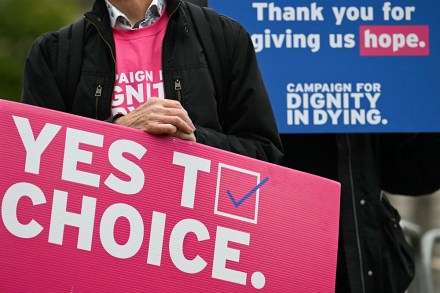
One rather hopes the assisted dying bill will be talked out in the House of Lords. We have no say on matters of government policy, sovereignty, international law (and much else). But this bill is far too controversial, and personally significant, for MPs alone to adjudge. We need a touch of democratic Athens, whose citizens

What a shame Andrew Tate didn’t live in ancient Greece

Has any public figure of recent memory ever admitted to feeling shame for anything they have said or done? As a moral term “shame” appears to have disappeared almost entirely from normal discourse (bar the self-satisfied “fat-shaming”). That tells us much about ourselves. Aristotle discusses the term in some depth. He does not see it

How the ancients anticipated the apocalypse

From our UK edition

What with the threat of global warming and nuclear war, the new year might start with a big bang. The Greeks were preoccupied with this possibility as well and called it the apocalypse (apokalupsis), meaning ‘uncovering’ or ‘revelation’. It has a long history behind it. The Greek farmer-poet Hesiod (c. 700 BC) introduced the idea

How the Roman ranking system actually worked

For otherwise healthy plebs in the Roman world, survival depended on four Fs: farming (the sole source of food and money), fighting, family and friends. Everything else that made life worth living meant having some degree of political control over your own existence, which could be summed up in a fifth F: freedom, or political

roman ranking
tom stoppard

Stoppard, Sappho and me

Many years ago, and well retired, I was working in my study at home when the phone rang and a voice said, “This is Tom Stoppard. David West put me onto you.” David was the professor of Latin at Newcastle University and it emerged that Tom used him when he had queries about Latin, but

How the Roman plebs made modern democracy

From our UK edition

For otherwise healthy plebs in the Roman world, survival depended on the four ‘Fs’: farming (your sole source of food and money), fighting, family and friends. Everything else that made life worth living meant having some degree of control over your life, which could be summed up in the fifth ‘F’, freedom, or political equality.

Why does the Latin mass prevail?

From our UK edition

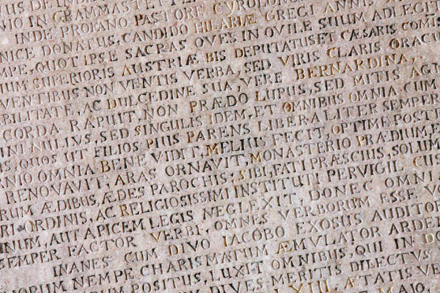
The Pope is visiting Lebanon and Turkey. Will anyone be raising the vexed question of the Latin mass and sacraments with him and asking him exactly why it is so vexed? Though Jesus spoke Aramaic, the New Testament first appeared in Greek in the 1st century ad because that was the common language of the

How I bonded with Tom Stoppard over the classics

From our UK edition

Many years ago, and well retired, I was working in my study when the phone rang and a voice said: ‘This is Tom Stoppard. David West put me on to you.’ West was professor of Latin at Newcastle University and Tom called him when he had queries about Latin. But he had a question about

What the newspapers reported in ancient Rome

From our UK edition

Nero’s personal amphitheatre, recently discovered near the Vatican, was praised to the skies in the ancient Romans’ ‘newspaper’. The historian Tacitus commented drily that it ought to carry stories of much greater historical merit. The ‘newspaper’ was the Acta Diurna (‘Daily Events’), written on papyrus by actuarii, posted up on an Album (whiteboard) in the

Aristophanes would have loved Zohran Mamdani

From our UK edition

Mr Zohran Mamdani, the 34-year-old elected mayor of New York, who has described the police as ‘racist, anti-queer and a major threat to public safety’, says that his top policy priority is implementing free universal childcare, taxing the wealthy, freezing rents, running buses for free and heaven knows what else. How very Marxist! The Greek

The golden thread between Donald Trump and Nero

From our UK edition

Donald Trump has knocked down the east wing of the White House and is turning it into his Golden Ballroom. Might he be tempted to go a step further and build a Golden House (Domus aurea), as Nero did? Nero was as besotted with gold as Trump is. He wrote poems in gold, preserved his

Andrew Mountbatten Windsor and the ancient struggle with shame

From our UK edition

The most extraordinary thing about Andrew Mountbatten Windsor is that he seems to have no sense of shame. That word in Greek was aidôs, which covered everything from a sense of shame, inhibiting one’s own behaviour, to respect, i.e. sensitivity to the feelings, status and claims of others. ‘When I consider that I am doing

The Romans would have known that AI can’t replace architects

From our UK edition

Architects are thrilled about AI, confident that it will take us into an exciting new world at the flick of a switch. The Roman architect Vitruvius begins his ten-book De architectura (c. 25 bc) by describing an architect’s education. Craftsmanship – continuous and familiar practice – must go hand in hand with theoretical skill and

How to succeed, Roman-style

From our UK edition

Whatever Prince Andrew has done, the succession to our throne is secure. How envious the Roman emperor Augustus would have been! In vain did he offer rewards for faithful marriage and punishments for adultery and such like. The mildest punishment was temporary expulsion from Roman territory; the harshest, banishment in perpetuity to an ‘island or

What did the ancients consider a ‘just war’?

From our UK edition

Since the UN does not provide a definition of the ‘just war’, it is interesting to see the ancient take on the matter. The Greeks contributed little. For Plato, war was necessary for the creation and survival of the city, but it was not its ultimate purpose: that was peace. For Aristotle, life consisted of

Keir Starmer and the ancient question of word vs deed

From our UK edition

Sir Keir Starmer said that Britain had come to a fork in the road. As usual, he took it – the fork between his words and his actions. Athenians of the 5th C bc were fascinated by the implications of logos (‘speech, reason, argument’, cf. ‘logic’) and ergon (‘action/results’, cf. ‘erg’). While Homeric heroes (8th

How to create an educational elite

From our UK edition

University term has started, and even more students are being taught in even larger classes. But to what end? Education was a subject that thinkers like Aristotle who argued that the aim of a state was ‘the sharing by households and families in the good life, i.e. a complete and self-sufficient life’. This being of