Peter Hoskin

The IMF is losing patience with Greece

From our UK edition

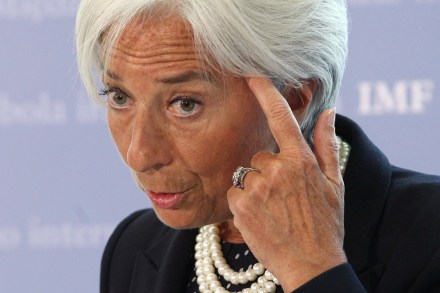
Much ado about Christine Lagarde’s interview with the Guardian this morning — and understandably so. After all, the head of the IMF is normally so restrained and delicate, yet here she lets that drop. When it comes to Greece, she says, ‘I think more of the little kids from a school in a little village in Niger who get teaching two hours a day, sharing one chair for three of them, and who are very keen to get an education… I think they need even more help than the people in Athens.’ And she also stresses that the Greek people should ‘help themselves collectively… By all paying their tax.’ Common sense? Sure. But in the annals of euro-rhetoric this is a particularly blunt example of it.
Off target on immigration

From our UK edition

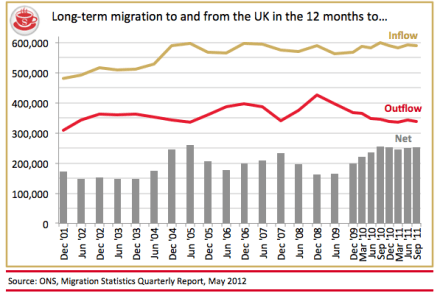
How goes the Tories’ plan to reduce net migration to the ‘tens of thousands’ over this Parliament? Not too well, judging by the latest ONS figures released today. As it is, net migration was 252,000 in the year up to September 2011. That, lest you need reminding, is over double the Tory target. No.10, however, has been fairly defiant in response. ‘It's still our intention to bring levels of net migration back down to tens of thousands,’ said a spokesman today, before adding that, ‘clearly that's going to take some time.’ They also cited different Home Office statistics, which record the number of visas issued up until March of this year.

Where will our politicians’ obsession with Hollande lead?

From our UK edition

Hollande fever strikes again in Nick Clegg’s interview with the FT this morning. ‘I personally massively welcome the arrival of Hollande on to the scene,’ he says, but it goes deeper than that. You see, the Deputy Prime Minister also places an emphasis on ‘growth’, as opposed to ‘austerity’, suggesting that the government might do more to get infrastructure projects up and running. When asked why they didn’t do this before, Clegg responds, ‘It’s for the obvious reason — because the economy is flatter than we anticipated two years ago.’ In some respects, this is unsurprising.

ASBOs weren’t much cop, but what about their replacement?

From our UK edition

Brace yourselves for a new crime wave sweeping across the country — the government is doing away with ASBOs. Or, rather, don't. The truth about ASBOs is that they were rather less significant than Labour would have you believe. As reports such as this one from Policy Exchange suggest, they've probably cropped up more frequently in newspaper articles than they have in real life. Only 20,335 ASBOs have been issued to date, covering less than one per cent of all incidences of anti-social behaviour. What’s more, there’s little evidence to suggest that those ASBOs that were issued made much difference. As the graph below shows, 57 per cent of all ASBOs have been breached at least once by their recipients. 42 per cent have been breached more than once.

Clegg rallies behind Cable

From our UK edition

It’s no surprise that the Lib Dems aren’t keen on Adrian Beecroft’s proposals for hiring and firing. This intra-coalition disagreement has been rumbling on for months now, after all. But when Vince Cable spoke out against them yesterday, it wasn’t entirely clear whether this was his party’s line or just Vince being Vince. Other Lib Dems might have taken a more conciliatory approach. Today, however, it’s clear that they’re not going to.

The IMF says it’s the Bank’s economy now

From our UK edition

When the IMF published a report into the UK economy last year, I wrote a blog post detailing how it managed to please everyone: George Osborne, Vince Cable, Mervyn King, Ed Balls, everyone. This morning, I’ve been tempted to just publish that post again — because the IMF’s latest report is basically the same. Osborne will be pleased with its emphasis on deficit reduction, including the line that ‘Strong fiscal consolidation is underway and reducing the high structural deficit over the medium term remains essential.

Iran and oil are still on the agenda

From our UK edition

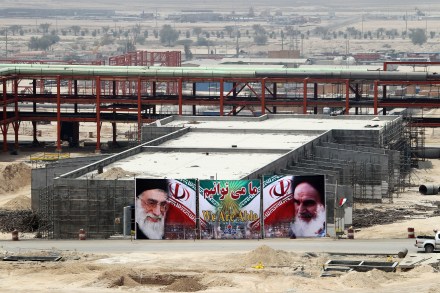
For all the talk about Greece and France and the Eurozone, it’s telling just how much our politicians are focusing on Iran. Indeed, some of the most concrete political settlements of the past few days have concerned that turbulent state. On Friday, the US Congress approved a Bill which included the blunt reminder that, ‘It shall be the policy of the United States to take all necessary measures, including military action if required, to prevent Iran from threatening the United States, its allies or Iran's neighbours with a nuclear weapon.’ And the G8 subsequently put out a statement about oil reserves that clearly had Iran in mind.

Europe is set to exacerbate the coalition’s internal tensions

From our UK edition

As James suggested yesterday, the publication of the Beecroft proposals this week could be a significant moment. If the coalition can carve a constructive agenda from them, then we might have a set of growth policies worthy of the name. But if it degrades into yet another internal squabble, then that chance may be missed. So, what’s it to be? It must be said, the tea leaves aren’t terribly encouraging this morning. Yesterday, we were told that David Cameron and George Osborne are minded to unravel the red tape that surrounds businesses when it comes to hiring and firing. But, today, one of their fellow ministers has spoken out against that sort of thinking. And guess which one it is. Yep, Vince Cable.

All eyes on Hollande

From our UK edition

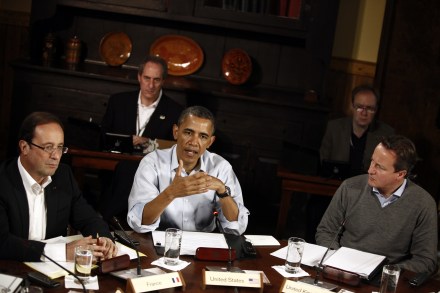
Have you noticed the weird hold that François Hollande has over our politics? If you haven’t, then let me tell you: his name has been almost inescapable in Westminster over the past couple of weeks. Even in PMQs this week, David Cameron and Ed Miliband couldn’t resist of spot of Hollandery. Behind-the-scenes, too, there is much consideration being given to how the new French President should be treated. Political strategists recognise, as I’ve suggested before, that his election could be a significant moment in the life of the Eurozone and the European Union.

The unions versus the Department for Education — continued

From our UK edition

Oh dear, seems that the one of the union officials behind that presentation I posted earlier isn't happy that it made its way on to Coffee House. Here's an email exchange — leaked to me by a different Department for Education source — that starts off with one from that union official, Brian Lightman, to various union and departmental types. Names and email addresses have been omitted to protect the innocent: From: Brian Lightman Sent: 18 May 2012 15:40 To: Numerous union officials and Department for Education staff Subject: RE: Education forum Sorry – the first half of this message was sent before it was complete.

The unions’ lazy opposition to schools reform

From our UK edition

ATL ASCL Presentation to Edu Forum 16May12 Now here’s a peek behind the Westminster curtain that you’ll find either amusing or dispiriting, depending on your mood. It’s a presentation delivered by a union delegation at the Department for Education this week, which Coffee House has got its hands on. You can read the whole thing above. We’ll get onto why it’s amusing (or dispiriting) shortly, but first a bit of background. Various school unions are invited into the DfE each month to meet with a minister or two, as well as with their advisers and civil servants. The idea is that they’ll talk policy; presenting problems and solutions in a way that ought to be mutually constructive.

PMQs live blog | 16 May 2012

From our UK edition

<a href= "http://www.coveritlive.com/mobile.php/option=com_mobile/task=viewaltcast/altcast_code=b4764a0fc6" _fcksavedurl= "http://www.coveritlive.com/mobile.

The staring contest over Greece

From our UK edition

Now that negotiations have broken down in Athens, and there will be another election, we face the prospect of an almighty staring contest. On one side, the Eurocracy, who will be urging Greek political parties — and particularly the left-wing coalition Syriza, which is ahead in the polls at the moment — to soften their anti-austerity stance. On the other, the Greek politicians, who might be hoping that the eurozone relents to some extent, and allows the cuts to be decelerated. The question is: who will blink first? As it stands, it’s difficult to come up with an answer.

Walking beyond parody

From our UK edition

As the Times's Sam Coates suggests, this official Department of Transport video lands right in the middle of The Thick of It territory. Remoding (1:00 in), anyone?

Greece is still the word

From our UK edition

Remember when Europe’s leaders were basically saying, ‘Don’t worry, it’s all sorted’? Remember when they were putting out communiqués that started ‘The euro continues to rest on solid fundamentals’? No doubt they’ll do so again, but those past shows of certainty still look kinda funny this morning. Despite some last-minute concessionary efforts by Europe’s beancounters, it still appears that Greece’s main parties will be unable to form a coalition, and are heading for another election. And we know what that could mean: victory for the left-wing Syriza coalition, a severe swing against austerity, Greece’s exit from the euro, etc. etc.

Hammond speaks out

From our UK edition

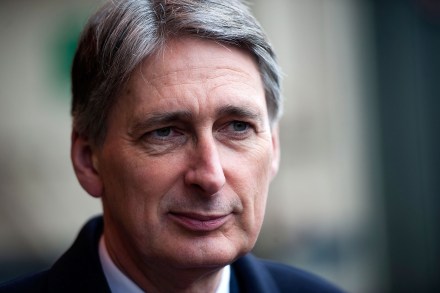
Generally speaking, Philip Hammond is one of the Cabinet’s quieter members; a sort of human calculator designed to run a department efficiently and with the minimum of fuss. Which is why his interview with the Sunday Times this morning (£) is so eye-catching. There’s very little that’s understated about it at all. ConservativeHome’s Matthew Barrett has already put together a useful summary of the main points, so suffice to say that Hammond is dismissive about both Lords reform… ‘He believes the upper chamber “works rather well” as it is and that voters are “probably largely indifferent” on the subject.

The Queen’s Speech: full text | 9 May 2012

From our UK edition

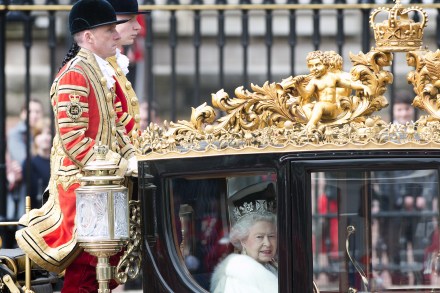
My Government’s legislative programme will focus on economic growth, justice and constitutional reform.   My Ministers’ first priority will be to reduce the deficit and restore economic stability. Legislation will be introduced to reduce burdens on business by repealing unnecessary legislation and to limit state inspection of businesses. My Government will introduce legislation to reform competition law to promote enterprise and fair markets. My Government will introduce legislation to establish a Green Investment Bank. Measures will be brought forward to further strengthen regulation of the financial services sector and implement the recommendations of the Independent Commission on Banking.

Cameron tries to reassure his backbenchers ahead of the Queen’s Speech

From our UK edition

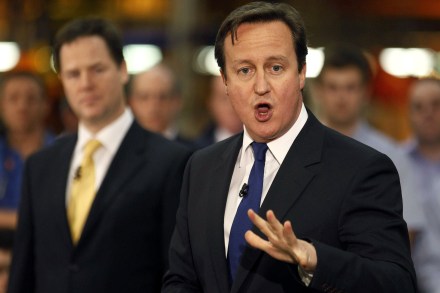
The newspapers are awash with articles previewing today’s Queen’s Speech, but few stand out as much as James Chapman’s interview with David Cameron in the Daily Mail. Here, Cameron does something that he rarely does: complain about life with the Lib Dems. There was that one time when he claimed the Tories would be ‘making further steps’ on welfare and immigration were they in a majority government, of course — but this goes further than that. He tells the paper, ‘There is a growing list of things that I want to do but can’t.’ As for the specific items on that list, Cameron mentions ECHR reform, employment regulation and the recognition of marriage in the tax system.

Have the Milibands got Hollande fever?

From our UK edition

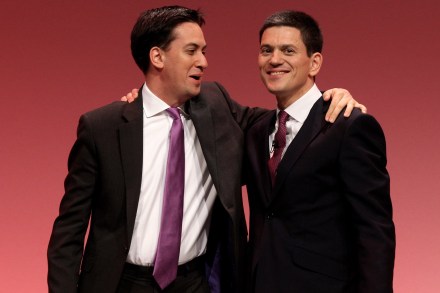
We’ve grown so used to regarding Ed and David Miliband as mutual nemeses that it’s strange to see them operating as a tag team today. The younger brother has delivered a fiery attack on the ‘unfairness and economic failure’ of the coalition, while the elder brother has an article in the Mirror arguing that the government is ‘Wrong about how to grow the economy in the modern world’. There’s also another article by the latter in the Times (£), just in case you haven’t had your fill of MiliCommentary. Much of what they say is unsurprising, but some things do stand out from their twin attacks nonetheless. The first is their insistence that the coalition isn’t just incompetent, but also ‘wrong’.