Peter Hoskin

The future of arts broadcasting

From our UK edition

Under the stewardship of John Reith, the BBC was godlier than it is today. In fact, when Broadcasting House was first opened in central London, Director General Reith made sure to dedicate the whole thing to Him up there. An inscription was chiselled into the wall of the building’s foyer, which began: ‘To Almighty God, this shrine of the arts, music and literature is dedicated by the first Governors in the year of our Lord 1931’. The words that followed included ‘decency’, ‘peace’ and ‘good harvest’. It’s not really the sort of epigraph that Auntie would put her name to now. But, reading that inscription again, it’s not so much the G-word that stands out as the A-, M- and L-words: arts, music and literature.

Mid-life crisis | 14 February 2013

From our UK edition

This is 40. Or perhaps I should say, is this 40? I haven’t yet reached that rounded age myself, so don’t have much of a frame of reference. But a quick spin around Wikipedia reveals that the film’s writer-director Judd Apatow (45) and its two stars, Leslie Mann (40) and Paul Rudd (43), all have the requisite number of years on them. They must know what they’re talking about, mustn’t they? Mann and Rudd play Debbie and Pete, a married couple who first appeared in one of the best comedies of the last decade, Apatow’s Knocked Up (2007). And their relationship is summed up by the film’s poster: Pete squats on the toilet, iPad in hand, while Debbie looks on askance through the bathroom mirror.

Hall of mirrors

From our UK edition

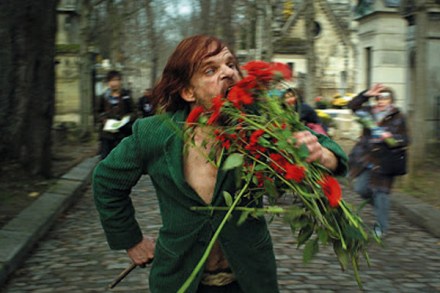
At first glance, Holy Motors is all about one astonishing performance — or several, depending on how you look at it. The performance in question is by Denis Lavant, who plays M. Oscar, a blank page of a man who scribbles over himself with make-up and wigs to portray a succession of different characters. At the film’s outset he is a Parisian businessman, leaving his home in a limousine to do battle with the markets. Soon after, he is an old beggar woman, a sex robot sheathed in rubber, a gangster, a father and more. We never really know why he does this beyond — in his own words — ‘the beauty of the act’. But then, look closer, and there’s more going on. Is it any coincidence that M.

Friends reunited | 3 January 2013

From our UK edition

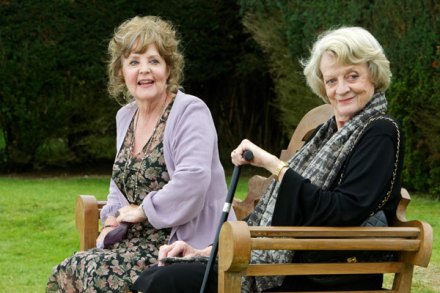
You know how television is becoming like the movies, more expansive and more expensive? Well, what if the movies were to meet television halfway, becoming smaller and more routine? The result, I’m sure, would be something like Quartet, Dustin Hoffman’s first directorial effort since 1978’s Straight Time. If you ran past this film at speed, you could almost mistake it for an episode of Downton Abbey. It’s set in a country house. Maggie Smith is among its cast members. And it’s borrowed actors from small-screen series such as Gavin and Stacey and The Vicar of Dibley. Just the ticket for a lazy Sunday night in. Except Quartet is not nearly so grand as Downton Abbey.

Grape expectations

From our UK edition

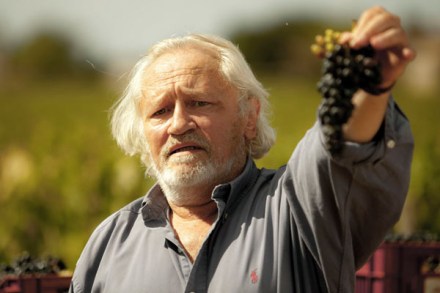
Five minutes into You Will Be My Son (or Tu seras mon fils in its original French), I expected a very different film from the one that eventually emerged. The first scene takes place in a crematorium, as a coffin and its occupant are cooked to ashes. A relative of the deceased picks at a flower, and asks whether the ashes of the man and of the wood will mix. At which the funeral attendant leans over like a great crow to say, ‘It’s all just carbon.’ The whole thing seems very poised, quite refined and a little bit clever. But then the film turns into something else entirely. Its location switches to a vineyard in Saint-Émilion, where we are properly introduced to the owner, Paul de Marseul (Niels Arestrup), and his son Martin (Lorànt Deutsch).

Caravan killers

From our UK edition

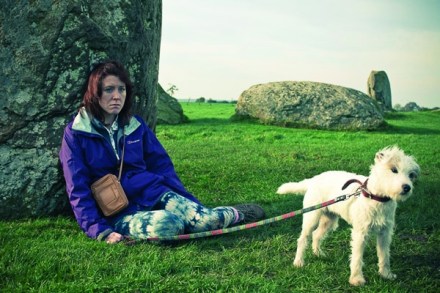
Here’s a fun diversion for all the family: how many ‘high-concept’ film ideas can you think of in a single minute? These are the films with premises that can be summed up — and pitched to expectant, impatient Hollywood producers — in only a few words. ‘Jaws in Space’, say, or ‘Arnie versus Hitler’. Get started now, and you could soon have the studios drooling a path to your door, eager to turn your aphorisms into easily marketable products. Red carpets and golden paycheques await. I mention this because, at first glance, it seems as if Ben Wheatley’s Sightseers is the result of a similar game.

Shrub of life

From our UK edition

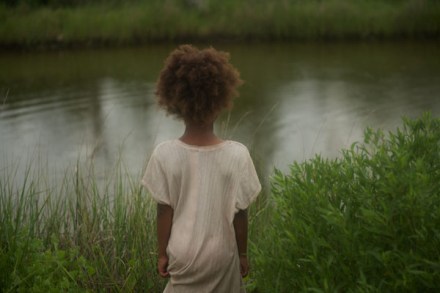
You know how it is: you wake up in your knock-down corrugated shack, surrounded by chickens and dogs and pigs, before staggering out into the morning sun to press the animals against your ear, listening to their heartbeats. No, sorry, I’m getting ahead of myself. You probably don’t know how it is, and neither did I before watching Benh Zeitlin’s Beasts of the Southern Wild. But this is what this film does to its viewer right from the off. It depicts a world so vivid and immediate that two dimensions naturally become three, without the need for any fancy Hollywood stereoscopics. It is, actually, our six-year-old heroine Hushpuppy (Quvenzhané Wallis) who tunes into the ba-dum, ba-dum of the animals’ hearts.

The bigger picture

From our UK edition

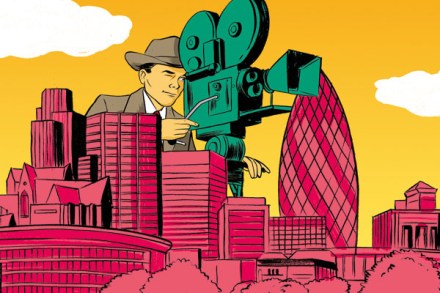
What used to be called the National Film Theatre, now BFI Southbank, is a weird sort of place. On the outside it is unprepossessing to the point of ugliness: a concrete mass sitting beneath the southern end of Waterloo Bridge, squat against the Thames, where it sulks away from the sunlight and overhead traffic. Whereas, on the inside, it offers a pretty jumble of conveniences for its clientele: a grand upholstered auditorium; a scattering of more utilitarian screens; a digital library of film called the ‘Mediatheque’; and a glassy bar and shop. The effect is rather like those ‘Ascent of Man’ diagrams that show the evolutionary links between monkeys and us, except in this case it’s for the movie theatre business.

Bourne again | 18 August 2012

From our UK edition

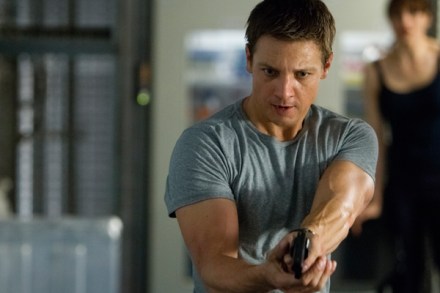
Seriously, what has Hollywood got against wolves at the moment? First there was last year’s The Grey, which saw a bearded Liam Neeson stalked across Alaska by a pack of the beasts before using his survival skills — and some broken bottles — to smash them on to the endangered species list. Now we have The Bourne Legacy, which starts with a bearded Jeremy Renner being stalked across Alaska by a pack of the beasts before using his survival skills to, etc., etc. It’s very similar, except Renner doesn’t have broken bottles at his disposal. He has military drones. It would be wrong to dwell on this lupicide, however.

Teenage dream

From our UK edition

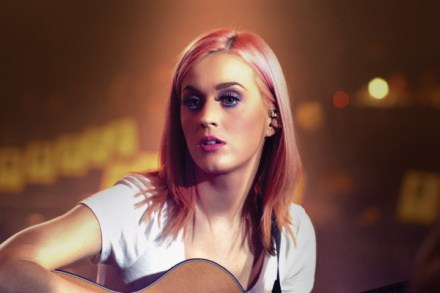
It’s Katy Perry! In 3D! And you’re almost certainly not going to see it! But for most of those who are, this is probably as good as cinema is going to get this year, or perhaps ever. Indeed, this documentary about Ms Perry’s rise to pop hyper-stardom is — to steal the title of her third studio album — a teenage dream. For many teenage girls (and younger), this is a chance to see their heroine’s life in exacting high definition. For many teenage boys (and older), it will be something else entirely. And in 3D too! But first some background information for those who are unfamiliar with Katy Perry and her work.

The vast picture show

From our UK edition

The awards season may be over, but can I nominate Neil White for a gong anyway? He genuinely deserves one. After all, he’s the chap from Nottingham who watched all of the 600 or so films that were released into British cinemas last year — and then blogged about them at www.everyfilmin2011.com. You might question his sanity, but you cannot question his dedication: hours and hours spent in the dark of cinemas across the country, and then further hours translating his thoughts on to the internet. And now? He is repeating the process for the current year. The rest of us would find it difficult to follow Mr White’s bleary-eyed example. After all, 600 films in a year equates to roughly 12 films a week, or nearly two films a day.

A farewell

From our UK edition

Here’s a first for Coffee House: a farewell by one of its contributors. And that contributor is me. It’s been four-and-a-half years since I first joined The Spectator to tend to this blog, but now I’m moving on. Or, rather, I’ll still be in the office until the end of next week — but I’ll be working on some non-blogging stuff then, so I thought I’d say goodbye to CoffeeHousers now. It’s been a blast: the best first job in journalism that I could have hoped for.

What to make of Gove’s remark about for-profit free schools?

From our UK edition

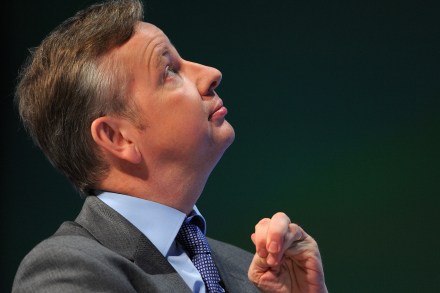
Garlands from all quarters for Michael Gove’s performance at the Leveson Inquiry this afternoon (well, not quite all quarters) — but the most significant thing that the Education Secretary said wasn’t actually related to the media, but to his ministerial brief. When asked about the prospect of profit-making free schools, he replied that they ‘could’ happen ‘when we come to that bridge’. It’s probably the clearest statement that Gove has made, on record, to demonstrate that he’s not averse to introducing the sort of profit arrangements that could give his agenda an almighty boost. The question is: when will he get to that bridge, then?

Clegg takes on the Establishment (and the Tories) again

From our UK edition

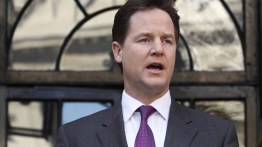
So Nick Clegg wants to present himself as anti-Establishment, does he? That’s hardly surprising. After all, the Deputy Prime Minister has ploughed this furrow before now, attacking the ‘vested interests’ that are the banks and the political class. And it’s generally a large part of the Lib Dems’ ‘differentiation strategy’ to come across as insurgents in suits. But Clegg’s comments today are still striking for how far they weaponise this theme and then turn it against the Tories. It’s not just the context of it: with Tory ministers — including Jeremy Hunt — appearing before Leveson this week, Clegg chooses to attack those who ‘bow and scrape in front of Rupert Murdoch’.

So let’s get this straight…

From our UK edition

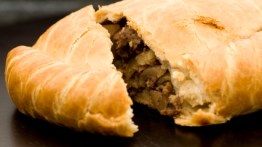
After today’s VAT changes: a) If you walked into a pasty shop and bought a pasty that has been kept hot in a cabinet (or in foil, or on a hot plate, or whatever), then you WOULD pay VAT. b) If instead that pasty had come straight out of the oven, then you WOULD NOT pay VAT. c) If the pasty was cold, or had been left to cool, you WOULD NOT pay VAT. d) If the pasty was cold, and then reheated in an oven or microwave before being handed over, then you WOULD pay VAT. e) If the pasty was being kept hot in a cabinet when you ordered it, and then it was taken out to cool before being handed to you, would you pay VAT or not? It wouldn't have cooled naturally from exiting the oven, as the government seems to specify — but it has been left to cool, after all.

When spring doesn’t turn into summer

From our UK edition

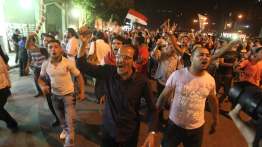
A high-ranking member of Hosni Mubarak’s disgraced government, or someone from the Muslim Brotherhood? It’s hardly an enviable choice — but that is the choice facing Egypt in next month’s Presidential election, after the official results of the preliminary vote were released yesterday. For obvious reasons, neither candidate much appeals to the freedom-loving younger generation that set the country’s revolution a-rolling in the first place. So, overnight, we’ve seen a return to protests, anger, fire, etc. This is still an immensely divided polity. As grim as the situation is, it will come as little surprise to Spectator readers (or to anyone, really).

Spinner unspun

From our UK edition

UPDATE: The below video has now been taken down from YouTube, but Guido has another copy here. Guido was first to this video of Downing St’s Director of Communications, Craig Oliver, remonstrating with the political correspondent Norman Smith about the tone of a BBC report — but it’s worth posting again here.

The Syrian tragedy continues

From our UK edition

Last Friday, the Secretary General of the United Nations, Ban Ki-moon, produced a gloomy 13-page report about the situation in Syria. ‘The overall level of violence in the country remains quite high,’ he wrote, before adding that ‘there has been only small progress’ on Kofi Annan’s six-point peace plan. And then, as if to prove his point, around 90 people — children among them — were killed in the town of Houla. The government has denied responsibility for the atrocity, instead blaming ‘terrorists’. But, whoever or whatever it was, you get the picture. It’s a bloody and terrible mess. The question that has loomed across this weekend is: what now?

The expenses spotlight falls on Baroness Warsi

From our UK edition

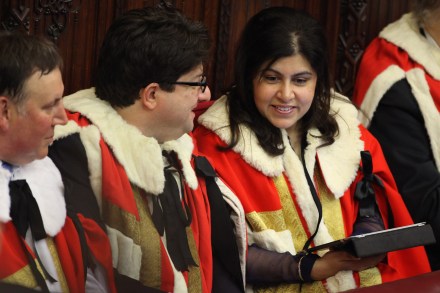
If David Cameron had a list of headlines he doesn’t want to see, I’m sure ‘Top Tory in expenses scandal’ would be near the top of it. Yet that’s what he, and we, will read this morning on the cover of the Sunday Times (£). The ‘Top Tory’ in question is Baroness Warsi, co-chairman of the party. And her offence, apparently, is to have claimed expenses for overnight accommodation while staying for free in a friend’s house. Warsi has more or less denied the accusation, saying that she did stay at the property on ‘occasional nights’ as the guest of a party official — but made an ‘appropriate payment equivalent to what I was paying at the time in hotel costs’.

Getting personal

From our UK edition

‘It’s getting personal this time.’ So says a UK Uncut type, in the video above, explaining why the group staged a protest outside Nick Clegg’s home in Putney today. The event passed off peacefully, apparently — but this brand of personalisation must still be worrying for those subjected to it. As Tim Montgomerie points out, ‘The Cleggs have young children and it can’t have been pleasant for them (if they were at home) or for local families.’ You wonder which politician, and which other local families, will be next.