The Spectator

Economic Innovator of the Year Awards 2025 – the winners

From our UK edition

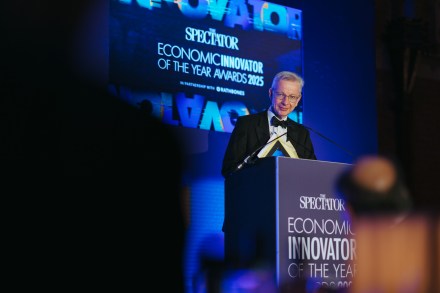
We’re very pleased to announce the winners for The Spectator’s Economic Innovator of the Year Awards 2025, sponsored by Rathbones. Economic Innovator of the Year Cuvva is the UK’s leading short-term car insurance provider, built entirely with customers in mind. Essentially, Cuvva gets people on the road on their terms, faster and for less, by making it super-easy to get insured on any car – yours or someone else’s with policies starting from just one hour. Innovator to Watch AssetCool delivers a scalable, cost-effective solution for upgrading power grids by combining advanced photonic coatings with automated robotic application.

Portrait of the week: a shambolic Budget, Ukrainian plan and justice overhaul  

From our UK edition

Home Before Rachel Reeves, the Chancellor of the Exchequer, delivered the Budget, the Office for Budget Responsibility accidentally released its contents. She will increase the tax take to an all-time high of 38 per cent of GDP in 2030-31. She froze tax thresholds until the end of 2030-31 and introduced a council tax surcharge on properties worth over £2 million from 2028. She scrapped the two-child benefit cap. She froze fuel duty for only another five months but brought in a tax of 3p per mile on electric vehicles. The amount that can be added annually tax-free to a cash Isa was reduced from £20,000 to £12,000 (except for over-65s) and salary sacrifice schemes will be capped at £2,000 from 2029. Online betting tax will rise to 25 per cent.

Innovator of the Year Awards: The winners

From our UK edition

16 min listen

On November 7th, the finalists for the 2024 Innovator of the Year Awards joined The Spectator and Rathbones at a gala evening in central London. There, they found out the regional and category winners for this year's awards. In this episode, our business editor Martin Vander Weyer, one of the founders of the awards, announces the winners for listeners who've followed our previous episodes in this year's series.

Wanted: a broadcast producer for The Spectator

From our UK edition

We're looking for a new producer to join The Spectator's broadcast team. You would be one of four on the broadcast team and one of only 30 journalists working here at The Spectator, producing a suite of podcasts ranging from British and US politics to lifestyle, religion and literature. The team is also behind Spectator TV, our YouTube channel which has grown by more than 140,000 subscribers this year alone, regularly featuring fantastic guests like Douglas Murray and Julie Bindel. Our shows are still growing, and we are always looking for fresh ideas and ways to do things better. You should be someone who knows current affairs well enough to suggest interviewees and who can pick out the interesting nuances in a news story that make for good conversation.

David Cameron back and Suella Braverman sacked: as it happened

From our UK edition

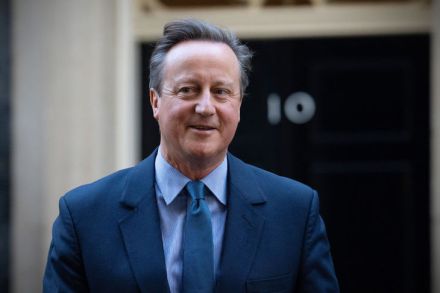
David Cameron has been ennobled and made Foreign Secretary. James Cleverly is the new Home Secretary after Suella Braverman's sacking. Steve Barclay is now Environment Secretary, after Thérèse Coffey resigned from government. Victoria Atkins takes Barclay’s place as Health Secretary. Rachel Maclean has been sacked as housing minister and replaced by Lee Rowley. Esther McVey will be a Cabinet Office minister, reportedly with an ‘anti-woke’ brief. Rising stars Richard Holden and Laura Trott have been promoted to party chairman and Chief Secretary to the Treasury, respectively. A slew of junior ministers have resigned, including Will Quince, Neil O'Brien, Nick Gibb, Jesse Norman, Jeremy Quin and George Freeman.

Portrait of the week: HS2 cancellations, (another) doctors’ strike and US Congress meltdown

From our UK edition

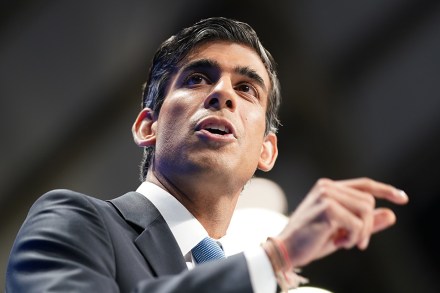
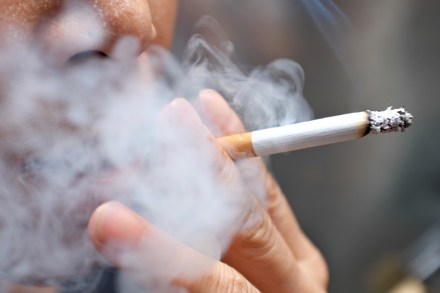
Home The Conservatives argued about tax and HS2 at their conference in the former Manchester Central railway station. At the end, Rishi Sunak, the Prime Minister, announced cancellation of the Birmingham to Manchester leg of HS2. He promised £36 billion for a ‘Network North’ and for transport outside London (where there would be a ‘Euston development zone’). He proposed raising the legal age for smoking by one year every year. He declared his values as ‘service, family, work’ and said: ‘A man is a man and a woman is a woman.’ He wore a bracelet saying ‘Dada’. In her own speech, Akshata Murty, his wife, said ‘aspiration’ summed him up. Lightning struck a food waste recycling tank at Cassington, Oxfordshire, causing a huge explosion.

Letters: it would be the height of stupidity to ditch the ECHR

From our UK edition

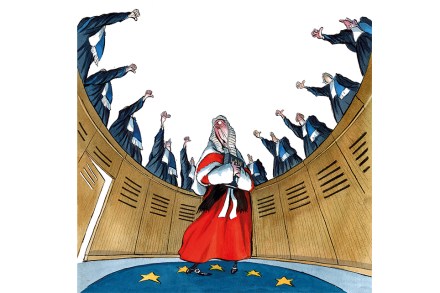
The sanctity of the ECHR Sir: Jonathan Sumption’s criticisms of the European Convention on Human Rights (‘Ruled out’, 30 September) are as lucid and as logical as one would expect from such an admired jurist. He provides a persuasive case as to why the UK could withdraw from the ECHR while preserving all the basic rights that we value and which are enshrined by the Convention.  Uncharacteristically, however, he fails to mention the single most important reason why the UK was at the forefront of the creation of the Convention – and the accompanying court – in 1949.   It was not to ensure that basic human rights were enjoyed in the United Kingdom or in other stable democracies which already enjoyed the rule of law and personal freedom.

Can Sunak establish himself as a radical?

From our UK edition

The Conservatives gather in Manchester this weekend for what may well be their last hurrah as a governing party. Bookmakers are offering odds of 7:1 to anyone bold enough to bet on Rishi Sunak winning the next general election. The Prime Minister himself is in a gambling mood and has started to make some brave and overdue decisions: rethinking HS2 and overhauling net-zero policies. Such decisions bring short-term embarrassment, and were avoided by his predecessors, but they offer long-term dividends. The question is whether this is a wise strategy in the lead-up to an election. Typically, a prime minister makes their big promises in a pre-election year.

Portrait of the week: Braverman on migration, Burnham on HS2 and police on AI

From our UK edition

Home Dozens of armed police in London laid down their guns after a Metropolitan Police officer was charged with the murder of Chris Kaba, 24, shot in Streatham Hill last year. The army stood by, but enough policemen returned to armed duties to make Military Aid to the Civil Authorities unnecessary. Rishi Sunak, the Prime Minister, backed some sort of review of armed policing guidelines ordered by Suella Braverman, the Home Secretary, which Downing Street said was expected to conclude by the end of the year.

Portrait of the week: A parliamentary arrest, a Morocco earthquake and a yoga ‘mass killing’ 

From our UK edition

Home Average wages (including bonuses) in the three months to July were 8.5 per cent higher than a year earlier. This should mean that state pensions rise by 8.5 per cent from April 2024, if the government does not claw back anything; the predicted rise would bring into the tax-paying bracket 650,000 more pensioners, a total of 9.15 million. GDP fell by 0.5 per cent in July. Wilko shops began closing as attempts to rescue the chain failed; Poundland offered to take on the leases of up to 71 shops. The cost of a first-class stamp is to rise from £1.10 to £1.25; before April this year it was only 95p. Bernard Looney resigned as chief executive of BP over a matter of personal relationships. A government auction for contracts for new offshore wind farms brought not a single bid.

In defence of e-bikes

From our UK edition

Identity politics Sir: Your lead article (‘On board’, 12 August) highlights numerous issues related to refugees, but does not offer much in regard to why this country is a magnet for economic migrants. You state that this is a rich country. How can this be the case when government debt is 100 per cent of GDP? Further, when we cannot provide adequate services in healthcare, education and housing, why should we take in migrants who cannot make an immediate contribution to the country’s tax base? The reasons that this country is so attractive are, firstly, the English language, which we can’t do much about. Secondly, we have an easily accessible benefits system, including healthcare.

Why do the Tories force asylum seekers to live on welfare?

From our UK edition

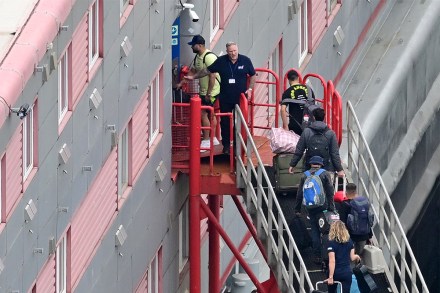
Over decades of service as a floating hotel, the Bibby Stockholm has accommodated all manner of people. It has housed workers for a Swedish wind farm and for the new Shetland gas plant; homeless people in Hamburg, asylum seekers in Rotterdam. It was briefly considered as a ‘high-end’ barge for students: with 222 en-suite rooms, a restaurant, TV room and gym, it was touted to Irish universities as a floating hall of residence. It makes sense, then, that the government considers the vessel a suitable place to house asylum seekers – given that Britain has so few large residential spaces available. But the mooring of the Bibby Stockholm in Portland harbour has triggered yet another round of hysterical outrage.

Rishi Sunak is right to hedge his bets on oil and gas

From our UK edition

It is quite right that the Prime Minister has chosen to approve new licences for oil and gas extraction in the North Sea, in spite of the bitter reaction from climate activists, the Labour party – and some of his own MPs. Chris Skidmore, who just recently completed a review of net zero policies on behalf of the government, said this week that the decision to award new licences 'is on the wrong side of the future economy that will be founded on renewable and clean industries and not fossil fuels'. Yet the Prime Minister is not retrenching on investment in renewable energy; he is hedging the government’s bets.

Letters: Biden is alienating Britain

From our UK edition

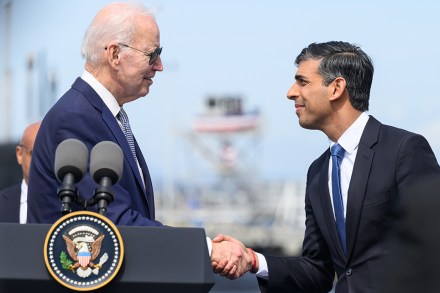
Joe Shmoe Sir: Your piece ‘Not so special’ (Leading article, 8 July) was right. Joe Biden doesn’t like us and a brief 45 minutes with Rishi Sunak last week doesn’t change that. In Saudi Arabia last year, Biden compared Israel’s treatment of Palestinians with Britain’s past in Ireland. This was outrageous – what about the US historical treatment of Mexicans, Cubans and Filipinos, and Biden’s friendliness towards IRA terrorists? Britain enjoyed excellent relations with the US under Kennedy, Reagan and Clinton, all of whom had Irish ancestry, and it is self-indulgent and a dereliction for this President to make his chosen personal background an issue, as he does.

Parents have a right to know what’s in sex education classes

From our UK edition

Rishi Sunak tends to shy away from social issues so it has been left to a backbencher, Miriam Cates, to introduce a Bill which would oblige schools to disclose to parents the materials whichare being used in their children’s sex education classes. The Bill is necessary because the Conservative government has allowed sex education in many schools to be taken over by campaign groups with a radical agenda who wish to persuade children that it is wrong to think in a ‘heteronormative’ way. The government has let down a generation of children in allowing ideologues to infiltrate lessons The scandals that have recently surrounded schools reveal the scale and severity of the problem.

Website and app FAQs

From our UK edition

WebsiteTo access your subscription on the website, follow the below instructions.1. Please create an account at spectator.co.uk using the email address on your subscription.2. Once this is done, your accounts will link in 24 to 48 hours and will remain linked for the duration of your subscription.If you have successfully registered a web account using the email address on your subscription and a password of your choosing and you’re still having difficulties, please try logging out of your account, clearing your browser’s cache, and logging back in.AppSubscribers also have full access to the Spectator app, available on android 6.0 devices and higher, Apple iOS 14 devices and higher, and Kindle Fire devices. To use the app, download it from the app store on your device.

The best of Low Life: Jeremy Clarke remembered

From our UK edition

Jeremy Clarke, The Spectator’s Low Life columnist, died this morning at his home in France. He was 66. For 23 years, his column was, for many readers, the first page they turned to in the magazine. Here is a brief selection of the best of Low Life: On self-confidence  30 March 2002: ‘Two Christmases ago, Sharon gave her Mum a self-help paperback called The Duty Trap. The book is aimed at people who persist in unhappy, one-sided relationships out of a misplaced sense of duty. On New Year's Eve, says Sharon, her Mum finished the book, went upstairs, packed a suitcase and walked out. She went back to the farmer, now widowed, with whom she'd had the one love affair of her life.

Portrait of the week: Biden, bullying and Barry Humphries

From our UK edition

Home ‘China is carrying out the biggest military build-up in peacetime history,’ warned James Cleverly, the Foreign Secretary, in his Mansion House speech, but said ‘no significant global problem’ could be ‘solved without China’. The government borrowed £139.2 billion last year, £13 billion less than expected, bringing public debt to 99.6 per cent of GDP. In an opinion poll by YouGov for the BBC’s Panorama, 58 per cent of the 4,592 people asked thought that the United Kingdom should continue to have a monarchy and 16 per cent did not know.

Who still smokes?

From our UK edition

By George Keir Starmer was mocked for showing footage of Glasgow in a video he made to celebrate St George’s Day. But the legend of St George (who is, after all, also the patron saint of Georgia and Ethiopia) did not leave Scotland untouched.  – Glasgow, Edinburgh, Dundee, Aberdeen and Stirling all have churches dedicated to St George. St George’s Cross is an area of central Glasgow which gives its name to an Underground station and also boasts a statue of St George and the Dragon. Central Glasgow also had a St George’s Place, outside St George’s Church, but it has since been renamed Nelson Mandela Place.