Patrick West

Patrick West is a columnist for Spiked and author of Get Over Yourself: Nietzsche For Our Times (Societas, 2017)

What Gen Z gets wrong about ‘racist’ Britain

From our UK edition

Nearly half of Generation Z believes that Britain is a racist country, and a similar proportion say that they aren't proud to be British. This is the grim finding of a study published in the Times yesterday, based on a YouGov survey and research by the opinion consultancy Public First of 18- to 27-year-olds. The revelation sits in stark contrast with a study undertaken by the Times twenty years ago, in which 80 per cent of young people said that they were proud to be British. The discrepancy is even more stark when contrasted with a general consensus that Britain has become a less racist and more racially-aware place in the intervening period.

Generation Bland: the inevitable rise of ‘Palentine’s Day’

From our UK edition

As we approach with anticipation or dread 14 February, the day we traditionally celebrate love and all things amorous, a certain demographic will instead be observing a rather less passionate and altogether more bland occasion: ‘Palentine’s Day’. Commemorated on 13 February, this is apparently the date upon which to honour platonic friendships instead of romantic engagements – and it’s proving increasingly popular among Generation Z. It all started with ‘Galentine’s Day’, a celebration of female friendship invented by the character Leslie Knope in American political satire mockumentary Parks and Recreation in 2010. As the concept moved from comedy to real life it morphed into the gender-neutral ‘Palentine’s’ – lest anyone should feel left out.

Why children peddle conspiracy theories

From our UK edition

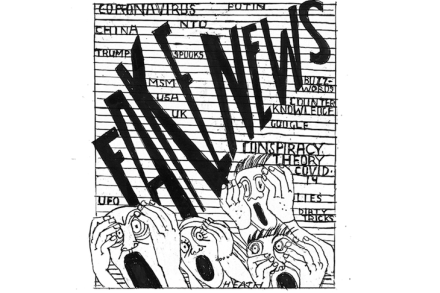
Teenagers today are more likely to believe in conspiracy theories, and that is a very bad thing indeed. This was the unmistakeable message conveyed by a story in the Times yesterday. Citing a report published by the Commission into Countering Online Conspiracies in Schools, it related how ‘conspiracy theories are rife in classrooms’. Young people, we're told, are more inclined to trust social media influencers than the government when it came to news sources and forming their views of the world. Teachers ‘need urgent support’ to prevent children ‘falling down rabbit holes online’ and succumbing to ‘misinformation’ they discover therein.

Lego isn’t homophobic

From our UK edition

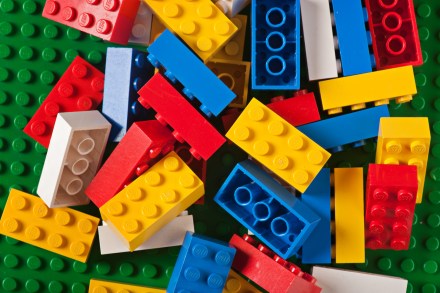
To the surprise of millions of children today, and to their parents who loved the toy when they were youngsters themselves, it turns out that Lego can be homophobic. This is the conclusion of a self-guided tour of the Science Museum in London. The tour, which explores ‘stories of queer communities, experiences and identities’, warns that the plastic blocks can also reinforce the idea that heterosexuality is the norm. As reported in the Daily Telegraph this morning, the ‘Seeing Things Queerly’ tour, devised by the Gender and Sexuality Network, also cautions that Lego can add credence to the view that there are only two genders. The logic behind such assertions is fantastical, but there is some tenuous reasoning afoot – or at least a laboured inference.

Why Britons can’t stop stealing

From our UK edition

We were once known as a nation of shopkeepers. We are now a nation of shoplifters. As the Times reported last week, citing two recent reports from criminologists, ‘Britain is an increasingly dishonest society’, where ‘stealing from self-service supermarket check-outs has almost become a national sport.’ It didn’t need academics to tell us what we already know, what we’ve read repeatedly in the newspapers, and what we’ve seen before our very eyes: theft has become commonplace and normalised. But we should still ask ourselves why. Many factors are at play.

Jeremy Corbyn and the curse of the eternal 1968ers

From our UK edition

Help the aged. Really, someone should help the aged. By this I don’t mean the poor pensioners who’ve been hit by the cut to their winter fuel allowance. Nor do I mean the Baby Boomers who are unfairly maligned for having bought a house when it was affordable to do so, and have held on to it ever since. I mean that generation who came of age in the 1960s and are still trapped in that decade. Like the callow youngsters they march with, they speak in a sloganeering, agitprop language befitting of the student union This was in evidence yesterday when the MPs Jeremy Corbyn and John McDonnell agreed to be interviewed by police following a pro-Palestinian rally in London on Saturday.

The triumph and tragedy of Tony Slattery

From our UK edition

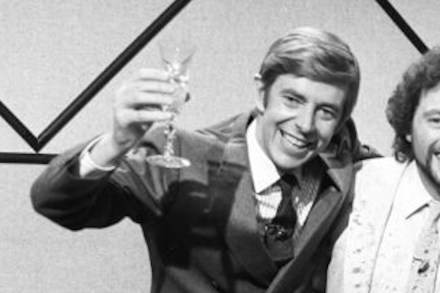
Tony Slattery was outrageously funny. And he was funny because he was outrageous. The actor and comedian, who died yesterday aged 65, may have belonged to that unhappy category of performers who were ‘troubled’ – tormented by insecurities and afflicted by addiction – but he also joins that distinguished pantheon of entertainers who made their mark for their rude and bawdy humour. Slattery was described as a ‘lost anxious teddy bear’ Slattery first came to public attention in the late-1980s as a panellist on the Channel 4 improvisation show Whose Line Is Anyway?, a programme that entailed playing out scenes in the style of a movie, programme or genre decided by the audience or the host, Clive Anderson.

What Elon Musk and Mark Zuckerberg owe to the mainstream media

From our UK edition

Censorship and the silencing of dissenting voices has been a defining feature of the 21st century. It’s curious, because it wasn’t meant to be like this. This epoch, as the tech libertarian utopians of the 1990s so eagerly pronounced, was going to be one of unprecedented and untrammelled freedom. The internet, which burst into public consciousness back then, promised as much. Social media, which erupted a decade later, promised even more. And then it all went wrong. I was cancelled by Facebook for writing about why men are funnier than women We shouldn’t have been surprised. Ideologies based on utopian fantasies, underpinned by the illusion that mankind can be perfected, inevitably descend into authoritarianism.

Facebook is no place for politics

From our UK edition

There was much jubilation yesterday among advocates of free speech following the news that Mark Zuckerberg is to relax restrictions on free expression on the social media platforms owned by Meta, including its most popular site, Facebook. This initiative will include doing away with politically-biased ‘fact checkers’, lifting restrictions on contentious political topics, and adding a function similar to ‘community notes’ on X. Social media has always been part of the problem.

Why we should be worried about Labour’s ‘Islamophobia’ plans

From our UK edition

Is there a problem with Islamophobia? The problem is the word ‘Islamophobia’ itself. What does it actually mean, and what does taking the word and its existence at face value entail? Many do assume that Islamophobia is out there in Britain, and that it needs to be addressed. When it was in opposition, the Labour party adopted its definition as drawn up by the All-Party Parliamentary Group on British Muslims. It states: ‘Islamophobia is rooted in racism and is a type of racism that targets expressions of Muslimness or perceived Muslimness.

Forgive Stephen Fry for supporting Stonewall

From our UK edition

There has been much indignation at the roll-call of those ennobled in the New Year Honours. There’s been bewilderment that Gareth Southgate, England’s failed football coach, has been given a knighthood. There’s been anger that Sadiq Khan, who has presided over an escalation of knife crime in the capital, has been similarly honoured. There’s been puzzlement that Emily Thornberry, whose foremost distinction has been sneering at working-class displays of patriotism, has been made a dame. And there’s been gnashing of teeth that Stephen Fry, that ubiquitous and often grating luvvie, has been given the title ‘Sir’. Much of the vehemence directed towards Fry has focused on his longstanding support for Stonewall, and echoing its stance on trans ideology.

Chocolat doesn’t need a trigger warning

From our UK edition

Trigger warnings have become a totemic feature of our times, symptomatic of an age that is both hopelessly fragile and insufferably judgemental. They have spread like a canker as publishers and authors have sought to parade their sensitivity and flaunt their moral superiority. And they are increasingly a means of a virtue signalling and projecting one’s ego. Evidence of this has been on show this week with the revelation that Joanne Harris has begun to add content warnings to her own books. Readers of her bestselling 1999 novel, Chocolat, will now be cautioned that the story contains 'spousal abuse, mild violence, death of parent, cancer, hostility and outdated terms for travelling community and religious intolerance'.

There’s no such thing as a neutral centrist

From our UK edition

Does religion matter in politics today? It certainly does, at least if you pose as someone who is neutral, as the BBC presenters do, or from the centre ground, or if you’re an avowed secularist. On BBC Radio 4 yesterday morning, Conservative MP Danny Kruger was asked how his stance on the Assisted Dying Bill was informed by his Christian beliefs. He said that it was, but hastened to add that many public Christians are in favour of the Bill, while many atheists oppose it. The MP for East Wiltshire has been questioned about the link between his faith and his politics before, and he will be asked again. It seems that those who profess to be neutral distrust any religious connection of this kind.

Why men join the manosphere

From our UK edition

The obsession with ‘toxic masculinity’ shows no sign of abating. As reported this weekend, Bridget Phillipson, the education secretary, has warned of ‘the misogyny increasingly gripping our schools’. In response to this threat, the government is to issue guidance for teachers to look out for signs in the classroom of ‘incel culture' stemming from the ‘manosphere’. Teachers of pupils aged over 14 are to be told to look for clues that boys were being drawn into aggressive misogyny, behaviour that could lead to violence and sexual abuse. They are to be on guard for rhetoric indicating teenage boys are being radicalised into ‘hating women’. A preferable route would be to stop teaching boys to hate themselves in the first place.

No, Keir Starmer: Brits don’t want ‘change’

From our UK edition

Change. If one word can embody the political philosophy of Keir Starmer, it’s this one. The Prime Minister is ever so fond of it. Starmer deployed it copiously on his way to Number 10, and it's been his repeated mantra ever since. No wonder that when the PM unveiled his big new idea this week, it was called The Plan For Change. He’s obsessed with the word and the concept. The problem is that much of the public aren’t so enamoured of change. Many people don’t like the way British society has changed. They would have preferred if things had remained as they were. Much of the public still want things to stay the same.

Vegans aren’t saints or sinners

From our UK edition

Vegans are a people both widely admired and hated. That is the conclusion of a report earlier this week, one that found that shoppers who opt for meat alternatives elicit fear and contempt from others. According to researchers from the University of Vaasa in Finland, who interviewed 3,600 people from four European countries, including the UK, people who choose plant-based options are perceived as ‘worthy of admiration’, yet at the same time their vegan lifestyle also arouses feelings of ‘envy, fear, contempt and anger.’ Before vegans let such news swell their heads – knowing now that they’re seen as both awesome and awful – further research, published in the Times today, should bring them back down to Earth.

Is DEI dead?

From our UK edition

The triumph of Donald Trump and the defeat of a Democratic party beholden to identity politics has prompted many to conclude that woke ideology is dead. The problem here is that people have been writing this obituary for some years now, ever since the ideology reached its apex of insanity in the summer of 2020. Still, it has refused to die. Corporations have come to realise that feigning voguish positions on social matters is not good for business However, the hyper-liberal dogma does now display tangible signs of retreat in one area: the business sector. If woke is not quite dead yet, then its opportunist capitalist offshoot, does at least seem moribund. Walmart, the world’s biggest retailer, which employs 2.

The trouble with Labour’s ‘respect orders’

From our UK edition

As the Allison Pearson debacle begins to settle down, the lesson being drawn by many is that the police have no business harassing people for voicing opinions that are legal, no matter how offensive or hypothetically damaging they might be. Many of us have been urging as much for years. But taking stock now, surely most can agree that it’s not the state’s role to monitor speech, morality or the way we conduct ourselves in our private lives. ‘Respect orders’ are befitting of Blair’s moralising crusade that begat Asbos If this is indeed a growing consensus, then the Labour government seems to be veering in the opposition direction. On Friday it announced a new measure to tackle antisocial behaviour, 'respect orders’.

Gary Lineker isn’t that bad

From our UK edition

It’s a crying shame that we will no longer hear the insightful and original opinions of Gary Lineker. No more comprehensive and judicious appraisals. No more balanced verdicts delivered in an authoritative yet amiable manner. No longer will we witness Lineker draw from his deep well of experience and knowledge to deliver his considered conclusions. Saturday evenings will never be the same again. Yes, I am of course talking about Gary Lineker the popular television football pundit, not Gary Lineker the unpopular political thinker. While the first version can lay claim to be – or once could have claimed to be – a national treasure, the newer, other iteration has become a figure of wide derision and even loathing.

What the Boots Christmas advert backlash is really about

From our UK edition

Christmas television adverts are meant to be comforting, homely, and traditional. While some find these offerings, especially John Lewis’s, overly twee and sentimental, most would agree that festive adverts should be kept clear of politics – overt or otherwise. This unspoken consensus, however, appears to have been lost on those behind the new Boots Christmas TV commercial, an advert stamped with hallmarks of the hyper-liberal politics that, all year round, bring so little joy and cheer to the nation.