Patrick West

Patrick West is a columnist for Spiked and author of Get Over Yourself: Nietzsche For Our Times (Societas, 2017)

Britain is becoming a nation of hermits

From our UK edition

The malign effects of the Covid lockdowns continue to reveal themselves. The latest confirmation of the baleful legacy of that policy is a new survey which suggests that we are turning into a nation of hermits. According to a fresh study, reported by the Daily Telegraph, many people in Britain are still imposing lockdowns on themselves, four years after the last government-decreed lockdown. The survey of 2,000 British adults discloses that two thirds of Gen Z – and more than half of millennials – said that there are times when they do not go outside for days. This isn't something that only afflicts the youth. Across all generations, the study related that a quarter of people make a conscious effort to step outside at least once a day.

Progressives can never be wrong

From our UK edition

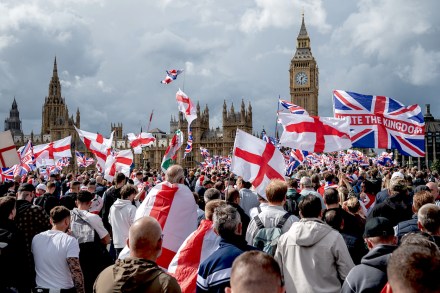
The progressive and idealistic left will never admit that they are wrong. That’s because, possessed with a sense of mission and unshakable righteousness, they will always believe that they are right. No matter the murder in America last week of a family man by a reputed, self-styled anti-fascist, and no matter the mostly calm and dignified conduct of those at the Unite the Kingdom march in London on Saturday, they will always smear and demonise those of a conservative persuasion with hysterical, slanderous words. By all accounts, despite the 25 arrests made from a crowd of up to 150,000, it was a mostly civilised and peaceful affair.

Why Reform’s critics say they’re fascist

From our UK edition

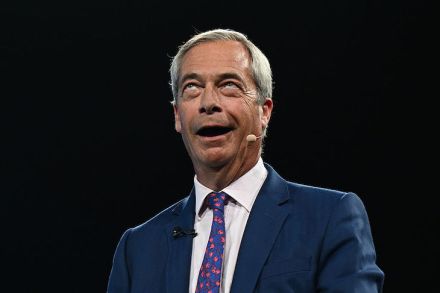
To smear your opponents as fascists or Nazis has always been the perennial temptation of those who seek to terminate an argument – or have no argument of their own. It’s the last resort of the callow, the ignorant and the desperate. And it’s an argument that just won’t go away. They’re doing this – and McDonnell is joining in – because it’s the last thing they’ve got left Former shadow chancellor John McDonnell deployed it in all tawdry gruesomeness yesterday. Speaking at a fringe event at the Trades Union Congress (TUC) conference, the MP said: ‘Reform are a protest fascist organisation. We’ve seen it in the Thirties.

Leave bad manners to the public, not the police

From our UK edition

Most people deplore bad behaviour in public and gratuitous breaches of etiquette and manners on trains and buses. Few would disagree with comments made yesterday by the shadow transport secretary, Richard Holden, that ‘inconsiderate and obnoxious behaviour blights the lives of the travelling public’. Yet many, contrariwise, would disagree with his proposal to remedy this scourge, namely for ‘swift justice for those who make people’s lives a misery’ through on-the-spot fines.

Britain’s sickness is plain to see on the streets of London

From our UK edition

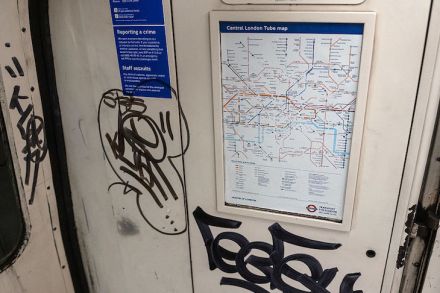
The appearance of vigilantes on the streets of Bournemouth certainly represents a worrying development. What is less widely-known is that civilian law enforcers have also started to appear on the streets in London. London is now exhibiting much the same problems that have been in incubation elsewhere for years I only became aware of this on Monday when walking up Tottenham Court Road. There in the afternoon I spotted two personnel clad in orange patrol vests emblazoned with the words ‘Street Warden’ (deployed, as it explained at the dorsal base, by the Fitzrovia Partnership, an organisation that works with local businesses) questioning three youths who, to judge by the expression and tone of their interrogators, had been up to no good.

Why is the state so obsessed with speech crimes?

From our UK edition

A new phrase to have arrived in earnest this year has been ‘two-tier’ justice, relating to the perceived government and judicial approach to crime based on someone’s politics or background. But it’s worth bearing in mind another parallel approach to justice that’s been with us even longer: the growing eagerness to prosecute people for what they have said, and a decreasing willingness to prosecute miscreants for what they have done. This week alone we have been reminded of this dual approach. As reported in the Daily Telegraph this morning, prosecutions for posts on social media judged to potentially stir up racial hatred have soared in the past decade. In 2015 just one person was convicted of the offence, compared with 44 in 2024.

Closing hotels won’t stop the migrant crisis

From our UK edition

After yesterday’s landmark decision on the Bell Hotel in Epping, the next question must be: where do we go from here? What is essential to understand is that yesterday’s High Court judgement was what might be called an ‘Al Capone reckoning’. One ultimate actor, the state, and by extension the government, has been humbled on a mere technicality. The Essex hotel was deemed in breach of contract for using its rooms to accommodate refugees, rather than paying guests. The state was not brought to heel on its ethically unsound and socially corrosive laws on immigration and re-settlement. That the Home Office sought to block Epping Forest council’s application for an injunction is important.

What’s wrong with a St George’s Cross flag?

From our UK edition

Flags have become a contentious and defining issue of this year. You only have to witness the furore that has surrounded the increasing proliferation of the Progress Pride and Palestinian flags in this country to recognise this. So it was only a matter of time before that other increasingly common sight, flags denoting pride in Englishness and Britishness, should have been drawn into the fray. As reported in the Daily Telegraph this morning, Birmingham Council has ordered the removal of Union and St George’s flags from lamp posts.

The looming ‘Islamophobia’ scandal

From our UK edition

Many people are now terrified to say what they think, voice unfashionable opinions, or even let slip the wrong words, having seen what happens to those who do. As we witness in the headlines with unremitting regularity, uttering something potentially offensive might cost you your job or prompt a visit from the police. This is why so many people are fearful of the proposal to have ‘Islamophobia’ defined by the state, and this fear is greatest among those who have felt the full force of our new censorial ethos: the British working class. According to a new survey carried out by JL Partners, Angela Rayner’s proposal for a new official definition of Islamophobia would hand Reform a 100-seat parliamentary majority at the expense of Labour.

The ‘Gen Z stare’ is just another act of teenage rebellion

From our UK edition

The latest complaint made against Generation Z is that its members now frequently assume a blank, glassy-eyed expression of indifference and boredom. The ‘Gen Z stare’, as it’s known, has become so prevalent among those born between 1997 and 2012 that it’s now a source of habitual frustration and annoyance among their elders – the millennials who coined this term. According to a Times report over the weekend, young parents now continually protest at having to confront this pose among their offspring, a demeanour that manifests itself in lack of eye contact and disregard for basic social niceties.

The irony of the Afghan resettlement scandal

From our UK edition

If there is one wholesale conclusion to be drawn from the Afghan resettlement scheme scandal, it’s that a problem we have today is not so much a profusion of ‘misinformation’ but rather the suppression of genuine information. In Britain now, it’s not ‘fake news’ that causes widespread resentment and anger, but moves made by successive British governments to silence real news. The authorities continue to make matters worse out of fear that the truth must not out Ever since the masses decided to vote against their overlords in Britain and America in 2016 in the EU referendum and US presidential election of that year, the elites have propagated the belief that an unintelligent populace has been vulnerable to ‘misinformation’.

How political ideology corrupted science

From our UK edition

Science is no longer regarded or respected as an objective pursuit, one in which the principle of impartiality is sought with due diligence. This is the inference we can make from comments made by Ella Al-Shamahi, presenter of the new BBC science series, Human. ‘We do have to be a little honest,’ she says, ‘to many, it seems like left-leaning atheists have a monopoly on science.

Britain’s mental health crisis isn’t what you think

From our UK edition

Britain has a widespread and collective mental health problem – but it’s not what you might think. Specifically, it’s that many people believe themselves to be mentally unwell when actually they are not. What’s more, society and the state have been prone to taking them at their word on this matter for far too long. We’ve become aware of this unfolding problem recently as it's evolved into a veritable crisis. It’s at once a financial crisis, one that now costs the taxpayer and the Treasury billions in welfare payments, while it's also a still-evolving human crisis.

Most people hate their jobs. Get over it

From our UK edition

Most people hate their jobs. This is a sad, unfortunate fact of life. But it happens to be an eternal truth. Throughout the course of human history the overwhelmingly bulk of mankind has toiled to live, rather than having the good fortune to follow their dreams. Even when this is the case, when people elect to pursue an artistic, literary, journalistic or thespian vocation, their lives still consist for the most part of drudgery, penury, rejection and disappointment. Jared Harris says that people in his profession need to take parts they don’t love if they ‘have bills to pay’ So we should welcome the intervention by the actor Jared Harris, who says that people in his profession need to take the parts they don’t love if they ‘have bills to pay’.

The decline of the fact checkers is something to celebrate

From our UK edition

For some years now, one of the greatest worries among a certain coterie has been that of ‘misinformation’. This is the idea that the masses, left to their own devices – figuratively and literally – are unable to discern what is true and what is false. This is what has prompted the establishment of such gatekeeping bodies as BBC Verify, institutions that presume to protect the general public from the vast tides of online nonsense. Logically had ostensibly noble intentions upon its creation in 2016 The news that Britain's biggest fact-checking company, Logically, has gone into administration, will be a blow to those who think we need such bodies.

Trial by victimhood has taken over Britain’s courts

From our UK edition

We live in a country in which petty grievances and perceived slights abound, and one in which resentments and gripes are taken seriously by the state. We saw evidence of this state of affairs in two unrelated reports this week. The first came from Leeds, where an employment tribunal found that the use of the word ‘lads’ in relation to a worker earning £95,000 a year at a farming and food production company amounted to ‘casual use of gender-specific language’, and could be legally regarded as ‘unwanted... given her account of how it made her feel’. Her level of compensation is to be decided at a later date.

Worrying about migration doesn’t make you an extremist

From our UK edition

This country still has a problem with a radical ideology. News that the government’s anti-radicalisation programme, Prevent, now classifies concerns about mass migration, or ‘cultural nationalism’, as a potential ‘terrorist ideology’ reveals the magnitude of this problem. And the problem in question is hyper-liberalism, a radical ideology that remains endemic in Prevent and elsewhere in the arms of the state. Far from dying out, this ideology, otherwise known as wokery or radical progressivism, has become normalised and embedded, especially in areas of government. The ideology has literally graduated from the academy and into the state sector.

The real reason why academics write in gobbledygook

From our UK edition

Why can’t academics write properly? Why can’t they express themselves in language that normal people can understand? These are questions that have echoed through the ages, and ones that still resonate today - so much so that even academics are starting to ask them. In an address to the Hay Festival this week, Professor Kehinde Andrews of Birmingham City University lamented how the work of so many of his peers is written in ‘devastatingly bad’, ‘mind-deadening’ and ‘over-convoluted’ prose. Taking one book as an example, he asked why it ‘kept using the word “quotidien”. What does “quotidien” mean? “Everyday”. Why not just say “everyday”?

Why we need Virgin Megastores

From our UK edition

They were a stalwart of Britain’s towns and cities from the 1970s until their disappearance in 2007 – and now Virgin is set to bring its Megastores back to the high street. According to the Times, the Virgin Group has in mind at least one central London site as a possible location for a new Megastore. Its chief executive, Josh Bayliss, said he wants to return the ‘human connection’ to the Virgin brand. Quite right. We should applaud this news, not just on nostalgic grounds – but for financial, aesthetic and communitarian ones too. Like so many once-familiar high street names, Virgin Megastores may have succumbed to supermarket competition and the online shopping revolution, but that revolution has not only impoverished our towns, it has impoverished us as human beings.

Katharine Birbalsingh is right about our worship of victimhood

From our UK edition

One of the main accusations levelled at the trans movement is that the tidal wave of youngsters claiming to be gender dysphoric in recent years is a form of social contagion, especially among rich, progressive households. Katharine Birbalsingh, the former government social mobility tsar and head of Michaela Community School in northwest London, seems to agree that it can be understood as a social phenomenon. And she has her own particular theory. ‘Our society is such that victimhood is admired’, she told the Standard yesterday, and one reason a disproportionate number of those drawn to the trans movement are ‘white and privileged’ is that it offers them ‘a victimhood narrative to embrace’, one denied them on account of their wealth and skin colour.