Patrick O’Flynn

Patrick O’Flynn

Patrick O’Flynn is a former MEP and political editor of the Daily Express

The case against the UK’s Hong Kong amnesty

From our UK edition

Almost across the political spectrum, people appear to have decided that it is a very good thing that the government may offer Hong Kong citizens with British Nationals Overseas (BNO) status the chance to come and live in the UK permanently. With China having passed draconian security legislation that runs against democratic norms, Home Secretary Priti Patel and Foreign Secretary Dominic Raab have made clear that Britain’s doors will be opening to those Hong Kongers with BNO status who would like to move here. As Ms Patel said:  If China imposes this law, we will explore options to allow British Nationals Overseas to apply for leave to stay in the UK, including a path to citizenship.

Why the Dominic Cummings row won’t harm Boris

From our UK edition

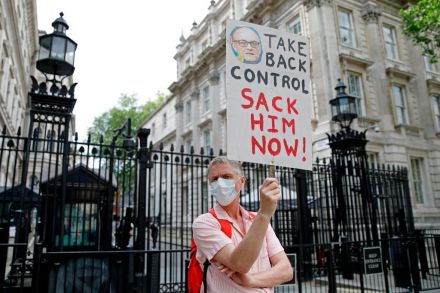
The idea of short-termism being a disease that especially afflicts the British economy is a recurring theme. We are regularly told that UK investors are too often looking for a quick buck unlike in, for example, Germany where they take a longer-term strategic view. Less attention is paid to the idea that this condition has wormed its way into other parts of our national life, specifically politics. People who should know better – practitioners and commentators alike – have decided that l’affaire Cummings has changed significantly the basic political facts of life. They're wrong, at least in the long term. Tim Montgomerie believes this row means that Keir Starmer has the Conservatives exactly where he wants them – damned as the party of the rich and the privileged.

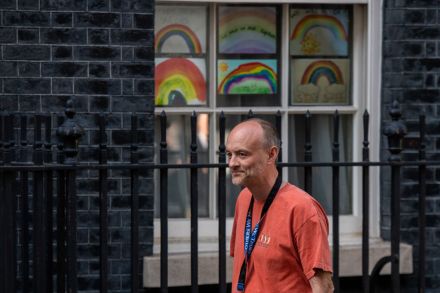
Boris Johnson is no coward for backing Dominic Cummings

From our UK edition

The failure of Boris Johnson to sack Dominic Cummings exposes him as a coward, according to the Daily Mirror today, The paper says the Prime Minister was 'scared to act' against his chief adviser as it continues to go for his jugular. Its visually quite powerful front page also damns him as a cheat – or perhaps it means Cummings is a cheat for allegedly breaching the lockdown rules. Anyhow, let us park the 'cheating' accusation, whoever it is aimed at, and focus our attention on cowardice. It’s a very curious charge to level at Johnson and almost the opposite of the truth. Inspecting Johnson’s political CV, one could certainly mount a case for him to be considered reckless but signs of timorousness are very thin on the ground.

It’s time for Lib Dems to accept that the party’s over

From our UK edition

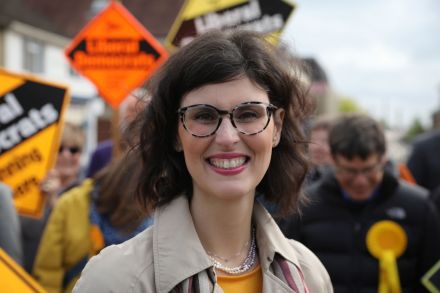
Who are you backing in the latest Liberal Democrat leadership contest then – Layla 'you got me on my knees' Moran or steady Sir Eddie Davey? It’s an academic question really, as I highly doubt it will have punctured your carapace of indifference. The stewardship of what we once referred to as 'the third party' – in government as recently as five years ago – is now very much a minority interest. But thanks to pressure from grassroots Lib Dem members – and allegedly there are still more than 100,000 of those – the party’s leadership contest is back on for this summer.

Tories should listen to Farage’s warnings about Channel migrants

From our UK edition

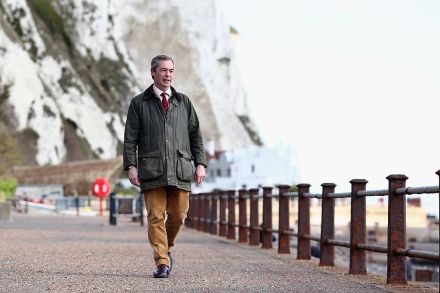
The idea of a flotilla of little ships crossing the English Channel from France to deposit their beleaguered human cargo safely on our shores was born in this country’s darkest hour during the second world war. To say that the method behind the success of the Dunkirk evacuation 80 years ago has been repurposed for the modern age is something of an understatement. These days the little ships are usually inflatable dinghies packed with desperate young men from Asia and Africa who seek to evade this country’s immigration laws. They land at various points between Dover and Hastings and – if undetected – many head for rendezvous points pre-arranged with people traffickers for onward transit to London and other major cities.

Boris’s sloppy PMQs performances are becoming a problem

From our UK edition

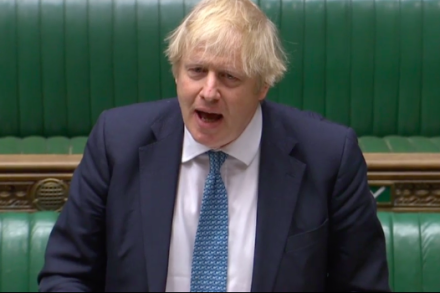
A former prime minister once told me that PMQs in the Commons is an event that can only be enjoyed in retrospect, after the final whistle has blown. Even if exchanges with the opposition leader had gone well, there remained the possibility of being tripped up by a minor party leader, an opposition backbencher or a member of the 'awkward squad' on your own side. Tony Blair disliked it so much that one of his first acts as PM was to cut the sessions from two a week (Tuesdays and Thursdays) to just one: a half-hour joust on a Wednesday. His prime motivation for doing so was that he knew the amount of time PMQs preparation had taken up when he was Leader of the Opposition.

Why are some pretending to be baffled by Boris’s announcement?

From our UK edition

So what did you think of the Prime Minister’s statement? I thought it was disappointingly over-cautious and suspect that ministers will come to rue the extra economic damage they are allowing by not sanctioning a bolder path out of lockdown. A 'baby steps' approach to getting back to normality over the next few months, contingent on what happens to the R value and reversible at any moment – and with the two-metre rule to be somewhat implausibly applied to public transport – is not what I was hoping to hear. But even before the PM had finished talking, the verdict of Twitter was in. And there was widespread anger about a supposed lack of clarity on Boris Johnson’s part.

Boris needs to start treating Brits like adults again

From our UK edition

It turns out that the biggest problem associated with lockdown hasn’t been the ‘covidiots’ – that tiny minority of people who ignored social distancing measures – but the ‘hunker in the bunker’ brigade who, after six weeks of house arrest, can barely envisage ever returning to normal life. Opinion polling shows the UK has one of the most risk averse populations in the world when it comes to the notion of restrictions being lifted. Nearly three quarters of us say we will be ‘very nervous’ about leaving home when limitations on our movement are removed, according to Ipsos Mori.

Could ‘Boris Bonds’ be the answer to Britain’s coronavirus recession?

From our UK edition

Do Alan Clark's diaries have a lesson for us about Boris Johnson's ability to continually defy the odds? In his entry of 7 April, 1982, Clark wrote about the whiff of mutiny in the air among Tory grandees towards Margaret Thatcher at the time of the Falklands War: 'It is monstrous that senior Tories should be behaving in this way. It is only on occasions such as this that the implacable hatred in which certain established figures hold the Prime Minister can be detected…If by some miracle the expedition succeeds they know, and dread, that she will be established for ever as a national hero…The greater the humiliation…the greater the likelihood of a lash-up coalition, without a general election, to fudge things'.

Boris won’t seek a Brexit extension in June, but he might in November

From our UK edition

Is there going to be an extension to the Brexit transitional period during which the UK must obey EU rules and keep stumping up cash for Brussels? The answer may appear obvious: David Frost, the UK’s chief negotiator, has unequivocally and publicly ruled it out. As he tweeted on 16 April: 'Transition ends on December 31 this year. We will not ask to extend it. If the EU asks we will say no.' But, this being politics, Frost’s statement leaves a key question unanswered. Namely: Is there going to be an extension to the Brexit transitional period? I do not mean to cast aspersions on Frost’s integrity here, but I merely note that in his early months as Prime Minister, Boris Johnson promised that we would leave the EU on 31 October, 2019 'come what may'.

What the country needs most is Boris Johnson back at his desk

From our UK edition

Boris Johnson has been out of action for almost a fortnight. His last meaningful act before going into hospital was to force frazzled Health Secretary Matt Hancock to ditch a threat to ban outdoor exercise that he’d made live on TV in response to some tweeted pictures of people sunbathing in a park. In place of that threat, Johnson’s Downing Street changed the tone by sending out a message telling the British public 'thank you, thank you, thank you' for their efforts. Though the Government initially claimed Mr Johnson would work on his red boxes and receive briefings while in hospital, this did not actually happen (no doubt due to his rapid deterioration). Downing Street confirmed on April 13: “He didn’t receive any papers while in hospital.

There might be a way to avoid higher taxes after coronavirus. Here’s how

From our UK edition

‘Let us never forget this fundamental truth: the state has no source of money other than money which people earn themselves. If the state wishes to spend more it can only do so by borrowing your savings or by taxing you more. It is no good thinking someone else will pay – that “someone else” is you. There is no such thing as public money; there is only taxpayers’ money.’ These words, by Margaret Thatcher at the 1983 Conservative party conference, have often been used as a justification for rolling back the state so that private citizens can spend more of their own money. They seem to cast the state as a parasitical creature, eager to be active but always needing to be fed.

Keir Starmer should pull his punches against Boris Johnson

From our UK edition

The luxuriantly coiffured soft left Labourite Keir Starmer may, at first glance, appear to have almost nothing in common with the balding Thatcherite Tory Iain Duncan Smith. In fact, when he wins the Labour leadership contest this weekend, as he surely will, he faces a political challenge that is similar to the one IDS accepted when he became Leader of the Opposition on September 13, 2001. IDS arrived at the summit of his party at a moment of profound international crisis, just as an incumbent premier with a prodigious gift for communication was judged by the British public to be rising magnificently to the occasion.

Boris’s coronavirus pragmatism is confounding his critics

From our UK edition

If ever Britain has undergone a period of authoritarian socialism, then this is surely it. Massive state intervention in the economy is taking place alongside state direction of the activities of private citizens that is both intensive and extensive in nature. Yet there are few private sector tycoons to be found arguing not to receive state support or, for that matter, free enterprise economists claiming that the market will, left to its own devices, come up with an optimal solution to coronavirus. Meanwhile more than 90 per cent of us approve of the draconian limits placed on our individual freedom in pursuit of the collective good. And I say that as someone who has recently returned home from his single state-sanctioned piece of exercise for the day.

Boris bashers need to cut it out

From our UK edition

Every weekday afternoon a professional Twitter mob gathers to give a running commentary on the Prime Minister’s daily coronavirus press conference. Its leading lights will critique Boris Johnson’s every utterance to see what might catch on. Perhaps it will be a snarky comment about how modified advice in the light of new data really shows that he was all at sea before. Or not across the detail. Or his failure to be able to guarantee when this will all be over might be deemed disgraceful. Maybe Alastair Campbell will throw in a grenade about allegedly confused messaging. Or Piers Morgan will issue a 'bloody well do something or we are all going to die' war cry. Many of the journalists in the room will then seek a 'gotcha' moment in the way they frame their questions.

Corbyn should be ashamed of his coronavirus point scoring

From our UK edition

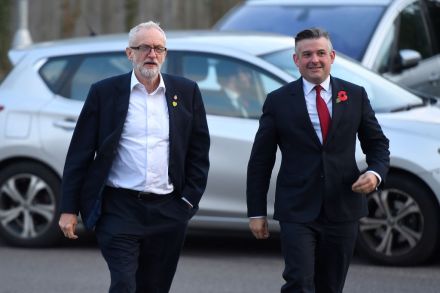
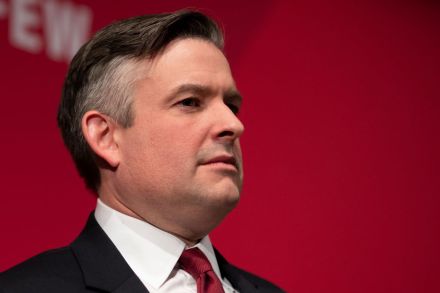
So there I was being non-partisan by praising the Labour party for its generally mature response to the coronavirus crisis when clearly I should have been putting this down to Jeremy Corbyn’s erratic level of engagement with major events rather than a deliberate strategy. Because it turns out that shadow health secretary Jonathan Ashworth’s wise mixture of qualified support for the Government underpinned by the asking of sensible, probing questions was not, after all, sanctioned by the Leader of the Opposition himself. Instead, despite his impending exit stage left, Corbyn has found irresistible the temptation to try and weaponise one of the biggest governmental challenges of our lifetimes against the prime minister of the day.

In praise of Labour’s coronavirus response

From our UK edition

It is not often these days that one gets a chance to praise the Labour party. Even with Jeremy Corbyn soon on his way out, the party has learned nothing from its election drubbing and seems determined instead to make the same mistakes. But it has, somewhat remarkably perhaps, covered itself in glory this week. And it would be wrong to pass up the opportunity to praise Corbyn for the way his party has so far responded to the coronavirus outbreak. Perhaps you have not noticed how they have reacted to the crisis? In which case, that in itself speaks volumes. Because you will no doubt have seen the way Piers Morgan has responded with a series of 'do something' rants on social media.

The Chief Medical Officer is a welcome counter-revolutionary

From our UK edition

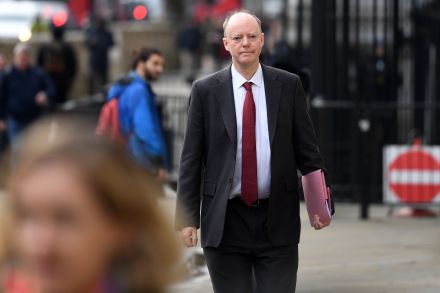
After the bitter battles over Brexit, during which the truth was stretched to breaking point by those on both sides of a profoundly emotive argument, to have someone in authority give a balanced, well-informed and non-hyperbolic account of the government’s handling of the biggest event of the moment comes as a huge relief. England’s Chief Medical Officer Professor Chris Whitty is doing just that on coronavirus, reminding us all that in some fields – medicine foremost among them – expertise really is a quality to be heeded and not distrusted.

Humdrum Hancock is the perfect face for coronavirus

From our UK edition

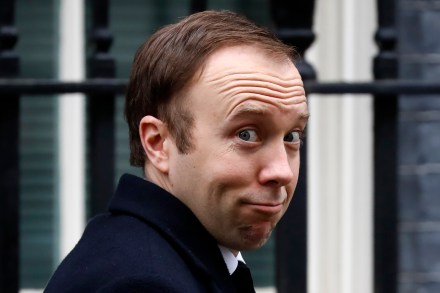
Readers of a certain vintage may remember that during the Falklands War a hitherto unknown official at the Ministry of Defence became something of a celebrity. Ian McDonald, who passed away last year at the age of 82, was a dry-as-dust Whitehall official from the days when civil servants actively tried to avoid the limelight. And yet his monotone delivery as official spokesman at MoD press conferences turned him into a cult figure and 'the voice' of the war. His calmness and uncanny ability to never offer an accidentally quotable soundbite alongside the factual but minimal information he conveyed was just what was required to keep the nation fixed on the task at hand.