Patrick O’Flynn

Patrick O’Flynn

Patrick O’Flynn is a former MEP and political editor of the Daily Express

Could Boris quit?

From our UK edition

Could Boris do a Harold Wilson? Over the years there has been much speculation about the sudden resignation of Wilson as prime minister less than a year after he had settled, apparently for good, the momentous question of Britain’s future in Europe via the 1975 referendum. Was he forced out by MI5? Had he already got wind of his early-onset Alzheimer’s? Was there some other hidden personal scandal that would have emerged had he not stood down? The truth was rather more bland: it seems more likely that Wilson had just lost his appetite for the grind of the job. In a resignation minute circulated to all cabinet ministers he observed: ‘It is a full-time calling.
Cut Boris some slack on the ‘Rule of Six’

From our UK edition

Happy 'Rule of Six' day everyone. I’m off out a bit later to meet five friends in a pub (true story). So I will be fully compliant and will positively baste my hands in sanitiser on the way in. But I hope to get a little merry nonetheless. But across media land toys are being propelled out of prams at high velocity over the new restriction as pundits declare what a nonsense it is (see my previous piece from last week for examples). One of the arguments they cite is that deaths from Covid are still flatlining (correct) while hospitalisations are not rising (incorrect, they bottomed out at under 750 and have now gone above 900).

In defence of Boris’s ‘Rule of Six’

From our UK edition

It wasn't supposed to be like this, was it? Six months after the imposition of lockdown, we were meant to be securely on a gentle path back towards normality, not facing fresh nationwide restrictions. So it is no wonder that the Government’s new 'Rule of Six' has proved to be the straw that has broken an increasingly grumpy camel’s back on the right of politics. Not only do the Government’s libertarian-minded detractors mock the arbitrary nature of the new restrictions, but they also take an increasingly hardline attitude towards the whole business of Covid. Toby Young, the general secretary of the Free Speech Union, has declared: 'The risk of a ‘second wave’ is a steaming pile of bullshit'.

Starmer needs more than just competence

From our UK edition

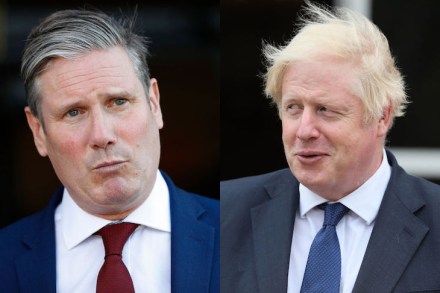
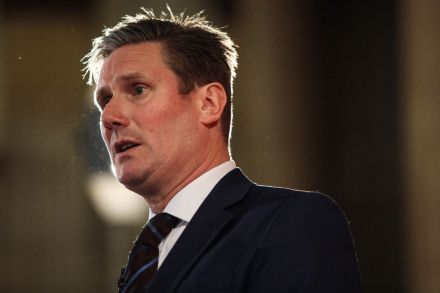
Keir Starmer went back to what he most enjoys at Prime Minister’s Questions: calling the government incompetent and demanding that it 'get a grip', especially over Covid. Let’s face it, he’s hardly short of material given all the let downs and U-turns that the PM has inflicted on the nation. He swiftly reduced Boris Johnson to the cringeworthy tactic of claiming that criticism of him amounted to an attempt to 'deprecate the efforts of NHS track and trace'. But more significant than Starmer’s deployment of his relentless boxer’s jab about competence today was what he did yesterday. In a series of television interviews, the Labour leader very publicly embraced Brexit.

Boris Johnson’s careerist cabinet problem

From our UK edition

Last year Boris Johnson won three notable domestic political victories. His hot streak began when he romped home in the Tory leadership contest and culminated with his decisive general election win. Between those two landmark moments was an event that served as a bridge between them – a decisive purge of the pro-Remain centrist tendency inside the Conservative parliamentary party. Many of the leading names in Tory circles for the past 20 years were bounced out of the party and then the Commons over their Brexit-blocking antics. Suddenly the game was up for Philip Hammond, David Lidington, David Gauke, Amber Rudd, Justine Greening, Rory Stewart, Dominic Grieve, Oliver Letwin, Ken Clarke and Nicholas Soames, among others.

The BBC’s opinion cartel

From our UK edition

The great liberal economist Adam Smith was one of the first people to sound the alarm about the damage that occurs when vested interests get too big for their boots. ‘People of the same trade seldom meet together, even for merriment and diversion, but the conversation ends in a conspiracy against the public,’ he warned. Had he lived in the social media age, I wonder what he would have made of the BBC’s Nick Robinson encouraging people to lobby the media regulator Ofcom about two new efforts to launch current affairs TV stations in Britain to compete with his own dominant outlet.

What is the point of Boris Johnson’s Tory party?

From our UK edition

It was way back in 2003 that the journalist Peter Hitchens first declared the Conservative party to be 'useless'. Peter’s thesis was that the Tories had become incapable of fighting effectively for any significant conservative cause, and were in any case usually unwilling even to try and therefore should be disbanded. In a series of columns over several years embracing issues from the EU to mass immigration to law and order and cultural matters too (they certainly repay reading again) he sustained what was at the time a lonely barrage on the right.  His thinking certainly greatly influenced my own decision to join forces with Nigel Farage and Ukip while actively campaigning for UK withdrawal from the EU from 2010 onwards.

Boris needs a minister for banana skins

From our UK edition

Every prime minister needs a Willie, said Margaret Thatcher to a soundtrack of great national tittering. She was of course referring to William Whitelaw, her massively experienced deputy upon whose advice she relied to moderate her zanier impulses and views. Whitelaw fitted the bill as a non-ideological Conservative who had pledged his loyalty to her and genuinely had no further hankering for the top job himself, having been roundly defeated by Thatcher in the Tory leadership contest of 1975. Just one of Whitelaw’s responsibilities was to act as ‘minister for banana skins’, using his man-of-the-world and resolutely non-intellectual outlook to spot impending problems and put forward practical solutions before they became full-blown crises.

Why Keir Starmer is failing against Boris Johnson

From our UK edition

The way to beat Boris Johnson is to offer a stark contrast to his political persona. At all points radiate seriousness, professionalism and competence and in times such as these the electorate will soon tire of his joshing and clown-like antics and flock to your banner instead. That’s the theory anyway and it seems to be working fine for Nicola Sturgeon, as evidenced by the SNP’s stratospheric poll ratings. But it isn’t working for Keir Starmer, whose Labour party remains way behind Johnson’s Tories in UK-wide polls, despite the Labour leader matching Sturgeon’s demeanour comb for comb and furrowed brow for furrowed brow. Starmer overshadows his own party’s top team every bit as much as Sturgeon does hers.

The UK’s incoherent Channel migrant strategy

From our UK edition

I saw a little cloud no bigger than a man’s fist that was coming in from the sea, reported the servant of the Prophet Elijah to his master. In that Bible story, the incoming cloud was the sign of an impending rainstorm that the drought-hit land of Israel positively yearned for. The political storm brewing in response to the dinghies coming in from the sea on the south coast of England every day will bring no such relief to Boris Johnson and his ministers. Instead it will bring frustration and rage – the rage of voters witnessing the Government colluding in the wholesale exploitation of the asylum system by irregular economic migrants and people smugglers.

Why Covid hasn’t been Boris’s Black Wednesday

From our UK edition

Where are we again? Oh yes: a newish Conservative prime minister has confounded his critics by winning a general election that most expected would lead to a hung parliament. The result has caused Labour to drop its leader and replace him with someone more reassuring and substantial. And before the Government can work on its main domestic agenda, a giant convulsion has reared its ugly head to turn the world of politics upside down. That’s right, we are in the autumn of 1992, in the aftermath of ‘Black Wednesday’.

I admit it, I got Cressida Dick wrong

From our UK edition

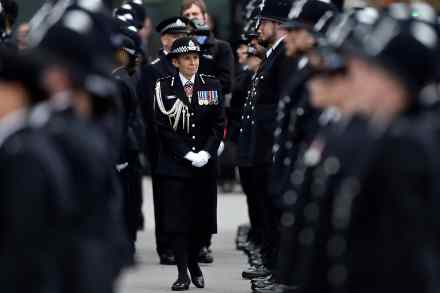
What are we thinking about Dame Cressida Dick, the Metropolitan Police Commissioner whose officers have lately 'taken a knee' at unlawful protests, failed to prevent the defacing of cherished national monuments, been injured in their scores and chased out of London housing estates? Weak, woke and woeful, right? That was certainly my view. Indeed, I was one of many calling for her to be replaced by a more robust police leader. Until, that is, I found myself reading the full transcript of her appearance before the Commons home affairs select committee earlier this month.

Has Boris lost the plot?

From our UK edition

When the facts change, I change my mind. What do you do sir? That defence of the political u-turn was purportedly uttered by the great economist John Maynard Keynes and is recognised as the classic intellectually respectable case for abandoning a stance in favour of an opposite one. It is certainly the best defence available to Boris Johnson over his apparent volte face on mask-wearing with the new announcement that masks will be compulsory in shops from next week. World Health Organisation advice has warmed up on the protective value of masks over recent weeks and the experience of several other countries appears to bear out their usefulness.

Prepare for Javid vs Sunak in the next Tory leadership contest

From our UK edition

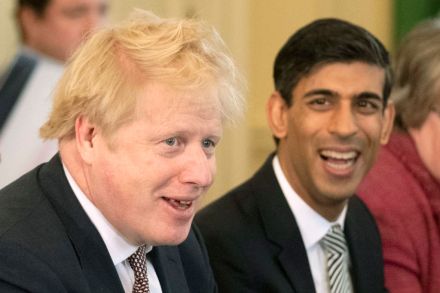
In 1992 a young footballer named Dion Dublin left my local team, Cambridge United, to take up one of the most coveted jobs in football – centre-forward at Manchester United. After a promising first few outings, disaster struck when he suffered a broken leg. By the time he was restored to fitness a genius named Eric Cantona had been signed and was strutting his stuff up front. Being a good lad, young Dion took it well enough. But it was basically game over for him at Old Trafford. As Sajid Javid rose from the Commons back benches this week to ask Chancellor Rishi Sunak a question about his summer economic statement, I could not help but be reminded of Dion and Eric. Sunak had just given yet another breathtakingly fluent, pitch-perfect performance.

Get ready for Starmer’s Brexit conversion

From our UK edition

A new problem is looming for Sir Keir Starmer: a leader of the opposition needs some shop windows if he is to get more punters through the doors and his will shortly be getting boarded up. Prime Minister’s Questions is usually more important to opposition leaders than it is to the actual PM because he must demonstrate that he has the potential to upend the status quo, increasing market share at the expense of the dominant player. By a quirk of parliament’s amended coronavirus calendar, Sir Keir Starmer still has four PMQs outings in which to strut his stuff before the later than usual summer recess.

Keir Starmer is stuffed

From our UK edition

The British political and media establishment had Remain winning the Brexit referendum at a canter, Hillary Clinton as US president by a landslide, Change UK actually changing the UK and a ‘Government of National Unity’ emerging in the Commons after Boris Johnson removed the whip from dozens of Tory grandees. All completely wrong. What does conventional wisdom tell us about British politics over the past three months? That Boris Johnson and the Conservatives are in huge trouble, of course. Boris has been seen to bungle the coronavirus pandemic, and so will be blamed for the looming economic meltdown. The Prime Minister’s personal ratings have slumped.

Boris should keep calm and ignore the polls

From our UK edition

When those words and phrases of the year lists come out there is bound to be a place in them for 'the new normal'. It is a phrase that invites us to expect that short-term shifts in how things are will become new long-term equilibriums. A socially-distanced lifestyle; governments being able to borrow vast sums very cheaply; face masks on public transport: these are just a few of the things that have in 2020 been labelled 'the new normal'. For Brits who craves some stability in turbulent times it can be a comforting concept. For many Conservative politicians, 'the new normal' seems to have begun a year or so ago – when Boris Johnson became Prime Minister and turned Theresa May’s horrific opinion poll ratings into something much more appetising.

Boris Johnson needs an alternative vision for Britain

From our UK edition

In the run up to December’s election, many on the Left and in the media sought to present Boris Johnson as a ‘Far Right’ politician. His support for Brexit was the foundation stone of this absurd mischaracterisation, built on fragments of his quotes ripped from their wider settings in old newspaper columns he had written and his passing physical resemblance to Donald Trump. In his dogged pursuit of the mainstream cause of Brexit, the PM retains a capacity to do things that turn the modern British establishment into a rolling Bateman cartoon. But as he has shown by his choices on economic issues, such as public spending, and social ones, such as the level of future immigration from Hong Kong, Boris is no natural right-winger.

Boris Johnson needs to get a grip

From our UK edition

It’s pointless to deny that the government is currently performing poorly across a wide range of fronts – and I say that as someone who voted Conservative with enthusiasm in December and who wishes the government well. Despite the shrill claims of some, the onset of an epidemic of a horrible new disease would clearly have been testing for any administration – which largely explains why some things are coming apart at the seams. But another highly damaging factor is now at work: the rolling out of obviously half-baked ‘blunt instrument’ policies that have not been subject to even the most basic of sensible refinements.