Patrick O’Flynn

Patrick O’Flynn

Patrick O’Flynn is a former MEP and political editor of the Daily Express

The Home Office’s grooming report is an exercise in obfuscation

From our UK edition

That the Home Office compiled a report on the political hot potato of child grooming gangs and then actually published it represents progress of a sort. Were you especially charitably disposed towards the department, you could call to mind Dr Johnson talking about the feat of a dog walking on its hind legs: ‘It is not done well, but you are surprised to find it done at all.’ So credit is due to Home Secretary Priti Patel for doggedly battling to ensure that ‘Group-based Child Sexual Exploitation – Characteristics of Offending’ ever saw the light of day.
The political asymmetry of the Brexit talks

From our UK edition

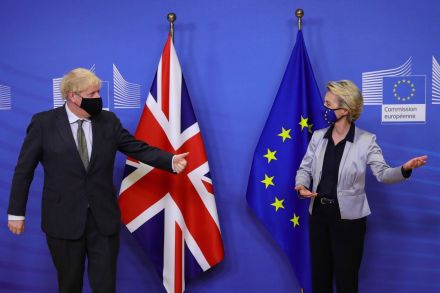
You will doubtless have heard this argument many times: Britain will have to budge on the terms for a free trade deal with the EU eventually because there is a powerful asymmetry at work. The case runs thus: Though it is perfectly true that the EU runs a big trade surplus with the UK, it is also true that more than 40 per cent of our exports go to the EU, while the UK market constitutes a much smaller share of the overall exports of any individual member state. Therefore, in any trade Armageddon in which all exporting and importing between the UK and the EU ceased, we would have lost nearly half of our export markets (worth about 14 per cent of GDP), while they would have lost a smaller proportion of theirs (worth perhaps a couple of points off EU GDP).

If Boris doesn’t blink over Brexit, Starmer becomes unelectable

From our UK edition

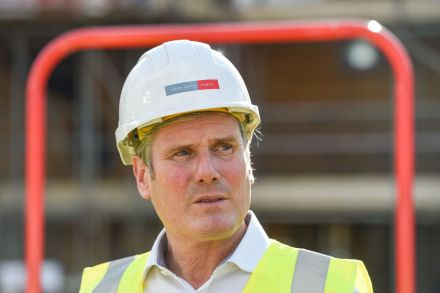
If it's No Deal, then it will usher in a crisis that will highlight the leader’s negative baggage and remind everyone why he should never be trusted, probably dooming him to ignominious defeat at the next election. If that is your view of the post-transition political landscape then I heartily agree. But, like most of the punditry, I bet you’ve got the wrong leader in mind. Because the man who will actually be holed below the waterline is Keir Starmer, not Boris Johnson. Let me explain by going through what No Deal will mean for each leader. Certainly a No Deal end to the Brexit transition is likely to be accompanied by bumpy times during the ensuing adjustment, including queues at ports and even shortages of particular products.

Richard Tice, not Nigel Farage, should terrify the Tories

From our UK edition

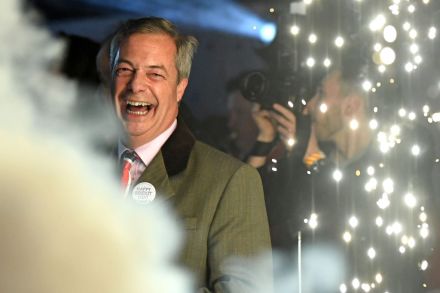
The terms of the Covid debate have changed markedly since Nigel Farage decided to re-enter the political arena after Boris Johnson's second English lockdown. Even with multiple vaccines coming on stream, we can still not rule out a third lockdown — but we can be pretty darned sure there won’t be a fourth. It’s not the end of the beginning, but the beginning of the end. So Farage and his chief lieutenant Richard Tice can no longer depend on anti-lockdown fervour alone to give them a flying start, despite the rebellious mood of Tory MPs. Could they, therefore, decide that discretion is the better part of valour and call the whole thing off, especially if there is no Brexit deal and Britain ends up going for WTO rules as they have called for?

Why is Labour sticking up for foreign criminals?

From our UK edition

That the left-wing Labour MP Clive Lewis should have organised a letter to Home Secretary Priti Patel opposing the deportation of Jamaican criminals hardly comes as a surprise. Being against the removal of foreign nationals, almost irrespective of what they have done to deserve it, is pretty standard fare for a member of the Socialist Campaign Group of Labour MPs – the leftist caucus associated with the likes of Jeremy Corbyn and Diane Abbott. That Lewis’s letter was signed by around 60 Labour MPs – easily more than a third of Labour backbenchers and twice the total membership of the Campaign Group – was more surprising.

Are the Tories still the party of Sound Money?

From our UK edition

When Philip Hammond delivered a notably parsimonious Spring Budget statement in 2017, his predecessor George Osborne put out a congratulatory tweet. ‘Well done Phil. Sound money and fiscal responsibility are the only secure foundations of a fair and strong economy,’ wrote Mr Osborne. Hammond’s Budget took place on the tenth anniversary of a seminal speech made by Mr Osborne to the CBI. In March 2007, the then 35-year-old Shadow Chancellor told the gathered captains of industry: ‘I do not want any uncertainty over our commitment to Sound Money. We will not seek to spend our way out of Britain’s problems – that would simply make the problems worse in the long term.

Why are Ed Davey’s Lib Dems keeping such a low profile?

From our UK edition

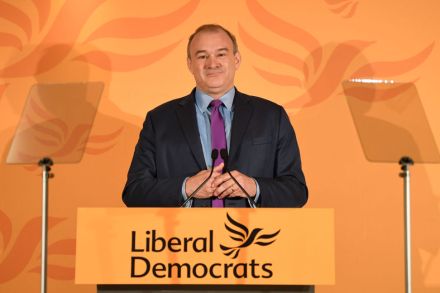
Paddy Ashdown once joked that he was the only leader of a major party to have presided over an opinion poll rating represented by an asterisk, denoting that no discernible support could be found anywhere in the land. While he was granting himself poetic licence in the telling of that anecdote – it was an occasional foible of one polling company only to list the Tory and Labour scores on the front page of its survey results – it was indeed the case that Lib Dem poll ratings of five per cent or less peppered the early stages of his leadership. This week an opinion poll by Savanta ComRes recorded that same risible rating of five per cent for the Lib Dems under current leader Sir Ed Davey, compared to 38 per cent for Labour and 41 per cent for the Conservatives.

The time is ripe for a Boris comeback

From our UK edition

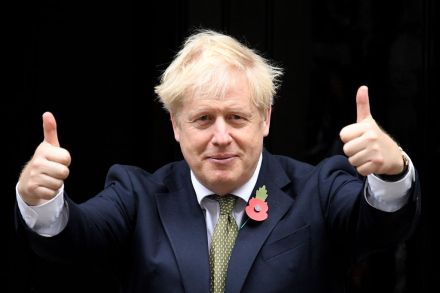
‘The thing about the greased piglet is that he manages to slip through other people’s hands where mere mortals fail.’ That was the wry assessment of Boris Johnson, given last autumn by David Cameron who has followed the Prime Minister’s brilliant career since their schooldays with many a chuckle and shake of the head. A week or so ago it seemed as though the piglet had finally been cornered. Authority was ebbing away in the wake of Johnson’s chaotic imposition of a second nationwide lockdown. The decisive shift in the polls which Keir Starmer had been waiting for appeared finally to be happening. And then, on Monday, came the Pfizer announcement that its vaccine worked, with an amazing 90 per cent effectiveness rate.

Dominic Cummings should follow Lee Cain out the door of No. 10

From our UK edition

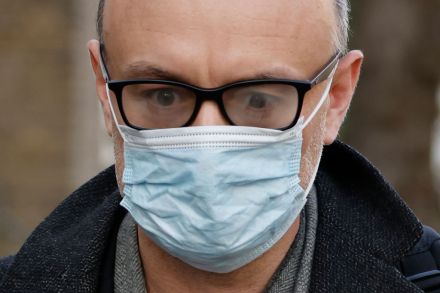
What we are seeing with the imminent departure of Lee Cain from Downing Street surely signals the beginning of the end for the notion that the creative vision of a single person can utterly dominate the output of a government. That single person, by the way, is not Communications Director Cain, nor even Boris Johnson, but Dominic Cummings. For this is largely a proxy war. The proposed elevation of Cain to the post of the PM’s Chief of Staff was only partly opposed because he was widely seen as lacking the authority and weight required for that position.

Boris Johnson’s ‘method’ isn’t working

From our UK edition

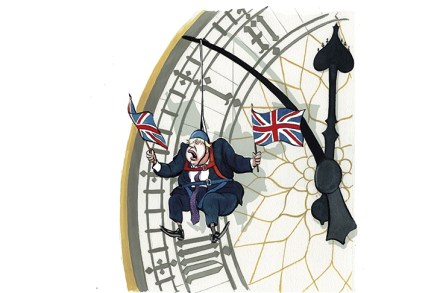
Is the Boris Johnson ‘method’ reaching the end of the road and if it is, can the Prime Minister find a new one – or is he altogether done for? The method, by all accounts deployed across more than one facet of the Prime Minister’s life, involves issuing a series of charmingly delivered apologies for things not having turned out as he’d led his audience to believe they would. Each apology is immediately followed by a new pledge that matters will take a decisive turn for the better very soon. And thus does the PM buy himself more time in which to extricate himself from scrapes. On Thursday he was at it again during a Downing Street press conference called to sugar the pill of a second national lockdown.

Macron has exposed the cowardice of Boris’s response to terror

From our UK edition

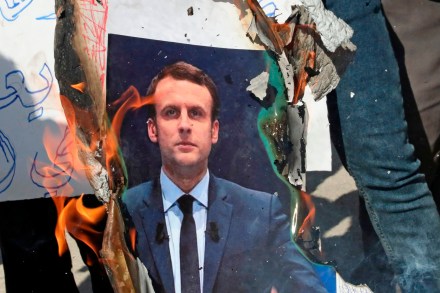
Sometimes what a politician leaves unsaid tells us more than what he does say. Take the different reactions to the wave of Islamist terror attacks across Europe by Boris Johnson and Emmanuel Macron. The Prime Minister’s statement of sympathy with Austria over the atrocities in Vienna last night may seem at first glance to cover the bases: 'I am deeply shocked by the terrible attacks in Vienna tonight. The UK’s thoughts are with the people of Austria — we stand united with you against terror.' But compare it to that from the president of France: 'Europe is in mourning. One of our own has been hit hard by Islamist terrorism. We think of the victims, their families, the shattered lives. France stands alongside Austria, ready to lend its support.

Farage will make Boris regret his panicky second lockdown

From our UK edition

During the 2015 general election campaign, when I was directing operations at the London HQ for Ukip, I had an 'absolutely brilliant' idea. The next day Nigel Farage would be campaigning on the Isle of Thanet, in Kent, where he was standing for election. On our grid, it was earmarked to be Small Business Day – designed to showcase the party’s manifesto focus on the self-employed and SMEs, aka 'the backbone of the British economy'. My plan? During his campaigning, Nigel should visit a butcher, a baker and a candlestick-maker (as mentioned in the nursery rhyme ‘Rub-A-Dub-Dub’). A suitable butcher’s shop and a bakery near to his route were swiftly identified.

Instead of lockdown, let’s create a National Shielding Service

From our UK edition

So what would you do? That was the question that cropped up on my Twitter timeline after I’d sent out various tweets condemning the shambolic decision by Boris Johnson to order another England-wide lockdown. I noticed the same question in the replies to an anti-lockdown tweet sent out by the Mail on Sunday’s Dan Hodges too. And it is a fair one that I think deserves an answer from commentators used to throwing rotten tomatoes at the stage but seldom willing to climb up on it. So here is mine: First, it is too late to call off the lockdown now, as preparations for another approach will take some time. So point one is that we must now go with the lockdown until December 2, but we should assert that it will end then and it will be the last one.

Keir Starmer needs a reshuffle to win back the Blue Wall

From our UK edition

The most important fact about British politics is also the most mundane: the next general election is an awfully long way off. Given the extraordinary events we are living through, it is sometimes tempting to forget this and to suppose that a big political moment in any given week is going to have transformative consequences. I have previously referred to outbreaks of this syndrome as flare-ups of ‘that bloke who drove to Durham that time’. This is in honour of all those pundits and MPs (including Tories) who claimed, ridiculously, that the Dominic Cummings saga was a game-changer that was bound to feature as a top cause of voter outrage with the government come the next election. In fact, we all need to slow down.

Burnham’s gamble could collapse around him

From our UK edition

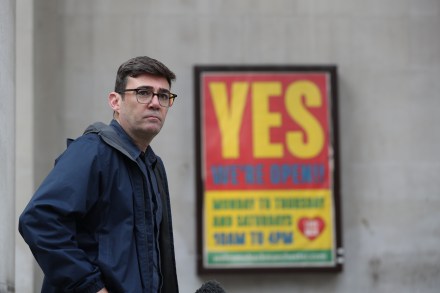
If they were to give out awards for best use of an anorak to communicate stroppy defiance then Andy Burnham would be about to break the stranglehold of former Oasis frontman Liam Gallagher. In a city where it rains on more than 150 days a year, it is perhaps unsurprising that the anorak has become the garb of the everyman. And it was surely no accident that Greater Manchester’s Mayor was clad in one as he spoke out on Thursday against Whitehall's plans to put his region into the highest tier of lockdown controls.

Boris’s Covid policy is finally starting to make some sense

From our UK edition

Boris Johnson probably thought he emerged from Prime Minister’s Questions this week having maximised his freedom of manoeuvre in the battle against coronavirus. Indeed, at one point he made it explicitly clear that he was not promising that there would be no second national lockdown, declaring: 'I rule out nothing.' While that may be the formal position, the politics of the issue now make it much less likely that the Prime Minister will go down this track. That should be a cause for optimism among all of us who believe further nationwide lockdowns will do immense economic harm while securing little if any lasting public health advantages.

Boris needs more friends in the north

From our UK edition

Replacing Islington’s Jeremy Corbyn with Camden’s Keir Starmer never seemed like the most obvious way for Labour to win back its lost northern heartlands. True, Starmer was not such an extremist as Corbyn, but his classic leftie London lawyer mindset was surely destined to go down like a lead balloon out on the Blue Wall. That was the comforting story the Tories told themselves when he was elected Labour leader anyway. And things may still pan out that way. But something unsettling for the Conservatives is certainly going on right now.

Can Boris Johnson solve the Tory lockdown split?

From our UK edition

The great Pixar animated film ‘Monsters, Inc.’ tells the story of Sulley, a fluffy-haired, broad-shouldered and rather cuddly monster who creates energy by scaring children in their beds but then discovers that vastly more energy can be generated by making them laugh instead. I offer this not as a rival to Boris Johnson’s new plan to make wind energy power the whole of Britain by ‘harvesting the gusts’, but because it has lately seemed to many observers that the Prime Minister has been on a reverse journey to that undertaken by Sulley.

Nigel Farage is watching and waiting for the next Tory slip-up

From our UK edition

A few weeks ago, Nigel Farage enjoyed a get together with a very senior Conservative party figure. Brexit was, naturally, at the heart of the conversation. As he departed from the convivial rendezvous he delivered a line that lowered the temperature in the room and is likely to concentrate Tory minds: 'If you screw it up again I will come back and kill you.' So far there is little sign of Boris Johnson’s administration going soft on post-Brexit negotiations. While any final future relationship deal is bound to contain compromises that could be presented as a betrayal to an ultimate Brexit purist, it will only blow up in the Government’s face if the general body of Brexit supporters come to think of it that way.

Tories should be terrified of Starmer’s ruthless streak

From our UK edition

How does a Labour leader going into an election with only around 200 MPs to his name become prime minister? Well, the conventional answer is that he doesn’t, as Neil Kinnock demonstrated in 1987. Kinnock stuck around for a second go in 1992, but still couldn’t get over the line. We can tell from Sir Keir Starmer’s utterances this week that he is not really a sticking around type of bloke. We can also tell that he has identified a path to Downing Street that, while rocky and full of potential pitfalls, might just be navigable. In his audacious conference speech on Tuesday, Starmer explicitly set himself a punishing goal – to take Labour into power at the next election, removing its frontbench team from 'the shadows' and catapulting it into government.