Patrick O’Flynn

Patrick O’Flynn

Patrick O’Flynn is a former MEP and political editor of the Daily Express

The Green party is missing a trick

From our UK edition

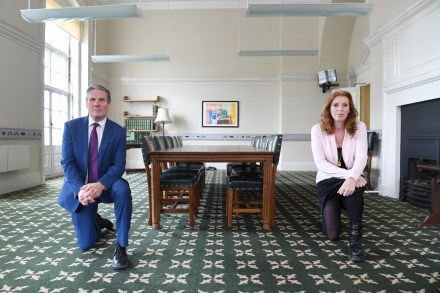
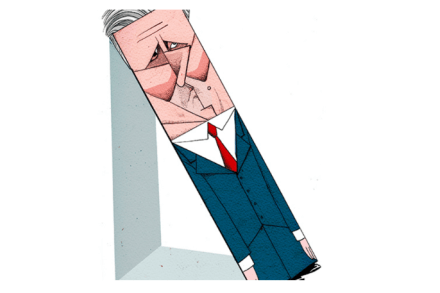
The British left is moribund. The Labour party’s ratings are sliding under Sir Keir Starmer, aka 'Captain Hindsight', as he struggles to project anything compelling to the electorate. The Liberal Democrats are doing even worse, with poll ratings often down at 5 or 6 per cent. They have given up on liberty — they don’t think free speech is a priority and have failed to query any significant aspect of lockdowns — and on democracy too, via their fanatical effort to set aside the result of the EU referendum. Sir Ed Davey’s major tactic seems to be to copy Sir Keir in being generally non-committal and to shadow his every move; a higher form of fence-sitting given the lack of such moves.
The greatest threat to Boris’s legacy

From our UK edition

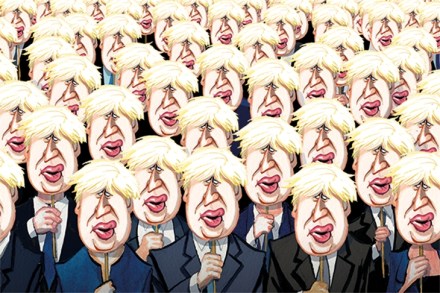
The government is starting to have an opinion poll problem, but it has nothing to do with any great threat from Keir Starmer or the Labour party. While the Tory ratings have gone from high to low 40s and Boris Johnson is not as extraordinarily popular as he was in January last year before the advent of the first dry cough of coronavirus, that’s not the issue of concern at all. On the contrary, the problem is that the Prime Minister may be getting addicted to favourable ratings and increasingly unwilling to put them in jeopardy by taking difficult or unpopular decisions.

Can Labour capture the spirit of the post-war era?

From our UK edition

The right is usually much better than the left at harnessing the awesome power of the folk memories that surround Britain’s heroic second world war struggle. The idea of British exceptionalism at its most evocative moment between 1939 and 1945 was crucial to Brexit and crucial to securing popular backing for the Falklands War a generation earlier too. So for Keir Starmer to base his economic pitch for power not on modern monetary theory or any other piece of leftish guru-jargon, but instead on drawing parallels with the reforming post-war Labour administration of Clement Attlee is smart politics. The Attlee government has a powerful mythology of its own that adds up to Labour’s best patriotic story, as Starmer set out on Thursday.

Labour’s revealing support for reparations

From our UK edition

The most extreme measure in the entire Labour Party manifesto of 2019 – and this is a high bar – was a pledge that Keir Starmer ought to have disavowed explicitly on day one of becoming leader. It committed a future Labour government to ‘conduct an audit of the impact of Britain’s colonial legacy to understand our contribution to the dynamics of violence and insecurity across regions previously under British colonial rule.’ This planned wallowing in national self-abasement was, to my mind, clearly conceived as a precursor to a demand for the payment of reparations by Britain for the excesses of empire.

Labour’s lightweight shadow cabinet

From our UK edition

Being at the launch of the 1997 Labour manifesto and watching the shadow cabinet take to the stage is one of my abiding memories from more than 20 years spent as a lobby journalist. Even setting aside the star-turn Tony Blair, it was a veritable march of the big beasts — Gordon Brown, Robin Cook, Jack Straw, David Blunkett, John Prescott, Mo Mowlam. All of these people were major players with large followings and massive public profiles. The less central figures also passed muster, including George Robertson (later a fine Nato secretary general), the ever-popular Donald Dewar, the clever and well-spoken Alistair Darling, suave Jack Cunningham, Margaret Beckett and Ann Taylor — solid contributors both — and that happy bruiser Frank Dobson.

Starmer’s patriotic rebrand doesn’t fool anyone

From our UK edition

Since Harold Wilson stood down as Prime Minister 45 years ago, there have been 11 general elections contested by seven different Labour leaders. Of those, only Tony Blair has managed to win, which he did three times in a row. The roll call of the defeated reads Callaghan, Foot, Kinnock (twice), Brown, Miliband and Corbyn (twice). As Alastair Campbell noted in a recent column for the New European, Labour’s record over the time span is lost, lost, lost, lost, Blair, Blair, Blair, lost, lost, lost, lost. Yet still we political commentators invite you to suspend your disbelief and suppose Labour is in the running. And still it is the Labour party’s activist membership that does this most readily.

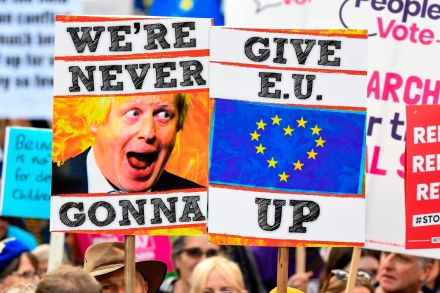
The EU’s vaccine debacle has finally ended the ‘People’s Vote’ myth

From our UK edition

Of all the charges made against Brexiteers, the notion that we 'don’t understand the modern world' is the one that some Remainers have most often returned to; their equivalent of the boxer’s stinging jab that relentlessly wears down an opponent. In a global system increasingly dominated by a handful of big players with huge populations and land mass – the US, China, India, Russia – being a medium-sized nation in Europe without the umbrella of the EU was supposed to be a mug’s game. In the European Parliament, that arch-federalist Guy Verhofstadt would often refer to the countries of Europe as 'dwarfs' who needed to band together to compete in such a world.

Gordon Brown’s plan to save the Union won’t wash

From our UK edition

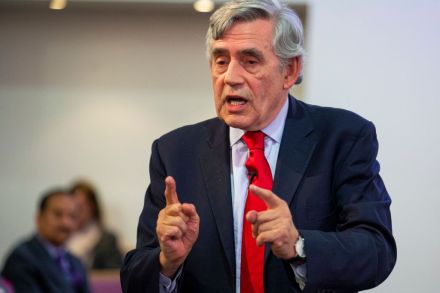
Back in 2006, when he was close to executing his masterplan to chase Tony Blair out of Downing Street, Gordon Brown sought to address something that worried many voters: his Scottishness. 'My wife is from Middle England, so I can relate to it,' he pronounced, as if Middle England were a town somewhere off the M40. In fact, though Sarah Brown was born in Buckinghamshire, she spent most of her early childhood in Tanzania and her family moved to North London when she was seven. By mistaking a term denoting the provincial English psyche for a geographical area, Brown merely demonstrated that he was indeed all at sea.

Do Tories know the truth about Boris Johnson?

From our UK edition

Exactly 40 years ago tomorrow, four Labour party grandees issued the Limehouse Declaration, signalling 'the re-emergence of social democracy in Great Britain'. The declaration, made on a windswept bridge near the east London home of Dr David Owen, marked the formation of a Council for Social Democracy, that soon became a fully-fledged political party, the SDP. The 'gang of four' very nearly succeeded in breaking the mould of British politics, as their moderation hit the spot with millions of voters who opposed Thatcherism but also recoiled from Labour’s radical socialist agenda of the time. But they were thwarted, first by Britain’s first past the post electoral system that made gaining a big parliamentary representation all but impossible.

Boris can’t afford to move slowly on lifting Covid restrictions

From our UK edition

At 3.48pm on Thursday the Sun’s political editor tweeted out an explosive story that Steve Baker, the co-convenor of the Covid Recovery Group of Tory MPs, had warned that Boris Johnson’s party leadership would soon be under threat if restrictions were not lifted soon. Less than 100 minutes later, Baker put out his own tweet as follows: ‘What this country needs is the complete success of Boris Johnson… I am clear Boris is the only person to lead us out of these difficulties and I support him in that endeavour.’ In short, Baker had overplayed his hand to an embarrassing extent – much to the delight of those parliamentary colleagues who regard him as insufferable.

Why Reform UK’s Scotland launch was a flop

From our UK edition

Scots may be getting vaccinated against Covid, but they already have the highest rate of immunity to the appeal of Nigel Farage to be found anywhere in the UK. So it was not a particular surprise that Farage today stayed away from the launch of the Scottish offshoot of his new entity, Reform UK. Instead it was left to party chairman Richard Tice to unveil the identity of the leader of Reform UK, Scotland. The sitting MSP Michelle Ballantyne, who stood unsuccessfully for the leadership of the Scottish Conservatives less than a year ago before going independent, has become the Scottish leader of Reform UK, without needing to win a single vote. The good news for the party is that Mrs Ballantyne came over as sensible, credible and inoffensive, not unlike Mr Tice himself.

Is Nigel Farage’s new party about to make waves?

From our UK edition

17 min listen

Brexit is done, but Nigel Farage may well remain an influential force in British politics. With his rebranding of the Brexit Party to 'Reform UK' approved this week, Katy Balls talks to James Forsyth and Patrick O'Flynn, former Ukip MEP, about whether or not Sinoscepticism and lockdown-scepticism are enough for Farage to build a new movement.

Rosie Duffield’s re-join remarks will haunt the Labour party

From our UK edition

Every party keeps on file a list of rash things politicians in other parties have said that can be used against them at a later date. Way back when I was directing Ukip’s 2014 European parliamentary campaign, I built up a ‘helpful contributions’ folder containing print-outs of gaffes and embarrassing admissions made by pro-EU MPs and MEPs. Conservative Campaign Headquarters probably has at its disposal a far more sophisticated and comprehensive digital system for logging the own-goals of its adversaries. But one thing is certain, someone will imminently be inputting an entry marked something like ‘Duffield, R. – Labour’s plan to re-join the EU’.

How Farage plans to shake up British politics

From our UK edition

Right-wing protest politics has just catastrophically over-reached in America, but it is suddenly back in business in Britain. Its dominant figure, Nigel Farage, has a new political start-up and is sounding rather pleased about it. Earlier this week the Electoral Commission finally — after more than eight weeks of humming and hawing — gave him permission to rebrand the mothballed Brexit party as Reform UK. 'It is excellent news that the Electoral Commission has approved our name change application. The need for Reform in this country is greater than ever,' tweeted the new Reform UK leader (an unelected post, naturally).

Nigel Farage’s China curveball should worry the Tory party

From our UK edition

I have lost count of the number of times the Conservative Party has thought it has shot Nigel Farage’s fox. They stretch all the way back to David Cameron’s January 2013 pledge to hold an In/Out EU referendum, and include the party’s as yet unfulfilled summer promise to stop the illegal Channel crossings and its delivery of a trade deal with the EU that honours the fundamentals of Brexit. Given that the Covid vaccines have also taken some of the sting out of the lockdown debate, which the former Ukip leader was poised to exploit, many Tories will have felt able to relax a bit about the challenge on their right-flank.

Has Brexit already destroyed Labour’s chances?

From our UK edition

Part of the soap opera appeal of politics comes from the idea that it is a competitive sport based on fine margins – with a result that will be determined by the relative performances of the teams and their captains. Under the British first-past-the-post system two major parties slug it out in an epic tussle across hundreds of seats and then one of them wins. Sometimes things are so closely fought that neither party has an outright majority, in which case one or more of the minor parties gets to choose which should be propped up. From this point of view, every policy shift or zinger soundbite thrown by Boris Johnson or Keir Starmer changes the odds as to which of them will occupy 10 Downing Street after the next election.

Starmer’s Brexit slip-up could cost him the election

From our UK edition

Amid all the euphoria about Boris Johnson sealing a final Brexit deal and the breaking-off of politics for pared down Christmas celebrations, perhaps you didn’t notice Keir Starmer losing the next election. Well, I did. And while I cannot be quite certain that Sir Keir has blown it absolutely for 2024 – events dear boy, events and all that – the evidence that he has done so would definitely pass a “balance of probabilities” test. Starmer’s momentum horribilis came during his Christmas Eve press conference responding to the news of Johnson’s deal. Asked what a future Labour administration would do about a deal that he clearly considered sadly lacking in many respects, the Labour leader’s true disposition just slipped out.

Will Farage change his mind about Boris’s Brexit deal?

From our UK edition

It will be some days before the full character of the Brexit trade deal and other future partnership arrangements with the EU become clear. The smoke and mirrors that often accompany budget statements surround this deal as well, and we must wait for expert analytical eyes to go through the body of the 500-page text and tell us what troubling details lurk inside it. But nonetheless, the very striking of a deal which can be argued to observe Boris Johnson’s basic red lines and bring an orderly switchover of trading arrangement stymies those who were seeking to catastrophise the final phase of Brexit.

What will Farage’s sidekick do next? An interview with Richard Tice

From our UK edition

Richard Tice is tall and lean, has a hint of Imran Khan around the eyes, and the ladies on reception in the office building where we meet seem to like him. Were Jilly Cooper to write a political novel then he would be its hero rather than anti-hero. Tice was, after all, the clean-cut one in the ‘Bad Boys of Brexit’, a band whose line up was completed by Arron Banks, Andy Wigmore and Nigel Farage. Tice is the chairman of the Farage-led Brexit party, a title he is finding irksome this afternoon as he would much rather by now be chairman of Reform UK, the new identity he and Farage have applied to the Electoral Commission (El Com) for. They applied more than six weeks ago and have heard nothing back, even though El Com told them they could expect a decision by now.

Smarmy Starmer is not making himself popular with anyone

From our UK edition

The verdict of the Twitter jury is in, articulated in a single, now viral tweet by broadcaster Matthew Stadlen:  'Keir Starmer would have been – and would be – a far better Prime Minister than Boris Johnson during this pandemic.' It is a theme that Starmer has naturally been keen to develop, leading him to make excoriating criticisms of Boris Johnson in a press conference at the weekend. The Starmer thesis is that Johnson is so anxious to be liked that he ducks out of taking tough decisions until it is too late.