Patrick O’Flynn

Patrick O’Flynn

Patrick O’Flynn is a former MEP and political editor of the Daily Express

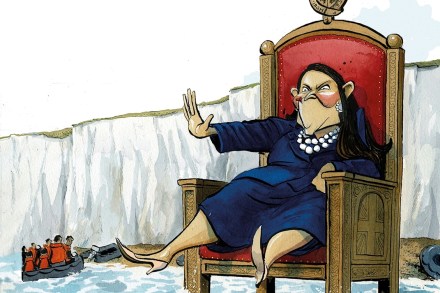
Talk tough and do nothing: The abject failure of Patel’s migrant strategy

From our UK edition

It is somehow fitting that during an Olympic Games a department of Her Majesty’s government is busy smashing records. In the very week that a man ran the 400 metre hurdles at the Tokyo Olympics in a previously unthinkable time of sub-46 seconds, the Home Office presided over the arrival of 482 irregular migrants on the south coast of England in a single day. That easily broke a previous record of 430, set on 19 July or 'freedom day'. Startled observers of the cross-Channel chaos are now pondering whether the 500 barrier could even be exceeded one day this summer. That the Norwegian hurdler Karsten Warholm’s record represented astounding success, while the Home Office’s amounts to shocking failure is by the by.
Boris’s poll slump isn’t such good news for Starmer

From our UK edition

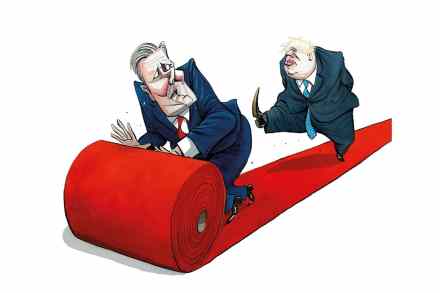
Labour narrowing the poll gap with the Conservatives has got to be good news for Keir Starmer, right? Wrong, actually. Let me tell you why it isn’t and why the recent tightening of the polls should leave us more convinced than ever that the Conservatives are on course for a comfortable victory at the next general election. First off, let’s take the headline data. Politico Europe's poll of polls is as good a place to find it as any and it tells us that on 23 June the Tories were averaging 43 per cent, to Labour’s 33 per cent. By 29 July, the Tories were scoring 40 per cent to Labour’s 35 per cent. So a ten point average Tory lead has halved to a five point average Tory lead in the space of five weeks.

Boris Johnson’s dangerous eco-obsession

From our UK edition

It is a notable feather in Nigel Farage’s cap that his new evening show on GB News has already become essential viewing for Tory high-ups. Last week brought a series of reports by well-connected commentators suggesting that Boris Johnson was worried about Farage highlighting the government’s chaotic failure to stem the cross-Channel flow of migrant boats. The issue has suddenly shot up the list of issues mentioned by Tory voters, with new polling from Redfield & Wilton Strategies now identifying immigration as their top concern. This week the former Ukip leader has touched another nerve with some Tory MPs by wondering aloud whether their party’s green obsession is reaching a pitch that is going to put off many of its core voters.

Starmer faces a difficult summer

From our UK edition

Like Covid data, polling data has a built-in time lag of several days. Those sifting the evidence on coronavirus typically expect to see about a four-day lag between someone becoming infected and them showing up as a positive case after getting tested. Indeed, the Financial Times has just produced a graph showing distinct Covid case spikes among young men four days after every England football match in the recent European championships. Opinion pollsters would recognise a similar lag when it comes to events that influence the standing of parties. It takes time for those events to percolate through the public consciousness.

Labour is picking the wrong fight with Priti Patel

From our UK edition

The position of Home Secretary Priti Patel is clearly untenable. Presumably this means she must resign. Who says so? Why, only her Labour shadow Nick Thomas-Symonds. At least, he has said the first bit from which we can infer the second. And what has reduced Patel to this miserable status in his eyes? Could it be the fact that 18 months after she first promised to halt the cross-Channel boats that spill migrants onto our shores, there are more of them arriving than ever? No, not a bit of it. Thomas-Symonds is not interested in that. In fact, whenever he and the Home Secretary debate migration policy she runs enough rings around him to decorate an Olympic flag.

The arrogance of Boris and Rishi’s failed isolation dodge

From our UK edition

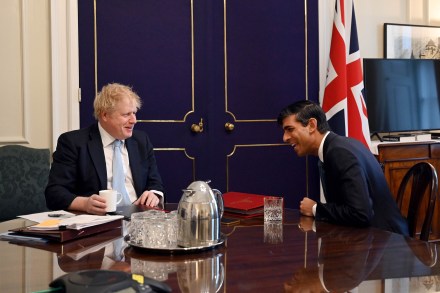
It's hard to break into the global top ten of insufferably arrogant political acts. You need to do something really memorable — something to match Imelda Marcos's shoe collection, assembled while her husband presided over an increasingly impoverished country. Or the Soviet regime’s creation of special reserved 'ZiL lanes' in Moscow to speed government high-ups through the rush hour traffic. But Boris Johnson and Rishi Sunak may well have just managed it. The pair decided to use a 'pilot scheme' to exempt themselves from a requirement to self-isolate after coming into close contact with a Covid carrier (the health secretary).

Keir Starmer’s fundamental problem

From our UK edition

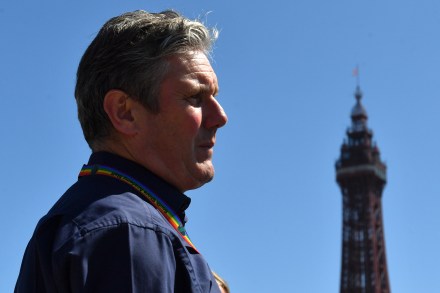
Half a century ago, Willie Whitelaw accused Harold Wilson of 'going around the country stirring up apathy'. I can think of no finer description to apply to Keir Starmer’s summer tour of Britain, during which we are told he intends to listen to the concerns of voters in a bid to win back their trust. His first such excursion, on which he was accompanied by BBC political editor Laura Kuenssberg, saw him encounter a dozen former Labour voters in Blackpool. Several of them confided that they had never heard of him, a revelation he described as 'utterly frustrating'. Ms Kuenssberg reported that the gathering gave Starmer quite a rough ride with some in attendance telling him he was 'wasting his time'.

In defence of ‘levelling up’

From our UK edition

Modern pragmatist political leaders are generally keen to reassure us that there is a unifying philosophy to be found running through their mish-mash of measures. In reality, perhaps they are keenest of all to reassure themselves of it. Tony Blair had the 'Third Way' and David Cameron the 'Big Society'. Boris Johnson has 'levelling-up'. But despite the largely hostile political class reviews being rolled out on Thursday in response to his speech on the latter, Johnson’s formulation is actually far more readily understandable than those of his predecessors. Many of you will vaguely recall that the Third Way was something to do with synthesising right-of-centre economics and left-of-centre social policy (and try selling that on the doorsteps on a wet Wednesday in Withernsea).

Johnny Mercer and the Tory loyalty problem

From our UK edition

Following his re-election as Chairman of the 1922 Committee, Sir Graham Brady would be well advised to start banging a few heads together. Because the Conservative parliamentary party has turned into a thoroughgoing disgrace. We’ve all read about the 'transactional' relationship between most Tory MPs and Boris Johnson – i.e. they will only continue to back him if he keeps winning. But what the past few days has highlighted is the transactional relationship Tory MPs have with each other. There is almost no semblance of basic team loyalty, let alone that higher level of solidarity known as esprit de corps.

Boris’s cunning has allowed him to share in England’s Euro 2020 glory

From our UK edition

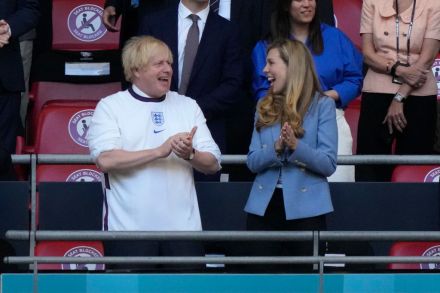
You campaign in poetry, you govern in prose. That was the formula of legendary New York governor Mario Cuomo and it served him pretty well over three successive terms in office. But it’s not quite right. Not these days.  What Boris Johnson appears to understand and Keir Starmer does not is that a key factor is whether you know how to campaign in pictures. We are a long way from an election campaign, but the natural Johnsonian flair for a compelling photograph is already being revealed as a massive advantage for him when compared to the dull visual output of the opposition leader.

Stop politicising football

From our UK edition

Before the England football team plays in the Euro 2020 final on Sunday we need to get one thing straight: who is allowed to support it? Not, apparently, a woman of Ugandan Asian heritage who posted on social media her encouragement to the players before yesterday’s semi-final and then her congratulations afterwards. That was, of course, Home Secretary Priti Patel, whose pre- and post-match tweets saw a torrent of fury and bile directed at her by thousands of left-wingers on Twitter. One of several elite 'blue tick' accounts to participate in the abuse, replying 'Not now Satan' to Ms Patel’s tweet picturing herself in an England shirt celebrating under the message 'Just brilliant. Well done #ThreeLions Football’s coming home.

How Keir Starmer can rescue his leadership

From our UK edition

In January 1990 things looked truly bleak for Alex Ferguson as Manchester United manager. He had not won a trophy in his first two seasons in charge and the third was going badly wrong. With a long injury list and an eight-game streak without a win, fan discontent was reaching fever pitch and media speculation suggested Ferguson was soon for the chop when his team took the field in an FA Cup third round match against Nottingham Forest. Get knocked out of that and all hope of silverware would be gone for yet another year. Fortunately for him, a young lad called Mark Robins popped up to score the crucial goal in a dour 1-0 victory. Ferguson’s United went on to win the FA Cup that season and the rest, as they say, is history.

What does Starmer actually stand for?

From our UK edition

The biggest reason Keir Starmer has proved a flop is not that he leads an unelectable rabble, or that Labour’s coalition of voters is splintering, or even that Covid has marginalised him — it is far simpler: He’s never known what to do. In fact, he lacks the first clue about how to do politics. High-powered lawyer he may once have been, but we might as well have pulled some random middle-class bloke out of a saloon car on a ring road and invited him to captain Britain’s next doomed attempt to win the America’s Cup yachting challenge. Because Starmer’s default pose is to be frozen at the wheel and staring blankly at a mysterious instrument panel as his crew awaits orders. He has thus always been doomed to catch a crab rather than the wind in his sails.

It’s time for Rishi Sunak to stand up to Boris Johnson

From our UK edition

Finally the pandemic fog is lifting and the outlines of post-Covid politics are starting to take shape. While the Government is perfectly capable of generating many more unfortunate headlines by mishandling the Covid exit wave – or indeed, in the case of Matt Hancock, ignoring the 'hands, face, space' rule – it is clear that one key relationship will largely determine its longer-term fortunes. It is that between off-the-cuff scruff Boris Johnson and his immaculately turned-out Chancellor, Rishi Sunak – the man in the ironed mask.

Labour’s killer queen is the perfect replacement for Starmer

From our UK edition

As Keir Starmer’s re-run of the great Change UK centrist dad experiment sinks deeper into political quicksand, the importance of a party leader being able to project a compelling personality becomes ever more obvious. Even the pinko pundit class that was overjoyed by his election as Labour leader is now close to giving up on Starmer, whose lack of ringcraft reminds us that there is something to be said for career politicians after all. Ambitious shadow ministers with antennae more finely tuned in to the public mood than his are said already to be preparing prospective leadership campaign teams in anticipation of the voters of Batley and Spen delivering a devastating thumbs down to Starmer next week.

Rishi Sunak’s waffle exposed the flaw in Boris’s green agenda

From our UK edition

Who pays? It is one of the most important questions in politics, especially when it comes to the sort of expensive zeitgeisty ideas that governments love to take a reputational ride on. When Margaret Thatcher was Tory leader, she tried to exempt her party from this charge of vulnerability to fashionable notions that come with eye-watering price tags attached, once observing:  'The Labour party scheme their schemes, the Liberal party dream their dreams, but we have work to do.' Nobody who has followed the career of Boris Johnson at all closely would seek to exempt him. Indeed, 'schemes and dreams' appear to be what make him tick.

Brexit, lockdown and the fracturing of British politics

From our UK edition

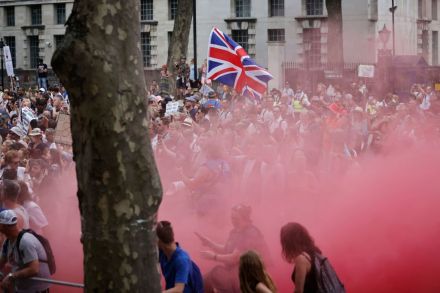
Is our society becoming less tolerant and more viscerally tribal? Or is our politics provoking people into committing more angry and desperate acts? The harassment of BBC Newsnight political editor Nick Watt in Whitehall this week by a group of anti-lockdown protestors recalled the ugly mood that descended on the environs of the Palace of Westminster during the Brexit stalemate of 2016-20. Back then, it was Remainer MP Anna Soubry who suffered the worst incident of intimidation, while the Leaver Jacob Rees-Mogg was also horribly abused by a pro-EU crowd as he walked home from a key vote with one of his children. Many of us might have hoped that such a level of polarisation was a peculiarity of how Brexit played out and would by now be securely in the political rear view mirror.

Priti Patel is running out of excuses for the Channel migrant crisis

From our UK edition

When immigration minister Chris Philp announced last summer that he was in the process of agreeing a 'new operational plan' with his French counterparts to stop the cross-Channel traffic in irregular migrants, it seemed as though the government was finally getting a grip on the crisis. In a statement to camera he declared:  'We had a very constructive meeting with our French colleagues in Paris this morning. We have reaffirmed our unshakeable shared commitment to making sure this route of crossing the Channel is made unviable…we have worked on a joint operational plan, with the objective in mind of completely cutting this route. We’re going to work at pace in the coming days to make that plan a reality.

Labour is the culture war’s greatest victim

From our UK edition

How damaging is the 'culture war' to the Labour party’s hopes of one day regaining power? On the left there is a fragile consensus in place that it doesn’t matter very much. The Times columnist David Aaronovitch set this out recently, using some opinion research from King’s College, London. According to the study most voters don't fully understand terms such as 'cancel culture' or 'identity politics'. For many younger people, the term 'woke' denotes something positive about appreciating the hurdles others may have to overcome. Only among the over-55s is 'woke' seen overwhelmingly as a negative thing, with just 13 per cent of people thinking it a compliment to be so described.

‘There is no alternative’: Why Boris will keep winning

From our UK edition

Those of us who generally wish this Government well and consider Boris Johnson a preferable holder of the office of prime minister to any likely alternative are facing a new accusation this weekend. The vast brigade of pinko pundits who have predicted Johnson’s downfall on numerous occasions only to be proved wrong each time, have changed tack. They now mostly acknowledge that rows over prorogations or pelmets – or even this week’s Dominic Cummings spectacular – are likely to have only a very limited impact upon public opinion. But they shake their heads sadly at us and tell us this is not the point. Rather, what actually matters is that we are in the grip of a morally deficient PM who is not up to the job and that ought to worry us greatly.