Patrick O’Flynn

Patrick O’Flynn

Patrick O’Flynn is a former MEP and political editor of the Daily Express

The Channel migrant crisis is spiralling out of control

From our UK edition

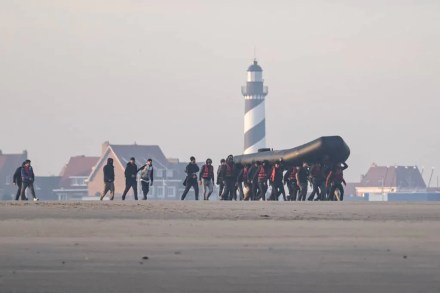
When did the scale of illegal immigration into the UK via Channel dinghies become a first order political issue for you? Perhaps you were, like me, outraged by the phenomenon from the start. If so, you will have been reassured by Boris Johnson's declaration at the outset of his premiership that those coming in this fashion would be 'sent back'. There were 1,843 such arrivals in 2019. Maybe your hackles rose at the end of 2020, when the Government confirmed that far from deterring the trade by implementing a successful returns policy, it had received another 8,466 irregular arrivals via dinghies during that year. Or, if you were relatively slow on the uptake, maybe you only became thoroughly irked at the end of 2021 when official figures recorded 28,461 such arrivals for the year.
Can Rishi really rescue the Tories?

From our UK edition

There is a sweet spot for party leaders in which two key conditions are fulfilled. First, the leader’s party is ahead in the polls. Secondly, the leader is more popular than the party. At the end of his first week in office, Rishi Sunak can at least be content that the latter of these conditions has been met. Ultimately though it will be the former that determines the result of the next general election. On this score there is a huge amount of lost ground still to claw back, with the Conservatives trailing Labour by an average of more than 20 points.

Backing Badenoch and Braverman is key to Sunak’s success

From our UK edition

What do you do when you are a prime minister presiding over a desperately difficult economic outlook riddled with features that are all but intractable in the short-term? Well, in Rishi Sunak’s case, you find other issues that might persuade people to vote for your party and convincing message-carriers to hammer home the approach you are taking. Sunak’s cabinet appointments have left fiscal conservatives in charge of the economic repair job while unleashing cultural conservatives on areas such as immigration control and the militant trans agenda. The reappointment of Suella Braverman as Home Secretary was the biggest talking point and biggest risk Sunak took when forming his new administration.

Can Rishi Sunak rescue the Tories from electoral wipeout?

From our UK edition

'At least I’ve been prime minister' – those were the reported words of Liz Truss on realising that she had presided over so much chaos that she’d have to step down after just six weeks in office. It is most unlikely that our next prime minister would react to catastrophic failure in such a manner. Because Rishi Sunak – and it will surely be him – is cut from a different cloth. Projecting himself as a success would appear to be his sustaining life force. And yet catastrophic failure – on the electoral front at least – is by far the most likely outcome of his premiership. If it lasts two years he will have done well but it is perfectly possible to envisage it coming to a grisly end at a general election in early May next year, just six months in.

Would a Boris-Rishi pact work?

From our UK edition

There is generally a basic problem to be overcome whenever somebody suggests two competing political egos come together to campaign on a ‘joint ticket’ – one of them has to be the boss. There is only one vacancy being fought over by Boris Johnson and Rishi Sunak and it cannot be subject to a job share. It is not, after all, the political editorship of the Guardian at stake here, but prime minister of the United Kingdom. It can be surmised that Sunak and Johnson will have had very different ideas about what a pact between them might look like when they met last night for extensive talks. Sunak will likely have favoured himself occupying No.

The Boris strategy needs to change

From our UK edition

Had Boris Johnson simply wished to use the current vacancy for prime minister to remind us all of his superstar status then it would be mission accomplished already. The mere confirmation that the great blond bombshell was mulling an instant comeback transformed a prospect I likened a fortnight ago to the preposterous Bobby Ewing shower scene in the 1980s TV soap Dallas into a 2-1 shot with bookmakers. Scores of Conservative MPs came out in his support. Across provincial England, vox-popping BBC reporters encountered a groundswell of opinion wishing for his return – most notably a Birmingham fishmonger who pointed at the camera before saying, Lord Kitchener style, ‘your country needs you’.

Booting Boris was a catastrophic error

From our UK edition

To call it a shambles is an insult to the many perfectly respectable shambles that take place each day up and down this fine land. Yesterday’s performance across Westminster and Whitehall by the Conservative and Unionist party will surely be remembered for many years as the textbook example of the nadir to which a dysfunctional, divided and woefully-led governing party can plummet. The preposterous levels of self-belief exhibited by the Prime Minister across the despatch box made for a disquieting opening act, to be followed by the loss of yet another occupant of a great office of state and then, with grim inevitability, utterly farcical scenes in the voting lobbies and the whips office.

Could the Tories’ downfall be Reform’s big chance?

From our UK edition

The Reform party, under its leader Richard Tice, invented Trussonomics before Liz Truss – launching an economic recovery plan in June which claimed to explain ‘how to grow our way out of crisis’. The core policy idea will be familiar to anyone who has followed the disastrous aftermath of Liz Truss and Kwasi Kwarteng’s mini-Budget – a huge stimulus, largely delivered through unfunded tax cuts and higher anticipated borrowing. Tice has so far been too modest to claim his rightful status as John the Baptist to Truss’s Jesus – which is hardly surprising given that she is being crucified right now.

Beware a Tory in a hurry

From our UK edition

Liz Truss will not lead the Conservative party into the next general election, despite her rather hesitant claim to the contrary in an interview with the BBC’s Chris Mason. There are probably now fewer than 20 Conservative MPs prepared to go into that contest with Ms Truss, or her alter ego Ann Droid, in charge. So she will be dispensed with, as even she must realise in those moments when a little bit of self-awareness creeps into her psyche. This being so obviously the case means the necessity to dump her at ultra-high speed has oddly receded.  Jeremy Hunt is in total command of economic policy, sending reassuringly brutal messages to the money markets about his plans for the public finances.

Who voted for Jeremy Hunt to run Britain?

From our UK edition

Jeremy Hunt has no mandate to lead Britain. He couldn’t muster sufficient Tory MPs behind him to properly enter the last leadership contest. He was beaten overwhelmingly in the one before that.  He was a key part of the failed Theresa May administration that lost a parliamentary majority at a general election. He played no role in the Boris Johnson administration that won it back with plenty to spare (a victory from which the Conservative mandate to govern still flows). Yet in a round of interviews this weekend, the new Chancellor of the Exchequer simply ripped up the economic agenda of Liz Truss. He mocked and then buried the PM’s vision of dynamic unfunded tax cuts. He pulled the rug from under her Commons pledge that the Government will not cut public expenditure.

The spectacular fall of Liz Truss

From our UK edition

Is Liz Truss the new Theresa May? A fortnight ago that question seemed unduly insulting to the Prime Minister. Now it seems unduly insulting to the Maybot, whose stage-dancing at Tory conference appears a triumph of liquid movement when compared to the curtsying of the Trussborg at royal audiences. Clumsy is as clumsy does, and Truss is now in a class of her own when it comes to political miscalculation. At least it took May a year to get fully found out in that catastrophic general election campaign of 2017. Truss has managed it in little more than a month.

A Boris Johnson comeback is ridiculous – but not impossible

From our UK edition

It would obviously be ridiculous for the Conservatives to dump Liz Truss after just a few weeks and seek to re-install Boris Johnson as prime minister. To do such a thing would be akin to what the producers of the 1980s TV series Dallas did after realising they had made a horrendous mistake by killing off Bobby Ewing: writing a script for the next series in which the assassination was depicted as a dream had by his wife Pam. The Tories would be asking the British electorate, in effect, to observe Boris walking out of the shower, into his luxuriantly wallpapered boudoir and telling a dumbstruck Carrie: 'I’ve got to go and talk to Rishi about the economy. I say, are you OK? You look like you’ve seen a ghost.

The Liz Truss survival guide

From our UK edition

If you can keep your head when all about you are losing theirs and blaming it on you then, as Rudyard Kipling almost wrote, there is a strong possibility you haven’t appreciated the gravity of the situation. Or as Corporal Jones put it more pithily in Dad’s Army: 'Don’t panic!' It is undeniable that Liz Truss is in a bind. Her first big play following national mourning for the Queen – the 'fiscal event' of last Friday – has not gone well, contributing to a meltdown about UK prospects in financial markets and emergency intervention by the Bank of England. Two successive opinion polls have put Labour 17 points ahead – the sort of lead that suggests Keir Starmer’s party is heading for victory.

How will Truss tackle immigration?

From our UK edition

Despite its leading lights having spent more than a decade spent promising us they will bring down immigration we can now say for sure that Conservative party is not going to do that. Liz Truss and Kwasi Kwarteng are preparing to expand the number of economic sectors to be declared as suffering from labour shortages and thus permitted to bring in both skilled and unskilled workers from abroad. Not only this, but they are also pushing for a trade deal with India that will involve 'open access' immigration arrangements. In his watershed financial statement in the Commons on Friday, Kwarteng included immigration in a list of areas where barriers to economic expansion were going to be removed by new policies to be announced in the coming weeks.

The Queen’s funeral was a fitting send off for Elizabeth the Great

From our UK edition

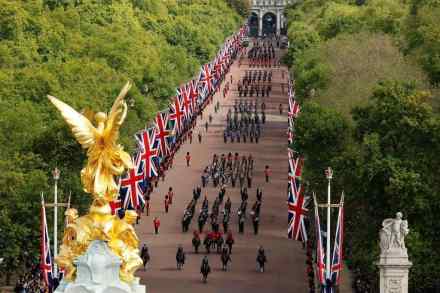
In the Christian tradition, which allows for a protracted gap between death and burial, there is often time for initial feelings of shock and grief to give way to other emotions – fond recall, gratitude for the contribution of the departed. But a funeral always returns us to sorrow. And deep sorrow was the abiding emotion today at the state funeral of Her Majesty Queen Elizabeth II. The applause that rang out along parts of the route when her body was conveyed back to Buckingham Palace – or the friendships that sprang up in the queue to see her lying in state in Westminster Hall – were rightly seen as flowing from the Queen’s genius at holding and bringing people together.

The sorry state of republicanism

From our UK edition

As republican protestors seek to disrupt the handing on of the title of head of state from one royal to another, we should appreciate that it is an obsolete system in the modern world. Not the monarchy, of course: it only takes one look at the mass outpouring of grief for the late Queen and the goodwill towards the new King displayed by all mainstream political leaders to realise that is in rude health. But republicanism. Imagine for a moment that a new British republic is about to be born. The presidential election has reached its final round of voting. Jeremy Corbyn and Nigel Farage have been edged out in previous rounds, leaving a straight head-to-head between Sadiq Khan and Boris Johnson.

The end of the Elizabethan age

From our UK edition

The Queen’s fragile smile in the official photograph released as she waited to appoint Liz Truss as her 15th Prime Minister carries even more meaning now. Her Majesty clearly knew there would be no 16th and after a turbulent summer it must have come as a relief to know that the country was about to move from a caretaker premier to a full-time one. Her audience with Ms Truss would prove to be the last significant act of a monumental reign lasting 70 years. And it meant that in her final days she could look back on the improbable promise she gave her future subjects on the occasion of her 21st birthday in 1947 and know she had fulfilled it in every respect.

Truss is in a stronger position than Thatcher – for now

From our UK edition

People used to understand that they were ageing when they noticed police officers in their neighbourhood looking unfeasibly young. Given that nobody ever sees a police officer on foot patrol these days, a new benchmark for startling youthfulness needs to be identified. After Liz Truss unveiled her top ministerial team yesterday perhaps ex-cabinet members could serve the purpose. Because Dominic Raab (48), George Eustice (50), Grant Shapps (53) and Priti Patel (50) have just joined the bulging ranks of former cabinet ministers to have moved from young thrusters to backbench elders with, in one or two cases, no discernible period of achievement in between. At least nobody can say that the line-up chosen by Truss is 'male, pale and stale'.

The issue that will win or lose the election for Liz Truss

From our UK edition

Nobody knows what they think about Liz Truss. Not literally nobody – those of us with a wholly unusual level of interest in politics of course have our pet theories – but nobody in the sense of the broad sweep of the general public. As Tony Blair noted in his memoirs: 'For most normal people, politics is a distant, occasionally irritating fog.' That is, in fact, a pretty good description of the last month of a Conservative leadership race that tested the appetite for politics of even the nerdiest among us. Not since John Major’s rapid rise-without-trace to succeed Margaret Thatcher has a new arrival in 10 Downing Street been more of a mystery to voters. So don’t believe polls purporting to know how people will react to her premiership. Everything is up for grabs.

Albanian channel crossings are making our borders look like a joke

From our UK edition

The wholesale abuse of the United Kingdom’s asylum system has taken a novel, absurdist twist in the last few months. Recent years have seen thousands of young men predominantly from war-torn or extremely oppressive countries – such as Iran, Iraq, Afghanistan and Syria – chugged across the English Channel from the safe country of France to lodge asylum claims here. But a new dispensation involves thousands of young men from a European country that has not seen a war for a quarter of a century and aspires to join the EU travelling through a series of other safe countries before reaching France and then crossing the Channel to claim asylum in the UK. This is Asylum Abuse 2022: Albanian Edition.