Olivia Potts

Olivia Potts

Olivia Potts is the Guild of Food Writers’ Cookery Writer of the Year 2025. She hosts The Spectator’s Table Talk podcast and writes Spectator Life's The Vintage Chef column

How to use up your Christmas leftovers

From our UK edition

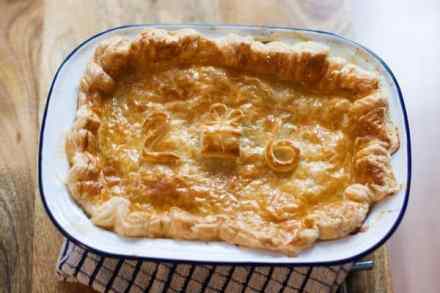
I’m going to keep this short, because if you have flung yourself into the festivities, or simply survived them, and are now sizing up piles of leftovers wearily and warily, the last thing you want to do is read a blog post. If that’s not the case, please feel free to trawl my archives and fill your boots. But it’s important not to waste valuable Quality-Street-eating or telly-gazing time on recipe-based mirth. So know this: this Leftovers Pie will save your Boxing Day. Here are the headlines: this dish is (a) easy, (b) delicious and (c) entirely adaptable according to what you have in the house. Got stuffing? Throw it in! Leftover roast potatoes? Squash them down and mix them through. A surplus of pigs in blankets?

The ultimate turkey curry

From our UK edition

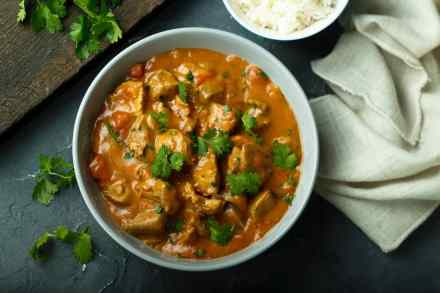
Turkey curry, as a means of using up festive leftovers has become something of a joke: the turkey curry buffet in Bridget Jones is the true low point of Bridge’s festive calendar. The prospect can strike fear into the most Christmas-spirited of souls. But actually, on boxing day, or the day after, the last thing you really want is the same meal you’ve been eating for the past two days, looking a little tired and fridge-worn, all the best bits gone. Don’t get me wrong: I’ll be first to the table for cold roast meats and my fifth serving of stilton in 48 hours, and if you hesitate for a moment, you won’t see that final portion of trifle for dust.

With Bee Wilson

From our UK edition

44 min listen

Beatrice ‘Bee’ Wilson is an acclaimed food writer and journalist, who has authored several books on topics from how bees make honey to the history of the sandwich. On the podcast, Bee discusses the fad of clean eating, how the internet has changed food culture, working with her charity TasteEd, her time as a contestant on Masterchef, and the experience of working on her first cookbook, The Secret of Cooking. She has also written the foreword for the reissue of Kathleen le Riche’s 1950s book ‘Cooking Alone’, which is available now in all good bookshops.

The secret to making a Yule log

From our UK edition

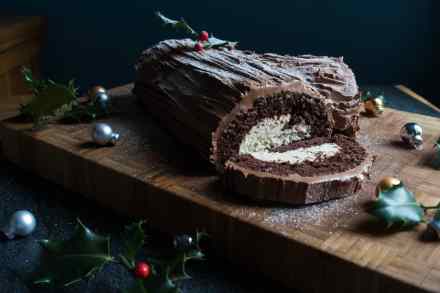
I watch a lot of Great British Bake Off. I’d like to say it comes with the baking territory, but the truth is, I’m simply hooked. I love all of it: the triumphs, the disasters, the crap jokes, the obscure technicals, all of it. My dedication to GBBO has taught me a couple of things: the Hollywood handshake has been so devalued in recent years as to be completely worthless; it’s probably worth breaking down and having a cry over your macarons just to get a hug from Noel Fielding, and swiss rolls are a bloody nightmare. They’re fiddly: they require whisking the yolks and whites separately, and then gingerly folding them together, before turning the whole thing out onto a tea-towel, doing some kind of weird pre-roll to set the shape, and then rolling again.

Cherry and ginger fudge: the perfect last-minute Christmas gift

From our UK edition

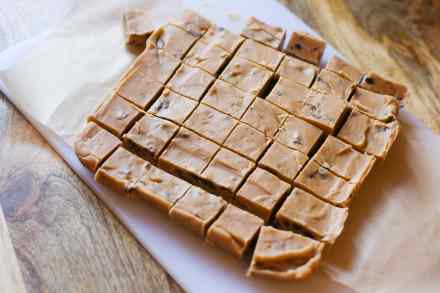
I wish I were someone who was organised and neat, someone who excelled at making organised and neat lists, and then methodically ticking off each item on completion. But that will never be me. And that is why, despite my best efforts, I found myself in Newcastle on a rainy Northumberland Street one year trying to decide whether I should spend £15 on a jar of pork scratchings for my father, or just scratch my own eyes out and be done with it.

The sheer joy of a sherry trifle

From our UK edition

Christmas brings out the best and the worst in me. It’s a chance to give in to my inclination to feed all my nearest and dearest at once, and also to show off a bit. I love the prep, from the shopping lists to the veg peeling, and I love the wind-down, from the leftovers to the decimated tins of chocolates. Am I controlling about Christmas? Yes, probably. But it all comes from a place of overexcitement. This year, however, Christmas looks a little different. On Christmas Day itself, I am likely to be 40 weeks pregnant with my first baby. This means that not only am I not masterminding Christmas dinner and all the rigmarole that comes with it, but neither will I be able to do a lot of the things that have always made Christmas for me.

The joy of old-fashioned gingerbread

From our UK edition

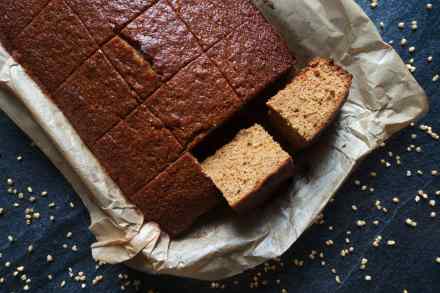
Christmas baking should be a source of joy. It should be something we look forward to, a break from the hectic organisation of dozens of presents, reams of wrapping paper, cosy-but-thoughtful decoration, enormous meals, endless Christmas parties, and stressful hosting. But Christmas baking can take on a life of its own: fruit cakes that ‘should’ have been made months ago (that three members of your family will tell you loudly they do not like and will not eat), puddings that need hours on the hob, edible biscuity decorations with boiled sweet centres that will inevitably stale on the tree. It can just become another chore. Now, I love a Christmas pudding. I even love making one, when I have the time, energy and inclination.

Christmas puddings tried and tested: from Aldi to M&S

From our UK edition

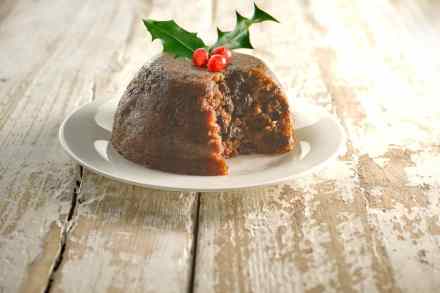
Christmas puddings are a little like Marmite: you either love them beyond all measure, or you’d be perfectly happy if one never crossed your path again. But, unlike Marmite, there are dozens on the market to pick through – and given that most of us will only eat one a year, it’s important to get the right pudding for you. We’ve taste-tested more Christmas puds than one person should ever eat to bring you the best of the best. Best overall pudding runner up: Aldi Specially Selected Marc de Champagne Christmas Pudding, 400g, £4.99 What they say: A celebration of vine fruits, glacé cherries and nuts blended with cider brandy, Champagne and a splash of Marc de Champagne brandy. Sprinkle with silver glitter to finish.

With Alf Dubs

From our UK edition

24 min listen

Lord Alf Dubs is a politician. He moved to the UK as a child when the Nazis invaded what was then Czechoslovakia, and went on to become an MP, a parliamentary under secretary for Northern Ireland, and a member of the House of Lords. He is a campaigner for refugee rights.On the podcast, he tells Lara and Liv about his evacuation from Prague, eating langoustine straight from a loch in Northern Ireland, and putting on a 'Stormont stone'.If you enjoyed this episode, then sign up to Liv's newsletter, The Take Away. You'll get her delicious recipes, and The Spectator's best food and drink writing. Go to spectator.co.

A foodie’s guide to Christmas gifts

From our UK edition

Like Father Christmas, I’m making a list, and checking it twice. I have scoured the food and drink world to bring you the greatest and most varied gifts for Christmas 2021. Entirely coincidentally, those who are obliged to buy presents for me can consider this my Christmas list, but I hope it will also provide inspiration for the food-lover in your life. For the keen cook I’ve used a lot of cooking thermometers over the years, both at home and at work, and Thermapen is the hands-down winner. With a temperature range of -49.9 to 299.9°C, and an accurate measurement in one second, it is easy to use, easy to read, and easy to clean.

Panforte: a sophisticated alternative to Christmas cake

From our UK edition

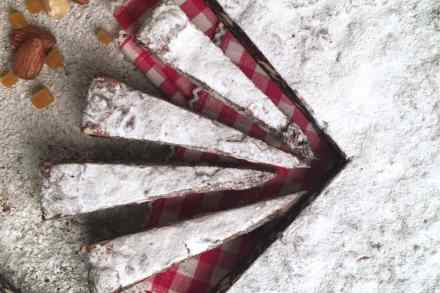
If you’re looking for an alternative to Christmas cake (or an addition to it), then panforte is the bake for you. Sufficiently similar to our traditional Christmas cake in its flavours of Medieval spice, dried fruit and candied citrus that it can’t fail to evoke the Christmas spirit, it is still entirely distinctive. Panforte is shallower than Christmas cake, and more solid; the honey in the mix means that it is chewy rather than crumbly, and where a Christmas cake is stuffed full of vine fruits and cherries, panforte majors in dates and figs. A slim wedge of the dense, spiced bake is more than sufficient and even, whisper it, more elegant than our homegrown Christmas cake.

Hasselback potatoes: the ultimate crowd-pleaser

From our UK edition

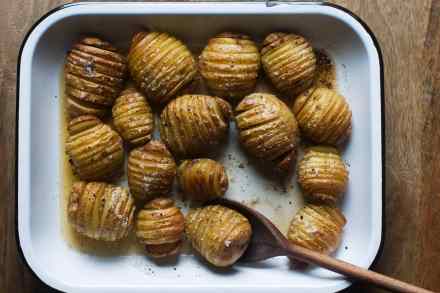
People are always disproportionately impressed by hasselback potatoes. Disproportionately because they are one of the easiest potato-based sides to make: just a few knife cuts, and tossed in some olive oil. They don’t require the par-boiling or roughing up of roast potatoes, and are less fragile than the simply boiled variety. As well as being handsome, they are buttery-soft inside, with crisp, taught skins, and crunchy bits where the knife has cut – and they have the added bonus of cutting faster than potatoes which remain in tact. The cuts increase the surface area, meaning greater crispness, which can only ever be a good thing when it comes to potatoes – and as they roast, the cuts force the potato to splay, to bloom.

The mince pie taste test: from Greggs to Fortnum & Mason

From our UK edition

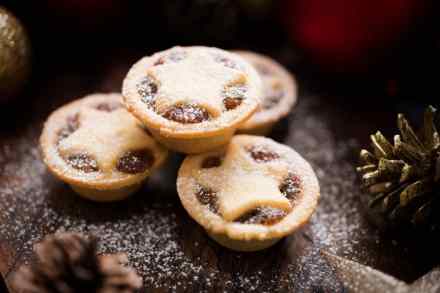
The number of different mince pies available in 2021 is staggering – more mince pies, frankly, than you could shake a stick at. And with all of them boasting about their vine-ripened fruits, their rich pastry, and the myriad boozed, how do you navigate the groaning supermarket shelves? We’ve tasted and tested until we had mincemeat coming out of our ears in order to bring you our guide to the best. Harvey Nichols Mini Traditional Rich Fruit Mince Pies, 12 for £9.95 What they say: Our decadently buttery Harvey Nichols Mince Pies are jam-packed with Christmas spices and rich fruit soaked in brandy and rum. What we say: These are a well-sized mince pie, with a good ratio of pastry to filling.

How Eggnog got its name

From our UK edition

There are all sorts of things we’re prepared to do once December rears its head, that we’d absolutely turn our noses up at in a less festive month: back to back parties, kitsch decorations, adding spices to anything that stands still long enough, engaging with relatives we normally avoid. And there are certain foods and drinks which would seem bizarre at any other time of the year, but we heartily embrace once there’s some tinsel swinging around, and chief among them is eggnog. Perhaps it is its rich, indulgent nature that means we only countenance it around Christmas, its spiced nature, or simply its surprisingly high alcohol content. Essentially a boozy, drinkable custard, eggnog is made from cream and milk, egg yolks, sugar whisked egg whites, and alcohol.

With Theo Fennell

From our UK edition

28 min listen

Theo Fennell is a jewellery maker. He has been designing and making jewellery in Fulham, London for over forty years and in 2008 founded The Original Design Partnership. On the podcast, he talks to Lara and Liv about his childhood growing up in the colonies during the last days of the British Empire. He gives his top tips for being the perfect guest (so you never have to cook again), and his love of the fish finger sandwich. For more from the world of food, subscribe to Olivia Pott's newsletter, The Take Away.

Recipe: Lancashire hotpot

From our UK edition

Nine months ago, after a decade spent in London, I moved to Lancashire. Although I’m a northerner born and bred, I’m from the northeast, between Newcastle and Sunderland, so this was new territory for me. Keen to assimilate, I was ready to get stuck into some of the dishes the area is famous for: Eccles cakes, Manchester tart and Lancashire hotpot. I was nervous. Regional dishes are integral to the character of a place, and often fiercely protected by those local to it. There are right ways and wrong ways to make them. As a newcomer, I didn’t want to get it wrong. Lancashire hotpot is a one-pot dish of lamb and potatoes, greater than the sum of its parts, and one of which its people are justifiably proud.

The art of cauliflower cheese

From our UK edition

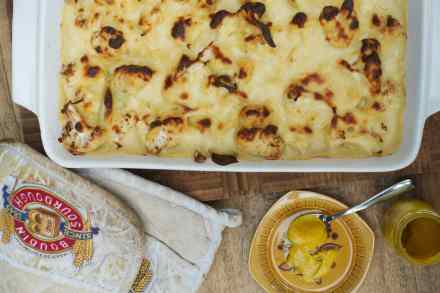
There are some dishes on which I am well aware I hold strong opinions: toast (well done but not burnt, real butter, generously spread; must be eaten hot), crumble (crunchy, not soggy, lots of it; simply must be served with custard, ideally cold), roast chicken (cooked hot and fast, with more butter than is sensible, until the skin crackles; the chicken oysters are always cook’s perks). But some catch me unawares. I don’t realise that I feel strongly about a particular recipe of foodstuff until I’m staring down the barrel of a recipe, or contemplating something that doesn’t meet my surprisingly exacting standards. I’ll find myself holding forth on the correct way to make an egg mayonnaise sandwich, or the one true way of cooking porridge.

With Dee Rettali

From our UK edition

21 min listen

Dee Rettali is an artisan baker. She founded Patisserie Organic in 1998, and afterwards the Fortitude Bakehouse in London. She is the author of Baking with Fortitude: sourdough cakes and bakes. On the podcast, she tells Lara and Liv about enjoying tinned fish, relying on the custom of cyclists in lockdown, and learning from 1970s French patisserie that baking was better without kitchen machinery.

Marble cake: why this retro bake deserves a revival

From our UK edition

Marble cakes are a simple concept, but such a satisfying bake, with that delightful reveal when you cut into the cake and expose the hidden pattern. They are made by dividing the base cake batter, and adding colouring or flavouring to one part of it, and then mottled by dolloping light and dark batter alternately into the same cake tin. They were a feature of my childhood, but feel a little passé now, which is a shame, as they’re well worth your baking energies. I think it’s time to bring them back. Now, many marble cake recipes will simply use a basic pound cake recipe, and introduce a couple of tablespoons of cocoa powder to half of the batter.

How to make Osso Bucco: a slow-cooked stew from Lombardy

From our UK edition

I must have written thousands of words about my love of stews, braises, and slow-cooked dishes, but osso bucco must be one of my longtime, unchanging favourites. Osso bucco comes from the Northern Italian region of Lombardy, and is made from braised veal shanks. It’s a cut that not only benefits from, but really needs, a low slow cook, bathing in stock and booze, until the meat is tender enough to be broken apart with the edge of a fork. The dish name literally translates as ‘hole in the bone’, which quietly points to the magic of the dish (or, you could argue, misses it entirely).