Olivia Potts

Olivia Potts

Olivia Potts is the Guild of Food Writers’ Cookery Writer of the Year 2025. She hosts The Spectator’s Table Talk podcast and writes Spectator Life's The Vintage Chef column

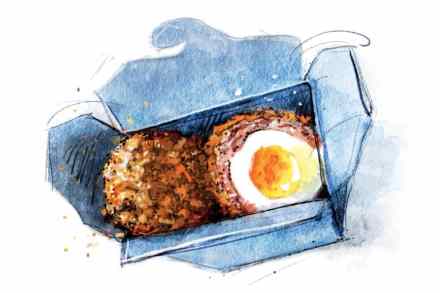
Why you should never buy scotch eggs

From our UK edition

One of the perils of being a recipe writer is that people regularly ask me why I bother making things from scratch, because ‘You can buy that in the supermarket’. Now, let’s put aside the obvious question – do they think I’m not aware of supermarkets? – and engage with the issue. I love supermarket food. There are many products which are simply better shop-bought: baked beans, mango chutney, Jaffa Cakes. Countless chefs and home cooks have tried to improve on Heinz tomato ketchup; all have failed. There are also supermarket foods which, while not necessarily better-tasting, are simply radically more convenient. Oven chips, say, or filo pastry. But consider the Victoria sponge. A shepherd’s pie. The humble crumble.

With Nell Hudson

From our UK edition

21 min listen

Nell Hudson has starred in Outlander, Victoria and the latest Texas Chainsaw Massacre film. Her debut novel, Just for Today, is out now: it’s about a group of twenty-somethings in London, having 'heady, reckless fun'. Nell speaks to Lara and Olivia about how she’s enjoying veganism and the one meat she misses, growing up on a farm, a peculiar childhood diet and the lonely eating habits of an actor.

Why your summer pudding needs a splash of elderflower

From our UK edition

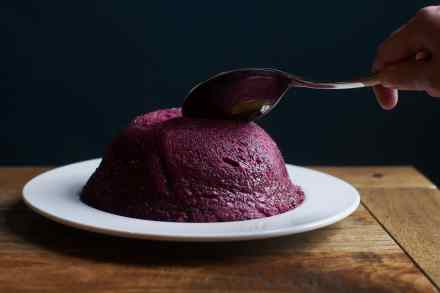
Is there a sight more pleasing, more cheering, than the vermillion dome of a summer pudding? Its vibrant colour cannot fail to raise a smile, even on dreary June days, suggestive as it is of all that is best about the British summer when it plays ball: gluts of sweet, juicy fruit, that sweet-sour tightrope that our summer crops walk so deftly, long lunches in the garden, and sticky fingers. Each time I make a summer pudding, I am convinced it won’t hold. That, after a day of soaking, the flimsy bread frame will give way, spilling forth its berry contents all over the plate. Each time I turn out the pudding, I am freshly delighted and surprised; triumphant, as if it is my structural skill rather than berry juices that is to be congratulated.

Tarte au citron: serve up a slice of sunshine

From our UK edition

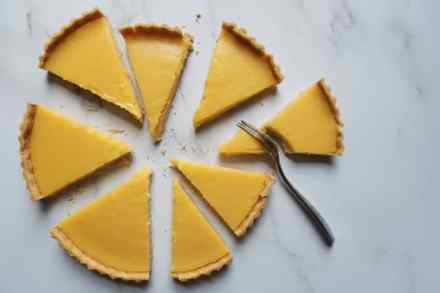
There is something inherently uplifting about a lemon. Even in literal or figurative dark times, lemons shine bright – little bumpy orbs of joy that cry out from the fruit bowl or the greengrocers to be turned into something mouth-puckering or, once paired with enough sugar, that perfect balance of sweet-sour. Perhaps I am overly sentimental, but lemons always strike me as cheering, and full of promise. Lemon curd was one of the first things I learnt to make when I began cooking, but I’ve held off turning it into a tart for a while, unable to work out how to create the exact pudding I wanted to eat. For a long time, I have wanted to make this perfect lemon tart, but have been thwarted in my attempts.

With Nuno Mendes

From our UK edition

29 min listen

Born in Lisbon, Portugal. Nuno Mendes grew up on a farm which inspired a passion and understanding for food. He attended the California Culinary Academy in San Francisco but after over a decade in North America, he decided he wanted to return to Europe. Moving to London, Nuno founded the cult domestic pop-up known as The Loft Project and later went on to take over the restaurant at the Chiltern Firehouse, and his latest venture Lisboeta has already made the Estrella Damm awards shortlist. On the podcast, Nuno talks about his Portuguese roots, his love of Japanese cooking and how he could see London's gastronomic revolution coming.

The sheer delight of Cherries Jubilee

From our UK edition

Cherries Jubilee is a dish with real heritage. Perhaps unsurprisingly, given its name, it was created to celebrate a jubilee: it is thought to have been created by Escoffier for Queen Victoria’s golden jubilee celebration in 1897. It consists of cherries cooked in flaming brandy, and then served warm over vanilla ice cream, although in the original dish it was even more pared down, lacking the ice cream element. The dish is flambéd, which means that the alcohol from the kirsch is ignited with an open flame, and cooked off quickly.

The ingredient that guarantees the flakiest Eccles cakes

From our UK edition

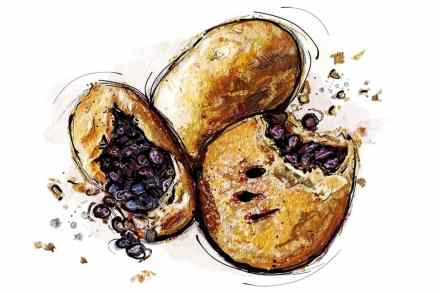
When I first made Eccles cakes, I’m not sure I really knew where Eccles was. I certainly didn’t think I’d end up living there a few years later. The only Eccles cakes I’d encountered were at train station coffee kiosks, or at London’s St John restaurant, where they are a permanent fixture on the menu. Don’t tell my neighbours. In Eccles, the cakes are ubiquitous. They’re such a part of the regional identity that as far back as 1838, a guide to British railways journey stated simply: ‘This place is famous for its cakes.’ My kind of place. And today, whatever the season, Eccles cakes still line the entrances to the local supermarkets. Eccles is a small town in Greater Manchester, formerly part of the country of Lancashire.

With Tommy Banks

From our UK edition

24 min listen

Tommy Banks is the youngest ever UK Michelin-starred chef, awarded in 2013 when he was aged 24, and is the owner of the restaurant The Black Swan which Tripadvisor named the best restaurant in the world.On the podcast, Tommy talks to Lara and Liv about how he turned to food after his dreams of being a professional cricketer were dashed, his struggles with imposter syndrome, and his new canned wine business Banks Brothers.For more recipes and recommendations, sign up to The Spectator’s free monthly food and drink email, The Take Away, at spectator.

The secret ingredient that transforms banoffee pie

From our UK edition

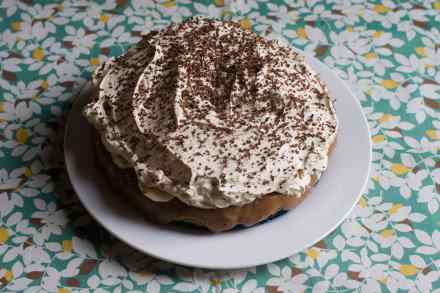
I have been labouring under a misapprehension for some time, perhaps my whole life. I thought that the ‘offe’ in ‘banoffee pie’ was a reference to the thick, gooey toffee layer that sits between the biscuit base and the cream. But no, the ‘offe’ has nothing to do with what is, in any event, really a caramel, but the coffee flavour that should be folded through the cream topping. I’m not sure I’ve ever had a banoffee pie that features the sort-of-eponymous coffee, and I am relieved to discover that wide swathes of the internet (including the fallible wikipedia) has made the same mistake.

Why I’m wild about Waldorf salad

From our UK edition

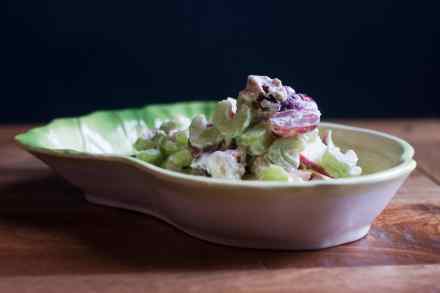
You don’t see Waldorf salad so much nowadays. It’s a simple dish: raw celery, apple, grapes and walnuts, tossed in a mayonnaise-based dressing. Although you might still find it packaged in the bigger supermarkets, it’s fallen off dinner tables and restaurant menus alike. We wrinkle our noses at the prospect of combining fresh fruit and mayonnaise: the combination always makes me mentally place the Waldorf salad in the 70s, alongside big platters of dressed salmon, covered in wafer-thin cucumber scales, and a host of other mayonnaise-coated, tricky-to-identify bowls purporting to be salads, possibly involving tinned mandarin oranges.

With Ameer Kotecha

From our UK edition

20 min listen

Ameer Kotecha is a British diplomat, pop-up chef and food writer. His first cookbook the Platinum Jubilee Cookbook, in which he chronicles 70 recipes related to the Royals, Diplomacy and the Commonwealth comes out on April 28th. He has also launched alongside Fortnum & Mason's the Platinum Pudding competition, which hopes to discover the next best British dessert. On the podcast, Ameer talks to Lara and Liv about how his childhood was the perfect blend of British food with Indian influences, how he ran a school-wide campaign for seconds and how in all of his years as a diplomat, he has never been offered a Ferrero Rocher. For more recipes and recommendations, sign up to The Spectator’s free monthly food and drink email, The Take Away, at spectator.

The delicious silliness of pink lemonade jelly

From our UK edition

The onset of summer makes me feel giddy. And it seems from those piling into beer gardens and loading up their hampers for picnics in parks, I’m not alone. Perhaps this is because it is of course too early for summer, I’m not ready for it. And to be fair, it’s barely arrived. Spring is still stamping its feet with April showers, and shaking its blossom filled trees to remind us of its presence. But those hot hazy golden days are creeping in, even on bank holiday weekends, the traditional domain of miserable, dreary weather, which we bravely brazen out, so determined are we to make the most of the one day vacation from work. No need this year: sunshine and giddiness prevails. Such giddiness calls for something silly, something bright and zippy, and maybe a bit childish.

How to use up your spare hot cross buns

From our UK edition

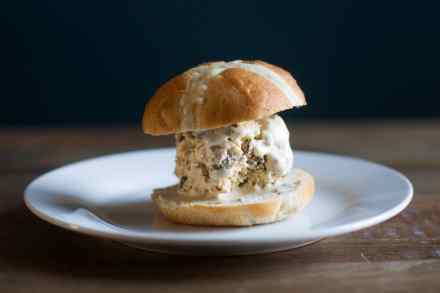
It always feels criminal to throw away hot cross buns. Hot cross buns are marked by their scarcity in my house: no sooner do they cross the threshold than they are pounced upon and demolished. Assuming that you are capable of more restraint than me, this recipe deals with the unlikely scenario of how to use up those leftover buns. The ravenous will be relieved to hear that only two buns are required. And if you have more willpower than I do, you can even hold back a couple more hot cross buns and serve the ice cream between two halves of a bun, as a particularly Eastery ice cream sandwich. This is a bit of a cross between traditional brown bread ice cream and my a spice-infused ice cream. It has a custard base, infused with cinnamon and nutmeg.

The secret to baking the fluffiest hot cross buns

From our UK edition

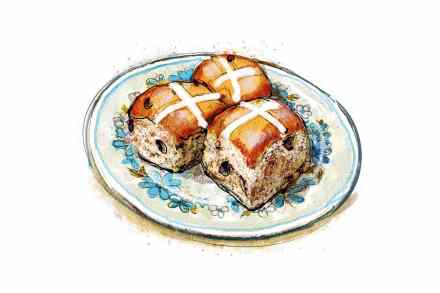
What makes a hot cross bun a hot cross bun? Is it in the bun: the spice, the dried fruit and citrus peel, or even the type of dough? Is it the way you eat it – hot! – sliced in half, toasted and dripping with butter? Or is it the cross itself? Hot cross bun purists will tell you that it’s all of the above, and that any deviation from the classic is, well, deviant. And more-over, that the buns should be eaten only on Good Friday, never before or after. But if recent examples are anything to go by, the rules are very loose. Each year, as soon as Christmas is over, unorthodox hot cross buns line our supermarket shelves and cause opprobrium among the sticklers.

With Michael Heath

From our UK edition

35 min listen

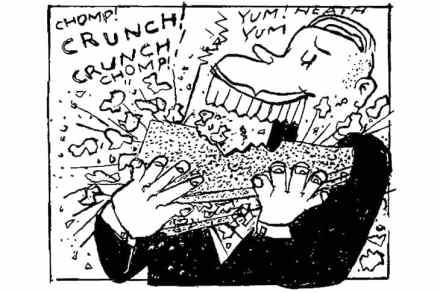
Michael Heath is a British strip cartoonist and illustrator and has been working nonstop since the 1950s. He has been cartoon editor of The Spectator since 1991. On the podcast, he talks to Lara and Liv about carrying German bombs into the local pub like milk bottles during the second world war, being given chewing gum by American soldiers, and how during the heyday of Soho, the focus was a lot more on the drinking than the eating.

Whisky syrup sponge: the perfect pick-me-up

From our UK edition

Bringing something golden, sweet and uplifting into your kitchen and life is exactly what is required at this time of year. And it doesn’t get more golden, sweet or uplifting than a syrup sponge. A syrup sponge is a steamed pudding, laced with golden syrup. The pudding itself is made by pouring a cake-style batter into a basin or bowl, sealing it with paper and foil, and then placing it in a half-filled pan of water, where it is gently cooked by the steam, until the sponge is light and risen. Golden syrup is an inverse sugar, which means it is created in the process of refining sugar, or after a sugar solution has been treated with an acid. Its flavour is distinctive: lighter than honey, like the palest of caramels, with a clean sweetness which tastes almost metallic.

Christopher Howse, Richard Florida and Olivia Potts

From our UK edition

28 min listen

On this week's episode, we'll hear from Christopher Howse on the destruction of Ukrainian churches. (00:50)Next, Richard Florida on how Covid has changed London for the better. (13:52)And finally, Olivia Potts on her love of the crisp sandwich. (23:56)Produced and presented by Sam HolmesSubscribe to The Spectator today and get a £20 Amazon gift voucher.

Rhubarb and custard cheesecake: a true romance of flavours

From our UK edition

Sometimes, when I am planning a pudding, it can feel like there is a hitch in my brain, a little sticky spot that I catch on, and have to release myself from before I can move on. That hitch, that sticky spot, is rhubarb and custard. I know that there are other pudding bases, sweet dishes that are more original, more popular. I know that there exist other marvellous fruits that deserve the spotlight, that there are chocolate concoctions that will ooze and impress, bitter caramels that will shock and delight. But in order to get to them, I have to move past my first instinct which is always: rhubarb and custard. It’s not simply that it is a default combination in my mind.

Crunch time: how to make the perfect crisp sandwich

From our UK edition

A crisp sandwich is a private and personal endeavour. In my experience (and I have considerable experience in this particular area) it is usually eaten alone in the kitchen, often over the sink. It is deliberately unsophisticated, the ultimate fast food: simple, salty, satisfying. It is a snack that speaks of the person you are, rather than the person you want to be. I firmly believe that no food should be a guilty pleasure, but I’ll concede that crisps sandwiched between two heavily buttered slices of bread does not scream nutritional balance.

With Lance Forman

From our UK edition

22 min listen

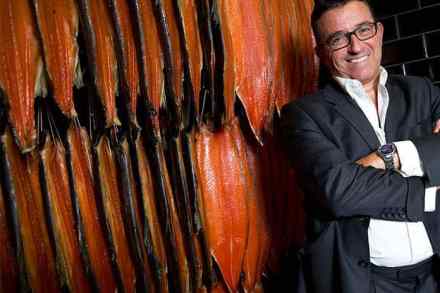
Lance Forman is the owner of H. Forman & Son, Britain's leading salmon smokers and author of Forman's Games. He was elected a Brexit Party MEP for London in the 2019 European election but quit the party to endorse the Conservatives.On the podcast, Lance reflects on his childhood in a traditional Jewish upbringing, eating smoked salmon sandwiches every day for his packed lunch. Lance brings in some of the foods made by his gourmet food delivery company, Forman & Field. This included smoked salmon blinis with cream cheese and their latest creation, a Victoria sponge ahead of the Queen's Jubilee. Come to the East End to learn all about curing and smoking salmon with Lance Forman of H. Forman & Son, suppliers of our celebrated Spectator Winemaker Lunches.