Nick Tyrone

Nick Tyrone

Nick Tyrone is the research director of the Jobs Foundation. He is also the author of several books including Politics is Murder.

Where has Keir Starmer’s shadow cabinet gone?

From our UK edition

Since the general election, many members of the cabinet besides the prime minister have been prevalent in the media. Rishi Sunak has become an out and out superstar, even occasionally lauded by portions of the centre-left media. Matt Hancock, for good or ill, has become a constant presence throughout the crisis. Yet it’s amazing how little impact the shadow cabinet, other than Starmer, has managed to make during the same period. This could be part of a deliberate strategy by Labour – aimed at establishing Starmer’s ‘new leadership’ and worrying about the rest later – but sooner or later, his lieutenants are going to have to start shining. Otherwise, they will all be defined by the Tories in the worst possible terms when the time is right.

What does Boris Johnson’s Tory party stand for?

From our UK edition

The main thing to say about Boris Johnson’s speech at this year’s online Tory conference is that it captures the present mood of the Conservative party almost perfectly. The problem with that is, that mood is one of confusion and soul searching about what the Conservative party actually exists to do. For a start, there is a need to address the topic of Boris’s missing mojo. This has been talked about to death, and so I will only say that complaints that he wasn’t at his shiny best are a little unfair. He didn’t have a crowd to feed off of today, which in and of itself took the speech’s energy levels down several notches. Also, he’s the prime minister at a time of national crisis.

Are all political parties destined to fail?

From our UK edition

We seem to be entering another era of political party expansion. There’s Laurence Fox’s new party, not to mention the quiet, faint resurgence of the Brexit Party that is likely to become louder soon enough. The peculiar thing about this is that all political parties are fairly terrible, and most of the great British public not only knows that but uses this knowledge as the backdrop to every political calculation they will make throughout their lives. I myself have been a member of a political party; I was a Lib Dem for about a decade. This was an odd move as I am far from a joiner of anything. Yet I’m a liberal, and as the party seemed to be going in a direction I could relate to, I hopped on board.

Boris’s new Brexit strategy? Agree to disagree

From our UK edition

The UK is set to offer the EU a three-year transition period on fishing as a means of setting aside the issue as a block to a potential deal. What to do about fish has been a major impediment in the negotiations throughout the post-referendum period. And it appears that this government wants to repeat what has happened whenever a major Brexit-related impasse has been hit in the past — just find a way to kick the whole thing into the long grass.

Laurence Fox’s party is doomed to fail

From our UK edition

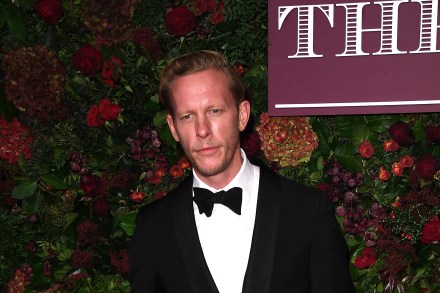
It was only a matter of time, in retrospect. There is a new political party in town. This one is called Reclaim and is the brainchild of the actor and singer Laurence Fox. I’m sure all of you know who Fox is already, but if not, here’s a refresher: earlier this year, Fox went on BBC Question Time. While on the programme he said some fairly innocuous things that for some strange reason blew up into a new battleground in the culture wars. Since then, Fox has become something of a hero to a certain segment of social media while being demonised by another. He’s now decided to start a ‘new political movement which promises to make our future a shared endeavour, not a divisive one’.

Lib Dems are foolish to ditch their pro-EU commitment

From our UK edition

The Liberal Democrats are putting a motion to their virtual conference this weekend to end the party’s commitment to trying to rejoin the EU. This will annoy many of their activists. It will convince some pro-Europeans that the time to rip up their membership cards is now (and, for many others, to feel smug about having always doubted the party). So what's the upside? There isn't one. Instead, this is another in a long line of useless moves by the party, built on trying to get people who will never like the Lib Dems to change their minds. To make matters worse, the motion is predictably wishy washy in what it sets out. It commits the party to 'keep all options open' in regard to Britain’s relationship with the EU.

The Tories have missed Starmer’s Achilles heel

From our UK edition

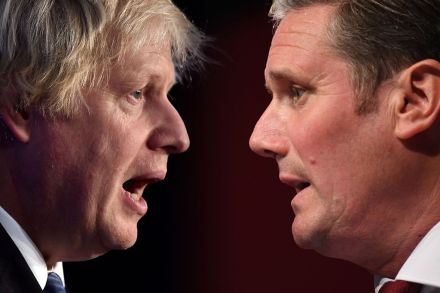
The main Tory attack on Starmer since he became leader of the Labour party is that he is 'too much of a lawyer'; dull and metropolitan. The problem with this line is that it complements the narrative Starmer is trying to build himself, namely that he is competent while Boris is not. As such, it is worse than ineffective as a strategy — it is actually counterproductive. What is strangest about the continued use of the lawyer strategy is that there is an alternative attack on Starmer staring the Tories in the face, one they have not yet touched. When Sir Keir ran to be Jeremy Corbyn’s successor, he rolled out ten pledges that at the time he said would define his leadership of the Labour party.

A second lockdown would be a disaster for Boris

From our UK edition

Could Britain be heading for a second lockdown? Boris Johnson says his government is doing 'everything in our power' to prevent one, but failed to rule it out if coronavirus cases don't stop rising. Yet even if the Prime Minister does end up ordering Britain back indoors, it's worth asking whether he has the political capital to carry out such an order. Amidst a stormy few weeks in which the PM has alienated both wings of his own party, angered the frontrunner to become the next US president and been blasted by most of the press, I'm not convinced. When the first lockdown happened in March, there was a lot of goodwill throughout the country for both the idea of locking down and the government’s handling of the crisis.

Farage could still come back to haunt the Tories on Brexit

From our UK edition

Some Tory MPs are worried about a strategy that the party is apparently seriously considering adopting at the next general election. It is sometimes referred to as the ‘30-10 strategy’. The ‘30’ denotes the solid, unshakable Tory base; people who will supposedly vote for the Conservatives no matter what. The ‘10’ represents the Brexit add-ons; Ukip and Labour voters who went Tory in December 2019 because they wanted to ‘get Brexit done’. The ‘30’ can be taken for granted by nature, leading to everything being done to keep the Brexiteer ‘10’ onside.

Why is the UK breaking international law now?

From our UK edition

If the UK government was just going to ignore international law, why did we bother leaving the EU at all? Before anyone gets too jumpy, allow me to explain. If you look at the Brussels laws the UK had to accept during its time as a member state, you’ll find that the government was almost always its own worst enemy. There was a tendency to ‘gold plate’ EU directives, meaning we would take the most extreme interpretation of the rules in question. Most EU directives have annexes that allow member states to play with any restrictions. While many member states shaped the rules around their needs, Britain had a tendency to apply the rules to their limits.

Ripping up the Withdrawal Agreement is a big mistake

From our UK edition

Like most things Brexit related, it depends on who you believe. The EU is concerned over the announcement that the government will be introducing legislation that could override portions of the Withdrawal Agreement, in particular the Northern Ireland Protocol. The UK government insists that the changes they wish to introduce are 'limited and reasonable' and will not violate the treaty. I truly hope it is our government which is right here. If Boris really is planning to violate the Withdrawal Agreement, signed with the EU earlier this year, that would be a grave error. The logic of threatening the European Union with legislation that changes portions of the Withdrawal Agreement could be to send a message.

Extinction Rebellion’s newspaper stunt has backfired badly

From our UK edition

I believe that halting and if we can, reversing man-made climate change is one of the most important challenges facing humankind in the 21st century. How we manage to decarbonise our economy while continuing to prosper will be a key element of existence in the decades to come. Yet I don’t think Extinction Rebellion is a good addition to this cause. In fact, I believe the group is now doing more harm than good. My mind on this was made up over the weekend, when XR protestors blockaded several newspaper printworks, one in Hertfordshire and one in Knowsley, stopping the distribution of the Sun, the Times, the Daily Telegraph and the Daily Mail.

Is Boris pushing for a socialist Brexit?

From our UK edition

One of the main things that's holding up an UK-EU trade deal is the demand that the UK sticks to current state aid rules. Boris and Frost are refusing to budge. They want the freedom to do whatever they wish with state aid in post-Brexit Britain. Restrictions around state aid spending are in place to ensure governments do not prop up failing industries or distort the free market by handing out public money to troubled sectors – either halting their collapse or giving them an artificial competitive advantage.  What was the point of defeating Corbyn only to ape Corbynism in such a vital way? When you get rid of state aid rules, horrible things can happen, particularly from a centre-right perspective.

Starmer is right to keep quiet on what he’d do in Downing Street

From our UK edition

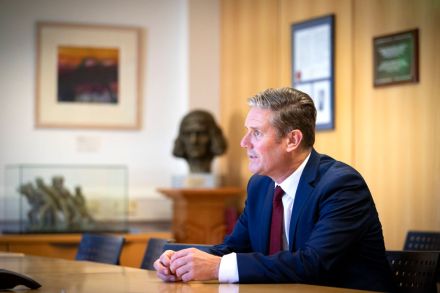
Since becoming Labour leader, Keir Starmer has tried to establish in as many voter’s minds as possible the idea that his party has changed irrevocably from the Corbyn era. This has mostly taken the form of responding to what the government does by trying to label it as blundering, contrasted against Starmer who is alternatively painted as a paragon of competence. What has been notably missing though is any real idea of what a Labour government under Starmer might actually do in terms of policy. The truth is, this doesn’t actually matter, at least for the time being. The Labour leader not only has the space to continue being vague on policy, he should carry on doing so.

Ed Davey can make the Lib Dems liberal again

From our UK edition

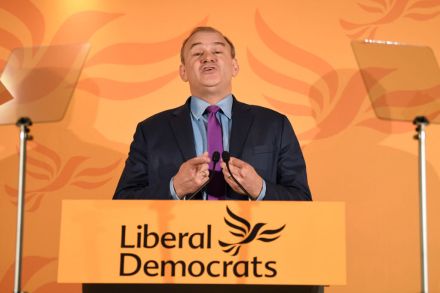
It seems as though Layla Moran's offer to make the Lib Dems 'more radical than Labour' has been decisively rejected. Her rival Ed Davey won over 60 per cent of the votes cast and is the party's new leader after an interminable and dire leadership contest. After the result was announced, Davey got up and gave a short, remarkably good speech. It was humble and to the point. The Lib Dems have lost touch with most voters, he said, and he was going to make it his mission to try and win back as many as he could by getting in touch with their true concerns. His words immediately reminded me of the way Keir Starmer had won the leadership of his party in April. Has Ed Davey pulled the same trick here?

Why Keir Starmer no longer needs to fear the left of his party

From our UK edition

John McDonnell, Corbyn’s right hand man for four and a half years, was full of praise when asked about the official opposition’s handling of the Covid crisis. ‘Keir’s got this exactly right’ the ex-shadow chancellor told John Pienaar. But many of Corbyn’s loyal supporters didn’t agree; sparking an internal Labour argument between the party’s warring sides. It is tempting to point to the scrap and claim that it is yet more evidence of the difficulties Starmer faces to get Labour winning again, as the party’s internal battles never seem to end and in fact, are now being fought out between ever smaller factions.

Keir Starmer’s potential Brexit playbook

From our UK edition

Throughout the last four years, you could be forgiven for thinking that everyone in Britain has been extremely passionate about Brexit one way or another. The truth is, most people are sick to death of the whole debate. This was the reason ‘Get Brexit Done’ was such an effective slogan; most voters wanted the topic laid to rest. It is this general apathy that I believe is informing Keir Starmer’s approach to Brexit as Labour leader, combined with the knowledge that while most people are sick of Brexit, we are about to enter a whole new phase of it that can’t be ignored. Passionate Remainers complain that Starmer hasn’t been anti-Brexit enough since he became leader – where was the plea to extend the transition period?

Keir Starmer would be wise to avoid a Lib Dem alliance

From our UK edition

The myth that is developing goes like this: Labour can’t win enough seats to form a majority government at the next election, however much the Tories may tank. They will need the SNP and almost certainly the Liberal Democrats to rule. Therefore, Labour needs to stand down in English seats where the Lib Dems have a clear shot at the Conservative party. There are several problems with this myth, but one that isn’t being talked about: the price the Lib Dems would extract for bringing a Labour minority to power would be steep, and not worth it from a Labour perspective. If Labour leader Keir Starmer is wise, this must inform Labour’s strategy in Lib-Con seats at the next election.

Starmer is falling into Boris’s trap on school reopenings

From our UK edition

The National Education Union has issued 200 safety demands they want met before schools are to fully reopen in September. The response from many Tory MPs to this has been to describe the list as a ‘wreckers’ charter’, designed to make a return to the classroom this autumn practically impossible. Boris Johnson, meanwhile, is establishing getting kids back to school full-time once again in September as one of the guiding missions of his premiership. As the prime minister said, ‘now that we know enough to reopen schools to all pupils safely, we have a moral duty to do so.’ This is a wise move by Boris Johnson. Getting the classrooms full again is a big opportunity with little political risk.

Are the Lib Dems finished?

From our UK edition

16 min listen

The Liberal Democrat leadership race will finally come to an end this month but, after December's crushing election defeat, is the party over too? In a special Saturday edition of Coffee House Shots, Gus Carter speaks to Katy Balls and Nick Tyrone, author of Politics is Murder, about how a new leader could pull the Lib Dems back from the brink of extinction.