Nick Tyrone

Nick Tyrone

Nick Tyrone is the research director of the Jobs Foundation. He is also the author of several books including Politics is Murder.

Ideological purity is a grave threat to the Tory party

From our UK edition

One of the main reasons why the centre-right has been in the political ascendancy across the western world over the past decade has been the behaviour of the left. In Britain, Jeremy Corbyn became Labour leader and brought with him a distain for consorting with anyone who wasn’t ideologically pure. Labour only wanted ‘good voters’ and told everyone else to ‘sod off’ (or stronger words to that effect) and vote for the Tories. In 2019, a lot of voters did just that. The Tories and the British centre-right generally have been able to capitalise on this by doing the opposite. They welcomed voters, whether they were socially conservative or socially liberal; or statist or passionate free marketeers.

Why Boris should go for no deal

From our UK edition

Boris Johnson has negotiated his way into a corner. With the naïve view that the EU would eventually buckle and accede to the UK’s desires, we are now just over five weeks away from the end of the transition period. The choices in front of Boris are to either cave in to the EU’s demands in order to sign a weak, thin, bad deal – or walk away without a deal. I think he should do the latter. Of course, there are obvious advantages for the Prime Minister in signing a deal (even a bad one) with the EU at this stage. It would cause slightly less disruption than no deal. And it would leave the two negotiating sides with some goodwill left. A deal would also put Labour in a tight spot.

Why is Sadiq Khan talking London down?

From our UK edition

Sadiq Khan's powers as London mayor are relatively limited, but part of his remit is to act as a salesman for London. He is there to talk up the virtues of one of the greatest cities in the world. It was surprising then to see him concede at the weekend that we have to 'accept the fact that there is potentially an existential threat to central London as we know it.' This surely is the opposite of what the mayor of London should be saying at this moment in time. It also demonstrates why Sadiq Khan deserves to lose the election in May. Sadiq Khan already lost my vote months ago when he announced that the next mayoral contest would be a referendum on rent control.

Why Boris, not Rishi, will lead the Tories into the next election

From our UK edition

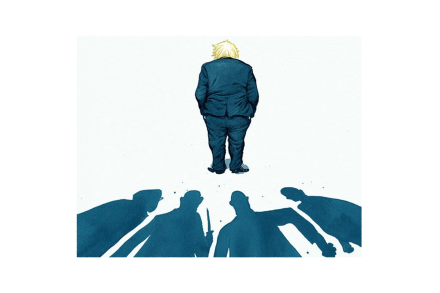
Some Tory MPs are hoping that Dominic Cummings’ departure from Downing Street will bring with it a vital lift to Boris Johnson’s premiership. Other Tory MPs have made up their minds about Boris already. Either they think he was always a flawed character whose only use was winning them the 2019 general election, a job long since passed; or they have been turned off by any number of things that have transpired in 2020. Basically, some Conservative MPs will be disappointed in 2021 when Boris turns out to be Boris; others are past caring. In spite of this, it seems almost certain that Boris Johnson remains in Number 10 for the next three-and-a-half years and contests the 2024 general election as leader of the Conservative party.

Keir Starmer can never allow Jeremy Corbyn to return

From our UK edition

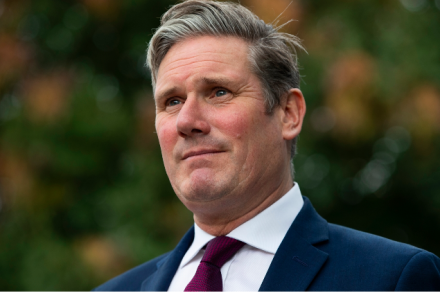
Keir Starmer had no control over whether to end the suspension of Jeremy Corbyn after only 19 days. Yet it was up to him, as party leader, whether or not to restore the party whip to the former leader. This choice represented another big moment for Starmer. He knew he had to do something before PMQs today, lest he hand Boris Johnson a PR coup. Starmer's decision not to give Corbyn back the whip is surely the right one. But for Starmer, here's the bad news: this drama is far from over. Starmer is now in a position where refusing to give the whip back to his predecessor as Labour leader will always be deeply within his political interests.

Why has England banned worship?

From our UK edition

Over the weekend, more than a hundred religious figures from across the different faiths launched a legal challenge against the ban on communal worship in England. They claim the Covid restrictions are a violation of their basic human right to freedom of religious expression. Leaders from the Anglican and Catholic churches, as well as the Muslim Council of Britain, are in agreement on how unfair they view the ban. It's difficult to think of a cogent argument against their position.  For background, I am an atheist. Raised in a Catholic family, I never truly believed, even as a small child. Atheism has been something that has been with me throughout my whole life. Yet the argument that those of faith should be allowed the freedom of communal worship is compelling.

A (partial) defence of Dominic Cummings

From our UK edition

As a liberal remainer type, I’m not sad to see Dominic Cummings leave Number 10. I fundamentally disagreed with his agenda, from Brexit to civil service reform to a more active state aid programme. Yet I cannot chime in with those saying Cummings was a failure, an ad man who blustered his way into the heart of government due to Boris Johnson’s weakmindedness. Why? Because it simply isn't true. And those Labour supporters who are speaking of Cummings' exit as one of the few highlights of this dismal year have revealed an uncomfortable truth: they wish they had someone like him on their side. This is nowhere clearer than in the criticism of Cummings for his campaigning nous.

With Dominic Cummings gone, Boris can reinvent himself

From our UK edition

Dominic Cummings's departure has been described as a big loss to Boris Johnson. There is no doubt that his top advisor played a significant role in the Tories' thumping election win a year ago. But his time in Downing Street has been less successful. So could Cummings' departure actually help Boris? His Christmas resignation – which Cummings insists is in keeping with the pledge made at the start of this year – is a chance for Boris Johnson to reinvent himself. It could also ultimately help save his flagging premiership, one dragged down by the Covid crisis and the continuing impossibility of ending Brexit in a satisfactory manner.

The Lee Cain debacle is a key moment in Boris’s leadership

From our UK edition

Lee Cain's departure raises an important question: what is the point of Boris Johnson's legion of Spads? The government has never been so stuffed with advisors, and yet it has also rarely been so chaotic.  We live in an era in which the special advisor has more control over events than ever before; no Spad in Downing Street has ever had the power of Dominic Cummings. The Barnard Castle debacle – which surely would have resulted in the dismissal of anyone else – showed this all too clearly. But this rival power base has hindered, rather than helped, Boris Johnson. There is, of course, nothing new about the Downing Street advisor. Thatcher had Oliver Letwin and David Willets in her policy unit.

Keir Starmer should welcome a Labour party split

From our UK edition

‘A split party will be doomed to defeat,’ says Len McCluskey, with a hint of threat. The left of Labour are sabre rattling behind the scenes and starting to go public; talk of them actually leaving the party is becoming louder. They are annoyed at Jeremy Corbyn’s ongoing suspension more than anything, but there are other gripes. They are irritated at Keir Starmer avoiding the culture wars as much as he can instead of taking their side without question. They are angered by the fact that Biden’s victory has robbed them of the ‘centrists can’t win’ narrative they were hoping to promote. But if the Labour party does split as a result, it could prove to be a blessing rather than a curse for Starmer in his bid to become prime minister.

Labour risks learning the wrong lesson from Biden’s victory

From our UK edition

‘One election victory does not mean that work is now finished for the Democrats; for us in the Labour party, it is only just beginning,’ Keir Starmer wrote today in the Guardian. Amongst his comrades on the centre-left, he seems almost alone in understanding this point. Biden’s victory was greeted by the British centre-left on social media as the definitive end of an era. Brexit is ‘over’ somehow, or at least, no-deal Brexit has become impossible. The Tories are now supposedly on the brink of being pushed from office by a moderate centre-left wave. Except of course, Starmer is correct – and Labour is in real danger of learning the wrong lessons from this US election, as their American cousins in the Democratic party already seem to have done.

Boris Johnson is the big winner in this presidential election

From our UK edition

The US presidential election currently sits on a knife’s edge. It could go either way, and if you were in Trump’s camp right now, you might be justified in feeling optimistic. It wasn’t supposed to be this way – the polls yesterday had Biden up nine points nationally, and ahead in almost every major battleground state. But it could have real repercussions for British politics. When the dust settles – regardless of whether Biden or Trump is declared the eventual winner – this result should be very good news for Boris Johnson. Not because of Brexit or US-UK relations, but because of something much more basic and long term. First of all, let’s address the polling issue.

Farage’s Reform party won’t succeed – but may end Boris’ time as PM

From our UK edition

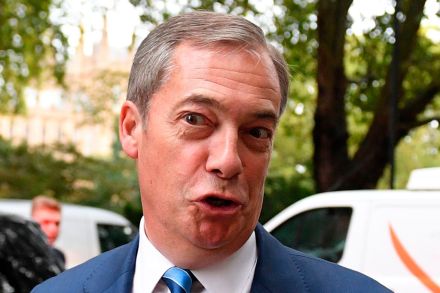
Nigel Farage has decided to soft reboot the Brexit party. This 'new' party will be anti-lockdown, anti-quango, anti-House of Lords, with a lot of talk about illegal immigration along the way. Particularly in an age where populism appears to be on the wane, the Reform party will only appeal to a niche audience. Will it get more than eight per cent in the polls? It's hard to see how. The party will struggle to manage to scale the boundaries the voting system pits against small parties and win a seat in the House Commons. Even at local level, they won't do all that well. But as Ukip did, Reform might just change everything in British politics. Passionate anti-lockdown sentiment is only felt by a small minority.

Here’s why the Covid ‘new normal’ won’t last

From our UK edition

Is the ‘new normal’ here to stay? Many people assume so. Working from home will become the default, people will go on fewer holidays and business trips will become a thing of the past. I’m not convinced. In fact, while the second wave means the current restrictions won’t vanish overnight, it seems almost certain that, when Covid is finally a thing of the past, life will return to the ‘old’ pre-pandemic normal. People will be desperate to go out as much as they can, see people in person more and crave the social interactions they are currently missing out on. Don’t believe me? Remember at the start of lockdown the popularity of Zoom quizzes and drinks. Whatever happened to those?

Is it time for Labour to give up on the Union?

From our UK edition

Is Labour finished in Scotland? There has been an assumption by many, particularly those in England, that the SNP behemoth will start to roll back at some stage; being in government in Holyrood will inevitably cause political gravity to take hold. Yet the SNP’s political humbling seems more remote than ever before, with a large gain in Westminster seats in December combining with huge polling leads for both themselves in Holyrood elections and for their side of the independence question itself. I believe Labour needs to strategically give up on Scotland – at least for now – if it wants to govern after the next general election and indeed, give themselves any prayer of winning big again in Scotland anytime in the future.

Boris Johnson is fighting on too many fronts

From our UK edition

When Boris ran to become leader of the Conservative party – and again when he campaigned in December’s general election – he was pitched by his supporters as a unifier. Boris was going to get Brexit done and then lead the country into a new era – the spats of the previous half a decade consigned to history’s dustbin. Unfortunately for Boris and indeed everyone else in Britain, that’s not the way things have worked out. Right from the start, Johnson’s premiership has been marked by conflict. Only a few weeks in, he removed the whip from a host of Tory MPs, including the former Chancellor of the Exchequer Philip Hammond. Although many of these MPs eventually got the whip back, the tenor of the times was set.

Diane Abbott has revealed Labour’s biggest political problem

From our UK edition

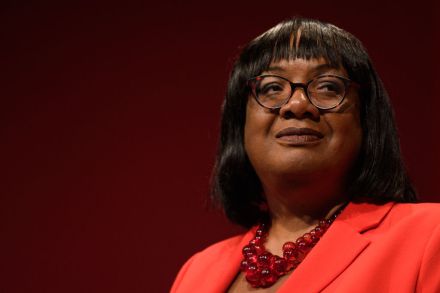
Peter Mandelson said just before the 2001 general election, that ‘no politician would declare that they were “against” ambition’. And yet, that’s what Diane Abbott did on Newsnight yesterday evening. In an interview with Lewis Goodall, she spoke about Keir Starmer and the time she shared with him in Corbyn’s shadow cabinet. Asked about his evident desire to become Labour leader, Abbott replied, ‘Keir Starmer’s ambition is fairly apparent’, with ‘ambition’ said in an accusatory way, as if having such a thing was an obviously bad thing. ‘I blame his mother for calling him Keir’, the former shadow home secretary added at another point in the interview.

Boris isn’t bluffing about a no-deal Brexit

From our UK edition

Since Boris's thumping general election win in December, I've lost count of the number of people – both Remainers and Leavers – who tell me that no deal just won't happen. Boris needs a deal, they insist, and the EU will bend a little here and there to give the Prime Minister a ladder to climbdown. Yet I've always been convinced that no deal is far and away the most likely outcome of the EU negotiations in 2020. Today's warning from the PM – in which he talks down the prospects of a deal – make me even more sure this is the case. Why am I convinced no deal is so likely? Firstly, the EU’s position in all of this continues to be misunderstood by many in Britain.

Starmer’s circuit breaker is smart politics

From our UK edition

Keir Starmer's strategy has always been to wait cautiously for events to unfold, rarely playing too bold a move. When he does act, it is usually after a long period of hibernation.  Starmer sat in Corbyn’s shadow cabinet while many Labour MPs who felt roughly the same way he did about Corbyn’s project either rebelled from the backbenches or even left the party altogether. He ran for leader on a Corbyn-continuity platform, even though it’s fairly clear by now that this isn’t what he truly believes in, simply because it was the safest option. Since becoming leader of the opposition, he has avoided making policy announcements and has instead waited to pick off the government when it has been seen to make a mistake.

Keir Starmer needs a Covid plan of his own

From our UK edition

It’s clear now that Covid is going to be with us for the long haul. Most sane voices are talking about the remainder of the crisis in terms of years, not months. Yet the government has still not been able to take itself out of short-term mode. They seem to be holding out for a vaccine miracle. Stranger still, the opposition is still in short-term mode on Covid as well. I don’t think this can continue without becoming a large problem for Starmer, both internally within Labour and also in the polls. Starmer’s plan when it comes to the crisis so far is simple to explain. He wants to support the government wherever possible to demonstrate two things.