Nick Cohen

Nick Cohen

Nick Cohen is the author of What's Left and You Can't Read This Book.

Lord Justice Leveson and the danger of the great and the good

From our UK edition

The Leveson Inquiry has all the makings of an establishment disaster. In saying that, I am not defending the behaviour of the tabloids. I find it contemptible that no story in the 'hackgate' scandal can be justified on public interest grounds. Not once did James and Rupert Murdoch hirelings break the law to expose an abuse of power, or the corruption of an official, or corporate wrongdoing. It is a measure of their degradation that they did not think they needed to act in their own self-interest by covering their backs with a few reputable investigations. Although there is no jurisdiction in the world that allows journalists to hack phones, the jury system of the Anglo-Saxon democracies would have protected reporters who had been pursuing worthwhile stories.

When the centre goes berserk

From our UK edition

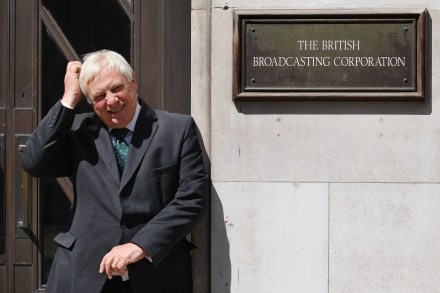
Over at the Leveson inquiry a smug Lord Patten – there is no other kind -- said the BBC could not possibly be biased because left wingers attack it on some occasions and right wingers attack it on others. The BBC holds the ring, he implied. Uncontaminated by the ideologies of extremists, and possessing indeed no bias or ideology of its own, it speaks for moderation and reason. Although true, the argument that apparently moderate and reasonable people can be more ideological than extremists is ordinarily a hard one to make. Given the crisis in the eurozone perhaps even Patten can grasp that the centre ground offers no protection against deranged ideas. Support for the euro was the mark of moderate men for almost two decades.

The Strange Death of Scottish Nationalism

From our UK edition

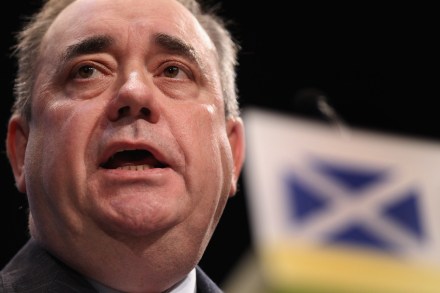
A few months ago a German magazine phoned me to talk about Scotland leaving the UK. The reporter had bought the SNP line that Scottish independence was a practical proposition, and that Scotland could survive and indeed flourish as an independent state in the Eurozone. But, I told her, the Royal Bank of Scotland and the Bank of Scotland, which were meant to be leading Scotland's charge to become a Celtic tiger economy, have collapsed. 'Does the EU really want another country with a failed financial system? Try selling that to the readers of Bild.' On the BBC on Sunday, Alex Salmond became increasingly tetchy when John Sopel questioned him about a Scottish future in the Eurozone.

Can we torch Time Magazine’s offices now?

From our UK edition

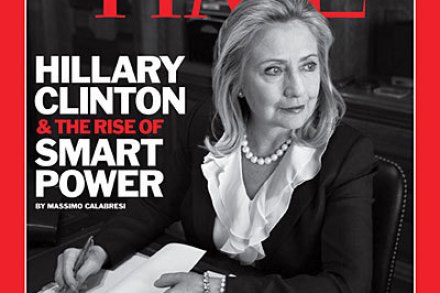
I should declare an interest and say that I have always admired Time Magazine. It has great journalists. It has even commissioned your humble correspondent and allowed him to join its exalted company of writers – and more to the point paid your humble correspondent ready money for the privilege. In normal circumstances I would deplore the notion that its offices should be firebombed and editors, reporters, critics, subs, secretaries and IT support staff reduced to piles of smouldering ashes, so charred and diminished their next kin would not be able to identify them. But what possible argument can those of us who shudder at the thought of arsonists torching Time, and immolating all who work there, now make in its defence?

The Prison of Nations

From our UK edition

By the standards of what was to come in Europe, the Austro-Hungarian Empire was not so bad – it was not a police state with concentration camps like the 20th century fascist and communist regimes. But in the 19th century its subject Italians, Serbs, Czechs and Slovaks could not see the future and insisted that they were living in the "Prison of Nations".  The empire offered no real autonomy to its subject peoples. They could not set their own budgets, enjoy popular sovereignty or levy their own taxes. When it collapsed after World War I, Austro-Hungary seemed as irrelevant as any form of human organisation can be. In the novels and journalism of Stefan Zweig, Robert Musil and Karl Kraus it is a frivolous and doomed empire which everyone knows cannot last.

The Lilliputian “Superstate”

From our UK edition

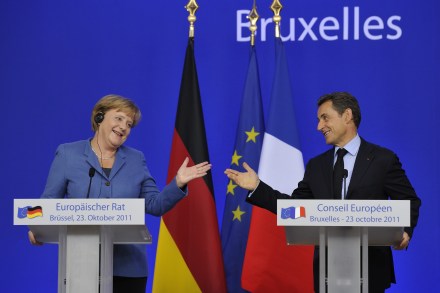
For the past week, the papers have been full of the woes of David Cameron as Tory backbenchers sense the possibility of a new European settlement and try to put pressure on him to loosen Britain's links or leave completely. In more elevated moments commentators have discussed whether a new Euro bloc, bound in a fiscal union, would act against Britain's interests. What hardly anyone discusses is whether the EU can create a new settlement or Euro bloc, or whether the task is beyond it. Eurosceptics have been showing off quite shamelessly. They point out, correctly, that they have exposed the establishment thinkers who supported the Euro as dupes or idiots. But on one point Eurosceptics have been horribly wrong. The EU is not the "EUSSR" or a bureaucratic dictatorship.

Helping out the Editor

From our UK edition

Fraser asked how Britain can compete in the new world of global television. Here are two answers: 1) Don’t give up on the BBC. To use the language of marketing that has been polluting English for a generation, the BBC is a “global brand”. Fraser’s idea that Sky could ever win the same levels of trust is optimistic in the extreme. It would take decades for Sky to build a comparable reputation; longer if the board and shareholders allow the disgraced Murdoch family to cling onto power. BBC bias is a snide and cowardly phenomenon. But let us be realistic. When people talk about BBC bias they usually mean Radio 4 bias. The World Service remains a model of quality journalism. 2) Raid the overseas aid budget.

On not understanding Tories (3): Inflation

From our UK edition

Being an occasional series in which the writer confesses that supporters of the British Conservative party leave him in a state of perpetual perplexity. Part one here and part two here.   In my political neighbourhood, the image of the Cameron is now set. He is the smiling assassin whose affable public image hides his ‘Thatcherite,’ ‘heartless,’ ‘Bullingdon Club,’ — fill in any other disobliging epithet you can think of — agenda. He is an extremist dressed up as a moderate; a phoney centrist, who is quietly destroying the welfare state. Whatever they wish to say about the rest of the coalition programme, on economic policy, my leftish colleagues have got one aspect of this government hopelessly wrong.

The New Statesman: The Toadies’ Gazette

From our UK edition

Here we go again. According to the surprisingly reliable Gudio Fawkes, the New Statesman has forced Dan Hodges, a lively young writer, whom you actually want to read, to resign for being a lively young writer, you actually want to read. Specifically, he had done what free journalists in a free society are meant to do and criticised a leading politician – Ed Miliband in Hodges' cases. As a parting snub, the Statesman failed to publish Hodges' piece from the Labour party conference (but thanks to Iain Dale you can read it here).

Obama and Miliband

From our UK edition

I apologise for the advertisement, but there is a piece in the Observer that is well worth reading. Michael Cohen describes how Obama has tired of offering the hand of friendship, only for the Republicans to accuse him of being a socialist Mau Mau on a mission to destroy America. He will abandon bipartisanship and fight the 2012 presidential election as Harry Truman and FDR would have done: by painting the Republicans as the yapping lapdogs of the Wall Street plutocracy.

Chris Patten: a big disappointment all round

From our UK edition

Chris Patten has held almost every great and good job the great and the good can offer: Governor of Hong Kong, Companion of Honour, European Commissioner, Chancellor of the University of Oxford and Chairman of the BBC Trust. Only his parents’ decision to send him to a Catholic church will prevent him becoming Archbishop of Canterbury and winning the game of establishment bingo with a full house. Patten features in Peter Oborne and Frances Weaver’s strange polemic against British supporters of the Euro. (Strange because Gordon Brown and the Labour Party stopped Britain joining the Euro so the authors have no crime to accuse the “guilty men” of – other than being wrong.

Labour is caught on a fork

From our UK edition

Listen to John Prescott on the Today programme this morning and you may begin to understand the complexity of the task Labour faces. Prescott was putting the best gloss he could on Labour and the vastly incompetent civil service wasting hundreds of millions on regional fire stations. Listening to his bluster, even the most loyal Labour supporter might have been glad that the party was no longer in office. Prescott showed no remorse; no appreciation that the burden of taxation falls on working and middle class people, who need to hold on to every penny they can. As with so many left-of-centre politicians, he did not regard the waste of other people’s money as a sin.

Novelists can be shits (and may be the better for it)

From our UK edition

Writers of my generation are comparing the BBC’s version of Tinker, Tailor, Solider, Spy – the highpoint of the golden age of British television drama in my view – against the new film.  You can see the 1979 series now because rather magnificently, if not perhaps legally, someone has put it on YouTube. The film, which is also well worth seeing, is hours shorter and has less time to develop characters. Most strikingly, although it tries to be faithful to the novel, the atmosphere is different in subtle ways. When the BBC adapted le Carré, we were still living in the novel’s world.  Today’s film is historical fiction. That it works, superbly in some scenes, confirms that the Smiley trilogy will survive well into the 21st century.

From the archives: Is that you, Johann Hari?

From our UK edition

Today, Johann Hari admitted to vandalising his enemies' Wikipedia entries using the psydonym David Rose. One of his victims, the writer and Spectator blogger Nick Cohen, suspected so all along. His dairy, from July, is below: I learned that Johann Hari was a journalist who was better at attention-seeking than truth-telling when a small American journal asked me to reply to his review of What’s Left, a book of mine on the dark forces in liberal-left politics. I looked at it and was astonished. It was not that he disliked my ideas — he was entitled to disagree — but that he had attacked a book I had not written. He pretended that I believed the West had been right to support Saddam Hussein while he was gassing the Kurds when I had said the opposite.

Labour must make up for its failure on banking

From our UK edition

It is a sign of how serious economic thought disappeared in the bubble – "who needs it when we’re all making money?" –  that public opinion is not pummelling Labour for its failure to regulate the banks. Even the most conservative of Spectator readers might have once have said, "Well I expect Labour governments to increase spending and throw my money around. I expect them to waste it on schemes that won't help me, but at least I can count on them to treat the bankers like potential enemies of the state." I'm sure readers will correct me if I am wrong, but I cannot find one example of a centre-left government presiding over one of financial capitalism's manic booms and crashes.

In praise of Gordon Brown, being the first part of a one-part series

From our UK edition

All politicians require a thick skin, but Gordon Brown must have an elephant’s hide. If an ordinary man had presided over the greatest crash since 1929, shame would compel silence. Not so with Brown, who is unable to see himself as other see him, and has written an account of the European crisis for the New York Times, which is – astonishingly – well worth reading. ‘The exigencies of domestic politics have locked the euro zone into an impossible set of economic constraints — no defaults, no deficits, no stimulus and, of course, no devaluations — which mean that there can also be no banking stability, no lasting growth, no sustained job creation and no boost to competitiveness from their currency.

Conspiracy theories kill

From our UK edition

Andrew Neather of the Evening Standard was — and, for all I know, still is — a decent man. Although he worked as a speech writer for Jack Straw around the turn of the millennium, by the time I knew him he in the late 2000s, he had sensibly decided that bicycling was more interesting than politics. I could never have imagined him at the centre of a political controversy until 2009, when Neather wrote an article that sparked a conspiracy theory. As Joe Murphy, the Standard’s political editor, reported a week later: "Pressure was growing today for an independent inquiry into claims that immigration was encouraged by Labour for political gain.

Speaking for Britain

From our UK edition

Spectator readers are not going to like this, so I will keep short. Ed Milliband spoke for Britain last week, when he became the first senior politician in living memory to stand up to Rupert Murdoch. David Cameron looked and still looks like a little man and a bought man, who cannot say what he knows to be right because he is more frightened of offending his patron than defending the common good.  Until Cameron says unequivocally that a media baron whose organisation has engaged in a criminal conspiracy is not a fit and proper person to own BSkyB, he will carry on looking a diminished and seedy figure. Incidentally, can we have no more calls for Rebekah Brookes to resign? They miss the point entirely. The buck stops at the top.

Diary – 9 July 2011

From our UK edition

I looked at it and was astonished. It was not that he disliked my ideas — he was entitled to disagree — but that he had attacked a book I had not written. He pretended that I believed the West had been right to support Saddam Hussein while he was gassing the Kurds when I had said the opposite. He made up stories about my parents, good people he had never met, to show me in a bad light. Every second paragraph contained a howler. Well, I thought, get a book wrong and the text will confound you. I typed out the passages that proved that he was at best an incompetent reviewer and filed my reply. ‘Get out of that,’ I muttered as I hit the send button. Ithought no more about it until I looked at my entry on Wikipedia.

Pimping the press

From our UK edition

Why, I hear you ask, did the editors of the New Statesman and Independent do nothing about Johann Hari? Private Eye and many others had been raising killer questions about his journalism for years before the scandal broke, and yet they stood aside and let him be. Why, to raise the obvious follow up question after the grotesque allegations about Milly Dowler, did Rupert Murdoch and successive editors of the News of the World not stop stories that could only have come from illegal surveillance? Because the managers of the British media have a pimp’s morality. If a broadsheet columnist produces “facts” that thrill the clients, they pat him on the head and give him a pay rise rather than wondering if his routine is not  too good to be true.