Nick Cohen

Nick Cohen

Nick Cohen is the author of What's Left and You Can't Read This Book.

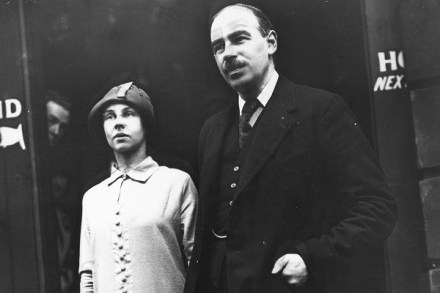
More Niallism: Keynes opposed Versailles because he was a screaming queen

From our UK edition

When I heard that Niall Ferguson had said that JM Keynes advocated reckless economic policies because he was gay and childless, and hence had no concern for the future, I wrote: 'If true, this represents Ferguson's degeneration from historian to shock jock'. The reports were true, but I was wrong. There has been no degeneration. Ferguson has always been this crass and crassly inaccurate. Donald Markwell, Warden of Rhodes House until last year, pointed me to his John Maynard Keynes and International Relations for the gruesome details. Markwell had to devote time and space to the ugly task of dissecting an attack on Keynes by Ferguson in a 1995 edition of the Spectator.
Simon Singh: Let us now praise a bloody-minded hero

From our UK edition

I don’t normally campaign. I’m not a joiner or a natural committee man. But the state of free speech in England pushed me into despair, and three years ago I started to do what little I could for the campaign for libel reform. Britain was not a country where the natives could debate their grievances and foreigners could come to talk of oppression in their own lands. Our politicians and judges welcomed actions from corporations at home that were clearly designed to use the crushing power of money to intimidate critics into silence, and from Russian and Ukrainian oligarchs, Hollywood paedophiles, Islamist fanatics and Saudi petro-billionaires.

Vladimir Putin meets the Munchkins

From our UK edition

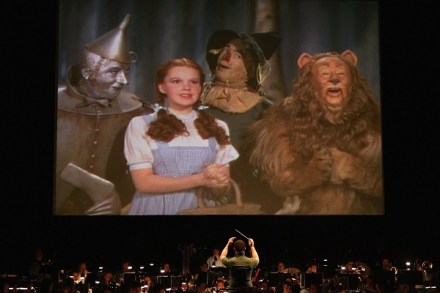
Late on Friday my editor at the Observer called and asked me to dash off a few words on what was wrong with the Mail and some Conservative MPs demanding that the BBC ban 'Ding, dong the witch is dead', a Munchkin chorus, from The Wizard of Oz. I was stuck on a train to Glasgow, but how could I resist? The partially successful attempt to stop the BBC playing a clip from a 1939 children's film is one of the most surreal cases of censorship I have seen. Right wingers were not demanding that the BBC blacklist the song because it was pornographic or libellous. The lyrics the merry Munchkins chirruped were irrelevant to them. They were censoring because they disapproved of the motives of the people who had bought the song, not because of the content of the song itself.

Evidence-based politics: the case of the incredible shrinking Tory Party

From our UK edition

Here is something those who rely on political commentators will not have expected to see. The latest poll from TNS BMRB has the Tories down to just a quarter of the vote: CON 25% (-2), LAB 40% (+3), LD 10% (nc), UKIP 14% (-3). The Opinium/Observer online poll had LAB 38, CON 28, UKIP 17, LD 8% at the weekend. YouGov for the Sunday Times on the same day had CON 30, LAB 40, LD 11, UKIP 13. (The Tories were just 1% above their low point with firm.) How can this be? All these polls were taken during the raging welfare debate. Commentator after commentator wrote articles assuring us that Labour was on the wrong side of public opinion, and the Tories had at last found an issue that would move the voters their way. Unanimity gripped the punditocracy.

Lutfur Rahman: Not a ‘bully’, just ‘sly’ and ‘unappetising’

From our UK edition

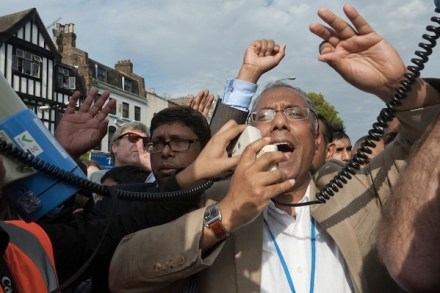
For the record, I did not accuse Rahman of being a 'bully,' as he tells Spectator readers. I accused the Mayor of Tower Hamlets of being 'sly' and 'unappetising'. His letter to the Spectator bears me out, I think. As does his ludicrous allegation that Rob Marchant and other Labour Party activists were threatening to murder him. In an insinuating passage, he links Marchant - a principled man, and anti-racist - to the English Defence League. Look at how he does it: 'Unsurprisingly, as a prominent Muslim figure, I frequently receive abuse and threats - mainly from racist extremists of the EDL-ilk.

Twitter: A playground for hysterics, prudes, fools and spies

From our UK edition

Another day, another story of the forces of order hounding an innocent citizen for making innocuous remarks on Twitter. This week's target was Rob Marchant, a centrist Labour supporter, who was chatting online with a few comrades. They all opposed Lutfur Rahman, the sly and to my mind thoroughly unappetising mayor of Tower Hamlets. Labour had expelled Rahman, a frontman for Islamic Forum Europe, after he ran against the official Labour candidate to become mayor. Unlike many of the conformists and appeasers on the London left, Marchant and his friends believed that it is the job of leftists to oppose the religious right. Not everyone agrees with that admirable sentiment.

Leveson: Don’t be frightened by the state

From our UK edition

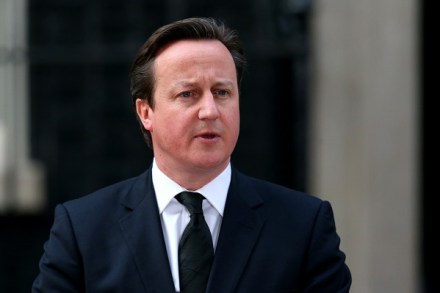
If David Cameron had any sense, he would stand up in the Commons and say “I am withdrawing the Royal Charter. The law officers have assured me that Lord Justice Leveson, though a fine judge in many respects, did not understand the Human Rights Act. He failed to see that the courts would almost certainly find that his plans to force newspapers and websites to join his regulator by hitting them with punitive fines were unlawful in practice. My problem is that too many in Parliament cannot see it either. “There is a madness here in Westminster; a fanaticism which I, as a traditional Tory, find distasteful. I do not like officials in the Department of Culture Media and Sport drawing up lists of who must submit to censorship – the Angling Times, no, Hello!

Leveson: Don’t let the state frighten you

From our UK edition

  If David Cameron had any sense, he would stand up in the Commons and say “I am withdrawing the Royal Charter. The law officers have assured me that Lord Justice Leveson, though a fine judge in many respects, did not understand the Human Rights Act. He failed to see that the courts would almost certainly find that his plans to force newspapers and websites to join his regulator by hitting them with punitive fines were unlawful in practice. My problem is that too many in Parliament cannot see it either. “There is a madness here in Westminster; a fanaticism which I, as a traditional Tory, find distasteful.  I do not like officials in the Department of Culture Media and Sport drawing up lists of who must submit to censorship – the Angling Times, no, Hello!

It’s not a press regulator, it’s a web regulator.

From our UK edition

Since the early 1990s, hundreds of millions of words have been produced about the Web. Enthusiasts have told us that it is the greatest communications revolution since Guttenberg invented movable type, and they are probably right. Utopian fantasists have imagined that cyberspace would be beyond the reach of governments – those 'weary giants of flesh and steel', as one particularly giddy theorist put it – and they were certainly wrong. Their libertarian dreams, as we can see tonight, were an illusion. Those 'weary giants of flesh and steel' are tougher than they look. They are more than capable of using the new technologies to their own advantage, while censoring what their citizens write online.

Christopher Hitchens’s lefty publisher begged from him – and then betrayed him

From our UK edition

Before the crash of 2007, as aid agencies were asking the governments of what we once called ‘the rich world’ to wipe out poor countries’ debts, Christopher Hitchens received a begging letter from his publishers. Verso, if you have never come across it, boasts that it is ‘the largest independent, radical publishing house in the English-speaking world’. Its old stagers are Tariq Ali and Perry Anderson, Marxist-Leninists of the upper class, who had been Hitchens’s comrades on the soixante-huitard left. Hitchens told me that along with aristocratic style of their fine offices in London and New York went the classic capitalist desire to expropriate the fruits of the workers’ labour.

The Sunday Times jails its source

From our UK edition

In a long piece in the last issue of the Sunday Times (£) Isabel Oakeshott, its political editor, wrote of her relationship with Vicky Pryce. She sobbed and sighed. She was full of sympathy. You can almost hear the tears pitter-patter on her keyboard as she describes how Pryce had become a 'broken woman'. The reader has to stare hard at her words to realise that Pryce was Oakeshott’s source, and that Oakeshott and her editor John Witherow had handed her over to the police. The eight-month prison sentence Mr Justice Sweeney gave Pryce today followed. Of course it did. Journalists once knew that if you betrayed a source they could end up on the dole, or in prison or, in the most severe circumstances, dead.

Sexual abuse: Don’t toe the party line

From our UK edition

A scandal broke in the Socialist Workers Party a few weeks ago after a woman member claimed a Trotskyist tribune of the working class had taken time off from promoting world revolution to rape her. The SWP did not behave as any decent person would and advise the woman to contact the police. In its paranoid mind, the criminal justice system conspires to discredit true revolutionaries, if given half a chance. Instead of involving detectives and judges, the party’s disciplinary committee set itself up as a kangaroo court, and "tried" the man it would identify only as “Comrade Delta”. The minutes show the paranoia with great clarity. One of the seven “judges” said that the SWP had 'no faith in the bourgeois court system to deliver justice'.

Arraigning a corpse

From our UK edition

Part 1 “Russian Justice” A judge at Moscow’s Tverskoi District Court stopped the trial of Sergei Magnitsky (above) yesterday – but not because the defendant was dead. Magnitsky’s demise was of no concern to the judge. It did not bother him in the slightest. The court merely postponed proceedings until 4 March when the world will see something rarely seen since the Middle Ages: a prosecutor arraigning a corpse. The Putin regime – that mixture of autocracy and gangsterism – is desperate to discredit the late Mr Magnitsky and his employer, Bill Browder of Hermitage Capital. If you don’t know the story, I’ll explain why. Browder exposed corruption in Russian companies. The Russian authorities did not approve.

The Leather Case

From our UK edition

Last year I wrote an unpatriotic column for the Observer. I said that while American literary and journalistic frauds tended to be simple men, who lied and plagiarised to boast their reputations and earnings, British frauds were as a rule darker and nastier. The first piece of evidence was Johann Hari – whose exposure caused the greatest scandal my small world of “broadsheet” journalism had seen in years. Hari did not confine himself to making up quotes and facts to enhance his career. Night after night, he went on Wikipedia and defamed his many enemies under a variety of pseudonyms – I should declare an interest and state that I am proud to say that I was one of them. It wasn’t enough for Hari to con his way up the greasy pole.

Lone voices against Terror

From our UK edition

I went to the Toynbee Hall, the meeting place for the radical East End, this week to listen to a debate many radicals would rather not hear. British Asian feminists and their supporters had gathered to launch the Centre for Secular Space an organisation whose work I would say is close to essential. It is not fashionable, however, because its focus is the collusion between the Anglo-American left and the Islamist right, which has betrayed so many Muslims and ex-Muslims, most notably Muslim and ex-Muslim women. Gita Sahgal, Nehru’s great niece, became the movement’s figurehead and eloquent spokeswoman when the once respectable and now contemptible Amnesty International fired her for protesting about its promotion of supporters of the Taliban.

‘Murdoch betrays everyone in the end’

From our UK edition

My guard goes up when people in power say that they believe in investigative journalism. Everybody says they do, of course. Then everyone says they have a sense of humour, most especially when they don’t. Just as I doubt the merriment of someone who needs to announce, ‘I enjoy a joke as much as the next man,’ so I worry about politicians and bureaucrats who make perfunctory commitments to serious journalism. Look around and you will see that their deeds belie their words. Almost without anyone noticing, a great silence is falling over the British state. Civil servants, police and prison officers are shutting up as they realise the dangers of talking to journalists are too perilous to risk.

Last call for Starbucks. Your flight is about to depart

From our UK edition

A friend of mine who has worked in the City all his life, and is by no means a leftist, can still explode with rage at the nom-doms and corporations, who expect to stay in Britain without paying tax. When their representatives say they will leave if the government taxes them, he replies “Fine. If you don’t like paying the taxes the rest of us have to pay, there’s a big road heading out of London called the M4. Take it, and hang a right at the sign marked Heathrow.” He understands that the notion of the state granting tax exemptions to fortunate classes ought to have died when the French revolutionaries abolished the privileges of the noble and clerical estates in 1789.

David Cameron marries a Rothschild

From our UK edition

In the Jewish joke a matchmaker calls on a poor tailor living in a Tsarist shtetl in the middle of nowhere. He tells the old guy that he wants to arrange the marriage of his middle daughter to the heir to the Rothschild fortune, no less. The tailor isn't impressed. He cannot marry off his middle daughter until he has married off her older sister, he says. He does not want his beloved girl to move far from him, and everyone knows the Rothschilds live in Paris and London. In any case, he is not sure about this Rothschild fellow: he has heard he is irreligious and a drunk. The matchmaker answers all the objections with great patience until, eventually, the tailor relents. 'Excellent,' says the matchmaker, 'now all I have to do is talk to the Rothschilds.

Can’t we even throw out Lynne Featherstone?

From our UK edition

I gave a talk to the Hornsey and Wood Green Labour Party last night. If you don’t know the area, the constituency covers Highgate, Muswell Hill and Crouch End: leafy north London villages, where the metropolitan middle class go, if not to die, then at least to produce babies. There are pockets of high unemployment and council housing, but the seat is generally prosperous and in places very prosperous. Its fortunes illustrate how the political parties have attended to the needs of the urban bourgeoisie. The Conservatives are nowhere now. As late as 1992, Hornsey and Wood Green was a Tory seat. This year they closed their local office and gave up, as they have given up in so many British cities.

The BBC: ‘It’s professional to cheat’

From our UK edition

In this morning’s Observer I write about the collapse of the old notions of honour and fair play in sport, banking, politics, journalism, the law and much else. As I acknowledge right away, hard evidence is hard to find. Football’s rules change: what was a manly tackle in the 1960s is a foul today. Yesterday’s 'Spanish practice' in the workplace becomes today’s criminal offence. The danger of false nostalgia is great. But you should not let the difficulties of comparing the present with the past unnerve you, and I hope I provide evidence that backs up our gut belief that standards have fallen. If anyone doubts my conclusion, listen to yesterday’s 606 from BBC Radio 5 Live. It wasn’t available when my piece went to press, but how I wish it had been.