Michael Simmons

Michael Simmons

Michael Simmons is The Spectator's economics editor. Contact him here.

The net migration debacle is a blunder too far for the ONS

From our UK edition

Another day at the Office for National Statistics (ONS), another apparent data mishap – this time on net migration figures. The agency published revised figures for 2021 to 2024 this morning, which set out a very different picture on who’s been coming in and out of the country. The ‘Boriswave’ was larger than previously thought For a start, the ‘Boriswave’ was larger than previously thought. When Brits are excluded, net migration is now thought to have peaked at over one million people in the year to March 2023 – some 110,000 higher than the previously estimated record high. Including Brits, there was a substantial downgrade in the revision.

Mahmood’s right turn, as migration figures revised – again

From our UK edition

19 min listen

Economics editor Michael Simmons and Yvette Cooper's former adviser Danny Shaw join Patrick Gibbons to react to the Home Secretary's plans for asylum reform. Shabana Mahmood's direct communication style in the Commons yesterday has been praised by government loyalists and right-wingers alike, but her plans have been criticised by figures on the left as apeing Reform. Will her calculated risk pay off and how will success be judged? Plus, as ONS migration figures are revised – again – Michael restates his appeal for more reliable data. And how could migration data affect the budget next week? Produced by Patrick Gibbons.

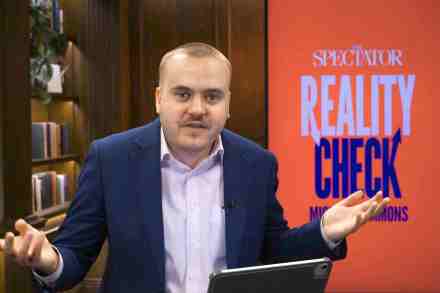
Reality Check: Britain’s data is broken

From our UK edition

There were cheers in the Treasury in September when statisticians found an unexpected £2 billion ‘down the back of the sofa.’ The tax man had underreported VAT receipts to the Office for National Statistics (ONS) and it meant Britain’s borrowing figures for the current year had been overestimated. A lucky discovery for HMT but an indictment of Britain’s statistical systems.  At the ONS headquarters in Newport, morale is collapsing. The agency, long criticised for data blunders, has become a symbol of a deeper crisis: Britain’s economic numbers can no longer be trusted. Across government, the data infrastructure that underpins policymaking is crumbling.

Datageddon: Britain’s stats have become dangerously unreliable

From our UK edition

13 min listen

Britain is facing a quiet crisis — its data is breaking down, and the government’s numbers are increasingly unreliable. In this episode of Reality Check, economics editor Michael Simmons asks what happens when the state can’t count properly. How can the Bank of England set interest rates or the Treasury balance the books when the data they rely on is wrong? And why are so many “official” statistics now being stripped of their trusted status?

Labour’s vibes are all wrong

From our UK edition

14 min listen

With two weeks until her Budget, Rachel Reeves has received more bad news: unemployment is now at its highest level since the pandemic. With the Chancellor hinting at income tax rises, could this be dangerous for Labour as it increasingly becomes the party of higher earners? Polling suggests the public would lay the blame for tax hikes with Reeves, despite her speech last week. With threats from a resurgent Green party to the left and Reform to the right, is there an obvious path forward for Labour to win back voters? James Heale speaks to Michael Simmons and Scarlett Maguire. Produced by Megan McElroy and James Lewis.

Rachel Reeves is killing the jobs market

From our UK edition

Britain's unemployment rate has hit 5 per cent – the highest level since the pandemic. Figures, just released by the Office for National Statistics (ONS), also show 117,000 payrolled jobs wiped out in the last year. The hiring slowdown seems to be getting worse as what was initially a reaction to the Chancellor’s £25 billion raid on employer National Insurance now turns into fears about the coming Budget.  Meanwhile, wage growth continued to ease, although it still remains well above inflation. Wages were up 4.8 per cent across the economy compared to last year, with pay rises doing considerably better in the public sector.  However, if wage growth slows again this month then it could mean we see a rate cut from the Bank of England just in time for Christmas.

Pain is inevitable for Rachel Reeves

From our UK edition

A year ago, the Chancellor called her £38 billion tax rise a ‘one-and-done’ move. Now she looks set to rinse and repeat, with reports that a 2p increase in income tax is on the table. According to The Times, she has informed the Office for Budget Responsibility that a rise in personal taxation is one of the ‘major measures’ she will announce. This is the strongest signal yet that she will break Labour's manifesto pledge not to increase income tax rates. What does this mean for the Chancellor, and taxpayers? Elsewhere, David Lammy suffered a disastrous Deputy Prime Minister's Questions after dodging questions on whether there had been another prisoner let out by mistake.

Why energy is the new political battleground

From our UK edition

12 min listen

With three weeks until the Budget, the main political parties have been setting out their economic thinking. Each faces the same bind: anaemic growth, fiscal constraints and uncomfortable exposure to the bond markets. The upshot is that there is less ‘clear blue water’ on the economy between Labour, the Conservatives and Reform. This has left a space for energy to emerge as the policy area in which to differentiate the parties in this new era of five-party politics. The Westminster energy consensus is over – Net Zero is not as popular as it once was – and the parties are setting out their stalls. Could energy win the next election? Oscar Edmondson speaks to James Heale and Michael Simmons.

The Bank of England blames Rachel Reeves for pushing up prices

From our UK edition

The Bank of England has held interest rates at four per cent. The Monetary Policy Committee (MPC) voted five to four in favour of maintaining the rate. There had been some speculation that the Bank might consider a cut to pre-empt some of the harshest measures expected in this month’s Budget, but the rate-setting committee chose to align with market expectations, which had widely anticipated a hold. Alongside the rates announcement, the MPC released their quarterly Monetary Policy Report which set the blame for inflation squarely at the Chancellor’s door. ‘Unusually large increases in administered price, such as Vehicle Excise Duty, and sewerage charges, are currently estimated to account for 0.4 percentage points of the overshoot in CPI inflation from target.

Reeves prepares the public for tax hikes

From our UK edition

11 min listen

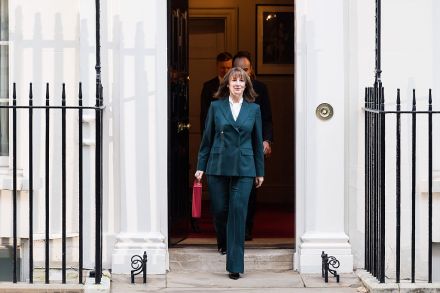
It is three weeks until the Budget – and Rachel Reeves wants to get her narrative out there. The Chancellor held an early morning press conference today to, in her words, ‘set out the circumstances and the principles’ guiding her thinking on 26 November. Her speech followed a familiar pattern. First, there was the evisceration of the ‘austerity’, ‘reckless borrowing’ and ‘stop go of public investment’ which characterised the last 14 years. In her 25-minute speech in Downing Street, one line in particular stood out: ‘If we are to build the future of Britain together’, Reeves said, ‘we will all have to contribute to that effort. Each of us must do our bit.

Is Brexit to blame for Britain’s economic doom loop?

From our UK edition

22 min listen

Rachel Reeves is preparing for her first major Budget – but is Brexit really to blame for Britain’s black hole? Host Michael Simmons speaks to independent economist Julian Jessop about the OBR’s productivity downgrade, Labour’s tax plans, and whether Reeves is right to point the finger at Brexit.

Farage: trust me with the economy

From our UK edition

15 min listen

With Reform leading in the polls, Nigel Farage is determined to ensure that nothing can impede its growth. This morning he sought to bolster his credibility on an area that the Tories think could be his Achilles heel: the economy. Reform’s £90 billion programme of tax cuts promised at the last election has been constantly used as a stick with which to beat its leader. So today, Farage took to the stage in the City, to – once again – formally bury ‘Our Contract with You’ – the platform on which he was elected in July last year. This morning’s speech was all about Reform claiming the mantle of fiscal conservatism and claiming that the party can be trusted with the nation’s savings. Who will win the battle to be the party of fiscal credibility?

Andrew (Mountbatten Windsor) saves the Chancellor

From our UK edition

15 min listen

Happy All Hallows’ Eve, everyone – and there is something spooky going on with Rachel Reeves and a property in Dulwich. Yesterday she was leading the news after admitting to renting out her family home following the move into No. 11 without getting the required licence from Southwark Council. There are a number of mitigating circumstances – not least the fact that the lettings agent said they would obtain the licence – but the Prime Minister has been forced to put out a statement. He backs her, for now, but will he come to regret that? Listen for a rare defence of Rachel Reeves on this podcast from our economics editor.

Luke Coppen, Mary Wakefield, Daniel McCarthy, Michael Simmons & Hugh Thomson

From our UK edition

35 min listen

On this week’s Spectator Out Loud: Luke Coppen looks at a new musical subgenre of Roman Catholic black metal; Mary Wakefield celebrates cartoonist Michael Heath as he turns 90 – meaning he has drawn for the Spectator for 75 years; looking to Venezuela, Daniel McCarthy warns Trump about the perils of regime change; Michael Simmons bemoans how Britain is beholden to bad data; and, Hugh Thomson looks at celebrity terrorists as he reviews Jason Burke’s The Revolutionists. Produced and presented by Patrick Gibbons.

The rich are leaving Britain – and making you poorer

From our UK edition

Are the rich fleeing Britain? That’s what the numbers suggest, but some activist groups have hit back saying that the data is dodgy. For the second episode of Reality Check, The Spectator’s economics editor Michael Simmons explains why the data shows that the wealthy are leaving Britain, and why this matters for everyone else.

What happened at the Parliamentarian of the Year Awards?

From our UK edition

17 min listen

There are a few sore heads at 22 Old Queen Street this morning because it was The Spectator’s Parliamentarian of the Year Awards last night. From Lucy Powell’s jibe at Morgan McSweeney (and Tim Shipman, for that matter) to Robert Jenrick’s jokes falling flat, it was an eventful evening of good-natured hazing, naval-gazing and – of course – recognising the best and worst of Westminster. Who came out on top? Oscar Edmondson debriefs with Tim Shipman, Michael Simmons and Natasha Feroze. Produced by Oscar Edmondson and Megan McElroy.

Datageddon: Britain’s stats have become dangerously unreliable

From our UK edition

There were cheers in the Treasury last month as the nation’s statisticians discovered a spare £3 billion down the back of the sofa. The Office for National Statistics (ONS) admitted that VAT receipts had been under-reported by £1 billion last year and £2 billion this year. The newly found cash will go some way to filling the Chancellor’s £30 billion fiscal black hole, but not everyone was celebrating. Just 150 miles west along the M4, at the home of the ONS in Newport, Wales, the mood was grim. The embattled agency was splashed across the papers for the wrong reasons. This error was just the latest in a long line of data disasters. That’s because the quality of Britain’s official data, like much of British life, has deteriorated to the point of being dangerously unreliable.

Who will ‘take back control’ of the economy?

From our UK edition

14 min listen

Kemi Badenoch continues to look more confident at PMQs – although there are always going to be some easy goals when you lead on the economy. Today she pressed the Prime Minister on Labour’s manifesto pledge not to raise income tax, VAT or national insurance – which he dodged – as well as repeating her offer to work with Labour towards a cross-party solution to the welfare problem. What do we know about the Budget at the end of next month? And are we any closer to understanding what a ‘working person’ actually is?  Lucy Dunn speaks to Tim Shipman and Michael Simmons. Produced by Oscar Edmondson.

Migration, the customs union & a £40bn black hole?

From our UK edition

14 min listen

There are reports that the OBR will downgrade Britain’s productivity growth forecasts, increasing the size of the black hole facing the Chancellor at the end of the month. This continues the spate of bad news for the Chancellor on the economy – but can we trust the figures? James Heale and Michael Simmons join Patrick Gibbons to talk about what this means ahead of the budget, whether anger over the money wasted on asylum hotels can be linked to the cost-of-living crisis and what Rachel Reeves is doing in Saudi Arabia this week. Plus: is a debate over the customs union really what Britain wants right now? Produced by Patrick Gibbons.