Michael Simmons

Michael Simmons

Michael Simmons is The Spectator's economics editor. Contact him here.

What to expect from Rachel Reeves’s spring statement

From our UK edition

Before the first missiles landed in Tehran, Rachel Reeves was looking forward to today. Her spring ‘forecast’ statement was going to be a doddle. The plan – to have the smallest intervention by a Chancellor since Philip Hammond in the spring of 2018 – was a sensible one. Britain’s fragile economy could not have handled months of speculation about black holes, tax hikes and gilt yields. So, at the November Budget, the Chancellor made clear that there would be no scoring of her fiscal rules by the OBR this time round, no tax announcements and no major policy changes either. No rabbits inside hats or rats under rocks. The Treasury, this time, has succeeded. There has been barely any speculation in the run-up to today’s statement.

Is Labour too close to the City – with Lionel Shriver & Robert Hardman

From our UK edition

35 min listen

Britain’s banks have a hold over Rachel Reeves, declares Michael Simmons in the Spectator’s cover piece this week. Almost two decades on from the 2008 financial crash, the UK has failed to reform the system and – as ordinary people face a cost-of-living crisis – Labour is in hock to big business. Is the Chancellor too close to the City? For this week’s Edition, host Lara Prendergast is joined by economics editor Michael Simmons, columnist Lionel Shriver, and columnist from the Daily Mail Robert Hardman.

Is Labour too close to the City – with Lionel Shriver & Robert Hardman

Spring statement: Reeves’ last throw of the dice?

From our UK edition

16 min listen

Polls are open in Gorton and Denton for the by-election but as we eagerly await the result we thought we’d discuss economics, because looking ahead to next week we’ve got the spring statement. It’s not a major fiscal event – as Rachel Reeves will be anxious to point out – but one which is taking on lots more significance not least by what is being floated… which is not a huge amount. We are expecting a policy light announcement, although many are hoping there could be something in there on student loans. Will the Chancellor emerge from this statement stronger? Also on the podcast, The Spectator’s cover piece focuses on the quid pro quo between the Exchequer and bankers and how this has come to define Rachel Reeves’ treasury. Are Labour too close to the banks?

Spring statement: Reeves' last throw of the dice?

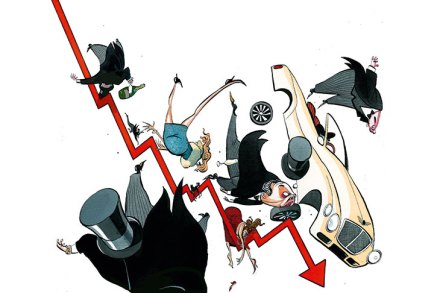
‘It’s a Faustian pact’: Rachel Reeves is giving bankers what they want

From our UK edition

The Epstein files lift the curtain on how power is exercised and influence traded by our financial elite. It is not a cheering sight. Business and economic gurus like the former US Treasury Secretary Larry Summers asking for dating advice from a convicted paedophile does not build confidence in the masters of the universe. Distasteful as these details are, the most telling insights into the predatory behaviour of the private-jet classes relate to how they exploit all of us, not just the vulnerable young women who catch their eye. Institutional logic does not explain Reeves’s love-in with the banks. They seem to have made a Faustian pact Peter Mandelson may blush at some of the personal details laid bare in his emails to Jeffrey Epstein.

SEND madness: Britain faces ‘ruinous costs’ from over diagnosing children

From our UK edition

6 min listen

Why are one in five school children classified as special educational needs and disabilities (SEND) in 2026? The rates of children being diagnosed with neurodiverse conditions have scaled to disproportionate rates and the costs are a major concern for the government. Michael Simmons takes a look at the data and explores why devolution has provided some kind of a solution.

SEND madness: Britain faces 'ruinous costs' from over diagnosing children

Peter Mandelson arrested by Met Police

Peter Mandelson, our short-lived ambassador to the US, has been arrested on suspicion of misconduct in public office.  In a statement to journalists, the Met Police said: Officers have arrested a 72-year-old man on suspicion of misconduct in public office. He was arrested at an address in Camden on Monday, 23 February and has been taken to a London police station for interview. This follows search warrants at two addresses in the Wiltshire and Camden areas. Moments before the Met’s statement, Mandelson was photographed being led out of his house by police. The move comes days after the arrest of Andrew Mountbatten-Windsor, also under suspicion of misconduct in public office.

Debt bomb: the £100 Billion problem nobody talks about

From our UK edition

21 min listen

There is an area of public spending nearly double what Britain spends on defence, more than policing borders or our streets. It's servicing the costs of what Britain has borrowed in the past. The growing debt bomb is continuing to climb with real consequences for the taxpayer. Michael Simmons takes a look at the data and speaks to the economist Paul Johnson about what political measures the government will have to take to tackle Britain's debt crisis, what it means for the taxpayer and why the reviving modern monetary theory movement is nonsense.

Debt bomb: the £100 Billion problem nobody talks about

The dodgy data behind child poverty

From our UK edition

Britain is set for another dodgy data scandal. In last Friday’s Reality Check newsletter I picked up on reporting from the Times which called into question the income data used to calculate Britain’s child poverty metrics. Now, the BBC reports that those figures are going to be revised. The result: half a million children who the government previously claimed were in poverty were in fact not. This is obviously good news. But let’s be clear: it’s also a total and utter scandal. The way we measure child poverty has always been a bit of nonsense. It uses ‘relative poverty', which sets a breadline of 60 per cent of median income. The problems with using relative income measures are obvious.

Is Reform brave enough to take on the pensions triple lock?

From our UK edition

Will any political party ever take on the triple lock? The answer from Reform’s Robert Jenrick yesterday appeared to be no.  At a press conference where Jenrick, Reform’s Treasury spokesman, appeared to junk nearly everything Reform had previously said on economic and fiscal policy. He chucked overboard what was in many ways a left-leaning approach to both economic and fiscal policy and adopted a list of proposals that would be right at home in a Tory manifesto. That included committing to keeping the triple lock – which guarantees the state pension rises by the highest of earnings, inflation or a floor of 2.5 per cent.

Is Reform now part of the ‘orthodoxy’?

From our UK edition

It is Robert Jenrick’s big day out today. The newly-minted Reform ‘shadow chancellor’ made his first speech this morning, where he had the chance to show what kind of chancellor he would be and – sporting a snazzy pair of specs – he had plenty of soothing words to calm the jitters of the bond markets. The top news lines from his presser was his decision to kill Reform’s two-child benefit cap – Nigel Farage’s big offer to Labour voters last summer – and the announcement that he he would support the independence of the OBR and the Bank of England. Is this a missed opportunity for Reform UK? Oscar Edmondson speaks to Michael Simmons and Tim Shipman. Produced by Oscar Edmondson.

Is Reform now part of the ‘orthodoxy’?

Inflation is down – but for how long?

From our UK edition

Britain seems to be turning a corner. Figures just released by the Office for National Statistics show the rate of inflation fell to 3 per cent in January, having risen to 3.4 per cent at the end of last year.  This downward trend is in line with forecasts from the Bank of England which expect inflation to hit its 2 per cent target in April. If that trend holds true, then the slowdown in prices won’t just be welcomed by struggling shoppers. This government – whichever ‘phase’ it is now in – has pegged its success and failure to addressing the cost-of-living crisis.

Ed Miliband and Andy Burnham’s Britain doesn’t exist

From our UK edition

With Sir Keir Starmer’s premiership in perpetual peril, it seems instructive to pay closer attention to his potential successors. On that, there have been two noteworthy interventions this week. The first from Ed Miliband who told the Today programme: ‘I tell you what angers Keir most about this country, it’s class. It’s the class divide.’ Not to be outdone, Andy Burnham then told a Resolution Foundation think-tank event that the focus of British politics needed to switch to lower earners. They present a Britain where capital exploits cheap labour, resulting in profound and widespread poverty. But that’s not the Britain we’re in Both men seem to want to focus on a country that does not exist.

Is there a silver lining in Britain’s dismal growth figures?

From our UK edition

Wes Streeting was bang on when he told Peter Mandelson the government had ‘no growth strategy at all’. The Health Secretary's claim seems to have been confirmed by figures, just released by the Office for National Statistics (ONS), which show Britain’s economy grew by just 0.1 per cent in the last three months of 2025. On a per capita basis the numbers were even worse: we're in recession. What is worrying given the make up of our economy is that there was no services growth at all, and construction contracted by 2.1 per cent. The only area of the economy that expanded (by 1.2 per cent) was production.

Keir Starmer has done nothing for Britain’s young

From our UK edition

10 min listen

This week Keir Starmer faced the greatest challenge to his premiership yet. What will this Prime Minister will be remembered for? Policies which hurt young people. From student loan debt crisis, tax thresholds, ISA allowances and the pensions triple lock, what hope is there for young Brits? Michael Simmons has the data.

Keir Starmer has done nothing for Britain's young

Britain’s economic upturn won’t save Starmer

From our UK edition

By the end of last week, it was clear the Prime Minister is a goner – the debate moved to the pace of his demise. That sped up yesterday with the resignation of Morgan McSweeney, his chief of staff. Starmer’s prospects looked very bleak indeed when I turned on the Today programme this morning to hear a defence of the PM being mounted by Baroness Smith of Malvern. I wouldn’t pretend to understand the government's communications strategy, but it doesn’t exactly scream confidence when the most senior spokesperson offered up for the morning media round is a junior skills minister from the Lords. A few hours later, the man in charge of that media strategy (and the fourth person to hold the job in 12 months), Tim Allan, jacked his job in and followed McSweeney out the door.

Keir’s worst week – but Kemi’s best?

From our UK edition

10 min listen

The sun is setting on Keir Starmer’s worst week in No. 10 – but potentially Kemi’s best. We go into the weekend with MPs publicly calling for his most senior aide, Morgan McSweeney, to step down because of his role in the botched vetting of Peter Mandelson, and with huge questions remaining about how much the Prime Minister knew about Mandelson’s association with Epstein. All of this means that the upcoming by-election on the Labour party’s patch in Gorton and Denton is poised very precariously. Meanwhile, Kemi has seized the opportunity to capitalise on Labour’s woes – but are she cutting through enough? And with her position looking more assured, and fiscal responsibility as their rallying cry, could it nearly be over for her shadow chancellor, Mel Stride?

Keir's worst week – but Kemi's best?
Peter Schiff on the dollar: America's bust is the world's boom

Peter Schiff on the dollar: America’s bust is the world’s boom

From our UK edition

25 min listen

Michael Simmons speaks to American economist Peter Schiff about the surge in gold prices, the weakness of the US dollar and why he believes the next major economic crisis is approaching. Schiff argues that recent dips in precious metals are a buying opportunity, warns that years of low interest rates and money printing have created a 'bubble economy' and explains why he thinks cryptocurrencies are 'speculative mania'.

The Bank cuts growth prospects by a quarter

From our UK edition

The Bank of England’s Monetary Policy Committee (MPC) has just voted to hold interest rates at 3.75 per cent. While market expectations and pundit’s predictions overwhelmingly foresaw a hold, the vote came in slightly tighter than expected at five against four. The decision came alongside new forecasts from the Bank that predict inflation falling back to the 2 per cent target from April, in what will be a relief to the government and indeed the rest of us. In even better news for Rachel Reeves, in the Bank’s ‘Monetary Policy Report’, also released today, it gave the government some credit for ‘developments in energy prices including from Budget 2025’.

Why the housing crisis is far worse than Labour wants you to believe

From our UK edition

8 min listen

Housing minister Steve Reed has been boasting about Britain’s housing market since Labour came into office – but is he right to celebrate? The country’s housing crisis seems to be delivering the worst of both worlds. Young people trying to get on the property ladder are being priced out by stubbornly high costs, while older homeowners looking to downsize find themselves trapped, with too few buyers able to afford their homes. Michael Simmons takes a look at the data.

Why the housing crisis is far worse than Labour wants you to believe

The Waspis never deserved a payout

From our UK edition

I want to congratulate the Department for Work and Pensions. They’ve made the excellent decision to – once again – refuse compensation to the Waspi women. The cohort of 3.6 million women born in the 1950s claim to have not been informed that their state pension age would rise – bringing it into line with the male retirement age. Their campaign group (Women Against State Pension Inequity) have led one of the most vocal but ridiculous campaigns in modern British history. Despite leaflets being individually written, information campaigns in doctors’ offices, and relentless TV and online adverts, the group claims that they were not adequately informed of the pension age change, and thus should be compensated from the pockets of the rest of us.