Michael Hann

The joy of meat-and-potatoes rock

From our UK edition

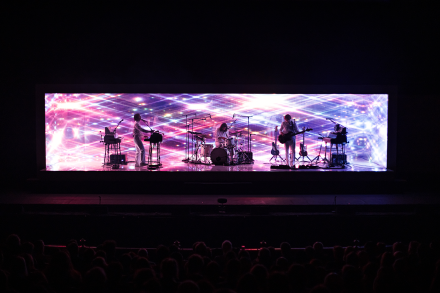
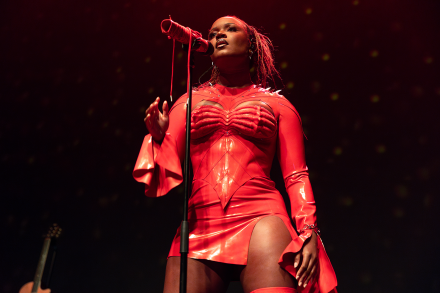
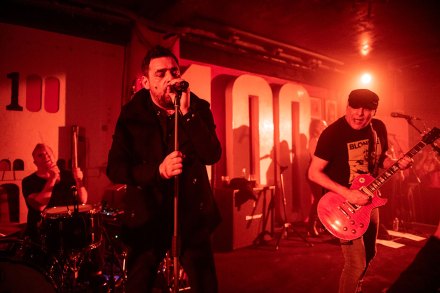
‘Meat-and-potatoes rock’ is the pejorative term critics use when describing groups of white men with guitars who play loud, uncomplicated music. Why would anyone enjoy such stuff, when there are the ceviches of hyperpop, the flavoured foams of experimental hip-hop, the chargrilled seasonal vegetables of jazz? Don’t they know the world has moved on? Unfortunately, the world has a habit of not listening to the critical consensus. The highest new entry in last week’s album chart came from the Snuts, a meat-and-potatoes guitar band. This week’s No. 1 album is all but guaranteed to be by Liam Gallagher and John Squire, the Toby Carvery of meat-and-potatoes rock.

He barely knows what he’s doing: Oliver Anthony, at the O2 Shepherd’s Bush Empire, reviewed

From our UK edition

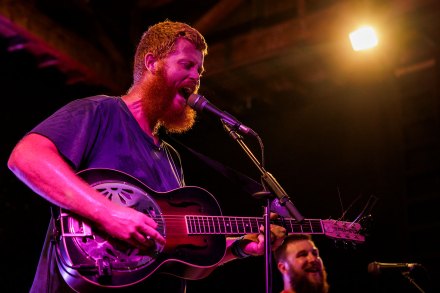
What does a chubby, bearded American feller wearing a plaid shirt and singing about his dog and truck have in common with a chic, sonically adventurous Irish art-pop star? Both, last year, were inadvertently parachuted into the battlefields of the culture wars. Oliver Anthony recorded a song called ‘Rich Men North of Richmond’ – Virginia, not Surrey – that was picked up by MAGA-types from an obscure country music YouTube channel, became a talking point in the Republican presidential primary debates and ended up entering the Billboard Hot 100 at No. 1 last August. While the music is appealing enough, Anthony is an appalling lyricist.

Monumentally good: John Francis Flynn, at the Dome, reviewed

From our UK edition

John Francis Flynn is monumentally good. He’s kick-yourself-for-missing-him good. He’s so good that when he spoke between songs in the upstairs ballroom of an old Irish pub in Tufnell Park, it was almost a disappointment: how could the man making this extraordinary music be so normal? Flynn is part of a cohort of Irish musicians revisiting traditional music. There’s the Mary Wallopers, in broad terms the most Pogues-ish. There’s Lankum, shortlisted for the Mercury Prize for their eyebrow-raising, droning experimentalism. There’s Lisa O’Neill, subdued and stern. And there’s Flynn, whose music dances from the unadornedly old-fashioned and Irish – the ‘Tralee Gaol’ played solo, on tin whistle – into something entirely different.

Without Pitchfork, bands like the Clientele would never have attracted any attention

From our UK edition

The whole world might have been different had Alasdair MacLean, singer and guitarist of the delicate, pastoral, slightly psychedelic band the Clientele, had his way. In 2006 he told music website Pitchfork about the time he was working for a publisher and strongly recommended they turn down a children’s fantasy novel that had been submitted. They overruled him and published Harry Potter and the Philosopher’s Stone anyway. We all know what happened to J.K. Rowling. MacLean ended up leaving the world of books, and in due course the Clientele got a music deal that enabled them to turn full time, though I have no idea whether they still survive solely on the tiny margins a working indie band can carve out.

The confusing, overwhelming, exhilarating music of Jockstrap

From our UK edition

Shall we get the pop predictions for this year out of the way first? Taylor Swift will continue to conquer the world; the charts will continue their descent into meaninglessness; some long-forgotten group or style will become inexplicably popular because kids use it to soundtrack their TikTok videos. There. That’s the coming year taken care of. And how did the old one wrap up? With a week of gigs in the run-up to Christmas that was so overloaded it was impossible to get to them all. That still left plenty of treats, though, beginning with Jockstrap. The band was joined on stage by strings, a percussionist, a soprano, as well as someone on stilts dressed up as a monster straight from the props cupboard of Terry Nation-era Doctor Who.

Why I love the Hold Steady

From our UK edition

Live music is thriving right now. According to the US trade magazine Billboard, Taylor Swift’s Eras tour has so far grossed an estimated $838m, and that’s just from 66 shows in the Americas. It’s already the second highest-grossing tour in pop history, and she hasn’t had to cross an ocean yet. At the top end, live music is indeed awash in cash. But at the grassroots end, it really isn’t: December began with one of the UK’s best loved small venues, Moles, in Bath, announcing its bankruptcy – one more historic room set to shut down. Bands complain about venues taking a third of their merchandise revenues, a recent practice that eats into one of the few areas where musicians really can make some money. International touring has become harder and harder.

‘Stomp clap hey’ music: Noah Kahan, at O2 Forum Kentish Town, reviewed

From our UK edition

I first heard of Noah Kahan in a cave in France this summer, when my 23-year-old daughter started wailing with distress at realising she had missed the chance to buy tickets to see him because she was in a cave when they went on sale (two shows at the Forum sold out in seconds). Kahan, a 26-year-old singer-songwriter from Vermont, has so far made very little impact on the world of the over-thirties, but his contemporaries and those a little younger adore him. If you Google reviews, you won’t find very much from the traditional music press or from big newspapers and magazines – but you’ll find plenty from student papers. What they like so much about him is a little mysterious.

Gig of the year: Ezra Collective, at the Royal Albert Hall, reviewed

From our UK edition

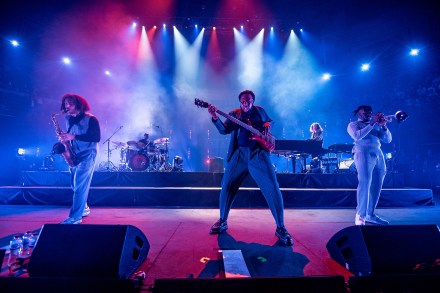
The American music website Pitchfork is the journal of record for alternative America. It has became this generation’s Rolling Stone, for both good and ill. Long before it was bought by Condé Nast, however, it was famous for a disastrous jazz review in which the site’s founder chose to employ what he appeared to believe was the vernacular of a jazz ‘cat’ of the early 1960s. All is forgiven, though. Here was the London outpost of the Pitchfork Festival, opening with jazz stars Ezra Collective, the quintet who earlier this autumn won the Mercury Prize for their second album, Where I’m Meant To Be. Ezra Collective are very easy to like.

Spellbinding performance of a career-defining record: Corinne Rae Bailey, at Ladbroke Hall, reviewed

From our UK edition

You won’t see two more contrasting shows this year than Corinne Bailey Rae performing her album Black Rainbows and Brian Eno presenting work with a symphony orchestra. One had music that did everything; one had music that did very little. But both were overwhelming and filled with joy of rather different kinds. When Bailey Rae last made an album, in 2016, it was gentle, tasteful, soulful R&B, the kind the young professional couple in a prestige Netflix drama listen to before their lives are overturned by a vengeful nanny. Black Rainbows,by contrast, from earlier this year, was an abrupt embrace of everything: from scuzzy garage punk to psychedelic soul to American show tunes, all inspired by the Stony Island Arts Bank in Chicago and its exhibits on the black experience in America.

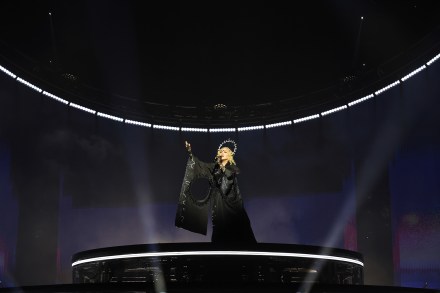
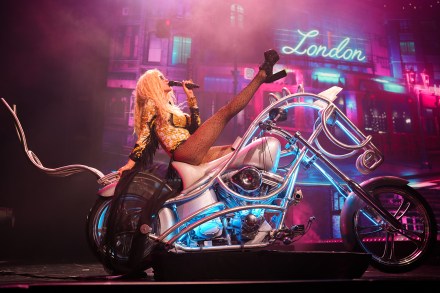
Virgin on the astonishing: Madonna, at The O2, reviewed

From our UK edition

When I was a kid listening obsessively to AC/DC and Iron Maiden and Black Sabbath, I despaired of music writers. How come none of them – except the staff of Kerrang! magazine and a couple of writers on Sounds – could see the majesty and splendour of this music? Why were they always banging on about flipping Echo and the Bunnymen and Joy Division, or harking back to old man Dylan? These days, all three of those bands are to some degree or another as revered. Not everyone loves them, but you won’t find many serious critics – even those who don’t personally care for ‘Whole Lotta Rosie’, ‘The Number of the Beast’ or ‘War Pigs’ – who’ll simply write them off as worthless. ‘A wandering worthless exercise’, wrote NME of Madonna’s Like a Virgin.

An awfully long night for a band without any bangers: The National, at Alexandra Palace, reviewed

From our UK edition

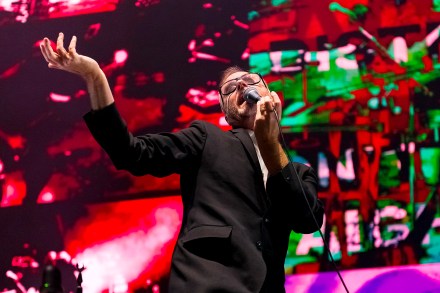
Over the past few years, the National have become the most important band in modern rock music. The strange thing is that this has happened at a point when their own work has perhaps lost a little of its earlier intensity. They’ve become important because they have come to represent something to other artists: a kind of adventurous but accessible integrity. The brothers who are the musical core of the band – guitarists Aaron and Bryce Dessner – have been so in demand that they have worked with, between them, (deep breath) Taylor Swift, Ed Sheeran, Michael Stipe, Sharon Van Etten, Bon Iver, Philip Glass, Steve Reich, Paul Simon, Sufjan Stevens, Nico Muhly, Jonny Greenwood, Bruce Springsteen and Ryuichi Sakamato. And those are just the ones you might have heard of.

If you can’t get something out of the songs of Shania Twain, you’re a lost cause

From our UK edition

Pop critics routinely make the mistake of assuming the most important acts are the ones copied by the groups they like. So to a generation of writers who grew up listening to 1980s and ’90s indie, the Velvet Underground are the second most important group of all time, after the Beatles. Don’t get me wrong, I love the Velvet Underground, and they are hugely important in rock history. But in reality the second most important group in rock history is Van Halen, because for a decade or so the vast majority of hard-rock bands – who in the 1980s were commercially huge – were trying to imitate them in one way or another.

The Strokes are always terrible – why do I keep going back to see them?

From our UK edition

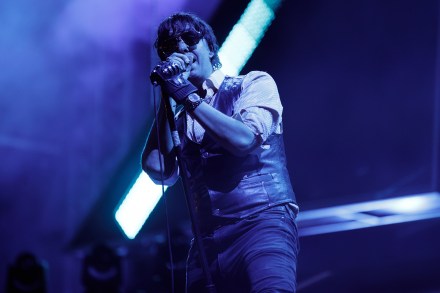
Quite when the concept of coolness became a thing is uncertain, even to etymologists. As early as 1884, an academic paper noted the expression ‘Dat’s cool!’ among African-Americans. But it’s about 100 years since ‘cool’ entered the lexicon as an unambiguous description of something to aspire to (via jazz, inevitably), and it’s still a crucial concept in the world of pop: it’s being cool that meant the Strokes could attract 50,000 or so people to east London, even though most of those present were at primary school when the band released their two first two albums, which are the two on which their reputation rests, and songs from which comprised nearly half their set.

It was midnight in a field in Wales and I was lying face down in six inches of mud: Green Man Festival reviewed

From our UK edition

I love Green Man. The smallish festival is the second most beautiful site I’ve ever visited (after G Fest, which is situated on a beach in a fjord in the Faroe Islands). Nestled in a valley between the mountains of the Brecon Beacons, it has great bills, it’s impeccably organised and I feel nourished by it. But, in the interests of being honest about festivals for those who have never been, I should also confess that this year it supplied the single most miserable experience of my music-watching life. It was midnight, in a field in Wales, and I was lying face down in six inches of mud Friday was the kind of day Noah might have felt a little discombobulated by. It began raining before dawn and it never let up. Come nightfall, the wind picked up too.

Is it all an elaborate practical joke? Mac DeMarco, at Hackney Empire, reviewed

From our UK edition

It’s not just who our pop heroes are that marks the passing of the generations; it’s how those heroes present themselves. Kevin Rowland, who turns 70 next week, appeared on stage for his London album launch in a jaunty sailor’s hat and striped top, looking as though he’d just come from a fashion shoot. Mac DeMarco, aged 33, ambled on in baseball cap, shlubby T-shirt and jeans. Rowland was upstanding, commanding and just a little forbidding. DeMarco sat on a stool and told a long story claiming that he and his keyboard player had been Oregon miners: a story which extended to include coprophagia, hair fetishism and maple syrup. Rowland is total commitment; DeMarco is total detachment. Both were adored above and beyond the usual level of dedication.

A giddy delight: Regina Spektor, at the Royal Festival Hall reviewed

From our UK edition

We’ll get on to the brilliance of Regina Spektor in a moment. But first a question: why are pop music fans treated so abysmally? The afternoon of Spektor’s second sold-out show at the Royal Festival Hall, the venue tweeted that she would be on stage at 7.30 p.m. She actually took to the stage a few minutes past 8 o’clock. Spektor was absolutely magnificent once she did come on. She filled the room with charisma, charm and wit If that were a one-off, so be it. But anyone who goes to a lot of shows is familiar with how malleable the concept of stage-time is in pop music. Lana Del Rey had her Glastonbury set cut short because she was so late coming on – apparently she was having her hair done. It’s maddening. Why can they not meet their call times?

Intoxicating: Bruce Springsteen, at BST Hyde Park, reviewed

From our UK edition

Seven years ago, I asked Bruce Springsteen what he meant when he talked of the covenant between himself and his audience. It was a long, thoughtful and thorough answer, and when I transcribed it, I realised he would have won Just a Minute, so clear was his reply. Part of what he said was this: ‘I have built up the skills to be able to provide, under the right conditions, a certain transcendent evening, hopefully an evening you’ll remember when you go home. Not that you’ll just remember it was a good concert, but you’ll remember the possibilities the evening laid out in front of you, as far as where you could take your life, or how you’re thinking about your friends, or your wife, or your girlfriend, or your best pal, or your job, your work, what you want to do with your life.

Why aren’t Spoon filling stadiums?

From our UK edition

Here’s a mystery for you. Why were Spoon, one of the most dynamic, sharpest rock bands in the world, playing a single night in a north London town hall (capacity 890) while Arctic Monkeys were playing three nights at Arsenal’s ground (capacity 59,000) as part of a UK tour that encompassed eight other stadiums in the UK, plus one arena, one park and Glastonbury? It’s not that Arctic Monkeys aren’t good – no one gets that kind of critical unanimity without being good. It’s just that Spoon are better, and better than almost everyone else. Onstage in London, aided by a genius sound engineer, Spoon were perfection So why aren’t Spoon filling stadiums? First, they rarely come to the UK.

Brilliantly unhinged: Grace Jones, at Hampton Court Palace, reviewed

From our UK edition

Some artists need flash bombs to make an impression on stage. Some need giant screens. Some need to run around like hyperactive toddlers. All Grace Jones needed was a hula hoop – not the delicious potato snack, but the plastic ring. For the ten minutes or so of ‘Slave to the Rhythm’ that ended her set on a balmy evening in the courtyard of Hampton Court Palace, she languidly rotated the ring around her hips, all while she strode across the stage, then climbed a set of stairs. Not a single revolution was missed. I realise that you don’t come to these pages for reviews of hula hooping, but by God, it was astonishing. I like to think it was what Henry VIII would have wanted. It was a fitting end to a brilliantly unhinged show.

One of the most tuneless, vapid, dismaying things I’ve ever seen: Mötley Crüe, at Bramall Lane, reviewed

From our UK edition

I’m not sure I’ve ever seen anything worse than Mötley Crüe in Sheffield. Nothing more tuneless, empty, vapid and dismaying. The Los Angeles glam-metal band became superstars in the 1980s, largely by wearing lots of make-up and doing terrible things, but I’ve never understood why. Even those who weren’t repulsed by the band members’ behaviour and personalities surely couldn’t have detected any actual tunes in there. At Bramall Lane, with a viciously loud PA, the few melodies that were there were largely undetectable. And the band – now in their sixties – still gloried in their obnoxious infantilism.