Michael Hann

The terrifying charisma of Liam Gallagher

From our UK edition

You’d have thought Wembley Stadium was a sportswear convention, so ubiquitous were the three stripes down people’s arms from all the Adidas merch: veni, vidi, adi. Pints drunk: 250,000 a night, apparently. All along the Metropolitan line pubs noted an Oasis dividend. At a corner shop, I was sold an official Oasis Clipper lighter. It’s surprising Heinz hasn’t yet offered an Oasis soup; you get a roll with it. Plainly, an awful lot of people have missed Oasis. And an awful lot of people – Noel and Liam Gallagher included – saw the chance to make an awful lot of money from their reformation. I don’t think any of them – neither fans nor entrepreneurs – will have been disappointed. At Wembley, the atmosphere was remarkable.

Magnificent: Stevie Wonder at BST Hyde Park reviewed

From our UK edition

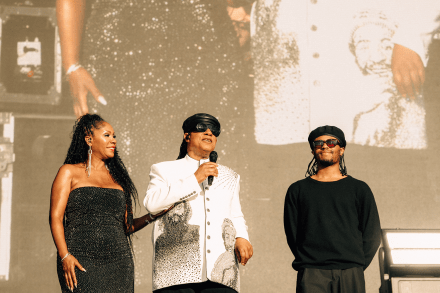
The highs of Stevie Wonder’s Hyde Park show were magnificently high. The vast band were fully clicked into that syncopated, swampy funk, horns stabbing through the synths, the backing singers adding gospel fervour. And Wonder – now 75 – sang like it was still the 1970s, his voice raspy one minute, angelic the next. Anyone who heard that phenomenal group play ‘Living for the City’ or ‘Superstition’ and didn’t feel ‘ants in my pants and I need to dance’, as James Brown once put it, should resign from life: they do not deserve such joy. That said, there were oddities. We were blessed with visits from four of Wonder’s nine children, two of whom were given whole songs to sing while the great man had a breather, as were three of the backing singers.

What I saw at Ozzy’s last gig

From our UK edition

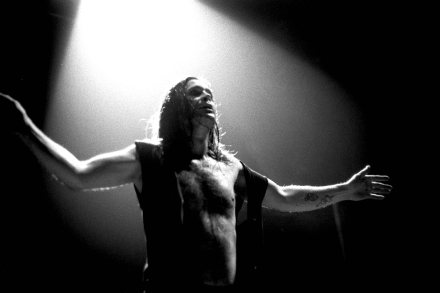
Ozzy Osbourne and Black Sabbath did something British groups had not done before. Before them, the British Invasion groups – from the Beatles, the Stones and The Who down to Herman’s Hermits and Dave Dee, Dozy, Beaky, Mick and Tich – had taken American music and sold it to the British public as the American dream, as exotica. And when they exported it back to the States, the Americans – most of whom had never heard the music the groups began by copying – heard in it something fresh and exciting and joyful. Sabbath instead sold the American nightmare back to the United States, filling arenas across North America, a much bigger concert draw there than at home.

A delight: Sabrina Carpenter at BST Hyde Park reviewed

From our UK edition

We all know, at heart, that economic theories of rational behaviour are rubbish. And that their application ruins so many areas of life. Football supporters, for example, are not ‘customers’; they are supporters. They are at the club before a new owner arrives, they remain there after that owner leaves. In the meantime, they do not make rational decisions. They do not, when QPR are rubbish, pop across west London to support Chelsea, though it might be the economically rational thing to do. Same with pop. I’m a music fan more than I am a customer.

Dua Lipa sparkles at Wembley – but her new album is pedestrian

From our UK edition

If, as is said, there are only seven basic narratives in human storytelling, then there should be an addendum. In rock and pop there is only one: the dizzying rise, the imperial period, the fall from grace (either commercial or ethical, sometimes both), and the noble return (historically prefigured with a glossy music mag cover proclaiming: ‘Booze! Fights! Madness! How Rubbish Band went to hell – and came back’). All three were on view in London this past fortnight. Waxahatchee was the one on the way up: this was, Katie Crutchfield announced proudly from the stage, the ensemble’s biggest-ever show. Dua Lipa was the one entering her imperial phase – her first Wembley headline, with a production to match.

The charm of Robbie Williams

From our UK edition

What could it possibly feel like to be a sportsperson who gets the yips? To wake up one morning and be unable to replicate the technical skills that define you. To suddenly find the thing you do well absolutely impossible. Golfers who lose their swing, cricketers whose bowling deserts them, snooker players who can’t sink a pot. Stage fright – something both Robbie Williams and Cat Power have suffered from – is much the same. Williams took seven years off touring last decade because of it, which must have been devastating for someone whose need for validation is so intense that he has made it his brand.

Anyone irritated by Springsteen’s speeches hasn’t been paying attention

From our UK edition

No one who went to see Bruce Springsteen’s Broadway residency a few years back came away disappointed because they knew what they were getting: a tightly scripted show, in which there was more speech than music. The country star Eric Church – who made his name with a single called ‘Springsteen’ – appeared to have been taking notes, for that was the model for his ‘residency’ at the Albert Hall. All that he lacked was the tight script – and Springsteen’s charm and charisma. It was, the MC told us, Church’s first time in the UK in eight years, but the place was horribly undersold, the top tier almost empty and spaces all around the stalls.

I think I’ve found the new Van Morrison

From our UK edition

Young male singers won the right to be sensitive in 1963, when The Freewheelin’ Bob Dylan was released. And in the 63 years since, being young and vulnerable and questing has been one of the great default settings. I’d say you can’t go far wrong singing sadly about your feelings, but of course you can, as the great mountain of discarded troubadours proves. Yet the size of that rejects mountain also tells us how alluring the prospect of baring one’s feelings to strangers can be. Zach Condon, who works as Beirut, and Dove Ellis are at different points on the sensitive young man spectrum. Condon is 39 for a start, so the young bit doesn’t even hold true.

A triumphant show: Self Esteem, at Duke of York’s Theatre, reviewed

From our UK edition

The most compelling character in the newish documentary One to One: John & Yoko isn’t either John or Yoko. It’s one A.J. Weberman, inventor of ‘Dylanology’ and ‘garbology’. He’s shown practising both in the film, rummaging through Bob Dylan’s bins for clues to the thought process of genius.  Fifty years on, two things struck me. The first is how odd it is that Lennon and Dylan would let someone as obviously potty as Weberman anywhere near them. The second is that everyone is now Weberman. Think of the Swifties who decode every missive from Taylor; the fanatics who obsess over the sexual antics of boy bands based on convoluted readings of song lyrics; and people like me who spend wintry Saturdays driving around the Jersey shore visiting Springsteen locations.

Divorce are the best young British band I’ve seen in an age

From our UK edition

Can we talk business for a moment? When reviewers like me go to big arenas, we get the best seats in the house, with fantastic sightlines and excellent sound (a PR who used to work for U2 told me she would routinely reassign press into even better seats than the already splendid ones they had originally been given; you do anything you can to get an extra 1 per cent more enthusiasm into the review). When we go to standing venues, though, we are as prone to the vagaries of geography as anyone else. And because we go to a lot of shows, we tend to arrive only five minutes before the turn we want to see goes on stage, which means we rarely find great positions.

Metal for people who don’t understand metal: The Darkness at Wembley reviewed

From our UK edition

Midway through their thoroughly entertaining show at Wembley Arena, the Darkness played a song from a decade ago called ‘Barbarian’, about Ivar the Boneless and the Viking conquest of Britain. ‘Barbarian’ exists in a long tradition of men with long hair, tight trousers and loud guitars singing about our Danish friends. Led Zeppelin did it on ‘The Immigrant Song’: ‘The hammer of the gods/ Will drive our ships to new lands/ …Valhalla, I am coming!’ Iron Maiden did it on ‘Invaders’: ‘The smell of death and burning flesh, the battle-weary fight to the end/ The Saxons have been overpowered, victims of the mighty Norsemen.’ Scores of others you are less likely to be familiar with have, too. The Viking anthem is a rite of passage in hard rock.

The death of touring

From our UK edition

Touring’s not what it used to be. When I were a lad, even big bands would do 30 or 40 shows around the UK to promote their new albums, stopping in places such as Chippenham Goldiggers, Hanley Victoria Hall, Ipswich Gaumont, Preston Lockley Grand Hall that would only see a major act today if they happened to need a local motorway services. Those days are gone. If you’re a superstar, you’ll do a handful of arenas in a few big cities. And if you are not a superstar, you might not even tour your new album at all, at least not in the old sense.

Finneas has little to offer without his sister Billie Eilish

From our UK edition

No truth is more self-evident than that there are those whose best emerges only when they are paired with others: Lennon and McCartney, Morecambe and Wise, Clough and Taylor. And it’s perhaps even harder for a behind-the-scenes collaborator to step out in their own right. Jack Antonoff, for example, is one of the creative powerhouses of modern pop: he co-writes and produces songs for Taylor Swift, Lana Del Rey and Lorde, who plainly regard him as intrinsic to their success. His work probably reaches more ears than any other songwriter on Earth. But when he writes and produces those songs for himself? The magic vanishes. The band he fronts, Bleachers, are popular, but no more popular than any other indie rock band that listens to Springsteen.

Lauren Mayberry is terrific – but it’s not music for middle-aged men

From our UK edition

There are nights when one realises quite how much effort the business end of showbusiness must be. On a bitterly cold Monday night in Philadelphia, Lauren Mayberry – over from Glasgow, and halfway through a month of criss-crossing the USA – took to the stage to survey a crowd of maybe 500 people, in a venue that holds 1,200. A good proportion of those 500 people were just like me: middle-aged men. We have every right to be there, of course, and one suspects Mayberry was glad they bought tickets. But I bet she was disappointed some of the remaining 700 or so tickets had not been bought by young women, for this is who this show is for.

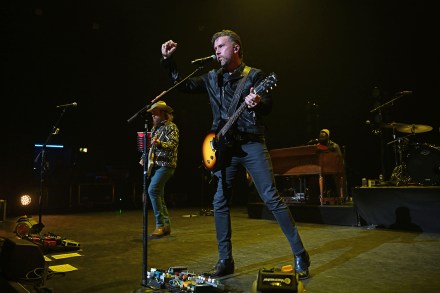
A cheaper, shinier, more processed Chris Stapleton: Brothers Osborne reviewed

From our UK edition

If you were a frequent viewer of Top Gear in its Clarkson/Hammond/May era, there is a particular laugh you will be very familiar with: the combined hoot and exclamation that the three of them, and Clarkson especially, would engage in when driving a fast car around a bend. It was a sort of ‘WOOOOwraghhhahahaha’, designed to convey both sheer delight at being alive and a certain manly pride in being able to extract such a feeling from a motor vehicle. It was a performance.

Like lying down in front of a bulldozer: the Jesus Lizard, at the Electric Ballroom, reviewed

From our UK edition

Many indie types from the 1980s and 1990s were secretly metal fans. But it’s not something they ever really wanted to admit to in public. They’d talk a good game about the Stooges and the Velvet Underground but back home – as was the case with Leeds’s goth overlord Andrew Eldritch, of the Sisters of Mercy – their living rooms were full of AC/DC videotapes. In fact, I’d go further and say the most influential track in the history of alternative music might very well be ‘Kashmir’ by Led Zeppelin rather than one of the hipster-anointed underground classics. It sometimes feels as though every indie band with one foot in rock has to have their attempt at ‘Kashmir’, all jarring rhythms and slabs of guitar, faintly eastern, very grand.

The problem with Paul McCartney is he wrote too many good songs

From our UK edition

Don Bradman, the greatest cricketer of all time, was once asked if he reckoned he could have maintained his batting average of 99.94 against the fearsome West Indian bowling attack of the time. Oh no, he said. Not a chance. He’d probably be hitting in the 50s, like the very best batsmen of the time. But then again, he added, he was in his late 60s so it was unrealistic to expect better. Seeing the Stones is the only thing that compares to the human-jukebox effect of McCartney live That’s the position Paul McCartney occupies in the world of pop. No, at 82 years old he is not going to make a new Revolver or Abbey Road. And no, he can’t do the Little Richard scream like he used to 60 years ago. But he is still, as they say in sport, the Goat. The undisputed champion of the world.

Kate Andrews, Mark Galeotti, Adrian Pascu-Tulbure, Michael Hann and Olivia Potts

From our UK edition

31 min listen

On this week’s Spectator Out Loud: Kate Andrews examines the appointment of Scott Bessent as US Treasury Secretary (1:20); Mark Galeotti highlights Putin’s shadow campaign across Europe (7:10); Adrian Pascu-Tulbure reports on the surprising rise of Romania’s Calin Georgescu (15:45); Michael Hann reviews Irish bands Kneecap and Fontaines D.C. (22:54); and Olivia Potts provides her notes on London’s Smithfield Market, following the news it may close (27:28).  Produced and presented by Patrick Gibbons.

Kneecap are basic but thrilling

From our UK edition

It was Irish week in London, with one group from the north and one from the south. Guinness was sold in unusual amounts; green football shirts were plentiful; and so, at both shows, was a genuinesense of joyful triumph – these were the biggest London venues either group had headlined. The Irishness was much more visible onstage at Kneecap, not least because, as a proudly Republican group, they can’t really not make a big deal of being from west Belfast. Their statements have prompted the inevitable fury from some quarters: Kemi Badenoch (as business secretary) refused them a £15,000 grant to help them tour, on the grounds that the British state should not be aiding those who despise it.

Perfectly imperfect: Evan Dando, at Islington Assembly Hall, reviewed

From our UK edition

‘Can I have a photo with you, please?’ It’s the most embarrassing question you can ask of someone you’re interviewing. But I had to. Not only because Evan Dando is one of my favourite songwriters. But also – vainly – because years of on-off drug addiction (mostly on) mean Dando is no longer quite the beautiful young man he was when he became famous in the early 1990s. Back then, I’d have looked like a troll standing next to him. Now, not so much. It was a night of beautiful imperfection – the kind that feels truer than a thousand arena shows He still, however, looks better than he has any right to, and in the evening he proved that he sounded better than I had dared to hope. Better still, he was fully present – not just physically, but mentally and emotionally.