Melanie McDonagh

Melanie McDonagh

Melanie McDonagh is an Irish journalist working in London.

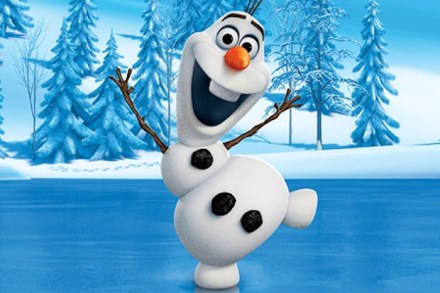
Why Frozen is a fabulously irritating film

From our UK edition

For a film I’ve never seen, I really, really hate Frozen. For those who don’t have children and don’t look into shop windows and don’t buy toys and are oblivious to merchandise, it’s the blockbuster, Academy award-winning Disney film, the most successful animation of all time and apparently the source of unending annoyance in car journeys, on account of children’s habit of singing the songs out loud. (The director, Jennifer Lee, has just issued an apology to parents everywhere.) My own children loathe it without any encouragement from me but they can’t get away from it either.

Treasure Island is a boys’ book. There’s no need for a feminist twist

From our UK edition

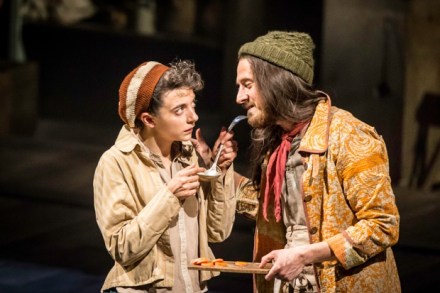
When Robert Louis Stevenson wrote Treasure Island he declared triumphantly that if it wasn’t a winner with boys, then he didn’t know what boys were like. And it was indeed the perfect boys’ book; pirates, a map, treasure, a boy hero, black-hearted villains and gore. Perfect. It was, therefore, with mixed feelings that I sat through the National Theatre's feminist take on Treasure Island last night. On the bright side, the set was phenomenal, a cavernous structure like a whale’s ribcage enclosing the action, with the ribs descending like some sort of swamp creature. In fact, Lizzie Clachan’s design - she had great fun with the rising central platform -  stole the show.

Grimms’ fairy tales: the hardcore version

From our UK edition

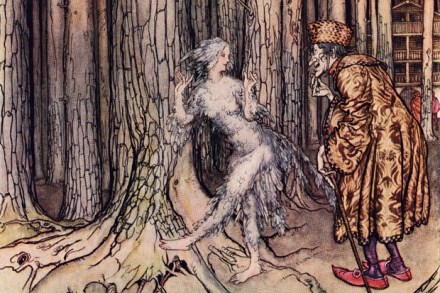
Child murder, domestic slavery, abusive families, cannibalism and intergenerational hatred — what could be better for the festive fireside than a new edition of Grimms’ fairy stories? There hasn’t been a straight translation in English of the original 1812 edition; most retellers in English relied on revised versions by Wilhelm Grimm. Now Jack Zipes has produced the complete first edition of The Original Folk and Fairy Tales of the Brothers Grimm. It’s a good translation, faithful to the simple character of the originals. It’s been well received by the fairytale industry, writers and academics who like to remind us that the original versions were rawer than Wilhelm’s family-friendlier edition of 1857.

Tristram Hunt is right: private schools do need to do more for the state sector

From our UK edition

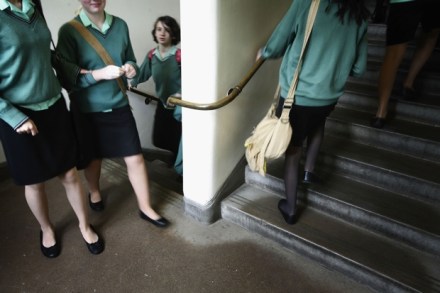
Please can we give Tristram Hunt a break? I’m right behind him when it comes to getting private schools to share their largesse with the state sector, and I mean, properly share. My children go to a little Catholic state school in West London just down the road from a terrifically expensive girls school, let’s call it St Peter’s. Well, over the last year, St Peter’s burnished its credentials on the social outreach front by sending in some of its sixth form girls to teach Latin. My son was in that Latin club, and I can tell you just what happened. The wretched sixth formers gave the children strawberry Haribos to bribe them to keep quiet while they got on with texting.

The best children’s books of 2014

From our UK edition

If it’s all right with you, I’d like to launch a campaign please. Right here. You may be wanting me to cut to the chase and just recommend some children’s books, but bear with me. I’m on the case. My campaign is to have pictures in books again. Adult books too, but obviously books for children. There are some wonderful illustrators out there, contemporary ones, for all ages, and the scandalous thing is, they are usually limited to the age range, 0–7. If you want to remind yourself what we’re missing, make for the House of Illustration in London’s King’s Cross; that should do it. Or try Chris Beetles’s annual, brilliant exhibition, The Illustrators, on now at his St James’s gallery.

Why we should use the language of Christianity in public discourse

From our UK edition

There was an interesting exchange last night at the annual lecture for Theos, the think tank that does God. After a speech by the economist Will Hutton which paid tribute to Catholic social teaching as a way of looking at economics, the floor was given over to the two MPs, Jon Cruddas and David Willetts. Jon Cruddas was fluent in the language of community, solidarity and fraternity, precisely, as he said, because that’s what Christianity is about, and he is of Irish Catholic stock. He observed that the fundamental principle that you should do to others what you would have them do to you was universal – it translates into every kind of moral thinking. Over to Mr Willetts for the dissident approach.

Spectator books of the year: Melanie McDonagh embraces The Essence of the Brontës

From our UK edition

Muriel Spark wasn’t only one of the great British novelists but a cracking literary critic and a lovely essayist. Her book on Mary Shelley is extraordinarily perceptive; ditto, but more fun, is her writing on the Brontës. Carcanet Press, having last year reissued the Shelley book, has now republished The Essence of the Brontës (£12.95), Spark’s compilation of their letters, with essays. It’s a joy on both fronts. Her piece on the siblings as teachers (‘genius, if thwarted, resolves itself in an infinite capacity for inflicting trouble’) is mordantly funny — her sympathies are entirely with their pupils — while the selection of letters is very fine and occasionally downright malicious.

Why Paddington is anti-Ukip propaganda

From our UK edition

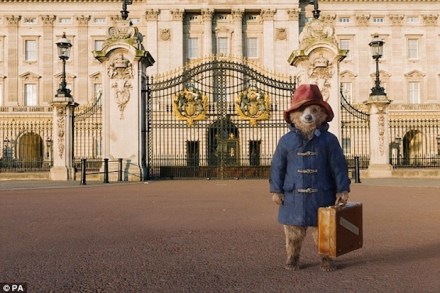
Well, I’ve just been to see the new Paddington film – the one Colin Firth bowed out of on account of not feeling up to being the voice of the most famous bear in literature, not including Winnie the Pooh. And yep, there were marmalade sandwiches at the launch. Two things. One, it’s nothing like the book, apart from a couple of episodes. In the original, Mr Brown spots Paddington among the bicycles and both he and Mrs B are willing to take him on. In this version, Mr Brown, as played by Hugh Bonneville, is an ol’ curmudgeon, a risk assessor who regards bears as trouble and this one in particular as a threat to the children’s health and safety.

Remembrance Sunday is marvellous; for God-free war commemoration, go to France

From our UK edition

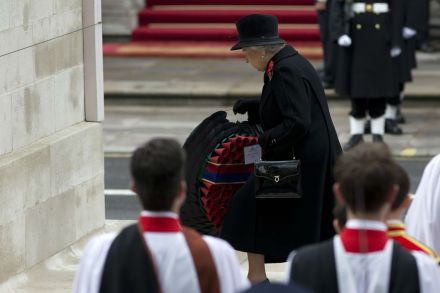
The most remarkable thing about the ceremony at the Cenotaph on Remembrance Sunday is that it just gets more popular. A ceremony that a generation ago might have been confidently predicted to appeal to a smaller and smaller bit of the population has somehow attracted the kind of benign publicity you get for the Children in Need awards. And the enormous crowds at the Tower to see the moatfull of ceramic poppies – one for each British life lost – has taken everyone by surprise. It’s got a good deal to do with the centenary of the First World War, of course, but that itself suggests that in a fractured Britain, people attach real emotional significance to wars from a lost world whose very language – such as sacrifice – is alien to our own.

The cult of ‘mindfulness’

From our UK edition

[audioplayer src="http://traffic.libsyn.com/spectator/TheViewFrom22_30_Oct_2014_v4.mp3" title="Ruby Wax and Andy Puddicombe discuss mindfulness with Mary Wakefield" startat=75] Listen [/audioplayer]The chances are that by now either you or someone you know well has begun to practise ‘mindfulness’ — a form of Buddhism lite, that focuses on meditation and ‘being in the now’. In the past year or so it’s gone from being an eccentric but harmless hobby practised by contemporary hippies to a new and wildly popular pseudo--religion; a religion tailor-made for the secular West. Think how hostile an awful lot of companies are to organised religion; to any talk of ‘faith’.

What Shami regards as right isn’t necessarily what is right

From our UK edition

Shami Chakrabarti, director of the civil rights group Liberty and omnipresent media personality, is on the cover of her book. She’s wearing a blindfold bearing the legend ‘On Liberty’, which seems to cast her in the role of Justice — blind, and all that. The title is the same as John Stuart Mill’s famous essay on the subject, which is, I’d say, unwise, as inviting comparisons. I did indeed go out to get JSM’s essay to read alongside Shami, and it wasn’t just the prose that left her standing. This book is an account of her time at Liberty since she started there, the day before 9/11, with a bit of autobiography thrown in.

Turkey in Europe? Now there’s a migrant backlash waiting to happen

From our UK edition

Well, I don’t know how José Manuel Barroso came across in the broadcast accounts of his address to Chatham House today but in person the man was geniality itself and rather impressive with it. He shares the mildly irritating tendency of EU bigwigs to attribute to the European Union developments that would have happened without it – recalling that within memory, Europe had moved from totalitarian regimes in half of its states to a democratic and peaceful unity. But in general, he gave the impression of trying to be as straight as he could with his answers. In laying stress on Britain’s freedom to stay outside the eurozone and the Schengen area, he rather skated over the reality that would-be EU entrants don’t have any choice in the matter.

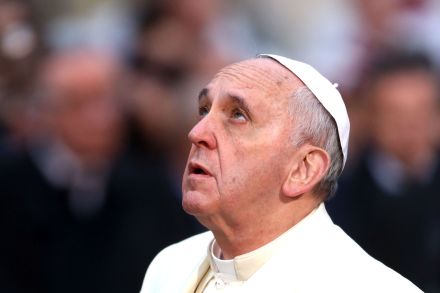
After the Pope’s Synod-on-family fiasco, let’s judge Catholicism on Catholic terms

From our UK edition

[audioplayer src="http://traffic.libsyn.com/spectator/TheViewFrom22_2_Oct_2014_v4.mp3" title="Luke Coppen and Cristina Odone join Freddy Gray to discuss divorced Catholics." startat=1053] Listen [/audioplayer] The Church’s extraordinary Synod on the family hasn’t gone down terribly well with secular pundits. It’s been billed as a failure on the BBC, which declared that gay Catholic groups are 'disappointed' with the inability of the Synod to make progress towards acknowledging gay relationships. Other groups are similarly disappointed by the Synod’s refusal to admit divorced and remarried people to communion.

The horrid, helpful egg-freezing scheme at Facebook and Apple

From our UK edition

Was the chief operating officer of Facebook, one Sheryl Sandberg, involved, do you reckon, in the company’s exciting invitation to its women employees to freeze their eggs so they can become pregnant at their convenience, preferably a little later in life? I’m not sure that this was one of the recommendations in Lean In, her inspirational advice to women wanting to get ahead in business. Get stuck in, was its motto, and sort out the children in the fullness of time on your terms. She does that herself, you know, with a Shared Earning/Shared Parenting marriage with David Goldberg. The rest of us get on with sharing both those things by dint of it being unavoidable, but we don’t give ourselves airs about it. Anyway, freezing her ova wasn’t how Ms Sandberg got ahead.

When Irish nationalism meant sexual adventure

From our UK edition

One of the easiest mistakes to make about history is to assume that the past is like the recent past, only more so. It’s a natural human tendency to project the outcome of events backwards, ignoring the fact that the arc of history really doesn’t work like that. In the case of Ireland that tendency to see the past in terms of outcomes is particularly misleading. The state that came about less than a century ago as a result of the Easter Rising, the war of independence and partition was socially conservative and strongly Catholic. Roy Foster’s achievement is to show that this need not have been so. This book — the title is from W.B.

All is fair in football, war and the former Yugoslavia – even Albanian mini-drones

From our UK edition

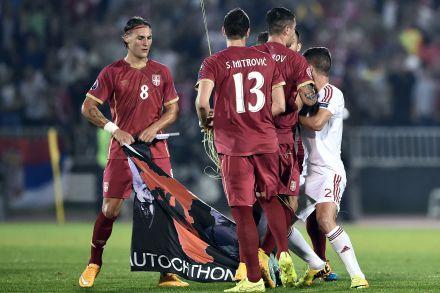
The whole notion that sport is, like the EU, an alternative to war, took a bit of a battering at the Euro 2016 qualifier in Belgrade's Partizan stadium last night. The match had to be called off after 40 minutes when a small drone, bearing the flag of greater Albania (with, presumably, the flag of Serbia as an Ottoman province in the corner) flew over everyone’s heads. One of the Serbian players, Stefan Mitrovic, made a grab at it, some Albanian players tried to rescue it and the most fabulous melee ensued. The brother of the Albanian prime minister, Olsi Rama, was initially arrested in the VIP box; I gather he produced a US passport, to the surprise of the police. A little group of Macedonian Albanians has now claimed responsibility for the episode.

The subversive thrill of Tom and Jerry

From our UK edition

I can’t wait to watch Tom and Jerry, The Complete Second Volume, on Amazon Prime, to which, as luck would have it, I belong. Obviously I’ve seen the cartoons before – I got them in years ago for my children when they were at an age at which everyone else was looking the hellish ‘In the Night Garden’ – but this time it’ll be for the subversive thrill of the warning: ‘Tom and Jerry shorts may depict some ethnic and racial prejudices that were once commonplace in American society. Such depictions were wrong then and are wrong today.’ It reminds me of the sense of subversiveness I got when I bought Tintin in the Congo for my son, after he'd read all the other books.

Yotam Ottolenghi: the Saatchi brothers of vegetable PR

From our UK edition

It would be a mistake to treat Plenty More, the new cookbook by Yotam Ottolenghi, merely as a collection of recipes. It is a collection of recipes, as it happens, and very good ones, but it’s more the epitome of a world view, a way of life, a vision of contemporary Britain. This is a collection of the great man’s latest vegetarian recipes from the Guardian magazine — I see some of my readers slipping from me as I write — and the mag accompanied the book’s serialisation with a picture of Yotam in the guise of a Renaissance artist, or prince. But really, the recipes are secondary to the man, who is pretty well the incarnation of the character of contemporary Britain.

Like it or not, Isis are Muslims. Calling them ‘monsters’ lets us off the hook

From our UK edition

There are various pieties that politicians observe in the wake of some barbarity committed by Islamic fundamentalists and duly David Cameron observed them in his statement yesterday about the murder of David Haines. Of the perpetrators, he observed: 'They are killing and slaughtering thousands of people – Christians, Muslims, minorities across Iraq and Syria. They boast of their brutality. They claim to do this in the name of Islam. That is nonsense. Islam is a religion of peace. They are not Muslims, they are monsters.' I really wish he wouldn’t. It doesn’t add anything whatever to our understanding of Isis to say that they are not Muslims but monsters.

Meet society’s latest ‘victims’: fatties, nerds and geeks

From our UK edition

Exciting times for those of us who are fatter than we should be. The feeling of being put upon may be, at a stroke, translated into full-on discrimination status if researchers at University College London have their way. According to academics at UCL who’ve conducted research into the effects of fattist stigma, ‘shaming and blaming’ fat people is counterproductive and society needs to confront one of ‘the last socially acceptable forms of prejudice’. Their research proves that although two thirds of British adults are overweight and a third are obese, nagging and jeering at them only makes the situation worse. Tell me about it.