Melanie McDonagh

Melanie McDonagh

Melanie McDonagh is an Irish journalist working in London.

If love now rules supreme, should incest and polygamy also be legalised?

From our UK edition

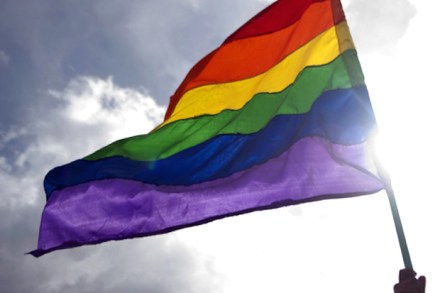
The question is, says the Guardian in a report from San Francisco, whether God is actually gay, what with the gay marriage movement being on such a roll. The US Supreme Court majority ruling that marriage between same-sex couples is a constitutional right usefully coincided with a similar ruling on gay marriage in Mexico, which makes a nice change, I expect, from worrying about the narcotics-related homicide rate. In Australia, Malcolm Turnbull says it's bound to happen there. Quite a coup, this, for the social media companies like Facebook, Apple and Google who've been campaigning for just this outcome.

How can University College London be taken seriously after the Tim Hunt affair?

From our UK edition

Question: which comes out worse from the Tim Hunt affair – the lynch mob on Twitter which brought him down, or University College London, which pulled the rug from under both him and his immunologist wife once they gathered that one of their own had said something off message? It’s a tough call, but I reckon, UCL, on the basis that it formerly had some academic and intellectual credibility whereas rationality was never the strong suit of the Twitter mob - the contemporary equivalent of the women who, in Greek myth, tore Orpheus to pieces for reason’s we’d better not go into. Tim Hunt and Mary Collins have had their say in the papers over the weekend, in The Guardian and the Mail on Sunday, and the pieces make heartbreaking reading.

The Women’s Prize for Fiction deserves a better drink than Baileys

From our UK edition

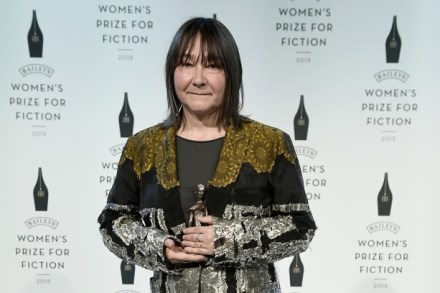
Well, as a mere PR exercise, the Baileys Women’s Prize for Fiction, awarded last night, has done really well, what with the American woman from Diageo (owner of Baileys) causing Ian Hislop to fall asleep while standing up during her speech. I haven’t a clue whether Ali Smith’s book, How To Be Both, about sexuality-shifting, is any use, though I am still recovering from reading last year’s winner, Eimear McBride’s A Girl is a Half-formed Thing, which is sort of James Joyce, only with really gross stuff about sexual abuse. It’s nice and short though. Two questions to ask about the prize. One, why was Shami Chakrabarti, director of Liberty, chair of the judges?

Degrees of bureaucracy

From our UK edition

It took Oxford 40 years to catch up with Cambridge in appointing a woman vice-chancellor, but Louise Richardson — ex-St Andrews, Irish, Catholic, terrorism expert — is to take over from the chemist Andrew Hamilton. He is leaving early to head New York University for an eye-watering £950,000 a year. His successor will inherit a more modest but still whopping £442,000 a year. That’s what happens when a university is run like a biggish corporation — the head is paid like a chief executive. (A professor gets around £65,000 a year: once, Louise Richardson would have been on something similar.

Irish Catholicism’s response to gay marriage hasn’t been totally incoherent

From our UK edition

Matthew Parris, in a characteristically elegant essay in this week’s magazine, complains about the rubbish quality of the arguments against gay marriage in the wake of the Irish Referendum; so very different from the kind of intellectually coherent Christian discourse that we used to get from the likes of Malcolm Muggeridge, C.S. Lewis et al. He’s got a point, though he is being a little unfair in identifying as the personification of intellectual shallowness Diarmuid Martin, the Archbishop of Dublin. His remarks on RTE, Irish television, after the referendum did not, admittedly, show him in a particularly good light.

Pope Francis is right to avoid television. It’s the dumbest medium known to man

From our UK edition

Unlike Pope Francis I can’t actually remember when I consciously gave up television and I have in fact watched it occasionally in other people’s houses on various occasions. But it was probably at least as long ago as he, twenty odd years ago. When I went to university there wasn’t a television in our room and there was an awful lot going on; fun stuff, more fun than looking at a screen. And at that point I broke the habit. It’s a bit like giving up sugar in your tea for Lent: the first time is awful; by the next Lent it’s easier; by the end, it’s normal. And so, term by term, I just lost interest. And I’ve never gone back.

Ireland’s gay marriage vote was never an equal contest

From our UK edition

In more ways than one it’s impossible to be heard above the din right now in the wake of the Yes vote in Ireland on gay marriage. There’s a special noise that goes with an orgy of self-congratulation, a roar of mutual approbation, and it drowned everything else out in Dublin as the results came in today. Like rugby, only more triumphalist. Actually, I was watching the scene from the Sky studio in Millbank, where my interlocutor in central Dublin, Patrick Strudwick, a journalist and activist, was appearing on a screen on the streets and had to shout over the crowd to make himself heard, to repeat, over and over again, 'It’s a victory for love, for equality, for human rights'.

The ‘gay cake’ case highlights a new intolerance developing in Ireland

From our UK edition

In what sense, precisely, has a bakery in County Antrim contravened discrimination law by refusing to ice a cake with a gay marriage slogan on it? The 'gay cake' case does have the useful function of identifying the partisan and idiot character of the Equality Commission, in this case, of Northern Ireland, which acted for gay rights activist Gareth Lee, the offended customer, whose slogan was repudiated by Ashers Bakery. The cake itself is silent on the matter right now but it was, I gather, available to be consumed by any customer of Ashers Bakery, regardless of race, religion or sexual orientation. [caption id="attachment_9131252" align="alignright" width="221"] The image the customer wanted on the cake[/caption] And that’s just the point.

A modern scandal in Belgravia

From our UK edition

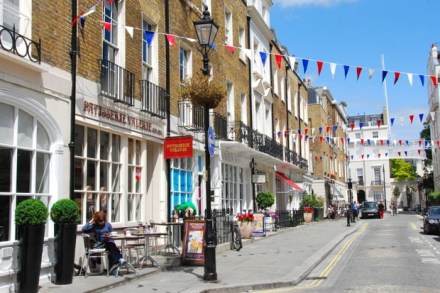
You know, I’m not sure the new, in-by-a-squeak Tory MP for Croydon, Gavin Barwell, has quite got it right when he says that 'London is turning into Paris', what with the rich dominating the centre and the poor pushed to the suburbs. If only. Obviously, it’s true that there’s a species of social cleansing going on in the rich boroughs but it’s more subtle than that. I went to see my favourite facialist in Belgravia this week – she’s fabulous; she comes from the East End and her granny used to make her shoplift as a child – and the view from Motcomb Street is alarming. Because so much of it is owned by the Grosvenor Estate, it’s at the mercy of ever increasing rents – I ask you, does the Duke of Westminster actually need more money?

A radical guide to boosting your baby’s ‘brand individuality’

From our UK edition

A Telegraph journalist, Lucy Denyer, has written about how rubbish it is that people are calling their children stupid, made-up names. (Spoiler alert: I’m anti stupid made-up names.) Trouble is, while she hasn’t exactly gone the Fifi Trixibelle/Peaches route herself, she has called her son Atticus. And no, it’s not the friend of Cicero she had in mind; it’s the bloke from To Kill a Mockingbird. Difficult one, Atticus. Classical names like Titus, Marcus or Octavia do dangerously expose your child’s class background, increasing their chances of getting beaten up.

No man is an island

From our UK edition

Bit of Kant, bit of Kierkegaard, bit of motorcycle maintenance. That’s one take on The World Beyond Your Head, Matthew Crawford’s philosophical polemic about how virtual reality is impinging on real reality. Actually, his targets in this book are Descartes and John Locke, with whom, he reckons, the rot started when it comes to thinking about the human person as a cerebral calculating machine, divorced from his own body and from the world around him. But he’s got it in for corporate capitalism, too, and its manipulation of our attention by hijacking every communal space — aural and visual — to get us to buy things. Perhaps I’m not quite winning you round here to this book, which I really, really like, and really, really want you to read. Let me try again.

Princess Charlotte’s middle names will soon seem extraneous

From our UK edition

Beatrice Elizabeth Mary. Anne Elizabeth Alice Louise. Elizabeth Alexandra Mary. These are the full baptismal names of Princesses Beatrice, Princess Anne and the Queen respectively. And what use are any of them other than the first one in each case? Today the papers have worked themselves up into a state of mild hysteria over the Cambridges' choice of name for their daughter. Charlotte: fine, one for Prince Charles. But the Elizabeth and especially the Diana bit really got them going - the child's third name merited an entire front page in the Mail. Diana won't be forgotten, says her 'closest friend', Rosa Monckton. Well, fine.

The police shouldn’t be expected to clamp down on wolf whistling

From our UK edition

Every morning on the way to work I pass a group of Polish builders waiting to start work on the new Design Museum. I know, it tells us a great deal about the availability of British youth for work in construction that every last one of them is Polish, so far as I can make out – and come to that, are the Irish nowadays too swanky to be navvies? -  but what’s interesting is how well behaved they are. They smoke heroically, but when women walk by they register their existence but don’t utter a peep. Possibly it’s because their English isn’t good enough for Wotcher, darling, but they don’t wolf whistle either, which I assume is a lingua franca. It’s not just me, I may say; it’s the same with teenage girls.

Children shouldn’t be expected to receive sponsorship for child’s play

From our UK edition

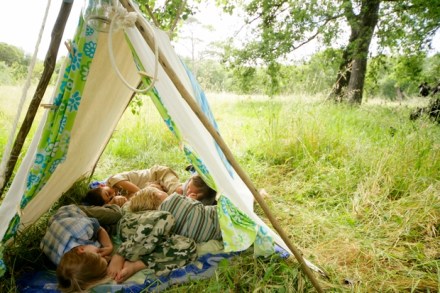
Can there be anyone curmudgeonly enough to take against Save the Children’s Den Day, a heartwarming event? – actually, make that an entire week, 29 May to 6th June – in which little children are 'being sponsored to transform their sofa, school desk or even a boring cardboard box into magical super dens. And the money they raise will help to save lives around the world.' What could be nicer and more harmless than to inculcate philanthropy in the young? Especially to help children like little Annie Mae in the Philippines, on the Save the Children website, made homeless in a typhoon and presumably obliged to make a den of her own, though not at all for fun.

The BBC debate confirmed some unhelpful female stereotypes

From our UK edition

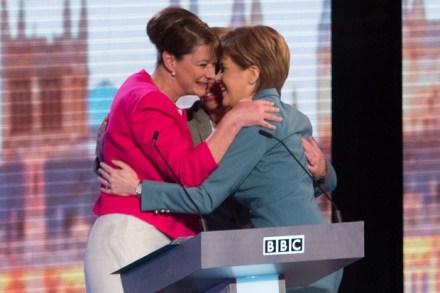
If I were a nicer person, I suppose I'd have been rather more moved by what the Independent called the moment that summed up last night's leaders debate, the 'beautiful group hug' by the three women leaders at the end while Ed Miliband looked on.  Rather, it summed up for me what I felt about the entire event, that it was a slightly embarrassing affair for women whose approach to politics is anything other than the sort of thing espoused by Greece's radical left-wing party Syriza.

The moral arguments for confronting Islamic State are increasing by the day

From our UK edition

It’s not perhaps the first thing you notice in the Labour manifesto, but one interesting commitment by the party is to establish a Global Envoy for Religious Freedom. It may or may not be an indication that Douglas Alexander reads The Spectator – which suggested some time ago that Britain should, like Canada, have a roving envoy to support specifically freedom of religion – but it’s a good move.

Putting away the fear of childishness

From our UK edition

Go to any bookshop — always supposing you’re fortunate enough to have any left in your neck of the woods — and chances are that lots of window space will be given over to two genres — children’s books and cookbooks. Step inside, and the children’s books are under your nose. Last year, children’s books were the fastest growing section of the books market. Yet the amount of space given over to children’s fiction and literature in the forums — newspapers and arts programmes — where we talk about books is remarkably small.

Don’t expect to hear anything about Islamic State during the election campaign

From our UK edition

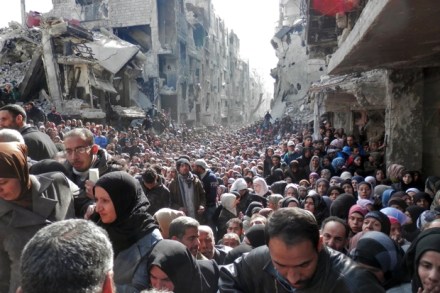
Granted, you don’t really expect foreign policy to feature much in an election campaign – we’re not saints - but it’s still shaming the way that the biggest foreign policy issue simply doesn’t register on the radar right now. I refer obviously to Islamic State, the group that just keeps on giving when it comes to reasons to want them wiped out. It’s a toss up really whether you go for the recently exhumed mass graves of the soldiers they massacred in Tikrit, the Yarmouk Palestinian refugee camp they seized control of, the images they obligingly posted of themselves smashing artefacts at Hatra or the blowing up an Assyrian church over Easter. Take your pick. And the response from the British Government?

Why is Labour making merit out of not backing an EU referendum?

From our UK edition

Fair play to Ed Miliband for launching Labour’s business manifesto today in Bloomberg, not perhaps the party’s natural stamping ground, at least not since the prawn cocktail initiative in 1997. And it was gutsy of it too to take out a full page advertisement in the FT – they don’t come cheap - to broadcast the party’s opposition to an EU referendum. 'The biggest risk to British business is the threat of an EU exit. Labour will put the national interest first. We will deliver reform, not exit', it says. Granted most British businesses, especially big ones and foreign-based ones, don’t want out of the EU.

If British democracy worked, we would have had a referendum on the death penalty

From our UK edition

Nice to know, isn’t it, that public attitudes are finally catching up with MPs’? It seems, from the Social Attitudes survey, that finally, half a century after parliament suspended the death penalty, 48 per cent of people no longer want the death penalty reintroduced. Opinion has been stubbornly in favour of it ever since 1965, and that was also true in 1998 when the Human Rights Act forbade capital punishment outright. In other words, until now, MPs have been wildly at odds with the opinion of most voters on an undeniably important issue. I’m unsure exactly where I stand on the issue myself, though I’ve always felt the guillotine would have been my own choice of method if it came to it.