Max Jeffery

Max Jeffery

Max Jeffery is The Spectator’s writer-at-large.

How Cowes found the secret of a successful seaside resort

From our UK edition

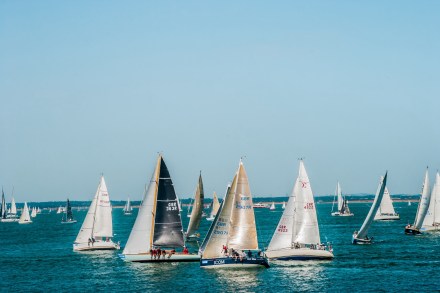
These days, most English seaside towns are sites of national mourning. You pay your respects by walking up some deathtrap pier, dropping two pence in an arcade coin pusher and whispering, your flower now on the grave: ‘Ashes to ashes, dust to dust.’ But Cowes, on the Isle of Wight, has managed to stave off this sorry end. Its secret is Cowes Week. Cowes Week, which starts today, is an annual sailing regatta. It has earned its place as a respected event in Britain’s sporting calendar – always in August, between Glorious Goodwood and the Glorious Twelfth – but its beginnings were unambitious.
Under ctrl, the Epping migrant protests & why is ‘romantasy’ so popular?

From our UK edition

39 min listen

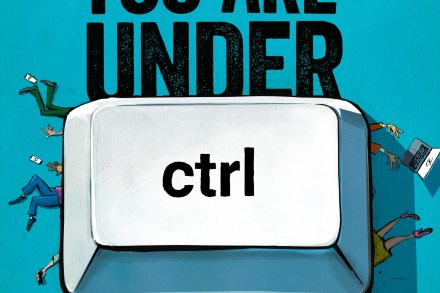
First: the new era of censorship A year ago, John Power notes, the UK was consumed by race riots precipitated by online rumours about the perpetrator of the Southport atrocity. This summer, there have been protests, but ‘something is different’. With the introduction of the Online Safety Act, ‘the government is exerting far greater control over what can and can’t be viewed online’. While the act ‘promises to protect minors from harmful material’, he argues that it is ‘the most sweeping attempt by any liberal democracy to bring the online world under the control of the state’.

The Epping protests have become entertainment

From our UK edition

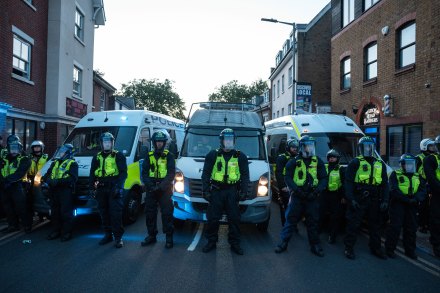
Early on Sunday afternoon at the Epping Bean Café, where a cutesy sign hangs from a wall reading ‘Coffee makes everything better’, a man is enjoying a roast dinner as the staff prepare for violence. Chairs and tables are moved inside, and a tall flagpole for advertising the café, which could be a very effective spear, is removed too. ‘Just in case we need to close down,’ says a waitress sweetly to the man. Epping isn’t used to days like this. The protests started on 13 July, after Hadush Kebatu appeared in court for the first time. Kebatu, 38, from Ethiopia, had allegedly tried to kiss a 14-year-old girl and a woman in the town.

Adam Curtis: ‘modern power makes me cry’

From our UK edition

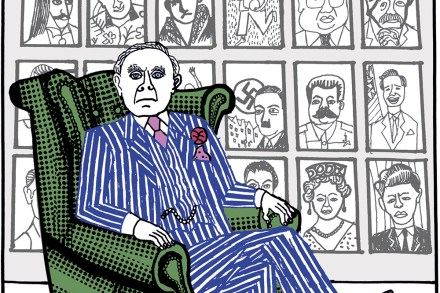
Adam Curtis used to make TikToks but he doesn’t want to talk about them. ‘I did quite a lot of TikTok, privately,’ he says, ‘just under another name. They’re probably out there somewhere…’ His head rests in his hand and his elbow on the chair next to him, the two of us among pink flowers at the kitchen table in the Soho townhouse where he works. He looks at me and repeats: ‘They’re private.’ For 30 years Curtis has been making documentaries for the BBC about how Britain became a sad place, or, in his own words: ‘What happened after the Cold War, mixed in with a deeper sense of… I think melancholy. A sense we were once powerful.’ ‘Never trust a liberal’ Shifty is his new film.

Ballymena got what it wanted

From our UK edition

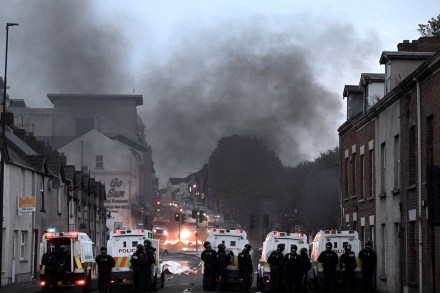
Thursday evening. All quiet in Ballymena so far, after three nights of wrath. On the kerb of Waring Street – just off Larne Street, which rioters tore through on Tuesday and left burning and beaten – sit James and Casper, both 16. James is wearing a balaclava with a Rottweiler’s face printed on the front. Casper wears a hoodie. Opposite the boys, a woman is handing out signs for people to put in their windows which read ‘LOCALS LIVE HERE’, and down the road, on the corner of Henry Street and Railway Street, a man is pointing his phone at a row of parked police jeeps, and will expectantly livestream this scene to thousands of people on TikTok over the coming hours, as violence is predicted, feared and hoped for, but does not come to pass. The rioting began on Monday 9 June.

In Essex, the only way is Reform

From our UK edition

The country is slipping away. The whole place, slowly, but London suddenly, blinding glass slabs becoming East End blocks, ‘SPLENDID NEW APARTMENTS!’ turning to marshland, to golf clubs, to small towns and a train station, Laindon, Essex, which has a nice 4x4 Porsche parked outside. Decline is the mood of Britain, and I was going to Essex to talk to people about it. Any political energy left in this country is behind Reform, and lately Nigel Farage has been using a new label for his people. ‘We are the party of workers, but also the party of entrepreneurs,’ he said recently. Did he mean the two simultaneously? The appeal to rich and poor and the people done good... Something in that mix sounded like an evocation of Essex.

Max Jeffery, Tanya Gold, Madeline Grant, Matthew Parris and Calvin Po

From our UK edition

29 min listen

On this week’s Spectator Out Loud: Max Jeffery tracks down the Cambridge bike bandit (1:10); Tanya Gold says that selling bathwater is an easy way to exploit a sad male fetish (5:38); Madeline Grant examines the decline of period dramas (10:16); a visit to Lyon has Matthew Parris pondering what history doesn’t tell us (15:49); and, Calvin Po visits the new V&A East Storehouse (23:08).  Produced and presented by Patrick Gibbons.

Have I unmasked Cambridge’s bike bandit?

From our UK edition

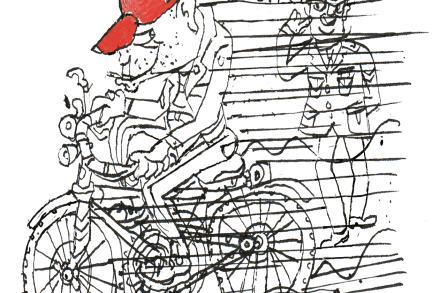
The Cambridge bike bandit emerged. I watched the rough, smiling face of the old man who came slowly from his bungalow and urged me to join him around the back; he didn’t look like a thief. We entered his grassless yard filled with bikes, tyres and tools. ‘This Raleigh, £80,’ he said, withdrawing a creaky frame from the pile. ‘I just changed the tyre. You see? Not heavy. Made in England. Nottingham. You can try a little bit. Try it for ten minutes. I don’t mind.’ A source had told me about the bandit, a man who openly shifted stolen bikes from a suburban Cambridge home, so bad and unpoliced has bike theft become in the city. I had got the outlaw’s phone number and arranged to meet him under the guise of making a purchase.

Kneecap are not rebels

From our UK edition

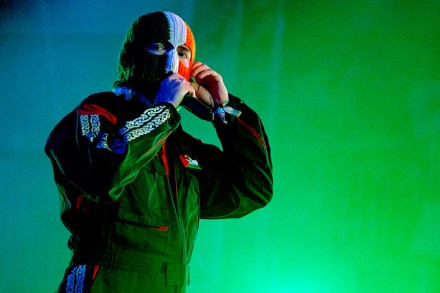
Better rebels than Kneecap would’ve begun their headline set at Wide Awake festival in south London on Friday night with a show of defiance against the British state, a swipe at the occupier in its fortress capital. Perhaps they would’ve unfurled a great big yellow Hezbollah banner. As it was, Kneecap flashed the message ‘FREE PALESTINE’ on a screen, showed a montage of criticism the band had received from Sharon Osbourne, some Fox News pundits and the shadow home secretary Chris Philp, and walked on stage to ‘It’s been ages,’ one of their less popular songs. The moment demanded more.

Michael Gove, Max Jeffery, Paul Wood, Susannah Jowitt and Leyla Sanai

From our UK edition

38 min listen

On this week’s Spectator Out Loud: Michael Gove interviews Justice Secretary Shabana Mahmood (1:17; Max Jeffery shadows the police as they search for the parents of three abandoned babies (14:41); Paul Wood asks if this is really the end of the PKK, the Kurdistan Workers’ Party (20:57); Susannah Jowitt reports that death has come to the Chelsea Flower Show (28:55); and, Leyla Sanai reviews Graham Swift’s new anthology of short stories, Twelve Post-War Tales (34:23). Produced and presented by Patrick Gibbons.

Britain’s billionaire exodus, Michael Gove interviews Shabana Mahmood & Hampstead’s ‘terf war’

From our UK edition

42 min listen

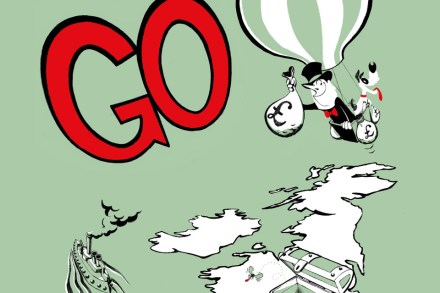
The great escape: why the rich are fleeing BritainKeir Starmer worries about who is coming into Britain but, our economics editor Michael Simmons writes in the magazine this week, he should have ‘sleepless nights’ thinking about those leaving. Since 2016, nearly 30,000 millionaires have left – ‘an outflow unmatched in the developed world’.  Tax changes have made Britain a ‘hostile environment’ for the wealthy, yet we are ‘dangerously dependent’ on our highest earners: the top 0.01 per cent pay 6 per cent of all income tax. If the exodus is ‘half as bad’ as those he has spoken to think, Simmons warns, a 2p hike to income tax looms.

The search for the mother of three abandoned babies

From our UK edition

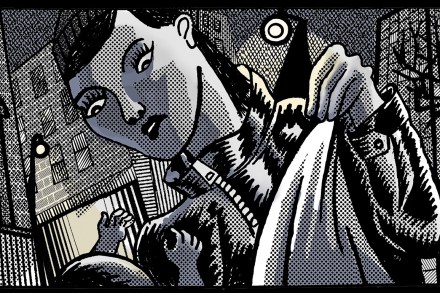
Elsa had been alive less than an hour and her umbilical cord was still attached when she was wrapped in a towel, put in a Boots shopping bag and left on the Greenway, a cycle path built on a Victorian sewage pipe that runs through east London. She was abandoned on 18 January 2024 by a rose shrub on the coldest night of the year. She was not the first baby to be abandoned in that area of the Greenway near Plaistow. On 17 September 2017, a baby boy was discovered wrapped in a towel under a bush about a mile and a half from where Elsa was later found. The hospital called him Harry. Then, on 31 January 2019, someone found a newborn girl, also wrapped in a towel and put in a shopping bag. She was beside a park bench 500 yards from where Elsa would be left.

Signal and the narcissism of connectivity

Signal is the fashionable place to discuss shady business – and that is probably what tempted National Security Advisor Mike Waltz, a military man with a previous in at the Pentagon, into using the app to discuss American air strikes against the Yemeni Houthis with top Trump administration officials. It was Waltz who added the Atlantic’s editor-in-chief Jeffrey Goldberg to the “Houthis PC small group” on March 13, two days before the strikes. To people like Waltz, Signal is the obvious place to plot such an operation. But Signal is also the app you use when you want the world to know that you have something to hide.

signal

Can Israel take more war?

From our UK edition

Israel No telling in Jerusalem this morning that Israel resumed war and poured hell on Gaza last night. In the Muslim Quarter of the Old City shopkeepers receive pallets of soft drinks, and spilled coke runs red-brown down the Via Dolorosa. A couple of streets away the Church of the Holy Sepulchre is very quiet. A few men chant lowly in the tomb of Christ. Thirty-three hostages and 1,900 Palestinian prisoners were freed in the ceasefire agreed in January, but the promised talks afterwards about a permanent end to the war went nowhere. Donald Trump said last December that there would be ‘hell to pay’ if Hamas did not return the hostages by his inauguration, and that is why the deal between Israel and the terrorists was done.

Colin Freeman, Harry Ritchie, Max Jeffery, Michael Gove and Catriona Olding

From our UK edition

35 min listen

On this week’s Spectator Out Loud: Colin Freeman explains how Islamic State tightened its grip on the Congo (1:23); Harry Ritchie draws attention to the thousands of languages facing extinction this century, as he reviews Rare Tongues: The Secret Stories of Hidden Languages by Lorna Gibb (8:00); Max Jeffery highlights the boxing academy changing young lives (13:20); Michael Gove reflects on lessons learned during his time as education secretary (20:30); and, Catriona Olding introduces the characters from her new Provence-based memoir club (29:27).  Produced and presented by Patrick Gibbons.

Howard Hodgson is a tabloid survivor

From our UK edition

Howard Hodgson ends lunch in a rage against unearned fame. ‘Marilyn Monroe: drunken actress,’ he says, ‘fat drunken actress. Gets killed. Ohhh! Marilyn!’ He does a mocking voice for that last bit, like someone wailing about her death. ‘John F. Kennedy: one of the worst presidents the United States ever had. Bay of Pigs. Fucked everything up. Robert Kennedy was vastly more talented than John, but John gets killed. Ohhh! National monument!’ ‘Diana Spencer: borderline personality disorder, eating disorder. The eating disorders and everything were just part of her borderline personality disorder. She wouldn’t have been able to be your wife,’ Howard’s blue velvet Nehru jacket shimmers as he gestures at me, ‘let alone the Prince of Wales’s wife.

The Boxing Academy changing young lives

From our UK edition

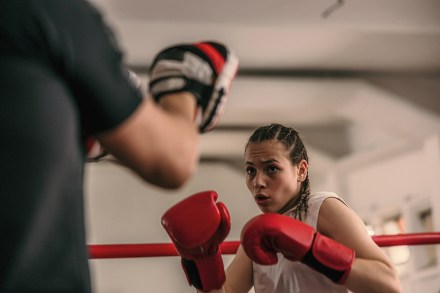
It’s a typical morning at the Boxing Academy in east London. In the reception, men with handheld metal detectors pat down students, confiscating their belongings and mobile phones for the day. A child has emptied out his pockets and is holding a mucky plastic dental retainer. ‘Can he have this?’ one man with a metal detector asks another. With suspicion, it is permitted. The Boxing Academy is an alternative provision secondary school in Hackney, founded in 2007 on the experimental idea that you could better teach difficult children by making boxing a central part of their education. Students take daily boxing classes, wear navy tracksuits and are as disciplined as boxers would be.

Michael Gove, Mary Wakefield, Mitchell Reiss, Max Jeffery and Nicholas Farrell

From our UK edition

32 min listen

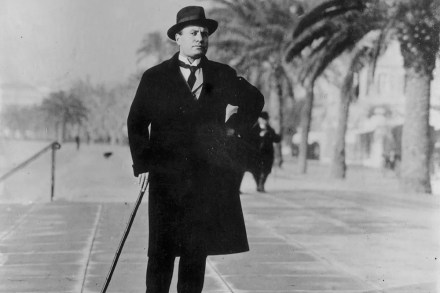
On this week’s Spectator Out Loud: Michael Gove offers up some advice to Keir Starmer (1:33); Mary Wakefield examines the rise of the ‘divorce party’ (7:28); Mitchell Reiss looks at the promise and peril of AI as he reviews Genesis: Artificial Intelligence, Hope and the Human Spirit, a collaboration between the former CEO of Google Eric Schmidt, the former chief research and strategy officer at Microsoft Craig Mundie, and the late US Secretary of State Henry Kissinger (13:52); Max Jeffery listens to The Armie HammerTime Podcast as the actor attempts to reverse his spectacular downfall (20:45); and, Nicholas Farrell reveals the time he got drunk with the ghost of Mussolini (25:24).  Produced and presented by Patrick Gibbons.

A feel-good classic: The Armie HammerTime Podcast reviewed

From our UK edition

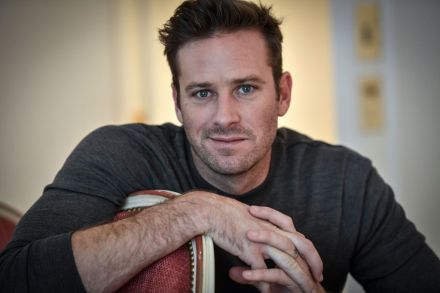
Relive with me and enjoy again the downfall of Armand Douglas Hammer. If you remember, Hammer’s Hollywood career had been going as smoothly as anything: there was his 2010 breakthrough playing the Winklevoss twins in The Social Network, his turn as Leonardo DiCaprio’s no. 2 in Clint Eastwood’s J. Edgar, the 2018 Golden Globe for Call Me By Your Name. By 2020 he was a GQ cover star: ‘Soul seeker. Scene stealer. Leading man.’ And cannibal, allegedly. In January 2021 an anonymous Instagram account called @houseofeffie posted screenshots supposedly showing Hammer’s texts to a woman. ‘Thinking of holding your heart in my hand and controlling when it beats,’ the message read. ‘I am 100 per cent a cannibal.

‘Kids were tougher in the 1990s’: what happens in Dan Pena’s £27,000 ‘tough love’ seminars?

From our UK edition

Dan Pena has a picture of Adolf Hitler on his wall, but not any old picture. You know, not a simple portrait with Bavarian hills in the background, or a snap of the Führer doting on Helga Goebbels, Joseph’s daughter. No, Pena has a Hitler collage – Nazis marching through Nuremberg, a swastika blotting out the sky, hellfire on the horizon and, the final layer, a red and murderous photograph of the man himself superimposed on to the right-hand side. ‘Allegedly I used to hit my students in the 1990s.