Matthew Plummer

John Key’s real legacy is his lack of blunders

From our UK edition

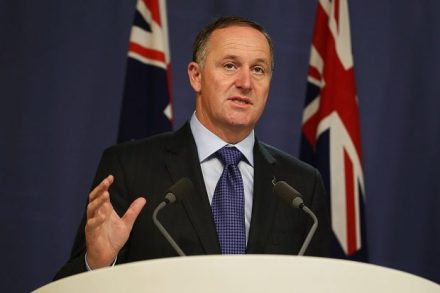
Imagine a Tory Prime Minister stepping down after nearly ten years at the top on his own terms. The budget was back in surplus, troublesome referendum results had been quickly forgotten, and the PM still remained overwhelmingly popular, with his party still sitting on around 50 per cent in the polls. No, it's not the restless dreams of David Cameron, but John Key - New Zealand's soon-to-be ex-PM, who unexpectedly announced his resignation earlier today. Arguably one of the most successful centre-right leaders in the world since Margaret Thatcher, Key has dominated New Zealand politics for the past decade. His National party has held near-majority government, despite a proportional electoral system that was meant to make such a situation impossible.
Yvette Cooper needs to do more than just talk about Nordic models

From our UK edition

Britain's Left has been indulging in worship of Scandinavian social democracy ever since the tide started ebbing on the New Labour project, most recently on prostitution reform and the SNP's vision for an independent Scotland. Thinking wistfully of Borgen beats the hard work of actually reinventing socialism, but I haven't heard so much excited talk about the 'Nordic Model' since I was at school and Helena Christensen was practically everywhere. Happy memories indeed. Last month Yvette Cooper announced that one of the pillars of her leadership bid would be childcare: campaign[ing] for universal childcare – as other countries, including Scandinavia, have.

Private enterprise has shaped Britain. So why is privatisation thought to be politically toxic?

From our UK edition

Lately there's been a lot of talk about the 'P' word: privatisation. Ed Miliband's team hasn't done the hard policy work to revitalise Labour as a party of government, and it is beginning to show. His platform for next May has a lot of sticky plaster policies, but very little that addresses structural problems like the housing market and transport costs, to name two issues close to my heart. Instead, catnip like 'no privatisation of our NHS' and 'reversing the privatisation of the railways' is being wheeled out to fill the Left's policy void. This conveniently ignores the Blair and Brown government's enthusiasm for market – rather than state – solutions.

The case for decriminalising prostitution is overwhelming. Look at New Zealand

From our UK edition

Every so often our politicians declare that ‘it's time to prosecute men for buying sex’; most recently with Caroline Spelman's call for men to make their views clearer about prostitution. I’m one of few men who’ll own up to visiting brothels and spending time with call girls. Alas – for those getting hot under the collar with anticipation – my time spent cruising red light zones was strictly professional: I spent most of 2008 photographing sex workers in New Zealand for my dissertation, which documented how the country's decriminalisation of sex work in 2003 had changed the industry.

Has local government in London left cycling in the wrong lane?

From our UK edition

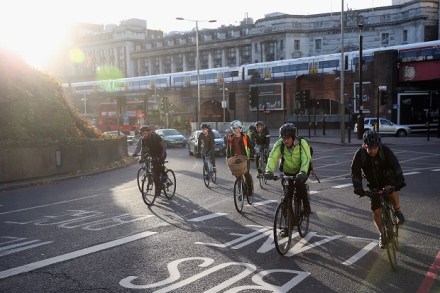
A couple of months ago I wrote to the Crown Estate about its bike-unfriendly redevelopment of London's Haymarket area, and was rather surprised when their London team offered to meet me and set out Crown's cycling credentials. Surprisingly, its new Central London developments have fabulous facilities for bike commuters, with showers, lockers, and ramps that allow you to ride straight into the basement parking space. The past decade has seen an explosion in two-wheeled travel across the capital, while car use has declined. Recent data shows that cyclists make up to two thirds of traffic on certain parts of London's roads. This is hardly unexpected, given the cost of tube travel and packed conditions.

Ignore Labour’s rage against the machines

From our UK edition

Two months ago I walked into the railway station at Biarritz. Without thinking I headed to the ticket machine on the concourse, pressed the small Union Jack on the touchscreen, and thirty seconds later had my ticket in my hand. Very simple and stress free, which is unsurprising as modern ticket machines are beacons of sanity for the international traveller. I remember the palaver at the Polish Railways ticket counter at Wrocław in 2006, when I was saved by a local in the queue behind me who could translate ‘could I have a single to Poznan for the early morning train tomorrow, and do I have to buy a supplementary ticket for my bicycle?’ Give me a machine every time.

Nimbyism? That’s not even the half of it.

From our UK edition

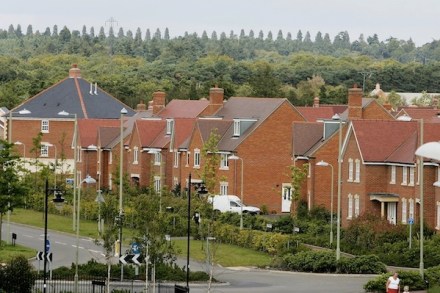
Pity the poor Nimbys. Not only has the government's horrible new planning regime come into force, but last week we heard the pro-HS2 lobbyists describing them as 'posh people standing in the way of working-class people getting jobs'. Even Isabel blames them for wanting to preserve the idyllic views from their breakfast room window. Being a nimby is so last century. Alas, calling the naysayers nimbys simply glosses over one of the biggest problems facing our society, namely how government deals with the built environment. This has little to do with preserving greenfields, areas of outstanding natural beauty, Jerusalem - or indeed nimbyism. It is simply that building houses in the countryside inherently designs significant expense into people's lives.